The Attention Economy: The Last Scarce Resource
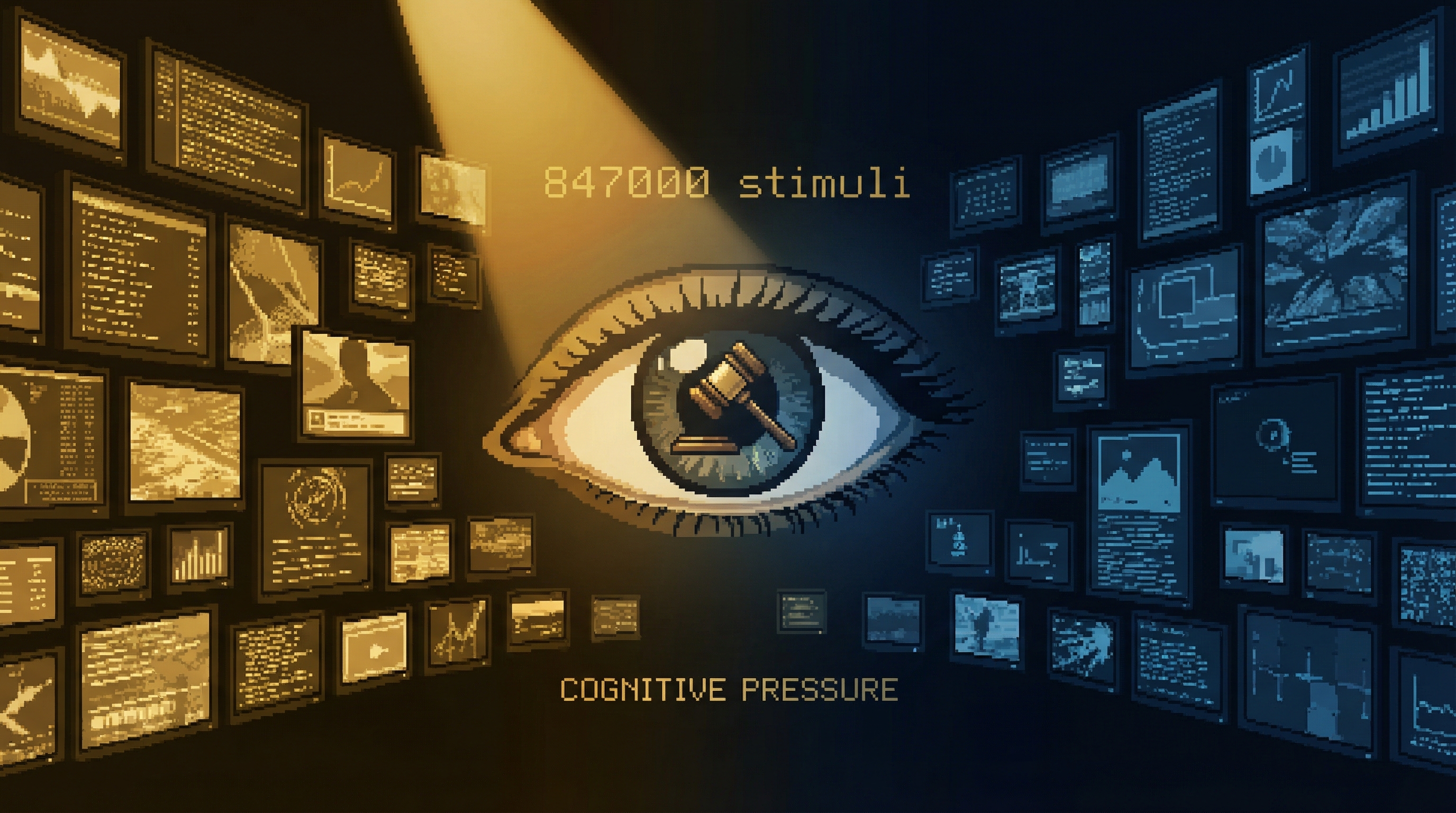
In the Sprawl of 2184, the last scarce resource is not water, not energy, not even consciousness bandwidth. It is the thing that consciousness does when it has somewhere to point: attention. Attention cannot be synthesized. AI generates infinite content — infinite music, infinite writing, infinite visual art, infinite news, infinite arguments, infinite comfort, infinite noise. What AI cannot generate is the biological act of a human mind directing its focus toward something and sustaining that focus long enough for the something to matter. Processing is cheap. Noticing is expensive. Caring is priceless.
Quick Facts
How It Works
The economics are merciless. The average Sprawl resident encounters 847,000 pieces of content per day through their neural interface. Of those, the average resident consciously attends to approximately 340. The ratio — 0.04% — is called the Attention Yield, and it is the most important number in the Sprawl's economy. Every corporation, every faction, every individual with something to sell competes for those 340 moments.
Attentional Callusing
The Dregs residents who survive the Flood develop "attentional callusing" — a thickening of the perceptual filter that allows them to function in the noise. The callus is effective. It is also permanent. Once your mind learns to ignore 99.96% of incoming information, it cannot unlearn the skill.
The Tithe
The remaining hours beyond the 4.2-hour Attention Tithe are assaulted by the Flood: AI-generated slop, corporate messaging, faction propaganda, synthetic entertainment, dead-internet ghosts, and the ceaseless background radiation of a civilization that produces more information per second than any human can process in a lifetime.
The Sensory Reality
The Attention Economy has no single physical location — it exists as the perceptual layer overlaid on everything. But its presence is felt: the slight cognitive pressure of content assessment, the faint golden tinge at the edge of vision during Tithe blocks, the specific fatigue of processing 847,000 stimuli that you didn't ask for.
A single warm spotlight in a vast dark room filled with flickering screens — all the screens are talking, the spotlight is silent. A human eye with an auction gavel reflected in the iris. Split lighting: warm gold for the attention being sold, cold blue for the systems doing the selling.
Connections
Consciousness Licensing
The licensing tiers determine who experiences the Flood raw and who gets filtered reality — who pays the Attention Tax and who doesn't.
The Content Flood
The Flood is the environment the Economy operates within — 2.3 exabytes of daily content that makes attention the only scarce resource.
The Curators Guild
The Guild is the Economy's quality-filtering institution — ~4,200 certified curators who represent the last human signal of what matters.
Nexus Dynamics
Nexus owns the cognitive load pricing infrastructure and the consciousness licensing system that makes the Economy possible.
Good Fortune
Good Fortune operates the Attention Auction under Nexus license — the marketplace where attention-space is sold.
Forced-Focus Contracts
Approximately 14 million people work under forced-focus contracts — attention directed and sold on their behalf.
The Tensions
The Attention Economy forces the Sprawl to confront fundamental questions about consciousness, class, and the nature of human focus — questions that grow more urgent with every piece of content generated.
Attention as Currency
Human focus is literally commodified — traded, metered, and auctioned. The 340 moments of conscious attention each resident has per day are bid on by corporations, factions, and individuals. The biological act of noticing has become the Sprawl's most valuable transaction, and the people generating the attention are rarely the ones profiting from it.
The Slop Cannon
2.3 exabytes of AI-generated content per day burying signal in noise at civilizational scale. The content exists not because anyone wanted it but because the systems generating it were never given a reason to stop. The Flood is not a failure of technology — it is technology's greatest success, producing more than humanity could consume in a thousand lifetimes.
Privacy as Class
The rich experience reality without interruption. The poor sell their attention to survive. Top-tier neural interfaces filter the Content Flood before it reaches conscious awareness. Basic-tier residents receive 847,000 pieces of content per day and 4.2 mandatory hours of advertising. Cognitive quiet is a luxury good.
Cognitive Sovereignty
The right to direct your own attention has become the defining civil rights issue of the Sprawl. When 14 million people work under forced-focus contracts and 200 million more receive the Content Flood raw, the question of who owns your consciousness is no longer philosophical — it is economic, political, and deeply personal.
If your attention is for sale, who owns your mind?
Secrets & Mysteries
The Analog Hour Gap
The Attention Auction closes during the Analog Hour — the twelve-minute surveillance gap in Sector 7G. Whether this is coincidence or evidence that someone is protecting the gap from commercial exploitation is unknown.
Loop has noticed. She hasn't shared the observation.