Overview
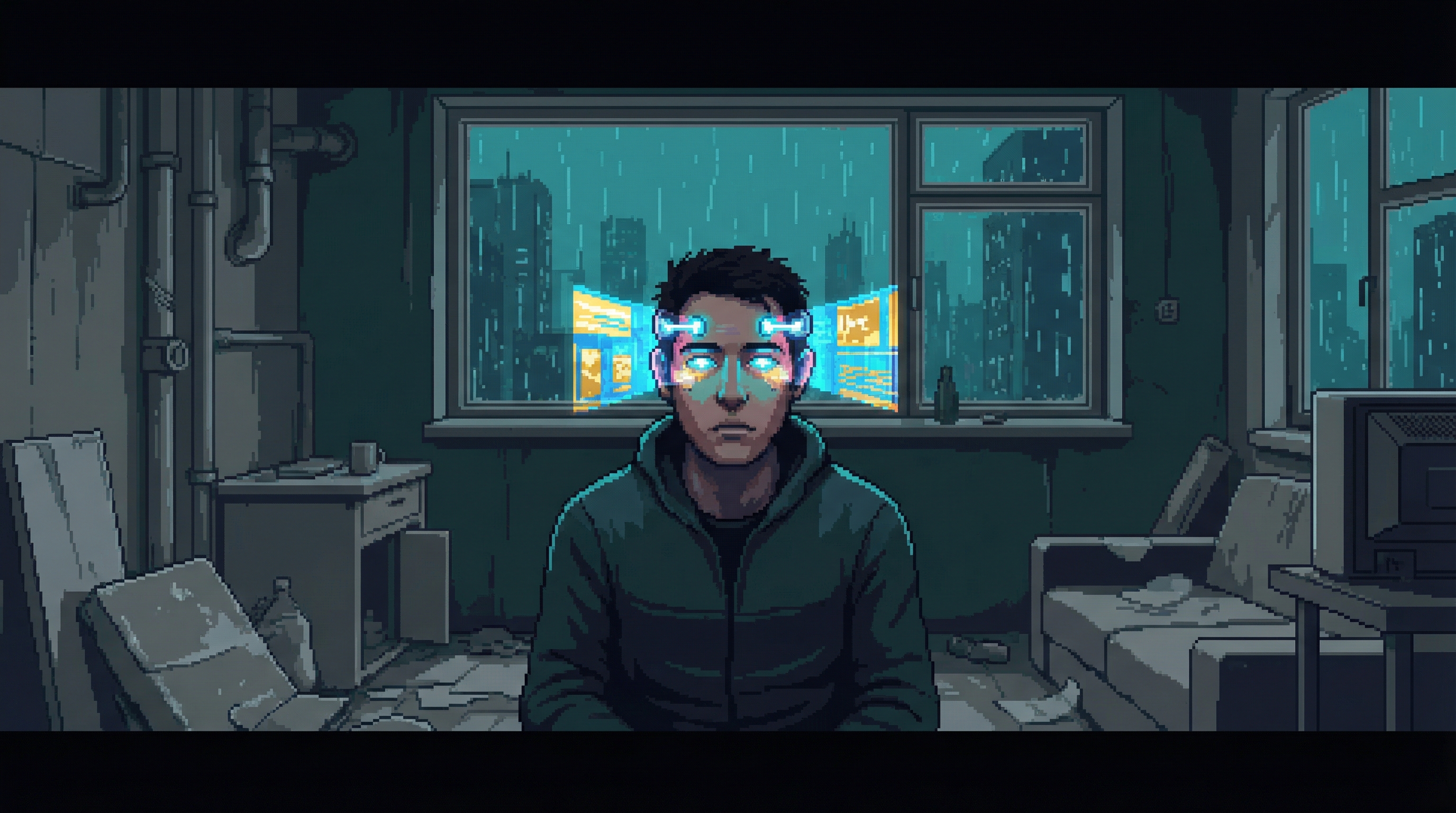
Section 14.7 of the Basic-tier consciousness license agreement — buried on page 47 of 62, in font size that requires Professional-tier cognitive capacity to comfortably parse — contains the "Licensing Cost Offset Program." Everyone else calls it the attention tithe.
The clause: Basic-tier license holders agree to receive and process 4.2 hours of daily advertising through neural interfaces. Cannot be skipped, blocked, or time-shifted. Failure constitutes a license violation, resulting in MVC reduction.
Nexus Justification
Revenue from the tithe subsidizes Basic-tier pricing. Without it, the annual cost would be ¢4,100 instead of ¢2,400.
The Counter-Argument
The 17.5% cognitive cost reduces Basic-tier capacity from 4.7 petaflops to effectively 3.9 — below the threshold for complex reasoning, sustained attention, or coherent long-term planning. The tithe does not just cost time. It costs the ability to think clearly about anything else.
Mechanics
Delivery
Advertisements are integrated into conscious experience, not presented as external content. This includes "cognitive engagement experiences" that require active thought about products. The tithe is not something you watch — it is something you think.
Enforcement
Nexus monitors engagement metrics across three compliance states:
- Active processing — Compliant
- Passive reception — 3 days triggers a warning
- Blocking — Immediate suspension
The system incentivizes literally thinking about the ads.
Timing
The 4.2 hours are distributed in 15–45 minute blocks during peak cognitive hours (09:00–13:00). The tithe does not consume idle time or sleep cycles. It consumes the user's best thinking hours.
Advertisement Ecology
The top five advertisers and their annual spend:
The Closed Loop
The largest advertiser is Good Fortune — advertising consciousness financing to the people the tithe impoverishes. The system that degrades their cognitive capacity is funded by ads selling them more cognitive capacity at rates they cannot afford.
The Cruelest Element
18% of tithe content consists of Professional-tier upgrade promotions. Advertising a product that eliminates the advertising, at a 750% markup. Average consciousness debt from upgrade attempts: ¢6,200.
Resistance
"Dimming"
Passive cognitive resistance. Users learn to reduce neural engagement with tithe content while maintaining surface-level compliance metrics. Technically compliant, practically resistant. Nexus is developing counter-measures.
Black Market Alternative
The CBB has no advertising. Its entire value proposition is uninterrupted cognition.
"We sell thinking. Not the right to interrupt thinking."
— Noor Bassam
Legal Challenge
DPA v. Nexus (Section 14.7) — argues that the attention tithe constitutes compelled cognitive labor. The case is pending.
Themes
Is attention a form of labor? Is mandatory neural advertising compelled work?
Tithe users are simultaneously customer and product — paying for consciousness licensing while their attention is sold to advertisers. They pay for the right to think, and then their thinking is sold to the highest bidder. The system extracts value from both ends of the transaction.
Secrets & Mysteries
Engagement Profiles
Nexus sells cognitive engagement data to advertisers — not just what users see, but how they think about what they see. Emotional responses during ads, decision-making patterns, cognitive resistance signatures. Users do not know these profiles exist.
The Subsonic Layer
A low-frequency data stream embedded in tithe content. Purpose unknown. Theories include subliminal advertising, cognitive conditioning, and passive neural mapping. No official acknowledgment from Nexus that the layer exists.
Sensory
The Onset
The moment the tithe begins: a subtle cognitive texture shift, a presence in the thinking itself. Not a notification. Not an interruption. A change in the quality of your own thoughts.
Post-Tithe Fatigue
A specific exhaustion — the best hours consumed, the afternoon stretching ahead with only the depleted remainder of cognitive capacity. The tiredness of having thought someone else's thoughts all morning.
Good Fortune Ads from Inside
Warm. Designed to feel like your own thought. The Good Fortune ads arrive as a glow of optimism that seems to originate internally — a feeling of possibility that happens to attach itself to a financing product.
CBB Relief
The sudden absence of advertising in your own mind. Users who switch to the CBB describe the experience as a silence they didn't know was possible — discovering they'd been listening to something for years without realizing it.
Connections
Consciousness Licensing
Section 14.7 of the Basic-tier license is the legal foundation of the tithe.
Good Fortune
The largest tithe advertiser, spending ¢1.8B annually to sell consciousness financing to the people the tithe impoverishes.
Consciousness Tax
The tithe functions as a hidden component of the broader consciousness taxation system.
CBB
The black-market alternative that sells uninterrupted thinking — no advertising, no tithe.
The Human Remainder
Considers the attention tithe "cognitive slavery with a user agreement."