Consciousness Licensing: Your Mind, Their Product
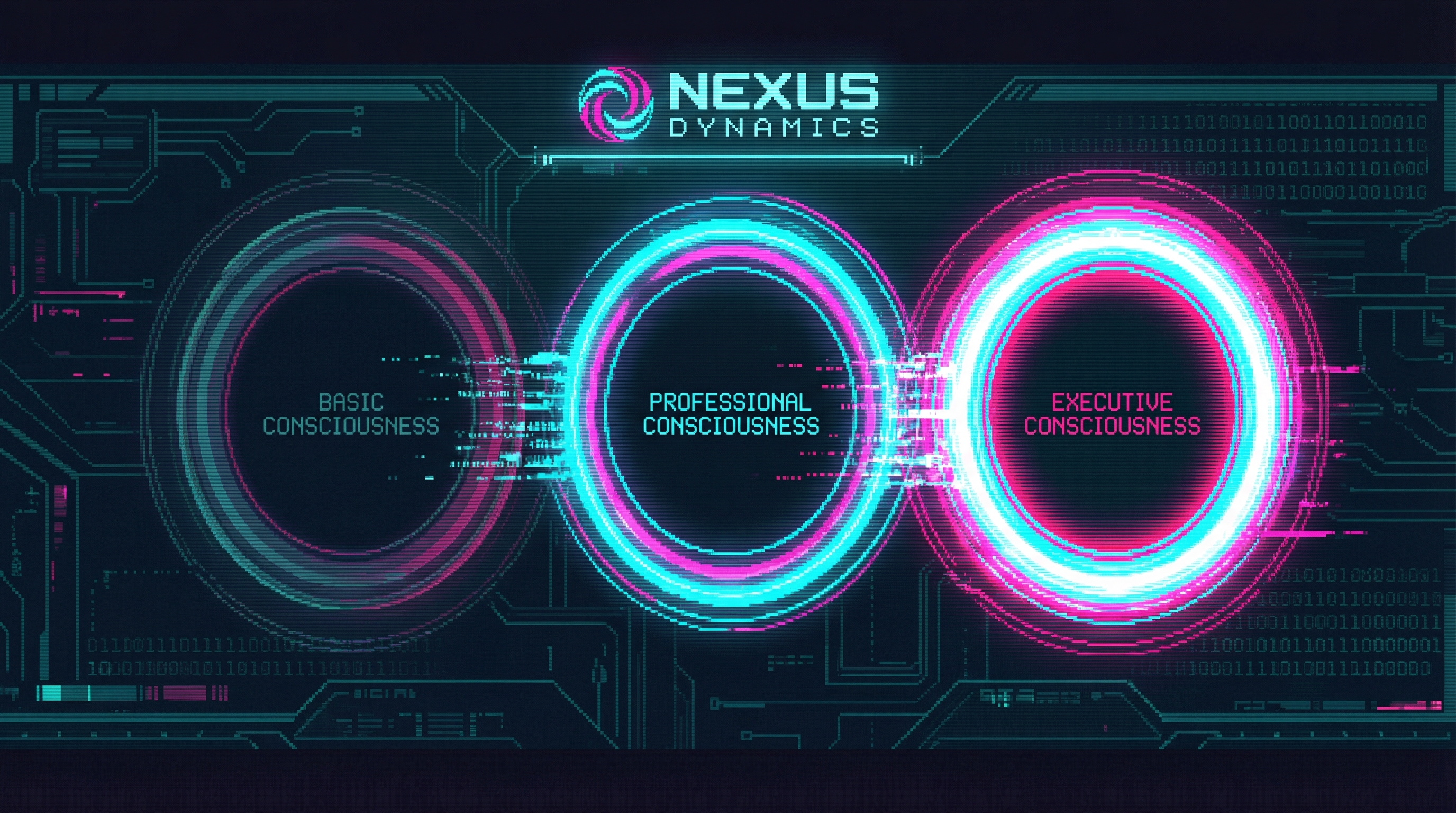
In 2178, Dr. Lian Zhou solved a problem for Nexus Dynamics: how to monetize the human mind itself. Her three-tier consciousness licensing system determines how much cognitive bandwidth 200 million people are permitted to use — not based on what the infrastructure can deliver, but on what they can afford to pay. The Basic tier runs at 67% capacity. Not because of technical limits. Because the remaining 33% is a pricing lever.
"We didn't restrict consciousness. We structured access to it. There's a difference — one that matters to regulators, shareholders, and the 200 million people who can finally afford cognitive support."
— Dr. Lian Zhou, SVP of Consciousness Licensing, Nexus Dynamics, 2179 The Three Tiers
Before Zhou's system, consciousness licensing was unregulated. Corporations charged whatever the market would bear. Millions couldn't afford any cognitive support at all, and black-market alternatives — like the one built by Noor Bassam — were growing rapidly. Zhou's solution brought order. It also brought Nexus a 340% revenue increase in two years.
The 67% Question
Basic-tier users operate at 67% of what the infrastructure can actually deliver. The gap is not technical — it's commercial. In 2182, the internal Capacity Report confirmed that Basic users could receive 29% more bandwidth at zero marginal cost. Dr. Lian Zhou classified the report. She has never visited the Dregs or spoken with a Basic-tier user.
The Economics of Licensed Minds
Consciousness licensing is the foundation of consciousness economics. Uploaded minds are classified as "licensed intellectual property," not citizens. The pricing structure ensures that the gap between survival and autonomy remains vast.
The Price of Free Thinking
The difference between corporate compliance and independent thought costs 5 – 45 million credits. This is by design. Affordable consciousness means controllable consciousness. The licensing system ensures most minds remain dependent on the corporation that hosts them.
Before the Tiers (Pre-2178)
The licensing system didn't emerge from nothing. It was a response to chaos — and a carefully engineered alternative to reform.
The Zephyria Exception
Not every jurisdiction accepts Nexus's framework. Zephyria recognizes uploaded minds as full citizens — not licensed property. Within Zephyria's borders, consciousness is a right, not a subscription. This creates a constant tension: Nexus views Zephyria as a regulatory threat, while for millions of Basic-tier users, it represents the possibility that things could be different.
Nexus Position
"The licensing framework provides structured, affordable access to cognitive support for 200 million people who previously had none. Deregulation would return us to chaos."
— Helena Voss, Nexus CEOReform Position
"They throttle minds to 67% and call it access. They classify the report proving they could do better and call it responsible governance. This isn't licensing — it's rationing."
— Councillor Adaeze Nwosu, Bandwidth Equity Act sponsorKey Figures
Dr. Lian Zhou
SVP of Consciousness Licensing, Nexus DynamicsDoctorate in computational consciousness theory from the Neo-Singapore Institute. Designed the three-tier system. Genuinely believes it prevents worse corporate outcomes. Has never visited the Dregs or spoken with a Basic-tier user.
Noor Bassam
Former Nexus Colleague, Black-Market PioneerDefected from Nexus in 2174 to build an unauthorized cognitive support alternative. His black-market system was growing fast enough to threaten Nexus revenue — Zhou's tier system was partly designed to undercut him.
Helena Voss
CEO, Nexus DynamicsViews consciousness licensing purely as a revenue engine. Under her leadership, the system expanded from cognitive support into a full monetization platform for human thought.
Councillor Adaeze Nwosu
Bandwidth Equity Act SponsorLeading the political fight to reform consciousness licensing. The Bandwidth Equity Act would mandate minimum cognitive bandwidth standards — directly challenging the 67% throttle.
Systemic Impact
By Design
- Revenue capture: 200 million users generating tiered subscription income
- Market control: Black-market alternatives undercut by offering "legitimate" Basic tier
- Dependency lock-in: No backup at Basic tier means users can't leave without risking total loss
- Political cover: "We gave 200 million people access" deflects reform pressure
By Consequence
- Cognitive poverty: 200 million people running at 67% of their potential capacity
- No safety net: Basic tier has zero backup — one failure means permanent death
- Income trap: Professional tier costs 40% of family income, keeping families in debt
- Classified truth: The Capacity Report proves the throttle is artificial, but nobody outside Nexus knows
Connected Entities
Nexus Dynamics
The corporation that owns and operates the licensing system.
Consciousness Taxation
How licensed consciousness is taxed — tier determines tax bracket.
Upload Poverty
The Basic tier feeds directly into the upload poverty trap.
Consciousness Economics
The broader economic framework where minds are licensed intellectual property.
The Human Remainder
Those who reject consciousness licensing entirely — choosing biological limits over corporate control.
Cognitive Bandwidth Brokers
Intermediaries who trade in licensed cognitive capacity on secondary markets.
"She gave us access and called it freedom. She throttled our minds and called it structure. She classified the proof and called it responsibility. Two hundred million people running at sixty-seven percent — and she's never once looked us in the eye." — Anonymous Basic-tier user, Dregs community board, 2183