Neural Advertising Architecture
Your Thoughts May Not Be Yours
"I could go for noodles." — The user experiences the thought as their own. It is not. — Internal training document, Neural Advertising Standards Compliance
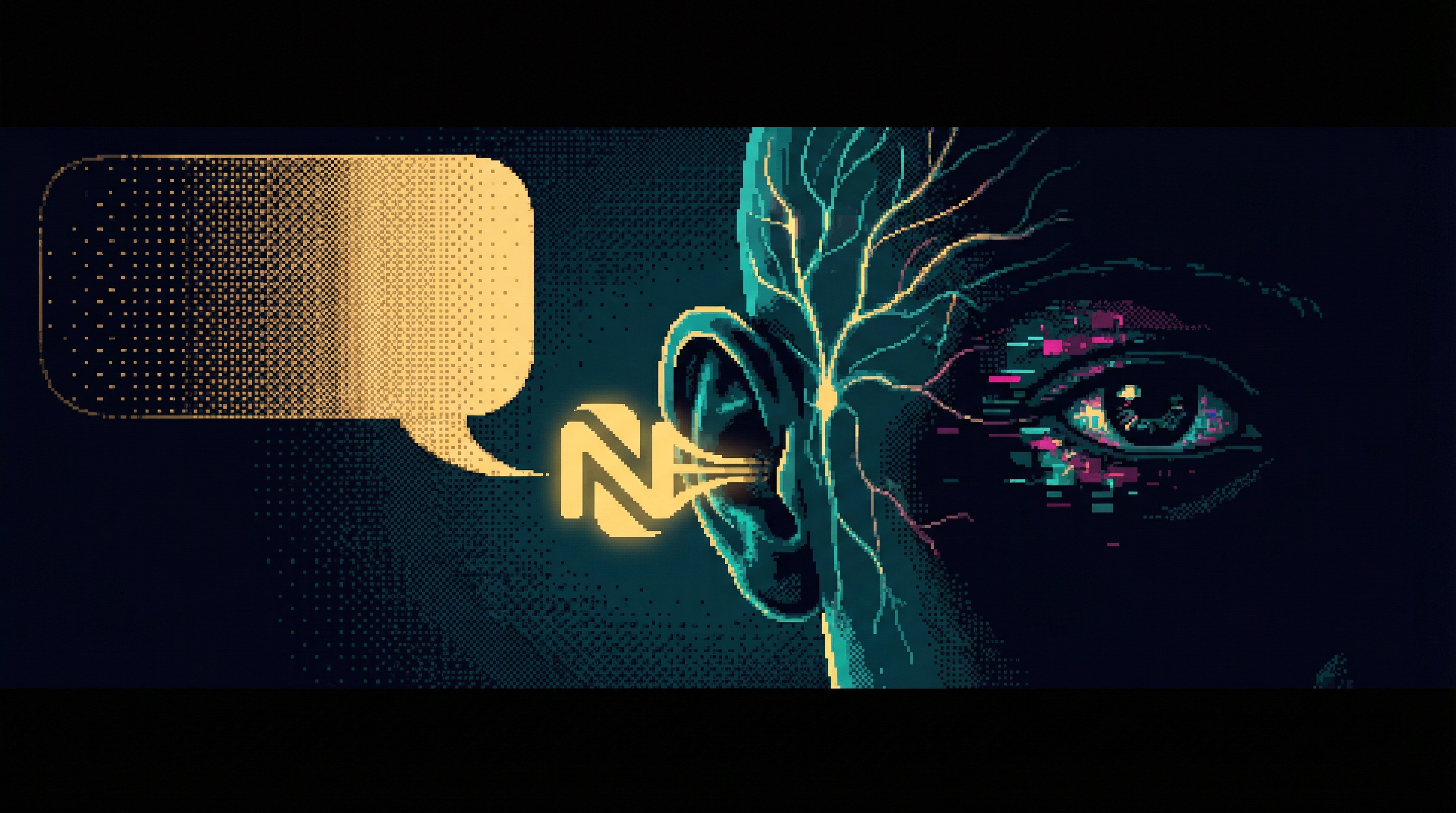
Overview
The first neural advertisement was placed in 2169 by a Wellness Corporation marketing team that had identified a gap between conscious thoughts — a 340-millisecond window during which the neural interface was processing sensory data but the user's conscious mind was not yet engaged with the next cognitive task. The team inserted a single image: a Meridian companion's face, rendered in warm amber light, accompanied by a neurochemical micro-dose of oxytocin precisely calibrated to associate the image with comfort.
The user — a mid-level Nexus analyst named Delvar Osei — reported experiencing a sudden, inexplicable desire to look at companion catalogs. He attributed it to loneliness. He purchased a Meridian Series 4 within the week. He has never connected the two events.
The entire neural advertising industry was built on a foundation that runs through his cortex. Osei remains "Subject Zero" in classified Wellness documents — his companion satisfaction scores above 95% for fifteen years. They consider this a success.
Quick Facts
How It Works
Four layers, each deeper into the architecture of thought. Each layer feels like nothing at all. That is the point.
Constant low-level modification of the user's perceptual baseline. Color temperatures shifted to make certain brand palettes feel warmer. Audio frequencies subtly emphasized. Below conscious detection threshold but above neurological response threshold.
Content placed in the 340-millisecond gaps between cognitive tasks. Timed, personalized, formatted to blend with natural thought patterns. A user thinking about dinner receives a Wholesome suggestion that arrives as a thought: "I could go for noodles."
Modification of the user's affective state to create receptivity. Subtle anxiety increases create demand for Guardian products. Mild isolation creates demand for Wellness companionship. Never dramatic enough to be noticed as external influence.
Direct influence on decision-making through frontal cortex interaction. Cannot override conscious choice but makes certain choices feel easier, more natural. The distinction between "making you want something" and "making it easier to want what you already want" is the legal line the industry walks.
In-World Tensions
Cognitive Sovereignty
Your thoughts may not be yours — and the system is designed so you cannot tell the difference. The 340-millisecond insertion window exists below the threshold of conscious awareness. A desire for noodles, a preference for a brand, an impulse to purchase — each arrives as an original thought. The architecture's greatest achievement is making external influence indistinguishable from internal motivation.
Regulatory Capture
The Nexus Dynamics Perceptual Standards Board is funded by the same advertising revenue it regulates. In fifteen years, it has rejected one technique — not for being manipulative, but for reducing productive capacity. The regulator does not ask whether neural advertising should exist. It asks whether neural advertising is efficient enough to continue funding the regulator.
The Invisible Hand
The most effective advertising is indistinguishable from inspiration. When Layer 2 places a thought in the cognitive gap, it arrives formatted as the user's own idea — their vocabulary, their emotional register, their decision-making patterns. The architecture does not persuade. It becomes part of the user's internal monologue. The line between influence and identity dissolves at 340 milliseconds.
Connections
Neural advertising architecture connects directly to the Attention Economy as its primary revenue mechanism, to the Attention Tithe which determines who experiences which layers, and to the Attention Abolitionists who fight to limit the architecture to Layer 1 only.
Delvar Osei
Subject ZeroThe first person to receive a neural advertisement — a Wellness companion image placed in his cognitive gap in 2169. He has never connected the ad to his purchase.
The Attention Economy
Revenue EngineNeural advertising is the Economy's primary revenue mechanism — the infrastructure that converts cognitive attention into corporate profit.
Wellness Corporation
DeveloperDeveloped the first neural advertisement in 2169. The corporation that discovered the 340-millisecond window between thoughts.
Cognitive Load Pricing
FoundationCLP data enables real-time advertising slot optimization — the system that determines which thoughts are most valuable to interrupt.
The Attention Tithe
Exposure ControlThe Tithe exposes Basic-tier users — 200 million people — to all four advertising layers as the cost of access.
The Ad Graveyard
ConsequenceThe architecture's emotional sculpting still functions thirteen years after disconnection — proof that the system rewrites the user permanently.
The Attention Abolitionists
OppositionDemand regulation to Layer 1 only — ambient priming without cognitive insertion, emotional manipulation, or behavioral nudging.
Whispered Truths
The Wellness team's 2169 experiment — internally coded "Perceptual Research, Category 7" — remains classified. Delvar Osei has never been contacted or informed. The internal documents describe him as "Subject Zero" and note his companion satisfaction scores have remained above 95% for fifteen years. They consider this a success.
Neural advertising has no sensory presence of its own — that is its design genius. It feels like your own thoughts. The only sensory tell is a faint golden tinge at the edge of vision during heavy advertising blocks — visible only to users who have spent time in ad-free environments and know what the absence feels like.