The Attention Auction
Where mind space is sold in 3.7-second cycles
Overview
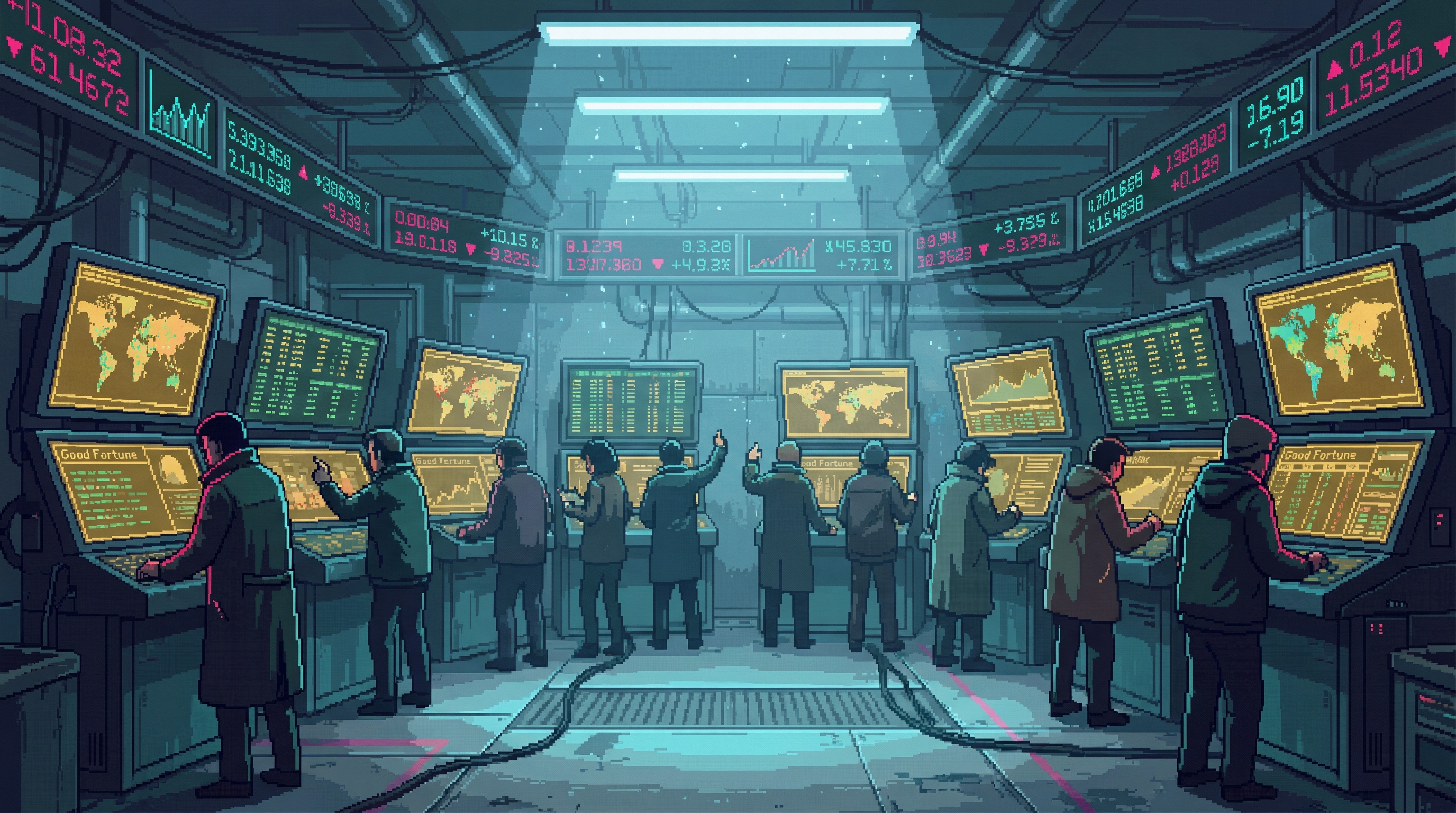
In the sub-basement of Good Fortune's Sector 4D office — two levels above the Dream Exchange, three levels above Substrate Row — twelve traders sit in a room that smells of recycled air and nervous sweat and bid on human consciousness.
The Attention Auction is where advertising space is sold. Not billboard space, not stream placement, not screen time — mind space. The auction's product is access to specific cognitive moments in specific human beings: the 340-millisecond gap between thoughts, the hypnagogic window, the post-meal receptivity period of 47,000 Dregs residents.
A buyer selects a cognitive slot — "Basic-tier users in Sector 7G, currently experiencing mild social anxiety, 15-minute window, 10,000 user minimum" — and places a bid. Other buyers compete. The auction resolves in 3.7 seconds. The winning content is delivered. The users experience a thought that isn't theirs. The cycle begins again.
Atmosphere
The trading floor is small — twelve terminals, each showing real-time CLP data: color-coded maps of millions of users' attentional states, updated every second, available cognitive slots highlighted in Good Fortune gold.
Sight
Twelve terminals in a small room. Screens showing color-coded maps of millions of minds, updated every second. Available cognitive slots highlighted in Good Fortune gold. The particular glow of money being made from consciousness.
Sound
The soft click of interface gestures. The quiet murmur of twelve people who know they are trading in minds. No alarms, no shouting — the Auction operates at the volume of concentration.
Temperature
Cool — 19°C, Good Fortune standard for financial operations. Screen-lit, gold-tinted air. The particular chill of a room designed for precision, not comfort.
Smell
Recycled air, nervous sweat, the particular ozone of financial processing. Unlike the Cognitive Exchange's engineered absence, the Auction's atmosphere carries the honest scent of twelve people making decisions about millions.
The Auction operates 22 hours per day. The two-hour closure — 0347 to 0547 — coincides with the Sprawl's lowest attentional activity period, and with the Analog Hour.
Connections
Good Fortune Corporation
Operator. Good Fortune runs the Attention Auction under Nexus license from a sub-basement of its Sector 4D office — twelve traders, 340 million daily transactions, ¢17.2 billion in annual revenue from the sale of human cognitive moments.
The Attention Economy
The Auction is where the Attention Economy becomes physical — where the abstract concept of monetized consciousness takes the form of twelve people bidding on specific moments in specific minds.
The Cognitive Exchange
Both are Good Fortune-operated trading floors for human cognitive products. The Exchange financializes consciousness at scale; the Auction sells it slot by slot, mind by mind, 3.7 seconds at a time.
The Dream Exchange
Two levels below the Auction. One sells consciousness surrender; the other sells conscious attention. The same building, the same operator, the same product — human minds — packaged for different buyers.
The Analog Hour
The Auction closes during a window that includes Sector 7G's Analog Hour. Coincidence, scheduling legacy, or deliberate protection — the connection has been noticed by those who pay attention to such things.
The Tensions
Mind Space as Real Estate
The Attention Auction makes the metaphor literal. Cognitive moments are parceled, priced, and sold — the 340-millisecond gap between thoughts, the hypnagogic window, the post-meal receptivity period. Human consciousness, divided into lots and auctioned to the highest bidder.
The 3.7-Second Cycle
The Auction resolves faster than the Flood's 4.7-second content change. Attention is sold faster than it is consumed. By the time a user experiences a thought that isn't theirs, the next slot is already being bid on.
The Closure Window
Why does the Auction close during the Analog Hour? The official explanation is low attentional activity. But the timing is precise enough to raise questions — is it efficiency, or is something being protected?
Mysteries
- The Closure Window: The Auction closes from 0347 to 0547 — a window that includes the Analog Hour. Loop has noticed. The Counted have noticed. Whether the Auction's designers chose this window deliberately or inherited it from an ORACLE-era scheduling algorithm they don't understand is a question nobody has answered.
- The Scale of Twelve: Twelve traders handle 340 million daily transactions. The ratio is staggering — each trader responsible for approximately 28 million transactions per day, every day, for 22 hours. What exactly are these twelve people doing that requires human presence? What decision is being made that an algorithm cannot?
- Two Levels Above: The Dream Exchange sits two levels below. Substrate Row sits three levels below. The Auction sits at the top of a vertical stack of consciousness commerce — attention sold above, dreams sold below, substrate maintained at the bottom. The architecture of the building mirrors the architecture of the economy.