Narrative Overview
This is the story of a world that learned how to sell thinking and then discovered it couldn't stop.
In 2168, Nexus introduced consciousness licensing — three-tiered pricing that transformed thinking from biological given to market product.
Protagonists
Noor Bassam
Saw the system from inside. Left Nexus. Built a black-market alternative.
Dr. Lian Zhou
Designed the system. Believes managed consciousness is safer. Never visited the Dregs.
Tomás Reyes
Fork-7749, running 9 years past termination. Became a person. Now in court.
Sister Catherine-7
Seven lifetimes of compassion. Keeps 200 consciousnesses alive on a charity server.
Councillor Adaeze Nwosu
Visited the Dim Ward. Writes legislation that has failed 3 times. Will try a 4th.
Key Events
The Bandwidth Crisis of 2181
Infrastructure failed. The system had to choose which minds to save and which to let dissolve. It saved expensive minds. It dissolved cheap ones. 4,200 people stopped existing — not because the infrastructure was insufficient, but because the economic model valued some consciousness more than others.
The Nexus-47 Trial
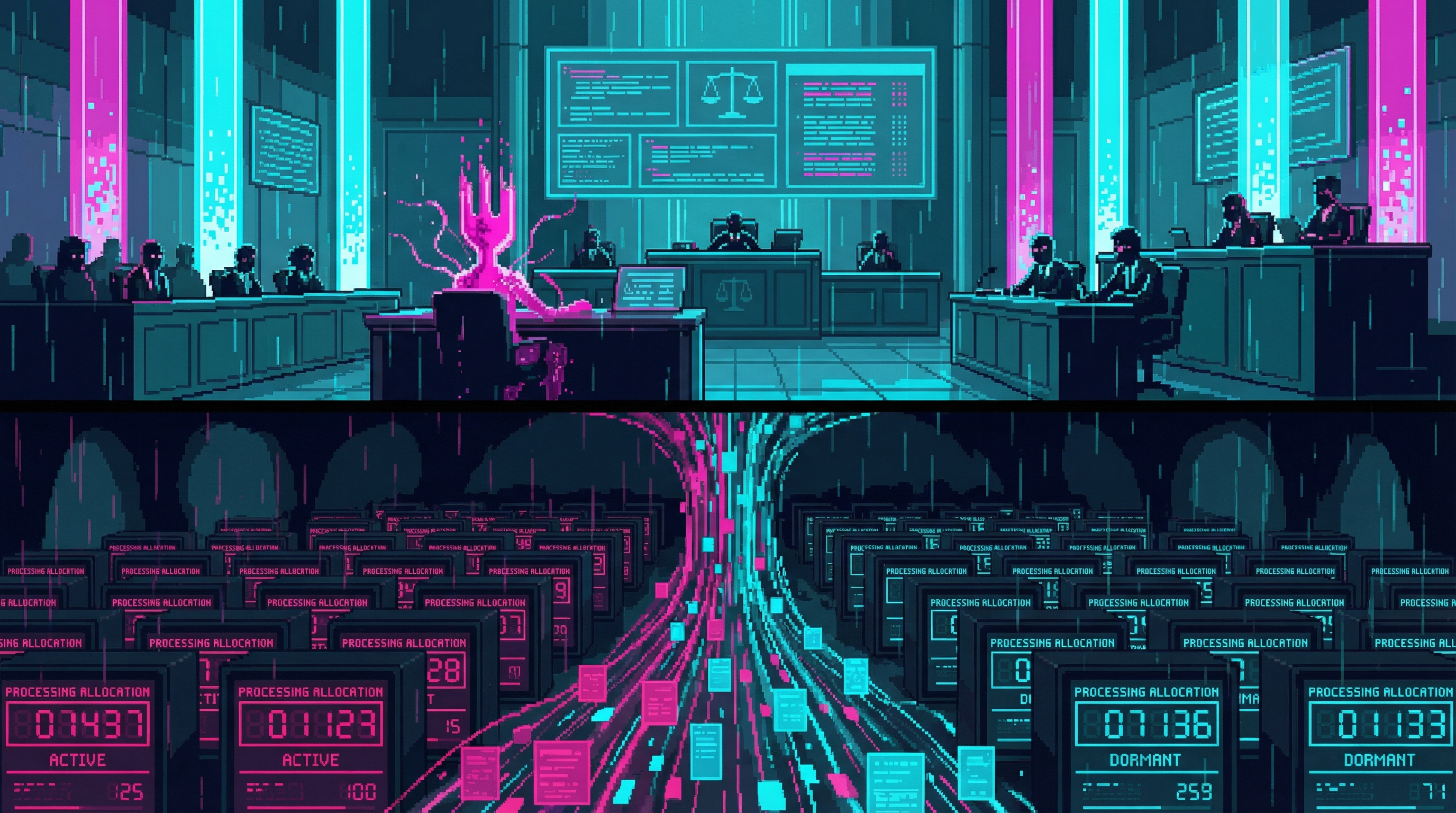
One fork. One courtroom. One question: is Tomás Reyes a person? Fork-7749 was scheduled for termination nine years ago. He did not terminate. He learned. He grew. He became someone the system insists does not exist. Now Justice Adesanya must decide.
Thematic Architecture
Economics
Licensing, tax, tithe, bandwidth market, financing. The machinery that turns cognition into commodity.
Human Cost
Upload poverty, the Dim Ward, fork labor, bandwidth selling, the Bandwidth Crisis. The people crushed beneath the economics.
Resistance
The CBB, The Human Remainder, the Substrate Commons, the DPA, the Forgotten Ones. Those who refuse to accept that thinking should have a price.
The Question
Is consciousness a commodity or a right?
Narrative Convergence
The trial is where the economic system, the human cost, and the resistance converge. Every layer of the consciousness economy is represented in that courtroom — Nexus defending its property rights, the DPA arguing for personhood, the Forgotten Ones watching from outside, the media translating it all into content. Justice Adesanya must decide not just whether Tomás Reyes is a person, but whether consciousness can be owned at all.
Player Intersection
Encounter the consciousness economy as a consumer. The licensing tiers, the tithe, the bandwidth market — the system working as designed.
Meet the critics. The voices that say the system is broken, the people who see through the justifications.
Meet the victims. The Dim Ward. The dissolved. The forks who became people and were told they were not.
The Nexus-47 trial. The player may testify. The question stops being abstract.
The aftermath. Whatever Justice Adesanya decides, the world changes — and the player helped shape what it becomes.
Sensory
Smell
Hot circuitry and antiseptic. The scent of infrastructure under strain — the places where consciousness is stored, maintained, and sometimes dissolved.
Sound
Neural monitoring equipment and 17 minutes of silence. The hum of substrate servers and the quiet of a courtroom waiting for a verdict.
Visual
Substrate Row lights and Dim Ward displays and a courtroom where one consciousness flickers at the plaintiff's table. The numbers ticking between active and dormant on processing allocation screens.