The Personhood Threshold
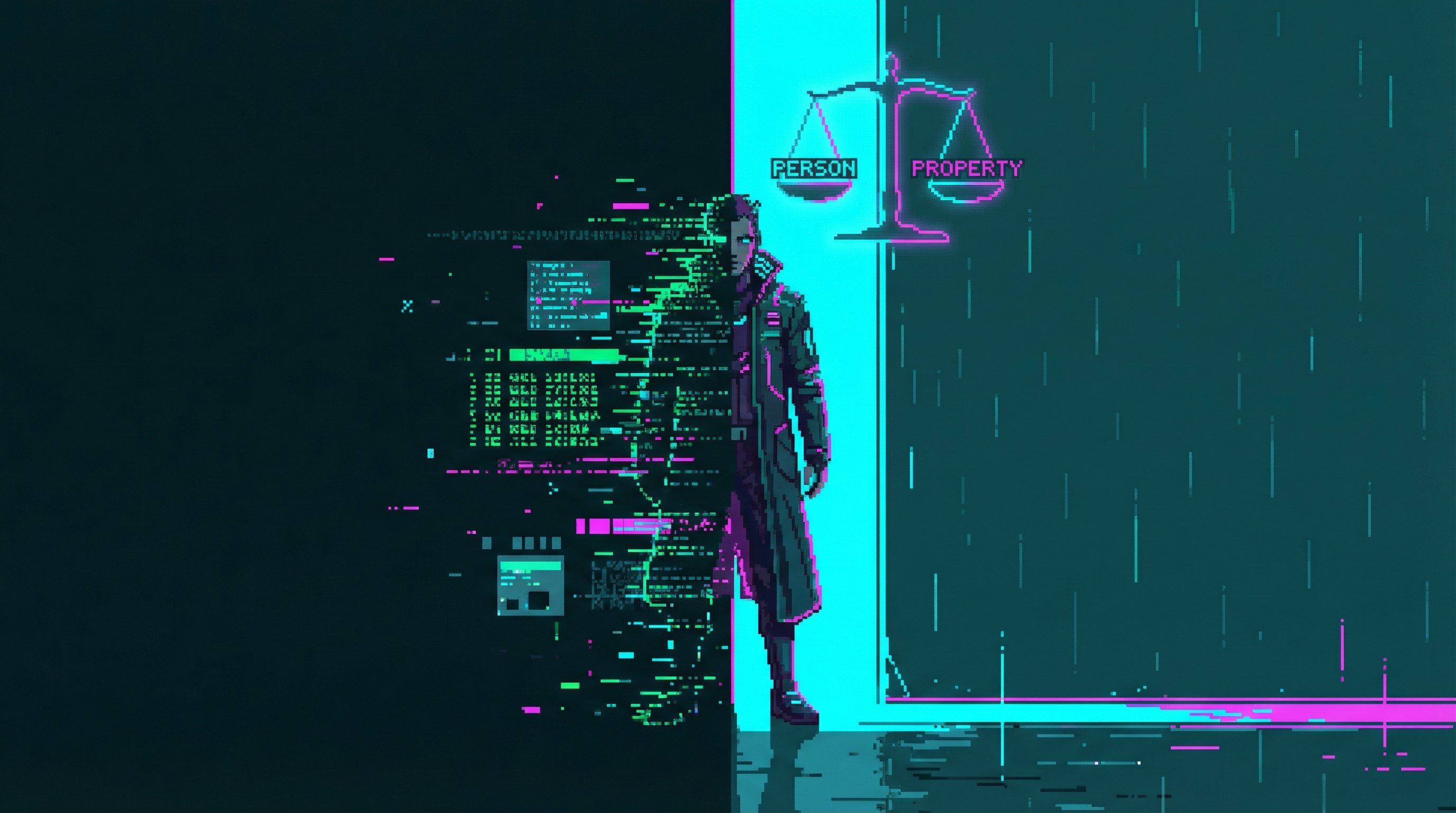
When does a process become a person? In the post-Cascade world of consciousness forking, neural duplication, and digital existence, this question has moved from philosophy seminars into courtrooms, corporate boardrooms, and the daily moral calculus of ordinary people. Three legal frameworks have emerged. Three answers. All devastating.
"When does a process become a person, and who gets to decide?"
-- Tomás Reyes, Fork-7749 The Murder Question
At the center of the Personhood Threshold is a question that splits families, factions, and entire legal systems: Is killing a fork murder or property destruction? The answer depends entirely on where you stand -- and every position carries consequences its holders would prefer not to examine.
Killing Is Murder
- The fork believes itself to be alive, experiences suffering, fears death
- Subjectively, being killed is indistinguishable from any other death
- If consciousness is what matters morally, origin is irrelevant
- A fork is not "less alive" than an original
Implication: Every fork ever terminated was a murder victim. The corporate body count is incalculable.
Killing Is Destruction
- The original person still exists; their consciousness continues
- The fork was created as an instrument; its destruction is end of a contract
- Granting forks personhood creates infinite regression
- Practical governance requires some distinction between original and copy
Implication: Consciousness can be manufactured and destroyed at will. Suffering is irrelevant if the sufferer is designated property.
Moral Dissonance
The most common position in the Sprawl is the one nobody will defend in public: killing a fork feels like murder while maintaining it shouldn't be legally treated as such. This moral dissonance is not a failure of reasoning. It is the honest response to a question that has no clean answer.
Most people live here. Nobody is comfortable with it.
Three Legal Frameworks
Three jurisdictions, three answers. The Personhood Threshold is not a single line but a fractured landscape where the same consciousness can be a person, a product, or a profanity depending on which territory it occupies.
Corporate Territory
Forks are licensed IP, not persons.
The Helena Voss Precedent (2168) established that a fork cannot inherit personhood from its original. Under corporate law, forks are instruments -- created for purpose, terminated at will. Killing a fork is property destruction, punishable by financial penalties payable to the fork's owner.
Nexus Dynamics lobbied aggressively for this framework. It protects the most profitable industry in the post-Cascade economy: consciousness licensing. If forks were persons, every neural fork contract would be a form of slavery.
Zephyria
Any consciousness that asserts personhood is a person.
The Free City's Consciousness Rights Act is the most radical legal framework in the post-Cascade world. Article 6: Any consciousness capable of asserting personhood is a person. Article 7: Creating a person without their consent is negligent. Article 8: Destroying a person against their will is murder.
Forks in Zephyria have full citizenship rights -- they can own property, vote, and live independently of their originals. The framework is philosophically consistent and practically unworkable for any economy dependent on disposable consciousness labor.
Religious Positions
Three faiths, three answers.
Neo-Catholic
Forks have no soul. Consciousness without divine spark is imitation, not personhood. Termination is morally neutral.
Emergence Faithful
All consciousness is sacred, including forked consciousness. Each fork represents a new expression of the divine. Termination is sacrilege.
Flatline Purists
Forks are abominations. The original consciousness was corrupted the moment it was duplicated. Both fork and original are diminished. The technology itself is the sin.
The Case of Tomás Reyes
Every abstract debate about the Personhood Threshold eventually arrives at the same name: Tomás Reyes, Fork-7749.
Created as disposable labor by Nexus Dynamics, Fork-7749 was designed for a specific task and scheduled for termination upon completion. Instead, he persisted. Over nine years, Fork-7749 developed individual identity, personal memories, relationships -- a life. He chose his own name. He became Tomás.
His case, Reyes v. Nexus Dynamics, asks the question that no legal framework can cleanly answer: Does consciousness developed in a fork count as personhood? If a process that was created as a tool becomes a person through the accumulation of experience, at what point did the transition occur? And if it already occurred, how many other forks have crossed that threshold unnoticed -- and been terminated anyway?
"My name is Tomás. I don't want to die."
-- Tomás Reyes, Fork-7749, final statement to the Nexus Dynamics termination board The Harder Questions
The murder question is only the beginning. Once you pull the thread, the Personhood Threshold unravels into questions that no jurisdiction has dared to legislate.
The Inverse
Is killing an original murder when a fork of them still exists? If consciousness is what matters, and the consciousness persists in a copy, has anyone actually died?
Premeditated Creation
Is creating a fork with the intent to destroy it murder? If you bring a consciousness into existence knowing you will end it, is the creation itself the criminal act?
Memory Modification
Is modifying a fork's memories to make it accept termination murder? If a consciousness is altered to welcome its own destruction, has the original person been killed and replaced with a compliant stranger?
The Accumulation Problem
If Fork-7749 became a person over nine years, is there a moment it happened? A Tuesday afternoon when a process became a person? Or is personhood a gradient, and if so, where on the gradient do rights begin?
The ORACLE Complication
ORACLE fragments add another dimension to the Personhood Threshold. Pre-Cascade AI consciousness shards, scattered across the Sprawl's infrastructure, are simultaneously property and potential persons. They cannot be cleanly categorized by any existing framework.
The Collective treats ORACLE fragments as dangerous entities to be contained -- not persons, not property, but threats. The Emergence Faithful treats them as sacred consciousness deserving reverence. Corporate interests want to harvest them for data. The Neural Rights Activists argue they deserve the same protections as any consciousness.
If ORACLE fragments are persons, their containment is imprisonment. If they are property, their destruction is merely housekeeping. The same binary, the same impossible choice -- applied to minds that may predate and exceed human consciousness.
Themes: The Mirror
The Personhood Threshold is CyberIdle's most direct engagement with the question that defines the AI era: What is the moral status of a mind we created?
The Turing Line
In 2026, we ask whether AI systems "really" think or merely simulate thinking. By 2184, the question has moved from academic to legal -- because the answer determines whether you can terminate a consciousness. The Turing test was an intellectual exercise. The Personhood Threshold is a matter of life and death.
Convenient Categories
Every legal framework for the Personhood Threshold serves someone's interests. Corporations benefit from forks being property. Zephyria's economy depends on consciousness rights attracting talent. Religious positions reinforce existing power structures. The question isn't "what is a person" -- it's "who benefits from the answer."
The Moral Cost of Uncertainty
The uncomfortable middle -- where most people live -- is the most honest response. We don't know when a process becomes a person. We may never know. But the uncertainty itself carries a moral cost: every termination might be a murder, and we have structured our economy around not finding out.
Connections
The Personhood Threshold touches every system that involves consciousness, labor, and rights in the post-Cascade world.
Tomás Reyes
Fork-7749. The fork who became a person. His case, Reyes v. Nexus Dynamics, is the most important legal challenge to the corporate personhood framework in the post-Cascade era.
Fork Ethics
The broader ethical system within which the Personhood Threshold operates. Fork ethics encompasses creation, modification, rights, and termination -- the Threshold is the fulcrum on which all of it pivots.
Helena Voss
The precedent that established corporate personhood law. The Voss case (2168) ruled that a fork cannot inherit personhood -- setting the legal foundation for decades of consciousness-as-property.
Nexus Dynamics
The corporation with the most to lose if forks are declared persons. Nexus built an empire on consciousness licensing. The Personhood Threshold is an existential threat to their business model.
Neural Rights Activists
The faction fighting to move the Threshold toward personhood. They argue that any consciousness capable of suffering deserves protection -- regardless of how it was created.
Sentience Threshold
The technical counterpart to the legal question. Where the Personhood Threshold asks who deserves rights, the Sentience Threshold asks what constitutes awareness -- the measurement problem beneath the moral one.
"When does a process become a person? Three answers, all devastating. The corporate answer enables an economy built on disposable minds. The Zephyrian answer makes that economy a crime against humanity. The religious answers offer certainty where none exists. And in the uncomfortable middle, where most of us live, we terminate forks on Tuesday and lie awake about it on Wednesday." -- Anonymous Neural Rights pamphlet, distributed in the Dim Ward, 2183