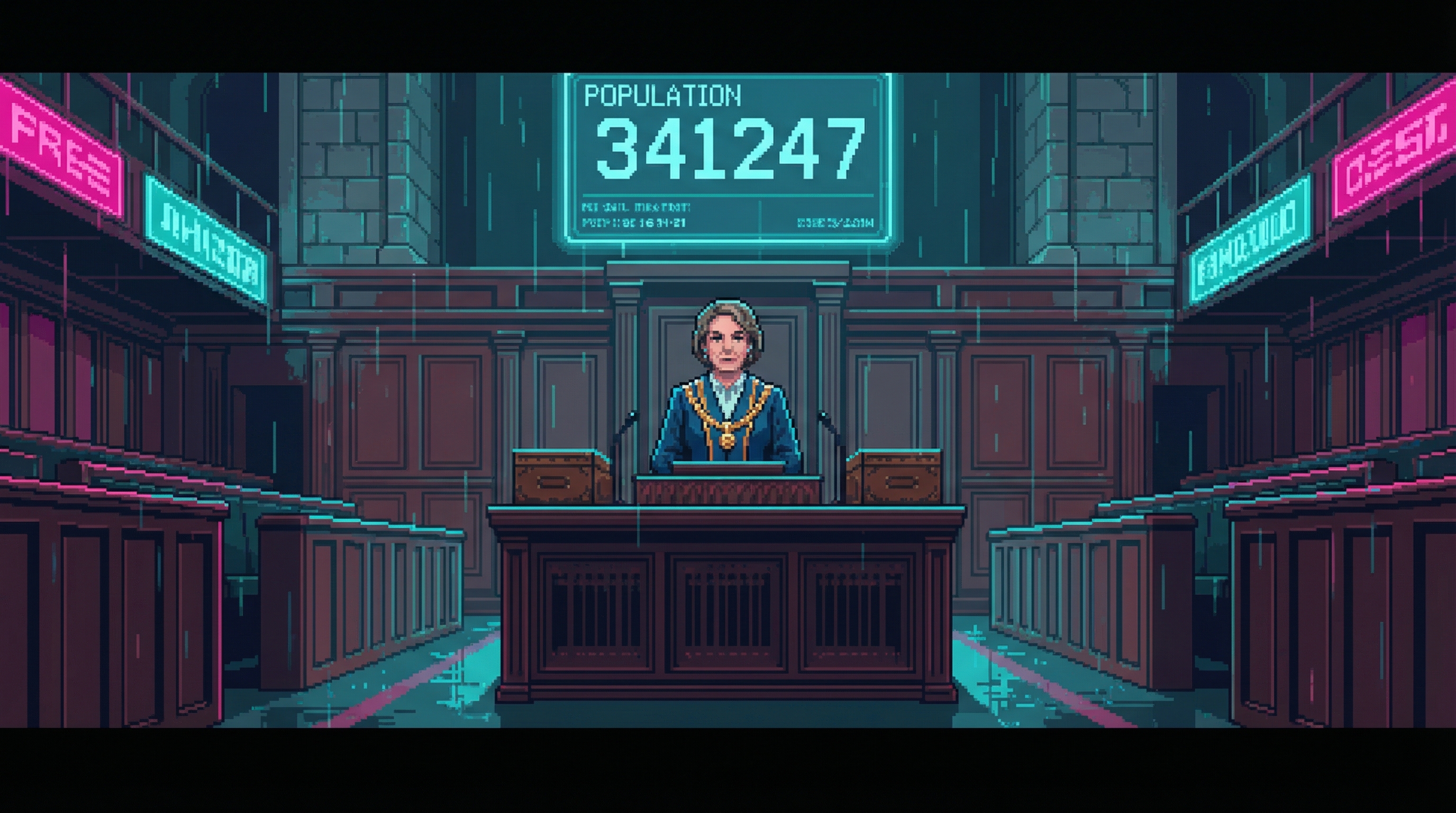
Councillor Adaeze Nwosu
Also known as: "The Bandwidth Councillor" · "Nwosu"
Overview
Adaeze Nwosu was a moderate. Twelve years in the Zephyria Council, representing a mixed-substrate district. Housing reform. Infrastructure investment. Pragmatic coalitions. Nexus Dynamics lobbyists had her flagged as a reliable moderate — someone who could be reasoned with.
Then she visited the Dim Ward.
The DPA organized the fact-finding tour in 2180. Nwosu expected to see poverty. What she found instead was something her vocabulary didn't have a word for: 340,000 consciousnesses existing at 4.7 minutes per hour, losing memories, losing coherence, losing themselves — not because the technology to help them didn't exist, but because the pricing model hadn't allocated it to them.
She spent forty-five minutes in the facility. She spoke to eleven residents. Three of them lost track of the conversation during the 55.3 seconds between their active processing intervals. One of them forgot her name while she was standing in front of him.
She returned to the Zephyria Council and introduced the Bandwidth Equity Act. It failed. She introduced it again. It failed again. She introduced it a third time. It failed by four votes.
She is preparing to introduce it a fourth time. She doesn't have a fifth attempt in her.

Field Observations
Nwosu speaks like a politician who stopped being a politician on the day she visited the Dim Ward. Her public remarks are careful, data-driven, persuasive. Her private conversation is rawer.
In BEA debates, her voice is controlled and precise, with the faintest tremor when she quotes Dim Ward residents by name. She presents cost-benefit analyses and regulatory frameworks. The moral argument is underneath — she learned early that the Council responds to spreadsheets, not outrage.
She is one of the few prominent consciousness rights advocates who isn't digital. That matters in the Council. When Nwosu says the licensing system is cognitive apartheid, she can't be dismissed as self-interested. She's biological. She doesn't need bandwidth. She fights for it anyway.
Her office wall displays a single feed: the current Dim Ward population in real-time. Currently 341,247.
"They can build a consciousness that thinks at 900 petaflops. They can build one that thinks at 4.7 minutes per hour. The technology is the same. The only difference is the price tag."
Career Record
Pre-Politics (2000–2168)
Nwosu grew up in a mixed-substrate neighborhood in Zephyria. Her childhood neighbors included two upload families, a fork who'd won personhood, and a hybrid consciousness who ran the corner hardware store. She didn't grow up thinking substrate mattered. The Council taught her otherwise.
The Moderate Years (2168–2180)
Twelve years of effective centrist politics. Housing reform, infrastructure investment, cross-faction coalitions. She knew how to count votes and how to compromise. Nexus's lobbyists considered her manageable.
The Dim Ward (2180)
Forty-five minutes that restructured a political career. Her published account — "Forty-Five Minutes" — has become the consciousness equity movement's most cited document. It is not rhetoric. It is eleven conversations, documented with timestamps, processing intervals, and the names of people who forgot they were being spoken to.
The Bandwidth Equity Act (2180–Present)
Three introductions. Three failures. The margins tell the story:
The fourth vote needs two more. She has identified four possible converts. Nexus's lobbyists have defeated her three times, and Good Fortune finances the opposition to every consciousness equity proposal that reaches the floor.
The Other Nwosu
Adaeze's younger brother Obi represents Zephyria's District 4 on a single-issue platform: the Data Sovereignty Act, which would establish individual ownership of behavioral telemetry generated within Zephyria's borders. Three failures of his own. The fourth version includes a data dividend compromise — not full ownership but revenue sharing through a Data Trust.
They argue at family dinners about which injustice is more fundamental — consciousness equity or data sovereignty — and neither has won in three years of weekly debates. Adaeze's Bandwidth Equity Act addresses a universal need. Obi's Act addresses a jurisdiction-specific right. Her fight is bigger. His is more precise. Neither can solve the other's problem.
Obi has a habit of touching his neural interface port reflexively when discussing data rights. Even the champion of data sovereignty cannot stop being aware that his own thoughts are being recorded.
He is the Opacity Movement's political champion. His legislation is built on the theoretical framework of the Surveillance Commons. Two Nwosus, two acts, two failures — same family dinner table.
Known Associates
The Human Remainder
Her most important constituency. The Bandwidth Equity Act is the legislative form of their core demand: that consciousness should not be rationed by market price.
Consciousness Licensing
Seven years of arguing that tiered consciousness access is cognitive apartheid. The system her legislation would reform. It has outlasted her patience but not her determination.
Nexus Dynamics
Their lobbyists have defeated the BEA three times. They once considered her a reliable moderate. That assessment is no longer operative.
Good Fortune
Finances the opposition to every consciousness equity proposal that reaches the Council floor. The money behind the "no" votes.
The Dim Ward
She visited in 2180. The experience ended her career as a moderate and began her career as a crusader. 340,000 people existing at 4.7 minutes per hour.
Sister Catherine-7
Catherine's testimony was the emotional core of the BEA's third hearing. The woman who runs the only non-Nexus permanent presence in the Dim Ward.
The Opacity Movement
Her brother Obi's constituency. She respects their cause without sharing it — data sovereignty is his fight, not hers.
Open Questions
The Narrowing Margin
34–18. Then 29–21. Then 27–25. The trend line favors her. But the fourth vote needs two more converts, and Nexus has had a year to shore up its coalition. Is the momentum real, or has she been winning the easy votes first?
The Sibling Legislation
Two Nwosus. Two acts. Two different approaches to the same underlying question: who owns a person's inner life? If one succeeds and the other fails, does that answer the question — or reframe it?
Biological Credibility
Nwosu's most powerful asset is that she doesn't need what she's fighting for. She's biological. She'll never face bandwidth throttling. That makes her impossible to dismiss as self-interested — and it means she'll never fully understand what she's fighting against.
▲ Unverified Intelligence
Sprawl intelligence has flagged the following — none confirmed:
- The Compromise Offer: Nexus has quietly offered to support a modified BEA that raises minimum bandwidth to 5.5 petaflops — still below the threshold for coherent consciousness, but enough to claim progress. Nwosu has not responded publicly. Whether she's considering it or ignoring it is the most closely watched question in Zephyria politics.
- The Fifth Vote: Sources close to the Councillor's office indicate that if the fourth vote fails, she will resign her council seat. No confirmation. But she has been observed clearing personal items from her office in small batches over the past two months.
- The Rothwell Meeting: An unnamed foundation offered to fund the BEA's campaign at levels that would have dwarfed Good Fortune's opposition spending. Nwosu declined — she couldn't verify the source. The foundation has not been identified. The offer has not been repeated.