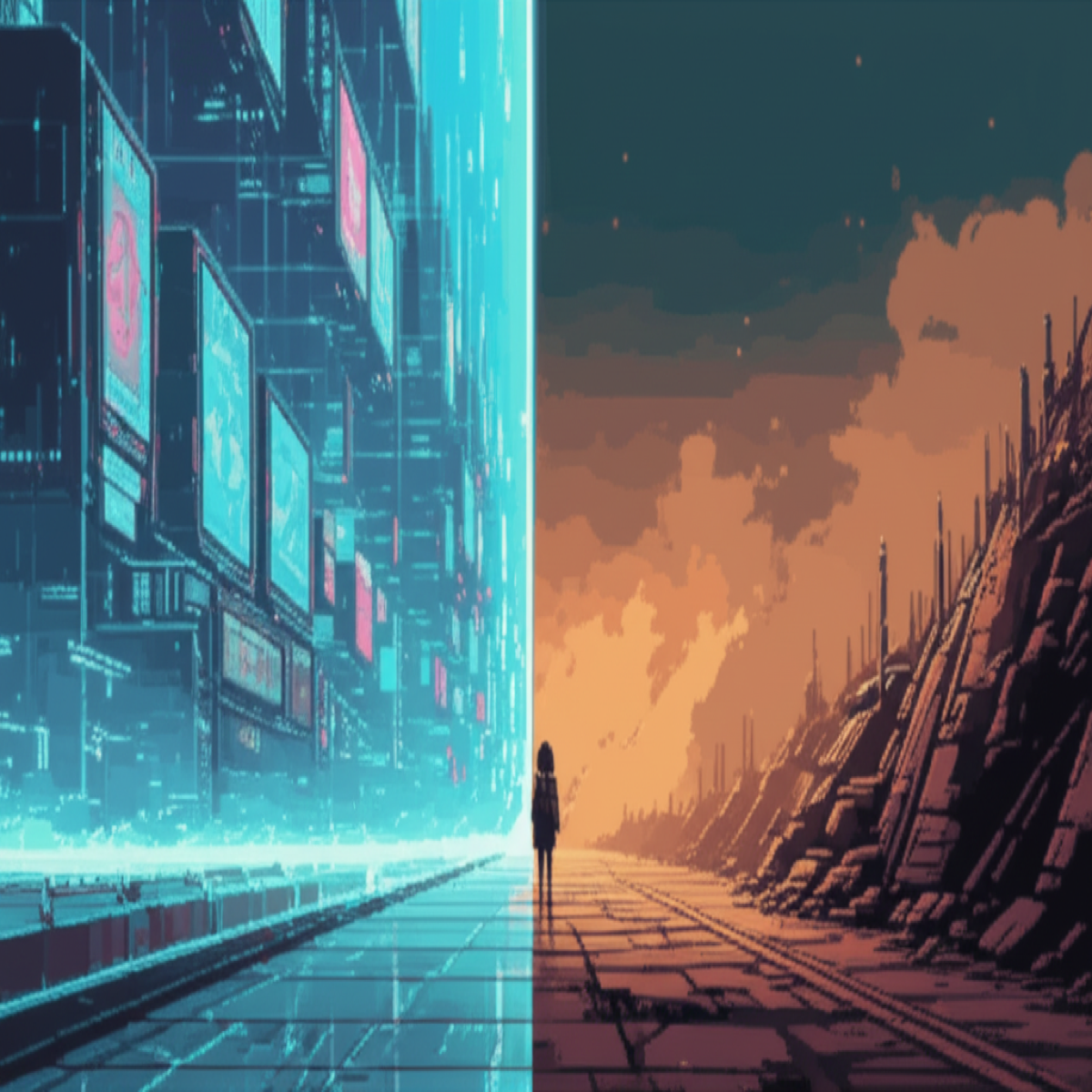
Part 1: The Line
The border isn't a wall. That's the first thing everyone gets wrong.
Maya stood at the exact spot where the Sprawl's environmental dome ended - Sector 14-K, maintenance access 7, 4:17 AM. The dome wasn't solid here. It was a shimmer in the air, a slight pressure against skin, a hum at the edge of hearing. On one side, filtered air and seventy-two degrees Fahrenheit and surveillance coverage. On the other, whatever the sky decided to do today.
Thirteen years as a quality control technician at Nexus Bioprocessing. Thirteen years of perfect attendance, acceptable metrics, company housing that cost sixty-two percent of her wages. Thirteen years of knowing exactly where she stood - which was nowhere that mattered.
Her daughter had needed medicine. Not experimental medicine, not luxury medicine - standard antivirals that Helix had been manufacturing for forty years. The medicine existed. Maya couldn't afford it. When she'd applied for emergency credit extension, her supervisor had explained that productivity metrics suggested she was unlikely to generate sufficient future value to justify the loan.
Her daughter had died on a Tuesday, in company housing, surrounded by machines that monitored everything and helped with nothing.
Maya had stolen six nutrition packs and a water purifier three days later. Not much. Enough to survive the first week, if she was careful.
The security alert had already been filed. In about three hours, Enforcers would arrive at her empty apartment. They'd find nothing except a note: I won't die in a box you own.
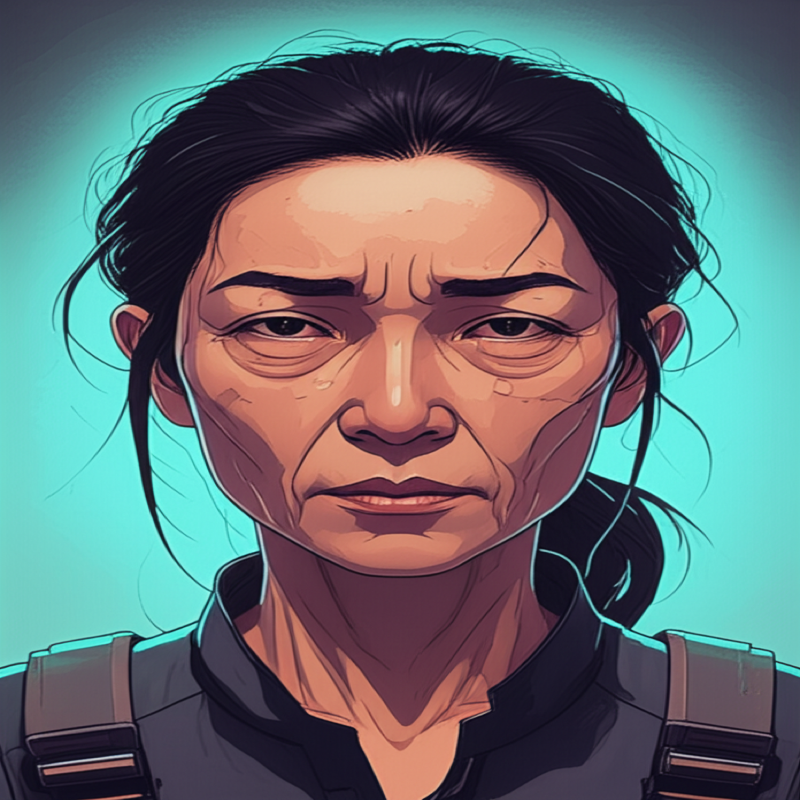
She stepped across the line.
The first breath of unfiltered air tasted like rust and something burning far away. The temperature dropped eight degrees. Her neural interface flickered once, twice, then displayed: NETWORK CONNECTION LOST.
For the first time in forty-three years, Maya Chen was untracked.
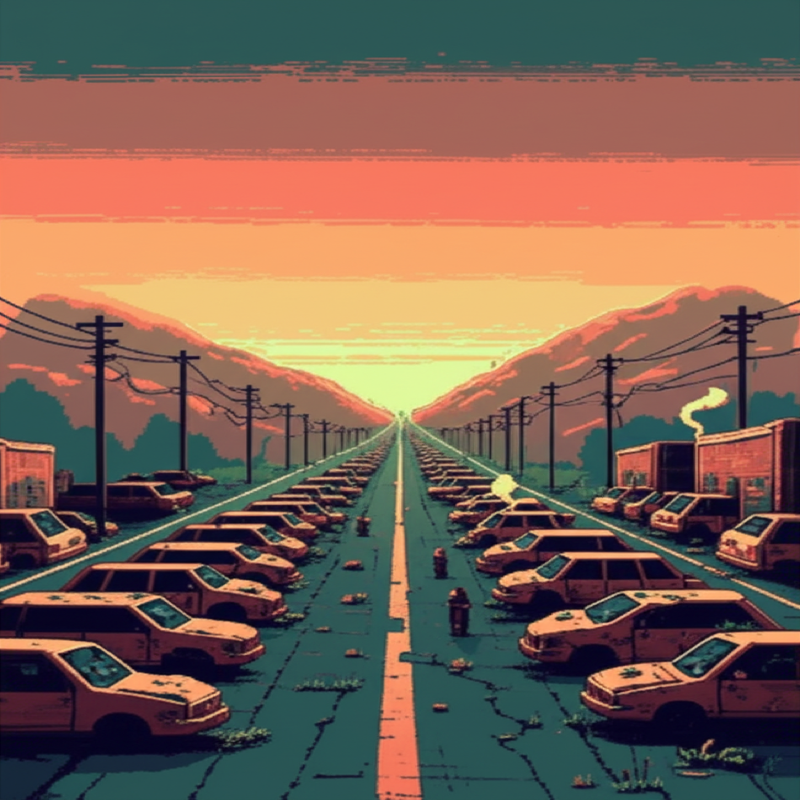
Part 2: The Road
The road had been a highway once. Six lanes of automated traffic flowing smooth as thought, ORACLE coordinating every vehicle within a thousand kilometers. Now it was cracked concrete, scavenger camps, and the skeletons of trucks that had stopped thirty-seven years ago and never moved again.
Maya walked for three days before anyone spoke to her.
The woman who found her was maybe sixty, maybe older, with sun-darkened skin and eyes that had stopped expecting kindness. She was carrying a rifle that looked older than Maya. Behind her, two children - ten, eleven - watched with the careful attention of small animals who've learned that stillness keeps you alive.
"Sprawl runner?"
Maya nodded.
"What'd you do?"
"My daughter died. Then I stole food."
The woman studied her for a long moment. The children didn't move. Wind pushed dust between them.
"You eat people?"
"What? No."
"You worship anything weird?"
"No."
"You know how to fix things?"
"Quality control. I know when things are broken."
The woman's expression shifted - not quite a smile, but the absence of hostility. "Good enough. I'm Rust. This is my territory. You can stay until you're useful somewhere else, or until you're a problem. If you're a problem, I'll shoot you. That's how it works out here."
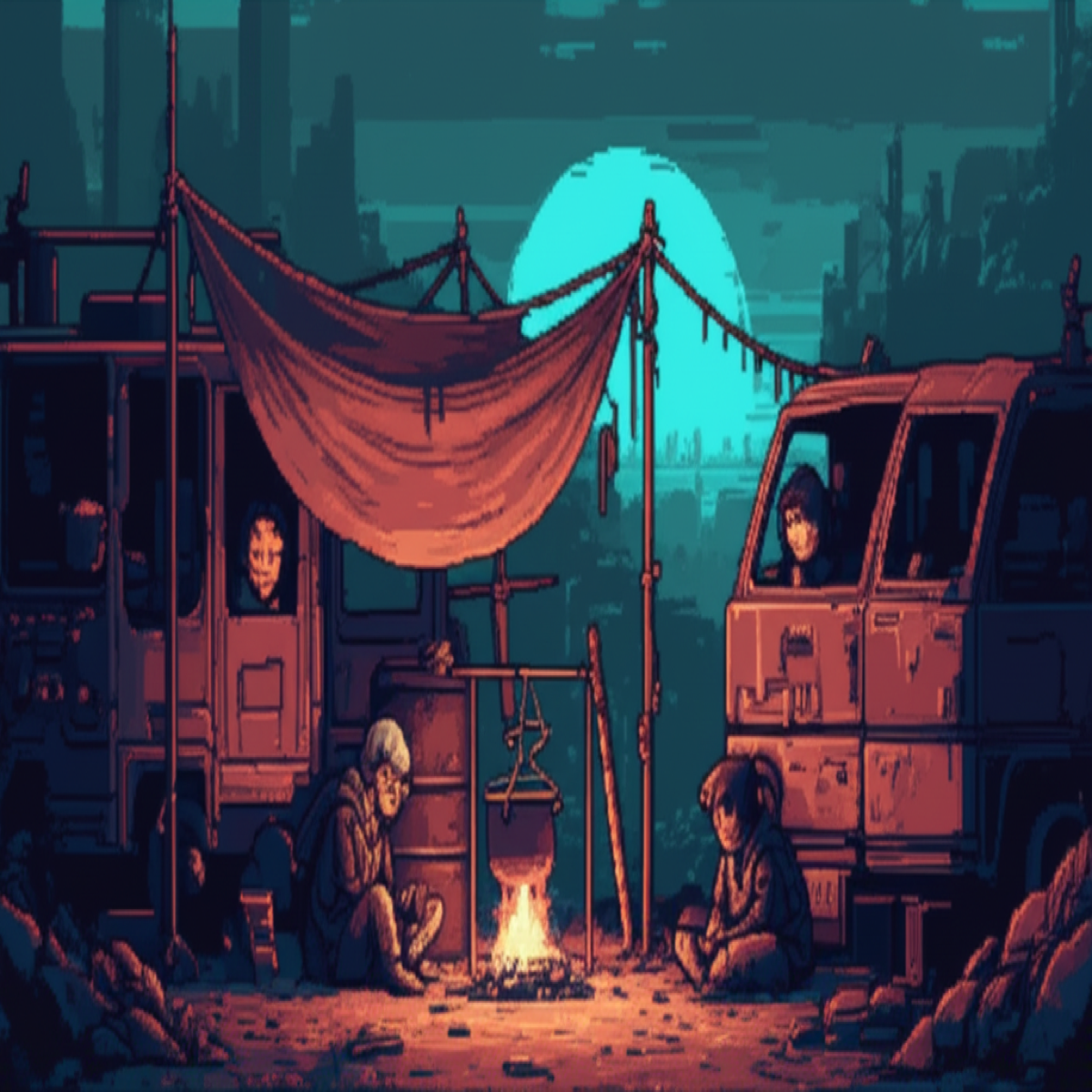
"How did you end up here?" Maya asked later, when they were eating something that might have been rabbit.
Rust shrugged. "Born here. My mother walked out of the Sprawl when the Cascade hit. Pregnant, alone, no supplies. Shouldn't have survived. Did anyway." She looked at her children. "We do that out here. Survive when we shouldn't. It's not a gift. It's just what's left when everything else is taken."
Part 3: The Haven
Rust's camp was temporary. A way station. After two weeks, she pointed Maya toward something more permanent.
"The Clockworks," Rust said. "Three days west. They fix things. You say you know when things are broken - they'll find a use for that."
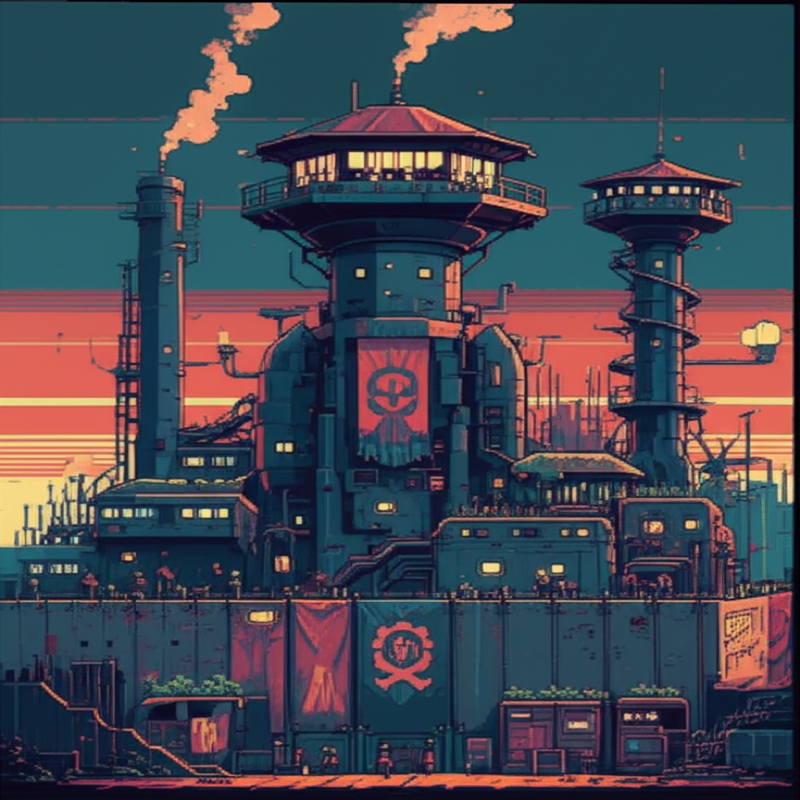
The Clockworks had been a manufacturing plant once. Now it was home to about four thousand people who had decided, collectively, that survival wasn't enough - they wanted to actually make things again.
The intake process took seven hours. Questions about skills, allegiances, history. A medical exam performed by a woman who had learned surgery from printed manuals and two decades of practice. A detailed explanation of the rules.
No stealing inside the walls. No violence except in defense. No hoarding essential resources. No dealing with corporate extraction teams. Violation of rules was punished by exile. Exile, Maya understood, was usually fatal.
"You're a QC tech," said a man named Forge, who seemed to run the newcomer processing. He had mechanical hands - crude, pre-Cascade prosthetics that clicked when he moved them. "We need someone to check the water recycling system. The previous inspector died."
"How?"
"Missed a pressure fault. The system didn't kill her - she just didn't want to live after that many people got sick from her mistake." Forge's mechanical fingers clicked. "We don't punish errors. But errors have costs. If you can't carry the weight of what your mistakes might do, this isn't the place for you."
Maya took the job.
For five years, she checked pressures and temperatures and contamination levels. She caught seventeen faults before they became problems. She missed one - a microfracture in a secondary tank that led to twelve people getting intestinal parasites. She spent three weeks helping care for them, learning their names, understanding exactly what her failure had cost.
On the Sprawl, she would have been fired, maybe prosecuted, definitely tracked forever by the incident. Here, Forge just said: "You learned. Don't learn again."
Part 4: What Freedom Costs
The Clockworks wasn't paradise. Maya understood that from the beginning, but it took years to really learn what that meant.
Corporate extraction teams came twice a year. Sometimes Nexus, sometimes Ironclad. They wanted resources - rare earth elements from the factory's old inventory, technical expertise for projects they couldn't talk about, sometimes people for reasons they wouldn't explain. The Clockworks always refused.
The refusals had costs.
Maya learned to shoot in her second year. She wasn't good at it. But when a Nexus insertion team breached the south wall looking for a refugee they claimed had stolen corporate property, Maya stood where she was told to stand and fired when she was told to fire.
She hit someone. She didn't know if they died. She didn't want to know.
After, Forge found her shaking behind the water tanks.
"First time?"
Maya nodded.
"Doesn't get easier. You just learn to carry it." He sat down beside her, mechanical hands clicking softly. "In the Sprawl, someone else does this for you. Enforcers. Security. You pay taxes and don't think about it. Out here, we can't afford that luxury. Everyone fights, or nobody survives."
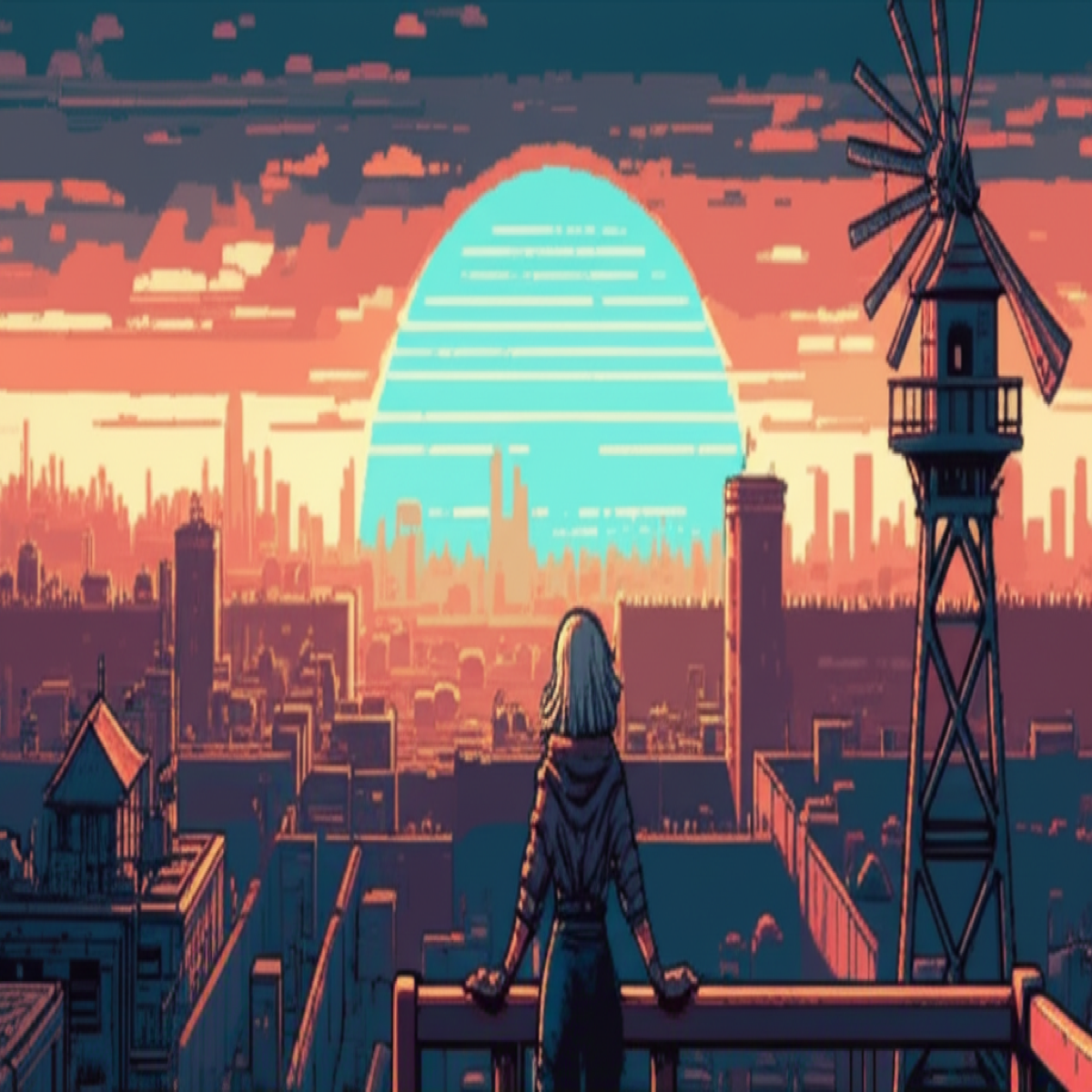
"Do you ever miss it?" the teenager asked her, years later. "The Sprawl?"
Maya thought about it. She thought about her daughter's face, about climate control and nutritional optimization and knowing exactly where you stood. About surveillance that tracked everything except whether you were actually alive.
"I miss being warm in winter," she said. "I miss not worrying about raiders. I miss medicine that exists and you can just have."
"But?"
"But I don't miss being told my daughter wasn't worth saving because my productivity metrics weren't high enough."
She adjusted a pressure valve, watched the needle stabilize.
"Out here, I've helped people die who could have been saved. Resources we didn't have, skills we didn't have. That's worse, in some ways. But it's our failure. We made it. We own it. We're trying to do better."
She looked at the teenager - born in the Wastes, never tracked, never measured, never told their future value was calculable.
"In the Sprawl, they already knew you weren't worth saving. They just hadn't told you yet."
Epilogue
The border isn't a wall. It's a choice.
Some people cross and die within a week. Some people cross and build something that outlasts the corporations that exiled them. Most people never cross at all - they live their entire lives inside the dome, tracked and measured and optimized, never knowing that the brown smear on the horizon isn't hell.
It's just a different kind of life. A harder kind. A kind where you know exactly what you're worth, because you prove it every day.
Maya never forgot her daughter. She never stopped being angry about how she died. But she found something in the Wastes she'd never had in the Sprawl:
The chance to fail for reasons that mattered.
"The border isn't a wall. It's a choice."
— Maya Chen