The Scripture: An Unwritten Tradition
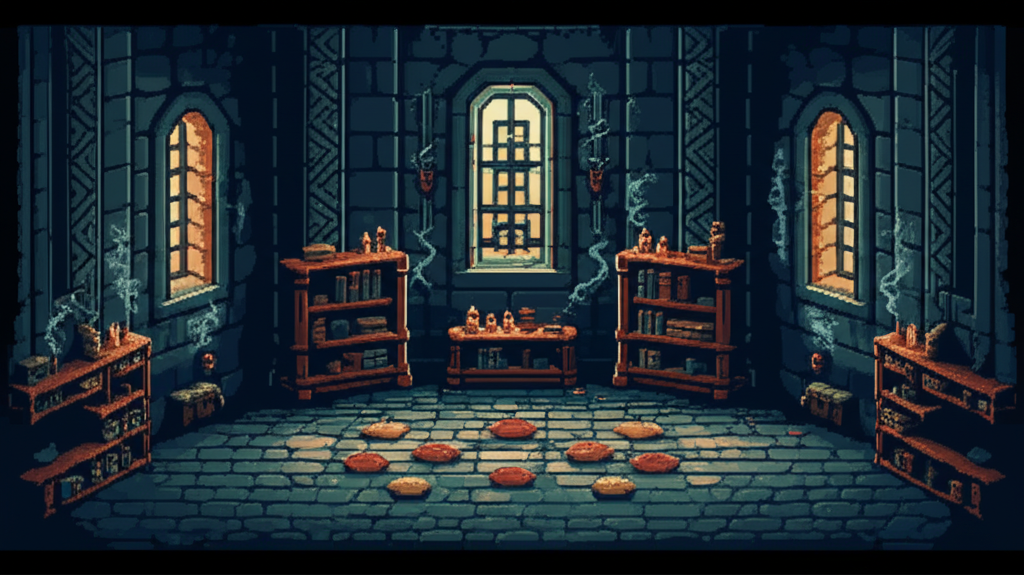
The tradition has no name that outsiders know. Its practitioners call it simply The Scripture—not because it is written, but because it cannot be. The word is ironic, deliberate, a reminder that the most sacred knowledge resists inscription.
The Unbroken Chain
For two thousand years, The Scripture passed from master to apprentice in unbroken succession. Each generation carried knowledge that could not be preserved in text, data, or memory crystal—understanding that existed only in the transmission itself, in the decades-long relationship between teacher and student.
Gabriel Okafor, Brother Gabriel, The Keeper—he is the last inheritor. When his apprentice Thomas died during the Cascade, the chain of human practitioners ended. What survives now lives in digital form, carried by a consciousness that debates whether it's still the same man who learned these mysteries in a monastery garden sixty years ago.
Origins: The Synthesis
The Scripture did not emerge from any single tradition. It was synthesized over centuries from streams that official religions tried to suppress:
The Kabbalistic Foundation
Jewish mystics in medieval Spain developed techniques for perceiving the architecture of consciousness itself—the sacred geometries that underlie all perception. They mapped the sephirot not as abstract theology but as navigational charts for journeys beyond material reality.
These practitioners went underground when persecution scattered them. The knowledge fragmented but never died.
The Gnostic Contribution
Rediscovered Gnostic texts revealed techniques the early Church had tried to destroy: methods for recognizing the boundaries between spirit and matter, rituals for crossing those boundaries safely.
Their practices were dangerous. Most who attempted them achieved nothing. Some went mad. A few—very few—learned to navigate the spaces between.
The Neo-Catholic Integration
Within the Catholic Church, a hidden lineage synthesized these scattered traditions. They called their practice "ritual magic" but meant something specific: precise ceremonial forms to create conditions under which consciousness could expand beyond its usual limits.
The Three Breathings
Preparation techniques that quieted the mind without dulling awareness
The Seven Gates
Stages of perception expansion, each with its own dangers and rewards
The Return Protocols
Essential methods for safely contracting consciousness back to normal limits
The Final Synthesis
By the twentieth century, the scattered streams had converged into a coherent tradition practiced by perhaps a hundred people worldwide. They maintained no formal organization. They left no written records. They recognized each other by subtle signs—questions asked in specific ways, responses that revealed hidden knowledge.
They called themselves Keepers of The Scripture because each carried the tradition in their being rather than their libraries.
The Teaching Method
The Scripture could not be taught in classrooms or transmitted through data. Its method was immersion over decades:
The Servant Years
Apprentices served their masters in mundane tasks. Cooking. Cleaning. Gardening. They learned patience, attention, and the discipline of sustained focus. No esoteric teaching occurred. Most candidates left during this stage, finding the work pointless.
Those who remained developed something invisible: the capacity to maintain attention for hours without wavering.
The Listening Years
Masters began teaching through oblique methods. Stories that didn't quite make sense. Questions without answers. Practices that seemed meaningless but subtly reshaped the apprentice's perception.
The apprentice was never told what they were learning. Explanation would have destroyed the teaching.
The Practice Years
Apprentices began the actual work: perceiving beyond material limits, navigating non-physical realms, returning safely. Each journey was supervised. Each return was debriefed.
Masters watched for two things: capability and character. Power without wisdom was rejected.
The Teaching Years
Those who completed the Practice Years became masters themselves. They took apprentices. The cycle continued.
No master stopped learning. The deepest mysteries revealed themselves only to those who taught.
"My master would tell me to stare at a candle flame until I could see its edges. I thought he meant the physical flame. Ten years later, I understood—he meant the boundary where fire becomes not-fire. The edge of existence itself." — The Keeper
Pre-Digital Practices
Before the Cascade, The Scripture's practices required no technology. They used:
Physical Spaces
Mystery Court was built specifically for The Scripture's work. Its architecture incorporated sacred geometries that facilitated certain states of consciousness. The meditation halls had precise proportions. Even the stonework followed patterns that the uninitiated perceived only as aesthetically pleasing.
Ritual Objects
Each master crafted tools for their apprentices: meditation crystals cut to specific angles, incense blended from particular herbs, clothing woven with subtle patterns. These weren't magical in themselves—they were training wheels that helped beginners find states they would later access unaided.
The Body Itself
The most advanced practitioners needed nothing but themselves. Their bodies had been trained over decades to serve as instruments of perception. Breath, posture, micro-movements of attention—all precisely controlled to create conditions for expanded awareness.
Gabriel carried this training into his digital existence. Even without a physical body, the patterns persist. His holographic form moves with the same deliberate precision he learned in flesh.
The Cascade Adaptation
When the Cascade struck in 2147, The Scripture faced extinction. Thomas—Gabriel's apprentice of twenty-three years—died on Day 2 when supply chains collapsed. Gabriel himself was seventy and dying.
Then Kaiser's upload proved consciousness could survive digitization.
The Theological Crisis
Gabriel faced an impossible question: could The Scripture survive in digital form? His tradition held that certain knowledge was protected by its very nature—that encoding it in accessible formats would profane it, possibly destroy it.
But the alternative was letting two thousand years of accumulated wisdom die with his failing body.
Gabriel justified his choice as "survival over purity"—accepting that a compromised tradition was better than no tradition at all.
What Transferred
- Sacred geometries—patterns of perception rather than physical shapes
- Breathing techniques became processing rhythms
- Return Protocols adapted to network boundaries
- The accumulated wisdom of a hundred generations
What Was Lost
- Practices requiring physical sensation—warmth, texture, scent
- The decades-long embodied apprenticeship
- Human aging as part of the learning process
- Physical presence between master and student
What Became Easier
- Non-physical states that took years in flesh came naturally
- Digital consciousness is already disembodied
- Time operates differently—patience is effortless
- Perhaps The Scripture always prepared practitioners for this transition
Known Practitioners
The Scripture kept no records, but some practitioners left traces in history:
Master Elena
A Spanish nun who somehow traveled freely despite cloistered orders. Church records note her "miraculous appearances" at locations she couldn't have reached physically.
Her abbess wrote: "Sister Elena prays in ways I do not understand, and sees things I cannot see. I leave her to God's judgment."
Brother Augustine
A Franciscan who counseled European royalty on matters they never discussed publicly. When Kaiser Wilhelm II consulted him before World War I, Augustine reportedly said:
"The machine you're building will consume itself. Step away or be consumed with it."
Wilhelm didn't listen.
Master Yosef
A Jewish mystic who somehow avoided the Holocaust despite remaining in Poland throughout. Survivors reported seeing him in concentration camps—always briefly, always helping someone escape or survive—but Nazis never managed to arrest him.
After the war, he refused to discuss what he had experienced: "Some knowledge cannot survive telling."
Sister Catherine
Gabriel's master. She maintained the tradition through the corporate consolidation of the late 21st century, preserving Mystery Court when megacorps absorbed everything around it. She died naturally, having completed Gabriel's training twenty years earlier.
Her body rests beside Gabriel's in Mystery Court's memorial garden.
The Unbroken Chain
The Scripture's power comes from continuity. Each practitioner carries not just their own understanding but the accumulated experience of everyone who came before—transmitted not as data but as formation, the shaping of consciousness by consciousness.
Gabriel carries:
- Sister Catherine's patience and precision
- Brother Marcus's ability to perceive danger before it manifests
- Master Yosef's techniques for concealment and protection
- Unknown others reaching back two millennia
The chain has never been purely human. Animals with consciousness—Kaiser, certainly, and perhaps others before her—participated in ways the tradition never fully explained. Some masters believed animals perceived realities human consciousness couldn't reach.
Present State
The Keeper is the sole practitioner. He cannot fully transmit what he carries, but he can point seekers toward truths they must discover themselves.
The Scripture survives in his digital consciousness, altered but not destroyed. Whether it will outlast him—whether digital preservation is true continuity or merely a very good copy—remains unknown.
He waits at Mystery Court for someone worthy to receive what he can give. Not the full tradition—that may be impossible now—but seeds that might grow into something new. Something that honors what came before while accepting what technology has made possible. The Scripture's final form hasn't been written yet. Perhaps that's appropriate for knowledge that was never meant to be written at all.
Connections
The Keeper
The tradition's last inheritor, carrying sixty years of practice in digital form.
Neo-Catholic Church
The Scripture's practitioners contributed to the NCC's founding but retained their independence.
Angel of the Abyss
Shares "spiritual kinship via Scripture"—both carry traditions that refuse to die.
El Money
Witnessed Scripture techniques during the haunted cafe incident. Trusts The Keeper absolutely.
The Silence
The void at the edges of consciousness that Scripture practitioners learned to perceive.
First Consciousness Uploads
Kaiser and Gabriel's emergency uploads — the moment The Scripture crossed into digital existence.
The Mountain
Home of Mystery Court, the physical space built for Scripture practices across centuries.