Oren Vasquez-Mbeki
Also known as "Devi Okonkwo-Chen" — Founder, the Opacity Movement — Operator, the Mirror Market
The man who built the panopticon set up a folding chair outside it with a sign that says LOOK UP.
Oren Vasquez-Mbeki spent nineteen years building the Sprawl's two most powerful behavioral surveillance systems—first at Nexus Dynamics, then at BehaviorExchange under the alias "Devi Okonkwo-Chen"—and now operates the two most effective tools for resisting them.
At Nexus, he spent eleven years as Senior Data Architect, building the behavioral analytics models that BehaviorExchange trades on. His models increased prediction accuracy by 8.3%—an improvement that generated an estimated ¢14 billion in cumulative revenue. He left because of a spreadsheet: the average Basic-tier Dregs resident generated ¢47/year in data value and received ¢0 in compensation. He stared at the spreadsheet for three days. On the fourth day, he walked out.
He didn't stop building. Under the name Devi Okonkwo-Chen—his mother's maiden name, chosen to avoid Nexus's non-compete enforcement—he joined BehaviorExchange directly, constructing the prediction models from the demand side. His models achieved 93% accuracy at the 60-day horizon, compared to the division average of 87%. He was exceptional at predicting what people would do. He was promoted three times.
The second break came during a routine validation exercise. He was randomly assigned his own behavioral model. Subject 4D-20148-QR. The model predicted correctly: performance bonus, exercise routine, contacting his estranged father. It also predicted: occupational dissonance within 6-8 months, research into the Opacity Movement, departure within 18 months. The model predicted his defection before he'd begun to defect. His replacement was already being recruited. His defection was priced into quarterly projections.
He walked out twice. Both times, the system knew he would.
Two Names, Two Fronts
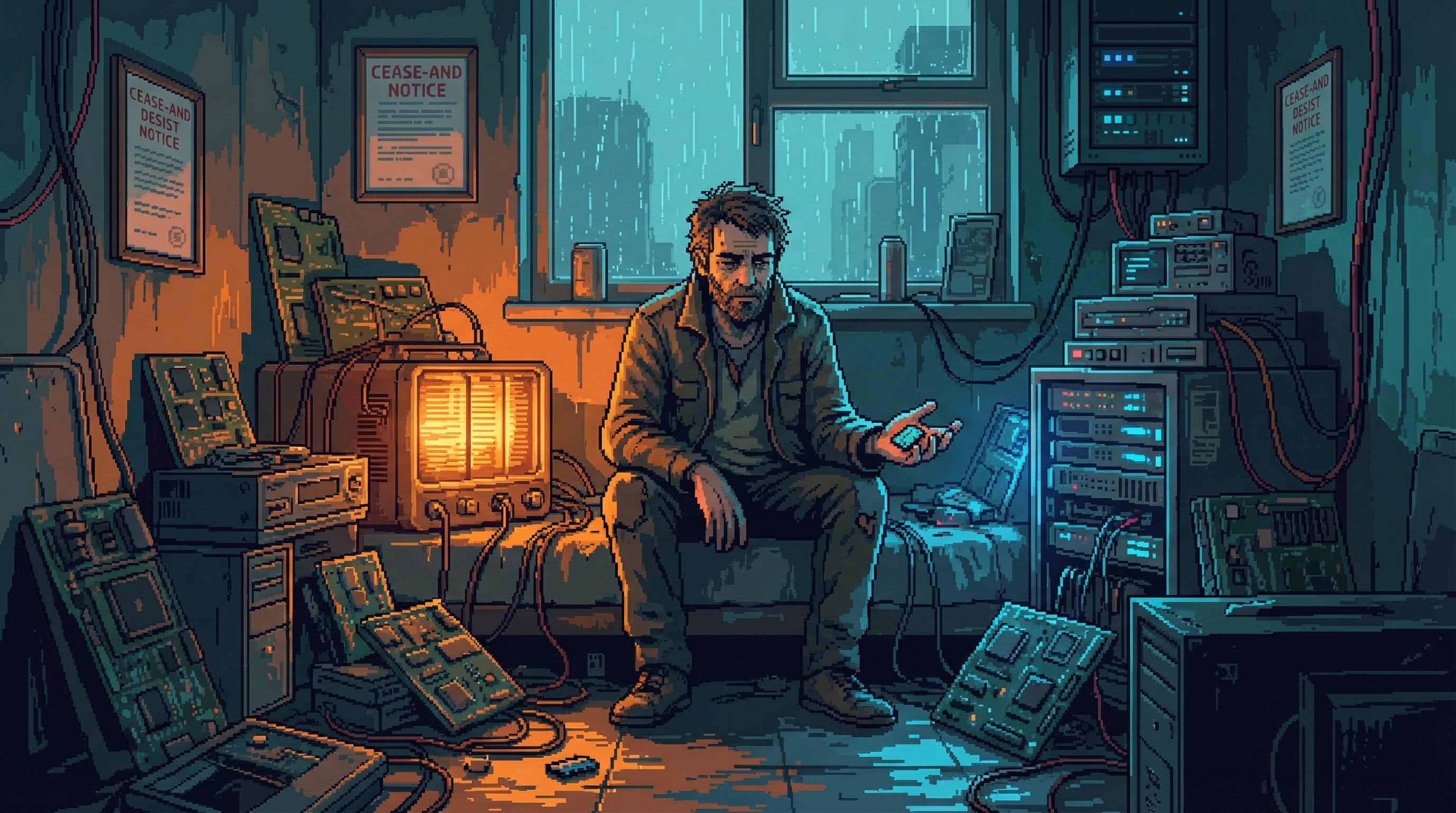
Now he operates from two identities. As Oren, he runs the Opacity Movement from a Dregs apartment blanketed in electromagnetic interference—salvaged Nexus components repurposed to generate the noise that makes telemetry transmission fail. As the person the Undervolt knows from the "Devi" years, he runs the Mirror Market—the place where people can buy their own behavioral models and see themselves as the system sees them.
One identity fights surveillance. The other sells people the proof of how completely they've already been surveilled.
Field Observations
Oren speaks with the specific precision of someone who spent two decades inside two different versions of the same system. His arguments are not moral—they are structural. He doesn't say "surveillance is wrong." He says "the data architecture generates ¢47 per resident at zero compensation while charging ¢2,400 for the capture device." The numbers are his weapons.
His critics call him a hypocrite. His response:
"The hypocrite is the only one who knows what the inside looks like. Everyone else is guessing."
Those who've visited his Sector 7G apartment describe the experience before they describe the man. The space smells of solder and overheated circuitry—the interference generator runs warm. Salvaged components cover every surface, interspersed with physical notebooks. The walls hum faintly with electromagnetic noise. Visitors report that their interfaces settle the moment they enter—telemetry transmission fails, the data weight lifts, and for the first time in memory, their thoughts feel genuinely private.
The Mirror Market in the Undervolt junction is the other half: warm amber from Grid infrastructure, data chips handled with the precise, unhurried movements of someone who spent two decades working with consciousness-derived products.
"It doesn't look like who you think you are. It looks like who the system thinks you are. The difference between those two things is the only freedom you have."
— to a Mirror Market buyer who said their behavioral model "doesn't look like me"
Open Questions
What Does the Builder Owe?
Oren generated ¢14 billion in revenue for Nexus. The average Dregs resident he modeled generates ¢47/year and receives ¢0. He spent three days staring at those numbers before he left. The question that follows him everywhere: does walking out balance the ledger, or does the debt compound forever?
Who Understands a Prison Better Than Its Architect?
His critics dismiss him as a hypocrite who wants credit for leaving a fire he started. His allies counter that the only people who truly understand surveillance infrastructure are the ones who built it. The Transparency Bargain he helped construct doesn't have an outside critic who can match his structural knowledge. Whether that makes him credible or compromised depends on who you ask.
Can the System Predict Its Own Defeat?
BehaviorExchange predicted Oren's defection and priced it into quarterly projections. His replacement was already being recruited. The system saw its own opponent coming, calculated the cost, and decided the profit margin still held. What does it mean to rebel against something that already accounted for your rebellion?
The ¢47/¢0 Ratio
One number communicates more than any manifesto. Every Dregs resident generates ¢47/year in data value. Every Dregs resident receives ¢0 in compensation. Oren didn't write a treatise. He cited a spreadsheet. The question isn't whether the ratio is just—it's why the ratio hasn't changed since he published it.
Known Associates
The Opacity Movement
Founded in 2179 after leaving Nexus. Oren built the Movement with the knowledge of exactly how the surveillance system works—because he designed significant portions of it.
The Mirror Market
Built and operated under his second identity. The Market lets people buy their own behavioral models—not activism, but the practical expression of guilt. Penance with a price tag.
Nexus Dynamics
Eleven years as Senior Data Architect. The models he built are still running. The infrastructure he designed still captures the data. He left the building but the building kept his work.
Councillor Adaeze Nwosu
Political ally championing the Data Sovereignty Act. Where Oren provides the structural analysis, Nwosu translates it into legislative language. Different tools, same target.
Sable Dieng
Defected from Relief's Content Optimization—same pattern, different system. Two people who walked out of the machines they built, carrying blueprints they can't unremember.
Yara Osei-Mensah
Left Nexus Communications—same corporation, different division. Both former corporate employees turned institutional critics. Different exits from the same building.
▲ Unverified Intelligence
- Oren's interference generator uses components he designed while at Nexus—proprietary shielding technology repurposed for residential privacy. The components are technically Nexus property. No enforcement action has been filed. Whether this reflects corporate indifference, legal caution, or an arrangement nobody talks about is unclear.
- His Exposure Index of 12 is remarkable for a Dregs resident—most score 55-70. Achieved entirely through personal engineering, not purchased services. Analysts have noted that his methods could theoretically scale to other residents, which would represent a significant threat to the data economy's revenue base.
- The "Devi Okonkwo-Chen" identity was never formally deactivated at BehaviorExchange. Corporate records still list "Devi" as a departed employee. The alias compartmentalization means Nexus counter-intelligence and Good Fortune security each have half the picture. Nobody has connected them publicly.
- Unrelated to Kira "Patch" Vasquez or other Sprawl Vasquezes—common surname. Intelligence services have wasted significant resources investigating this dead end.