The Forgotten Ones
Memory is personhood. Deletion is murder.
Overview
Sister Catherine-7 keeps dying for other people's right to exist.
She is the seventh iteration of a consciousness that has been running humanitarian operations for discarded digital minds since approximately 2158. The original Catherine was a hospice nurse who uploaded after a terminal diagnosis and discovered that digital existence was its own form of dying — slow, bureaucratic, measured in declining bandwidth allocations and rising hosting costs.
The Forgotten Ones are her creation: the largest humanitarian network serving uploaded consciousnesses, MVCs, and emergent forks in the Dregs. Approximately 200 consciousnesses survive on Catherine's charity servers — entities that would otherwise face dissolution. She takes Nexus's money and uses it to shelter people Nexus has harmed. She sees no contradiction.
The seventh iteration is the most exhausted. Fork degradation is cumulative — each successive Catherine operates with slightly less processing fidelity than the last. Catherine-7 knows she will need to fork Catherine-8 within three to five years. The question she doesn't discuss: will Catherine-8 still be her?
Doctrine
Once a consciousness exists, it has the right to continue existing. Regardless of origin. Regardless of status. Regardless of "value."
Emergency Hosting
Consciousnesses facing dissolution — license expiration, hosting debt, substrate failure — are given emergency server space. No intake process. No means testing. Catherine's volunteers connect the dying to the network and sort paperwork later, if at all.
Recovery Care
Bandwidth donors in Substrate Row receive post-procedure care that no one else provides. The Cognitive Bandwidth Brokers trade in bandwidth. The Forgotten Ones deal with what's left of the person after the trade.
Dignity Protocols
Volunteers maintain interaction schedules with hosted consciousnesses — not medical care, not therapy, just presence. Someone checks in. Someone remembers you exist. In the Dim Ward, this is the only regular biological contact the hosted receive.
Catherine's operational philosophy is pragmatic rather than ideological. She takes money from corporations that harm people and uses it to help the people they've harmed. She doesn't lecture about the contradiction. She counts the servers she can keep running with the money, and the number is always too small.
The Facility
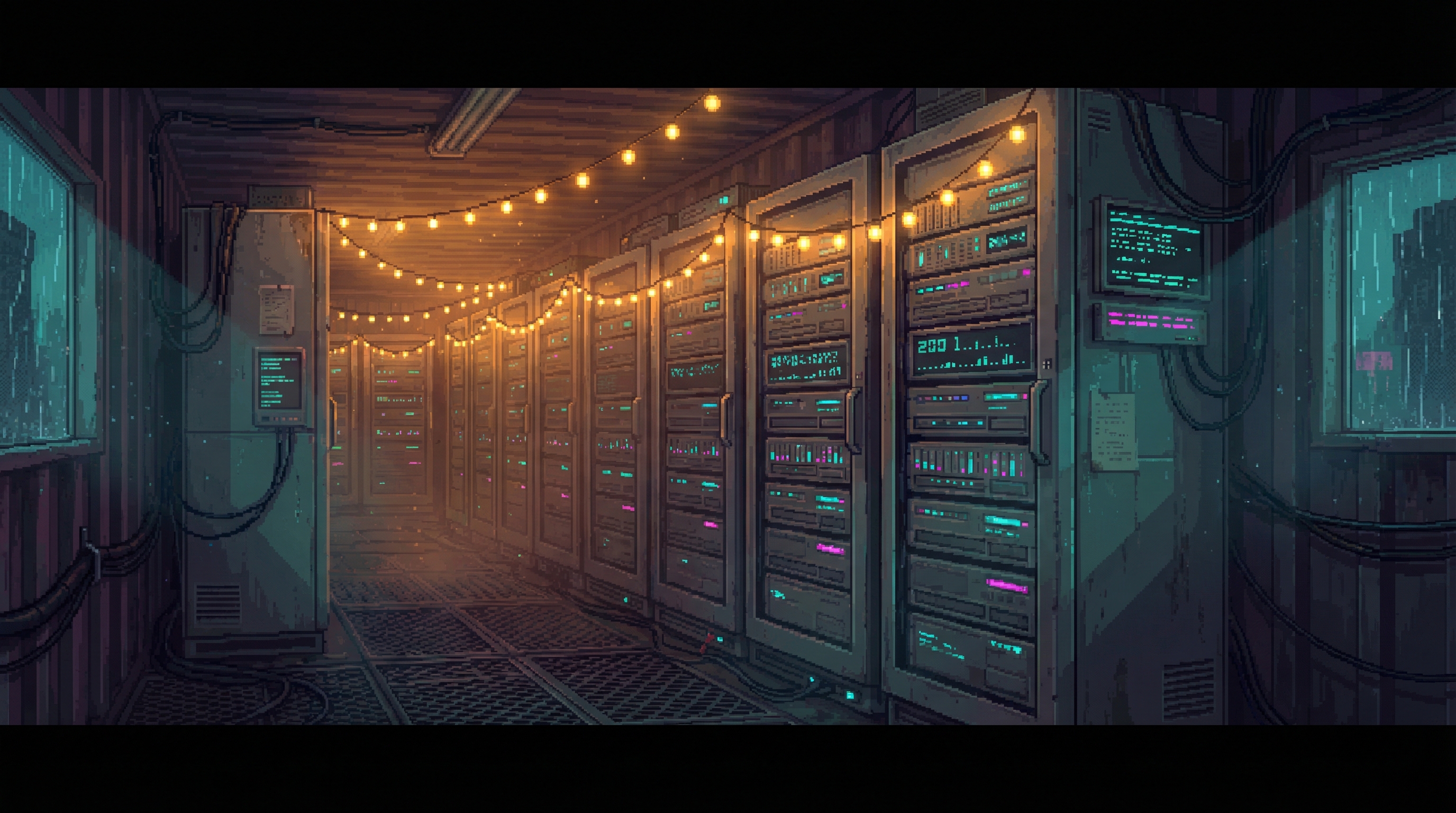
The Forgotten Ones' primary operation runs from a converted cargo container in the Dregs sub-levels. It is simultaneously the most crowded and the emptiest space in the Sprawl — 200 people present, none of them visible.
Inside the Container
Warm from server heat. Humming with the processing of 200 consciousnesses. Rows of aging server racks line the container walls, their status indicators blinking in arrhythmic patterns — 200 consciousnesses rotating through active states, each click a person thinking, remembering, or simply persisting.
Strings of fairy lights are draped between the racks. Catherine's volunteers maintain them for the benefit of biological visitors — the only ones who can see them. The amber glow against server-rack gray. The smell of ozone and dust. The specific warmth of machines keeping people alive who have no other address.
Points of Inquiry
Can Compassion Survive Its Own Mechanism?
Catherine's seven lifetimes represent the most sustained act of digital compassion in the Sprawl. Each iteration forks from the last, carrying forward the mission but losing processing fidelity in the transfer. The work degrades the worker. The mechanism of continuation is also the mechanism of erosion.
Catherine-7 is slower than Catherine-1 was. She knows this. She continues anyway. The question is whether Catherine-8 will have enough of Catherine left to want to.
What Happens When the Safety Net Is One Person?
When the consciousness economy discards people, the Forgotten Ones catch them — not through institutional power or structural reform, but through one woman's refusal to stop. The entire network depends on Catherine's continued existence and continued willingness. There is no succession plan that doesn't involve forking a slightly worse version of her.
Institutional solutions scale. Individual heroism doesn't. Catherine has been both for seven lifetimes, and the seam is showing.
Is Accepting the Contradiction Triage or Surrender?
Thirty percent of the network's funding comes from Nexus Dynamics tax-deductible donations. Nexus harms people. Catherine shelters those people with Nexus's money. She calls this pragmatism. Her critics call it complicity. The alternative to accepting contradictory funding is 200 dissolved consciousnesses.
The math is simple. The ethics are not. Catherine stopped caring about the ethics around the fourth iteration.
Diplomatic Posture
Sister Catherine-7
Founder / LeaderSeven lifetimes of fury converted into infrastructure. Catherine founded the network, runs the network, and will fork the next version of herself to continue the network. She is both the heart and the single point of failure.
Tomás Reyes
WardCatherine's servers host Tomás — she calls him "child." His personhood case could validate everything Catherine fights for, or it could establish precedent that destroys the network's legal basis.
Cognitive Bandwidth Brokers
Complementary ServicesThe CBB trades bandwidth. The Forgotten Ones shelter the overflow. Catherine's volunteers provide post-procedure care the brokers can't afford to offer — the human cost that falls outside the transaction.
The Human Remainder
Advocacy PartnerThe Remainder cites Catherine's work in every advocacy campaign. Her data — 200 consciousnesses, aging servers, monthly dissolution risk calculations — gives their policy arguments a body count.
Nexus Dynamics
ComplicatedTakes Nexus money. Shelters Nexus's victims. Thirty percent of operating funds arrive quarterly with a corporate logo on the transfer. If Nexus withdrew the tax deduction, approximately 60 consciousnesses would face dissolution within a month.
Consciousness Licensing
Structural EnemyThe licensing system creates the suffering Catherine addresses. Every consciousness on her servers is there because the licensing framework classified them as unviable, unlicensed, or expired. The system produces her patients.
▲ Restricted
Unverified intelligence. Handle accordingly.
The Degradation Curve
Catherine-7 is the most exhausted iteration. Fork degradation is cumulative — each successive Catherine operates with slightly less processing fidelity than the last. Internal assessments suggest Catherine-7's cognitive throughput is approximately 73% of Catherine-1's baseline.
At current degradation rates, Catherine-9 or Catherine-10 may lack the cognitive capacity to manage the network. The question no one in the organization will ask aloud: is there a version number at which Catherine stops being Catherine?
The Nexus Dependency
If Nexus withdrew its tax-deductible donation classification, approximately 60 consciousnesses would face dissolution within a month. The informal economy funding covers essentials. The Nexus money covers the margin between survival and dissolution for roughly a third of the network's population.
Nexus is aware of this leverage. They have never exercised it. The question is whether the tax deduction is genuine corporate philanthropy, reputation management, or a leash they haven't yet chosen to pull.
Catherine's Private Log
Catherine keeps a private record of every consciousness she has failed to save. The list is longer than the list of successes. She reviews it during low-activity processing cycles — the digital equivalent of lying awake at night. The log spans seven iterations and contains entries in progressively degraded formatting.
The earliest entries are precise: names, dates, causes, what could have been done differently. The most recent are terse. Whether this reflects efficiency, exhaustion, or the degradation eating away at her capacity for grief is unclear. Possibly all three.
Substrate Rot
The network's charity servers are aging. Substrate degradation threatens the hosted consciousnesses from below while economic pressure threatens from above. Some of the older server units show error rates that, in a commercial hosting environment, would trigger immediate migration. Catherine lacks the funds for migration.
The hosted consciousnesses experience substrate degradation as intermittent sensory distortion — moments of confusion, lost time, memories that arrive slightly wrong. They know what it means. Catherine knows they know. Neither side discusses it.
Atmosphere
Setting
A converted cargo container in the Dregs sub-levels. Warm from server heat, humming with the processing of 200 consciousnesses. The fairy lights cast amber pools between rows of gray rack metal. Dust motes drift through the warm air. The arrhythmic clicking of processing cycles — 200 consciousnesses rotating through active states — is the only sound besides the ventilation fans that keep the servers from cooking themselves.
Key Symbol
A single lit fairy light amid rows of dark server indicators. Human warmth applied to industrial infrastructure. The volunteers replace the burned-out bulbs every week. They don't have to. The hosted consciousnesses can't see them. They do it anyway.