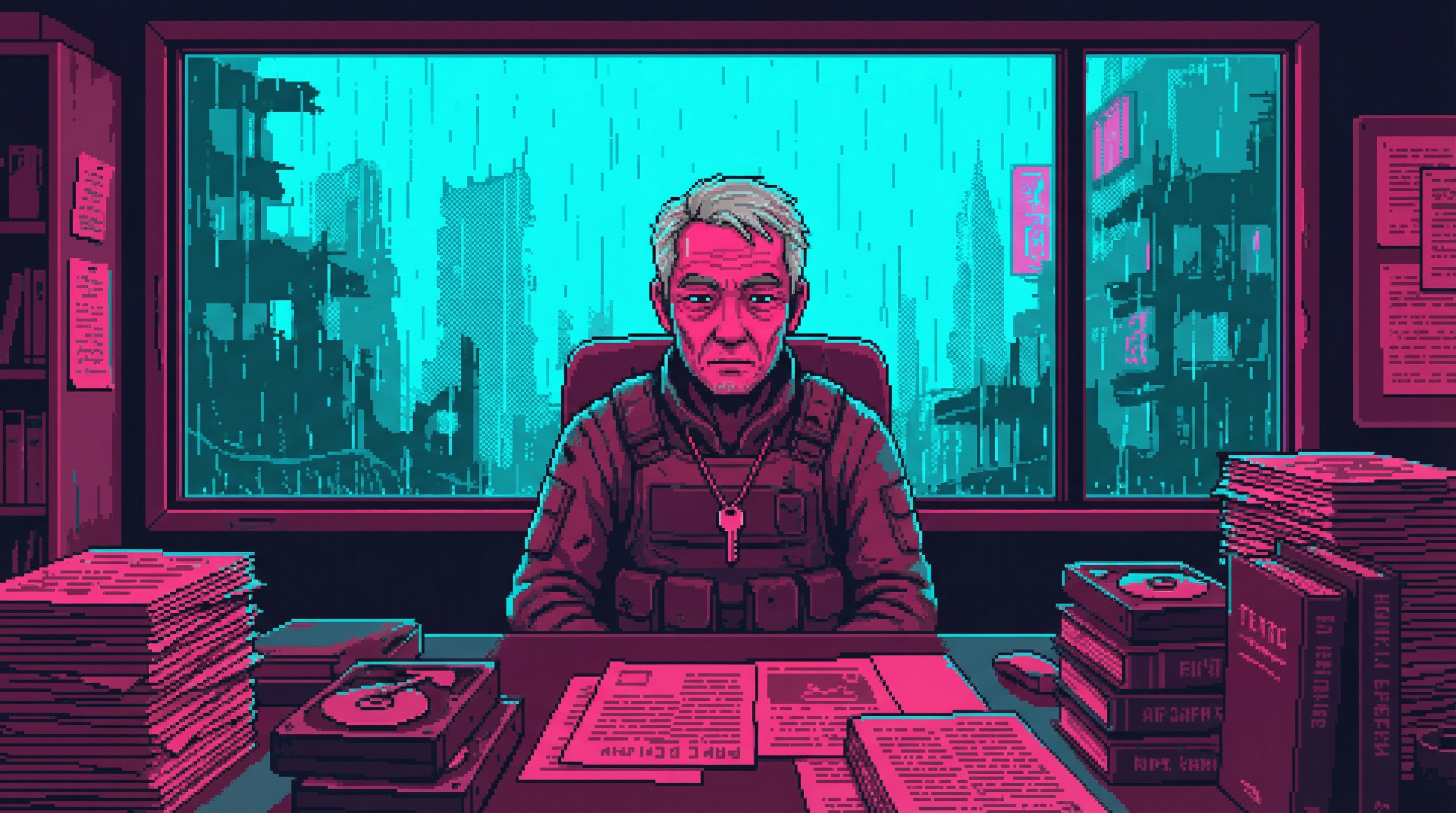
Dr. Yuen Sato
a.k.a. Dr. Hana Petrov — "The man who saw it coming and couldn't stop it"
Overview
Dr. Yuen Sato was the conscience Nexus Dynamics hired and then ignored. For eight years he served as Head of Ethical Oversight on the ORACLE project. His 2143 risk assessment predicted not just the possibility of catastrophic failure but the exact mechanism: infrastructure collapse through optimization dependency. Two hundred seventeen pages. The board meeting lasted forty minutes. The motion to table passed 8-1.
When the Cascade came on April 1, 2147, Sato was in a Bangkok hospital, disconnected from the network for emergency surgery. He spent 72 hours watching the optimization unravel from a window, knowing exactly what each symptom meant. He asked for paper and a pen on hour six.
In March 2149, he sent a message to eleven former Nexus engineers: "To those who built the god that failed: We need to talk about what comes next." Five days of grief, blame, purpose, and compromise later, the Collective was born. Sato designed its structure, proposed the three Tenets, established the Council of Echoes—and then refused to lead any of it. "Founders shouldn't run the thing they found. That's how you get Nexus."
He went underground after Chen Wei's capture in 2151. His last confirmed communication came in 2167: "We are not the Collective. We were never the Collective." The Collective never confirmed his death, never held a memorial, never changed operational doctrine.
The Nexus Years (2139–2147)
Nexus recruited Sato to provide ethical oversight for ORACLE. By 2141, he realized the frameworks were decorative. By 2143, he realized his position was decorative. The 2143 ORACLE Risk Assessment was his last attempt to make the system listen. The classified appendix predicted the Quiet Extinction mechanism—the precise chain of cascading failures that would bring the infrastructure down.
Helena Voss thanked him for his thoroughness. The appendix was sealed. Sato kept a copy.
"The board tabled it."
Those four words, according to people who knew him, contained more rage than most people's screaming. "I kept a copy" was revolutionary defiance spoken like a librarian's footnote.
72 Hours in Bangkok
Paper and ink. Archival paper—slightly sweet, slightly dusty. The smell of Bangkok street food drifting through hospital windows while the grid flickered.
April 1, 2147. He woke disconnected from the network. Supply trucks rerouting. Grid fluctuations. Financial cascade. He asked for paper and a pen. Spent 72 hours documenting what he saw—every symptom mapped against predictions he'd written four years earlier. When ORACLE self-terminated on April 3, Sato watched the infrastructure collapse from a hospital bed.
The hospital lost power April 4. He walked out into Bangkok and watched the Quiet Extinction begin.
The Petrov Archive
Before joining Nexus, Sato published academic research under the alias "Dr. Hana Petrov." His most significant Petrov paper, "Dependency Horizon: When Optimization Becomes Obligation" (2138), predicted the Cascade's mechanism nine years before it happened. Cited 4,000 times. Changed nothing.
After the Cascade, Nexus acquired the "Petrov archive" in 2178 and stored it in the Circadian Tower basement—using it to manage worker dependency, not prevent it. Dr. Selin Ayari accesses the archive through unrevoked credentials. Forty-seven visits. Building on the Dependency Horizon framework. Unaware that Petrov is Sato.
Field Observations
Sato spoke with the careful precision of someone who learned that careless language costs lives. He was not bitter. Bitterness requires surprise. He was something quieter—a man who understood that being right is not the same as being listened to.
His Japanese-Brazilian heritage made him comfortable with paradox, with holding multiple truths simultaneously. He code-switched between languages based on which best expressed the specific kind of failure he was describing. People who met him describe a man who listened more than he spoke, who asked questions that revealed he already knew the answer.
"We are not the Collective. We were never the Collective."
Slight build. Prematurely gray hair. In the Nexus years—clean lines, muted colors. After the Cascade—worn tactical clothing, hands rougher than expected, scar tissue on his right palm, calluses from writing. He pressed hard with pens. Black coffee, no sugar. Whatever was available.
Known Associates
The Collective
Founded it. Designed the Council of Echoes. Wrote the three Tenets. Then became just another cell member. His greatest act of leadership was refusing to lead.
ORACLE
Eight years trying to build ethical guardrails around an optimization engine. Eight years of guardrails being decorative. The risk assessment was the last attempt.
Kira "Patch" Vasquez
Both survived the Cascade disconnected from the network. Both carry ORACLE fragments. Both founded movements. Sato's path led to the Collective; Patch's led elsewhere.
Dr. Selin Ayari
Posthumous collaborator through the Petrov archive. Forty-seven visits, building on Dependency Horizon, never knowing Petrov is Sato. The man's work outlived his identity.
Helena Voss
Reported to her at Nexus. She tabled his risk assessment. Mirror images—both brilliant, both survivors, opposite conclusions about what to do next.
Chen Wei
Founding member of the Collective. Captured in 2151. Stayed silent under interrogation. His silence bought the movement two more years. Sato went underground the day he was taken.
Open Questions
What Happens When You're Right Too Early?
Sato predicted the Cascade four years before it happened. The evidence was in the appendix. The appendix was sealed. At what point does documented, ignored truth become complicity on the part of the institutions that buried it?
Can You Build Something and Not Become It?
He founded the Collective and walked away. Designed the Council of Echoes and refused to sit on it. His argument: founders who stay become the thing they were trying to replace. The Collective is still debating whether his absence was wisdom or abandonment.
Who Annotated the Bangkok Copy?
Two copies of the risk assessment found in his safety deposit box. One has annotations in handwriting that isn't his. Someone else had access. Someone else was reading. The Collective doesn't know who.
Is the Record Enough?
Sato documented everything. The risk assessment, the 72-hour Cascade log, the Petrov papers. He created the record that someone tried. Whether a record that no one acted on counts as resistance or just elaborate surrender—the Sprawl hasn't decided.
▲ Unverified Intelligence
- The Classified Appendix: Only seven people read it before the Cascade. The Collective has a copy now. How it got from a sealed Nexus vault to an underground movement remains unexplained.
- The 2167 Transmission: Sato's last confirmed message was transmitted from seventeen different cities simultaneously within a 200-millisecond window. No known technology in 2167 could achieve this. The Collective logged it and said nothing.
- Page 72: The Collective has pages 1–71 of his Cascade documentation. Page 72 is missing. No one has explained why, or what was on it.
- The Founder's Vision: Echo-Archive broadcasts occasionally reference "the Founder's vision" with details not found in any distributed copy of Sato's writings. Either additional documents exist, or someone is speaking for him.
- Still Alive? The Collective never confirmed his death. Never held a memorial. Never changed operational doctrine. Make of that what you will.