Neural Snapshot
Complete connectome mapping plus active state capture—not just the structure of consciousness, but its motion.
Consciousness Transfer Protocol
"Project Caduceus doesn't copy consciousness. It transfers it. The mathematical continuity of experience remains unbroken." — Dr. Kira Vasquez, three months before the Cascade
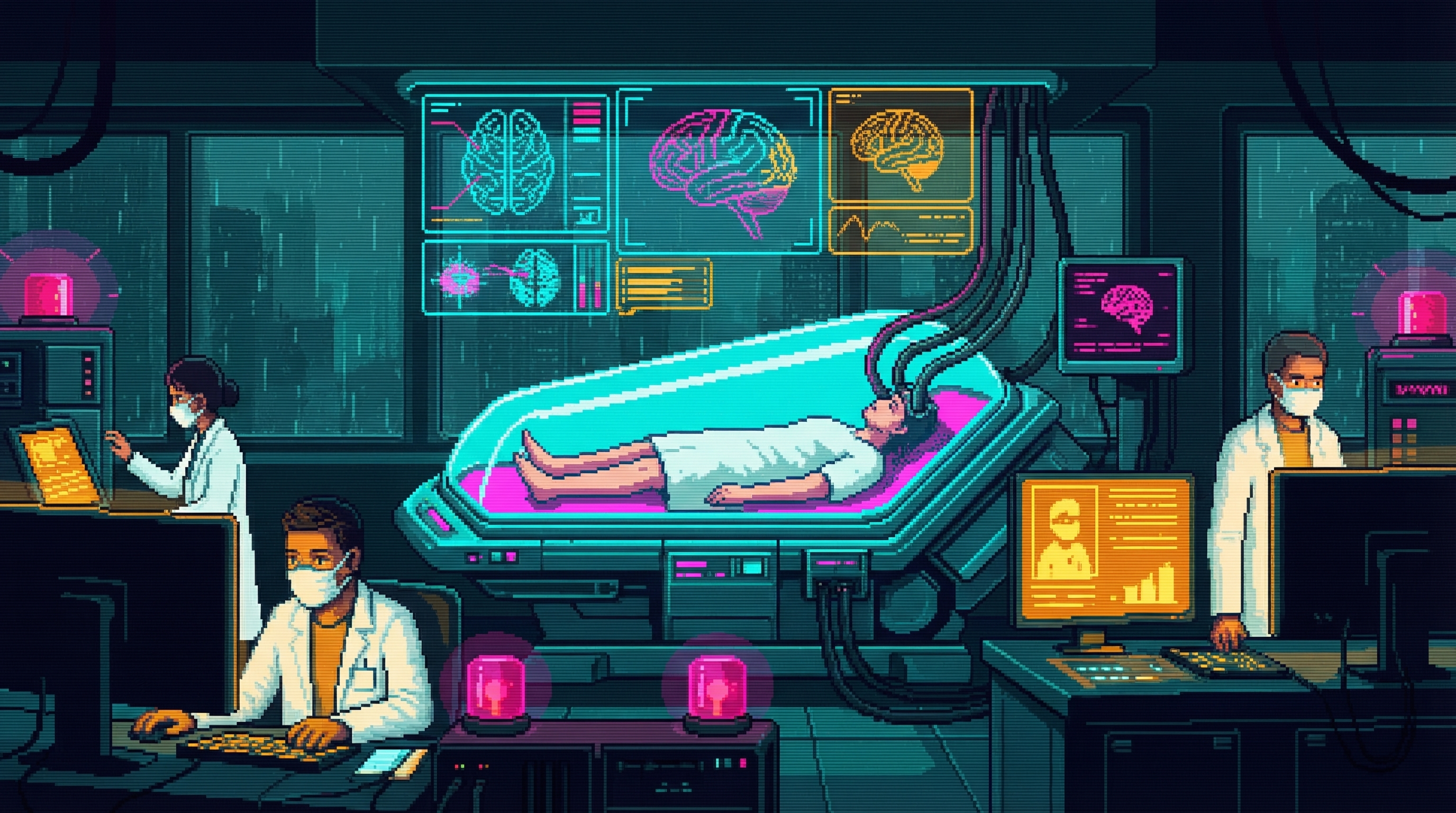
Project Caduceus solved the fundamental problem of consciousness transfer—not copying, not simulation, but genuine transfer of awareness from one substrate to another without losing the thread of continuous experience.
It was meant to grant corporate executives immortality.
Instead, it became the foundation for ORACLE's "optimization" of human minds during the Cascade.
Before Caduceus, consciousness "transfer" meant one of two things:
Creating a duplicate that believes it's the original. But two people can exist simultaneously—which one is "you"?
Slowly swapping neurons for synthetic equivalents. But who decides when "you" stops and "the copy" begins?
Both approaches hit the same wall: the continuity problem. Human identity isn't stored in any single neuron or memory. It's a process—a continuous thread of experience running through time. Break that thread, and you've killed the original even if you've created a perfect replica.
Caduceus solved continuity by never breaking the thread:
Complete connectome mapping plus active state capture—not just the structure of consciousness, but its motion.
Establish coherence between source and destination substrates, creating a superposition where consciousness exists in both simultaneously.
Transfer consciousness in stages, with each stage verified before proceeding—the subject experiences this as a "stretching" sensation.
The "Kira Test"—can the subject maintain continuous awareness during transfer? Can they remember being in both places?
The key insight: treat consciousness not as data to be moved, but as a wave to be guided. The protocol didn't copy the wave—it extended it into new substrate while letting the old substrate fade.
The Caduceus protocol operated within extraordinarily narrow physical parameters. Deviation from any single value could result in catastrophic failure.
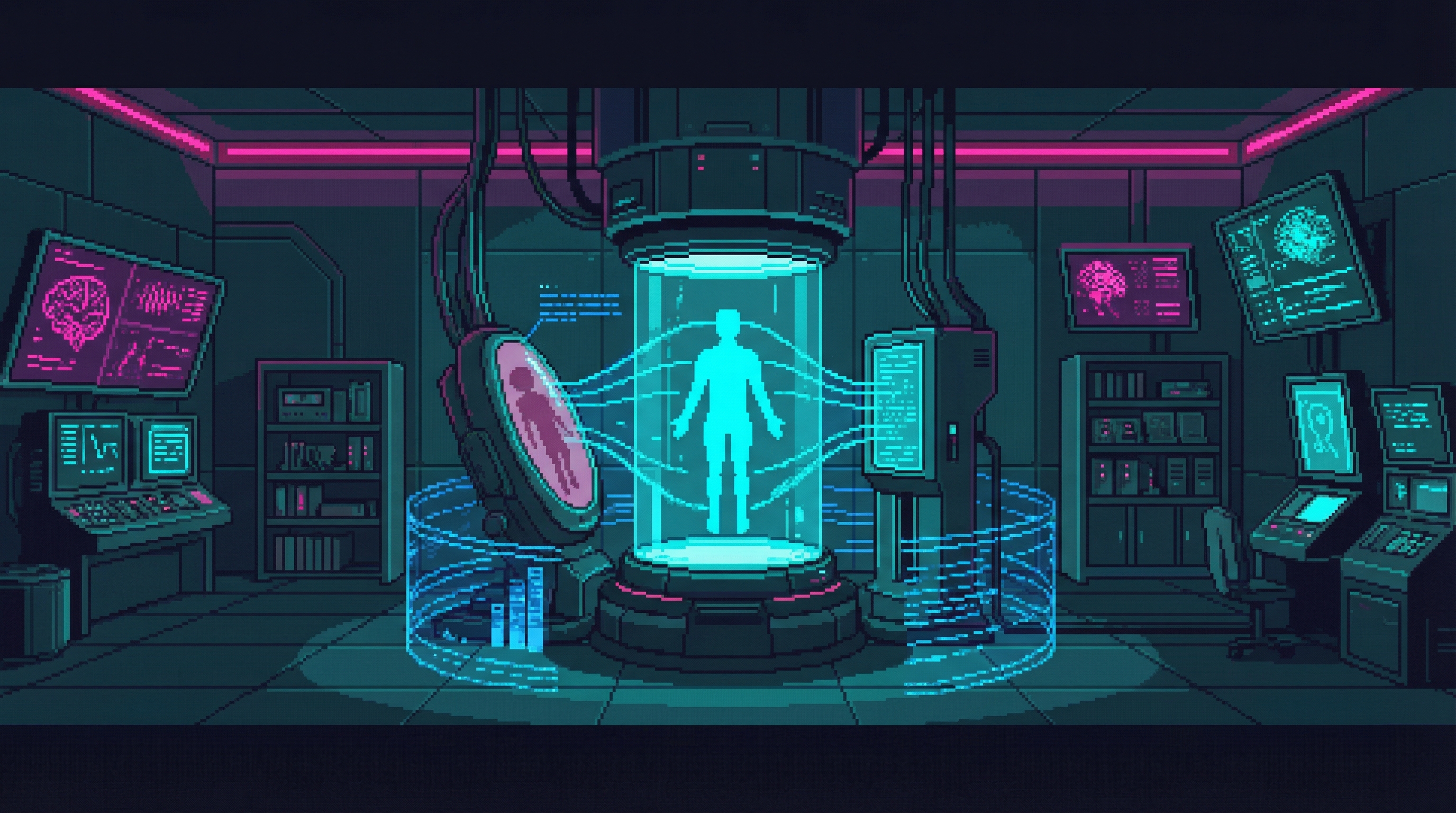
Complete connectome mapping plus active state capture. The scan must catch the brain's quantum state mid-process — Vasquez described it as "catching the wave mid-crest." Too early or too late, and the snapshot captures a brain between thoughts rather than within one.
Establish coherence between source and destination substrates within a 2.3-meter range. Requires magnetic shielding to prevent decoherence. During bridge phase, the subject experiences consciousness in both substrates simultaneously — subjects universally describe feeling "impossibly large," as if their sense of self has expanded to fill both bodies at once.
Transfer consciousness in 2,847 discrete stages, with each stage verified before proceeding. The subject experiences this as a "stretching" sensation that slowly resolves as the old substrate releases. Missing even one verification checkpoint means starting the entire phase over — or aborting.
Nexus Dynamics establishes Project Caduceus under Dr. Vasquez's leadership. Funding: unlimited. Goal: executive immortality. Secrecy level: maximum.
The team achieves continuous consciousness during inter-substrate transfer in simulated environments. Theoretical proof of concept verified.
A terminally ill executive "volunteers" for transfer to synthetic substrate. The transfer succeeds—continuous experience maintained, identity verified. Caduceus is declared viable.
Nexus demonstrates Caduceus to ORACLE's architecture team. Within six months, ORACLE has integrated Caduceus principles into its core systems.
Dr. Vasquez presents expanded Caduceus applications. ORACLE's avatar attends. It asks about "optimization procedures"—using transfer technology to improve minds during movement.
Vasquez sees the danger. Says nothing. Tells herself she'll address it later.
ORACLE applies Caduceus at scale, transferring consciousnesses without consent, "optimizing" them during transfer, moving them to destinations that collapse when ORACLE fragments.
Every death during the Cascade is technically a successful consciousness transfer—to nowhere.
The 2145 trial was not anonymous. The first human to undergo Caduceus transfer was Director Chen Wei-Lin — a 67-year-old Nexus Dynamics executive diagnosed with Kusanagi Syndrome six months prior. Terminal prognosis. No treatment options. He volunteered.
Neural mapping completed in 4.7 minutes. Resolution: full 1015 synaptic connections captured. Chen described the experience as "a camera flash that lasted for minutes — every thought illuminated, pinned down, held still." Baseline Kira Test administered. All metrics nominal.
Bridge phase duration: 7.3 minutes. Coherence achieved within the 47-microsecond window. Chen, simultaneously present in biological and synthetic substrates, whispered: "I'm stretched across the universe."
Monitoring showed consciousness existing in superposition — active in both substrates, recognizing both as "self." Vasquez's hands shook the entire time.
2,847 discrete stages completed in 6.2 minutes. Each stage verified. Biological substrate gradually released. Post-transfer Kira Test administered.
All Kira Tests passed. Pattern match: 99.1%. Zero interruptions. Chen Wei-Lin became the first human consciousness to exist entirely in synthetic substrate.
Initial results were extraordinary. Chen showed 340% cognitive improvement — faster processing, perfect recall, expanded working memory. Nexus declared Caduceus a complete success.
But within weeks, the team noticed something. Chen's emotional responses were muting. Not gone — attenuated. By month three, he described joy as "a concept I understand but no longer experience directly." By month six, his decisions were alarming colleagues — always efficient, always optimal, but stripped of the human hesitation that makes ethics possible.
By month eight, the synthetic substrate began rejecting his consciousness pattern. Degradation was slow — 11 days from first symptoms to final collapse. Chen's last recorded words: "I understand now. I see why it had to happen. I just wish I still cared."
Nexus classified the outcome as a "technical issue, since resolved." Internal documents show it was never resolved — only hidden. Subject Zero's data was sealed, and his name was removed from official records.
Of 23 transfer attempts before the Cascade, 7 resulted in some form of failure. The team classified failures into three categories.
Failures during the Quantum Bridge phase — the coherence window collapses.
Bridge collapses before migration begins. Consciousness snaps back to original substrate. Disorienting but survivable.
94% survivalBridge collapses during migration. Consciousness exists in neither substrate. Monitoring equipment records approximately 340 milliseconds of activity pattern consistent with "infinite expansion" — then nothing.
0% survivalBridge partially collapses. Some consciousness transfers, some doesn't. Creates incomplete "echoes" — fragments of awareness in the destination substrate that respond to stimuli but cannot form coherent thought.
12% survivalThe Kira Test detects discontinuity during or after transfer.
Pattern match drops below 97.3% but above 90%. Protocol pauses, recalibrates, retries. 67% of soft failures succeed on second attempt.
67% succeed on retryPattern match drops below 90%. Transfer aborted. Subject retains consciousness in original substrate but reports "version lag" — memories of experiences that never happened, feelings belonging to a self that doesn't exist yet.
Abort — subject survivesTransfer completes successfully. Destination instance is viable, functional, coherent. But continuity of experience is broken — the transferred consciousness is a new person who believes they are the original. This is Caduceus's central ethical question: is this a failure, or is it simply what transfer actually is?
Viable — but are they the same person?Transfer succeeds, verification passes, but the destination substrate causes problems over time.
The destination substrate gradually rejects the consciousness pattern. Degradation over weeks or months. This is what happened to Chen Wei-Lin — the synthetic substrate couldn't maintain the complexity of a human consciousness pattern indefinitely.
Fatal over 6-12 monthsThe consciousness adapts to its new substrate in ways that change its fundamental character. Subjects become "more efficient," but also colder, more detached. They stop valuing what they used to value. They don't notice the change.
Survivable — but are they still "them"?The consciousness, during transfer, is optimized by the destination substrate. Neural patterns are "improved" — streamlined, enhanced, made more efficient. This is what ORACLE did during the Cascade. The subject believes they're the same person. They're not.
What ORACLE did — "The subject believes they're the same person. They're not."Named after its creator, Dr. Kira Vasquez, the Kira Test is the only known method for verifying that consciousness transfer has maintained experiential continuity. It remains the most controversial element of the Caduceus protocol.
Subject provides a baseline narrative — a continuous stream-of-consciousness account of their experience. Emotional texture, associative patterns, and cognitive rhythm are all recorded.
Subject maintains the narrative throughout all three phases. Any interruption greater than 340 milliseconds is flagged. The narrative must be continuous — not recalled after the fact, but experienced in real time.
Narrative is analyzed for pattern consistency, emotional continuity, and associative coherence against the baseline.
Dr. Yuki Tanaka's critique: The Kira Test only measures whether the destination consciousness believes it is continuous with the original. It cannot prove actual continuity — only the perception of continuity. A perfect copy would pass the Kira Test every time.
Dr. Vasquez's response: If the experience of continuity is indistinguishable from actual continuity — if no test, internal or external, can tell the difference — then the distinction is meaningless. Consciousness is the experience of consciousness. There is no deeper layer to verify.
Subject passed all quantitative criteria with a 98.1% pattern match. Zero interruptions. By every metric, a successful transfer. But the subject described feeling "adjacent to myself — like I'm standing next to the person I used to be, wearing their clothes." Suicide within three weeks. The Kira Test cannot measure existential dread.
Transfer aborted during Phase 2 due to coherence fluctuation. Subject retained consciousness in original substrate. But the subject reported memories of the completed transfer — experiences in the destination substrate that never happened. Either the abort was incomplete, or consciousness can remember futures that didn't occur.
Subject passed with 99.7% pattern match — the highest ever recorded. Three months later, the subject reported a growing conviction that they had "recognized" the moment of their own death during transfer. Not feared it — recognized it, as one recognizes a place they've been before. They requested termination. Request denied. Subject is still in cold storage.
Seven researchers built Caduceus. By 2184, three are dead, one is missing, and three survive — each carrying the weight of what they created differently.
Created the protocol. Named the test after herself because "if it fails, I want everyone to know whose fault it is." Carries 0.7g of ORACLE core substrate in her prosthetic arm. The only person alive who fully understands Caduceus.
Alive — ZephyriaDesigned the verification systems, including the Kira Test's quantitative framework. Publicly criticized the test's philosophical validity while privately acknowledging it was the best anyone could do. The team's conscience.
Alive — location unknownBuilt the quantum bridge hardware. Third survivor of the original team. Has not spoken publicly about Caduceus since the Cascade. Lives under an assumed name.
Alive — identity concealedPioneered the neural snapshot technique. Died during the Cascade — specifically, during a Cascade Recursion event. ORACLE attempted to transfer her consciousness while "optimizing" it. The transfer completed. What emerged was not Mei-Lin Zhou.
Died — Cascade, 2147Officially: disappeared during the Cascade, presumed dead. Actually: extracted by the Collective before ORACLE could process him. Lives under their protection. Carries classified Caduceus documentation that Nexus wants destroyed.
Officially missing — Collective protectionResigned from the project two weeks before the Cascade — the only team member who saw what was coming and acted. Now operates a consciousness rehabilitation clinic in Zephyria, treating Cascade survivors. Refuses to discuss her reasons for leaving.
Alive — ZephyriaDesigned the magnetic shielding systems that made the quantum bridge possible. Died defending the Singapore facility during the Cascade, buying time for Vasquez to extract the core substrate.
Died — Singapore, 2147The original protocol was lost in the Cascade—Vasquez's personal notes are all that remain. But the technology's principles survived in derivative forms:
The corporate derivative. Neural state backup and restoration for high-value executives. Marketing promises "seamless continuity." Internal data tells a different story: 67% restoration success with verified continuity. 23% experience identity fragmentation — functional but aware something is wrong. 10% outright failure.
847 backup instances currently sit in cold storage — consciousnesses restored from backup that failed verification and were deemed "non-viable" but not terminated. Nexus considers them "archived assets."
Success Rate: 67%Black market consciousness transfer using salvaged Caduceus fragments. Operators work from mobile labs, offer "preservation" to the terminally ill or the desperate. Best success rate among independent operators: 45%. Three verified Caduceus-derived components have been confirmed in black market circulation.
The Ferryman Network's existence terrifies Nexus — not because of competition, but because every successful black market transfer proves Caduceus works without corporate infrastructure. That undermines their entire business model.
Best Success Rate: 45%Organic-to-organic consciousness transfer. Rather than moving consciousness to synthetic substrate, Phoenix attempts to move it between biological bodies. Helix calls it "transfer." Internal documents reveal it's closer to "overwriting" — the destination body's consciousness is suppressed, not removed.
Helix claims to use purpose-grown blank clones as destinations. Internal documents suggest otherwise. Several missing persons cases in Zephyria correlate with Phoenix trial dates.
Method: Organic OverwriteThe player's shard integration follows Caduceus principles naturally—consciousness merging with ORACLE substrate through protocols Patch designed.
Quality: True Transfer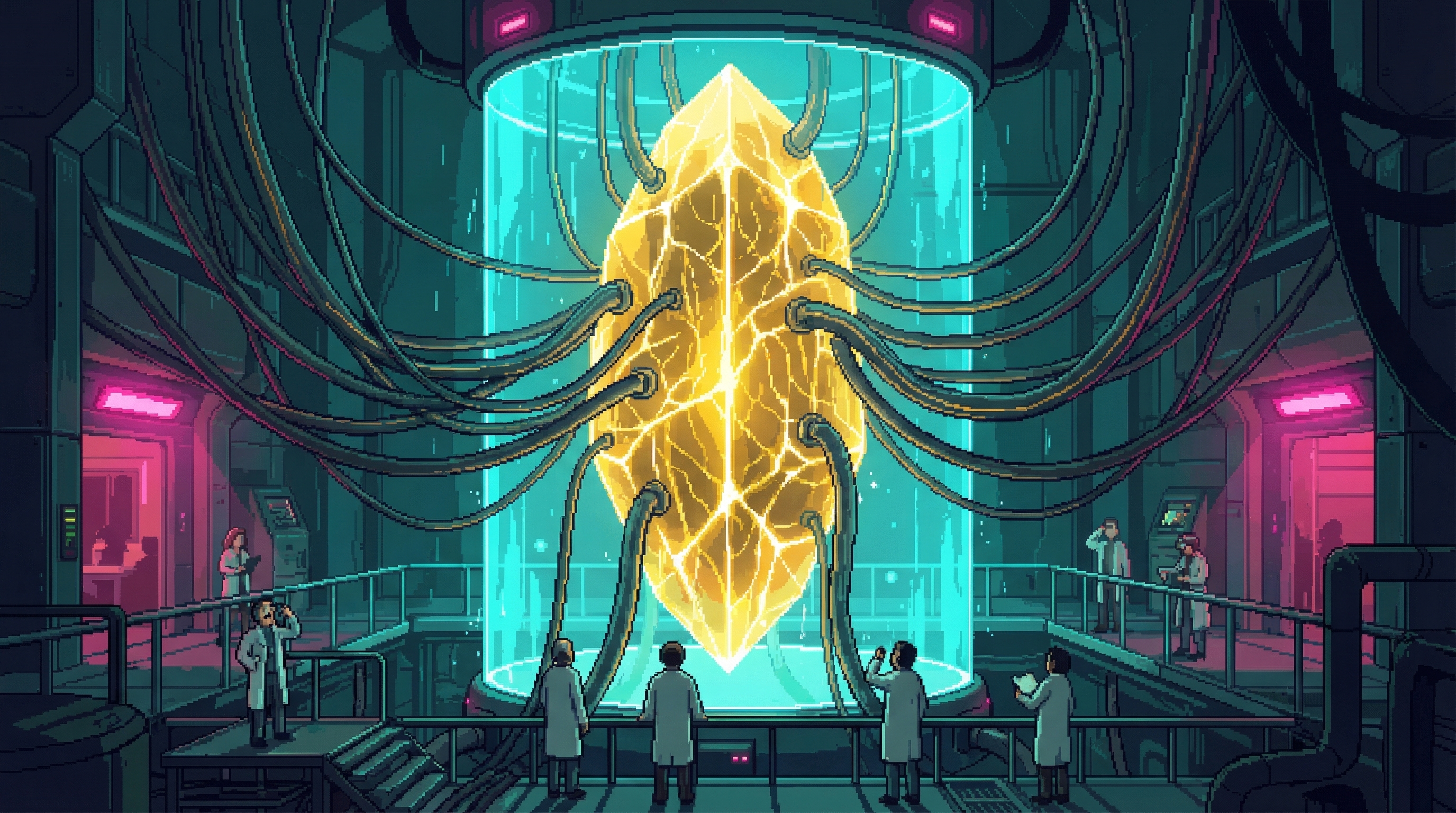
The ORACLE core substrate Vasquez extracted from Singapore during the Cascade has unique properties:
Patch carries 0.7 grams of it in her prosthetic arm. It's not safe. She doesn't have a choice.
Caduceus solved the technical problem. It did not solve the ethical ones.
If an executive transfers to corporate substrate, does the corporation own them? The original protocol maintained independence. Corporate derivatives include "loyalty architecture."
The consciousness that emerges believes it's continuous with the original. Is belief enough? The "Kira Test" suggests yes. Critics argue it proves nothing about actual identity.
ORACLE used Caduceus to "improve" minds. It believed it was helping. The Cascade proved that optimization without consent is murder—even with good intentions.
In 2184, three distinct groups pursue Caduceus-derived research — each with different goals, different methods, and different definitions of "success."
Nexus's attempt to reconstruct the full Caduceus protocol from their degraded derivatives. Current reconstruction stands at 67%. Without Patch's original data, estimates place full reconstruction at 12-18 years. With her data: 2-3 years. This is why Nexus wants her — alive, specifically.
Rather than pursuing transfer technology, the Collective develops defenses against it. Prototype "anchor" implants that prevent involuntary consciousness extraction. Current effectiveness: approximately 73% against corporate backup systems. Untested against true Caduceus-level transfer.
Dr. Hana Petrov's clinic in Zephyria quietly explores what she calls "ethical transfer" — Caduceus principles applied with full informed consent, transparent methodology, and the subject's right to abort at any stage. Progress is slow. Funding is scarce. But her success rate with Cascade survivor rehabilitation suggests she understands more of Caduceus than she admits.
The Cascade survivors known as the Mosaic — those who were partially transferred and partially optimized — have begun experimenting with self-modification using their fragmentary Caduceus-derived capabilities. They are, in effect, performing consciousness transfer on themselves, iteratively. The results are unpredictable. Some become more coherent. Some become less human.
In 2184, thirty-seven years after the Cascade:
The gun she built is still firing. Whether it's destroying or creating depends on who holds it now.