The Fog Index
How Hard Will It Be to Think Today?
"Nexus will tell you today's interference reduces secondary processing throughput by 2.3%. What does that mean? Nothing. The Fog Index tells you the same thing differently: today you will think through static. Now you know what to do about it." — Loop, explaining the scale to new Dregs arrivals
Overview
The Fog Index is the Dregs' informal measurement of electromagnetic interference density — a number between 0 and 10 that describes how much the ambient electromagnetic environment degrades neural interface function and, by extension, the experience of being a conscious person in the Sprawl.
The scale was developed by Loop — the Noise Floor operator and former SCLF firmware engineer — based on her knowledge of how different electromagnetic conditions affect different neural interface configurations. The Index correlates field density, frequency distribution, and temporal pattern against known degradation curves to produce a single number: how hard will it be to think today?
The Index has no corporate equivalent. Nexus Dynamics internal monitoring measures interference as a function of processing efficiency. The Fog Index measures it as a function of human cognitive experience. The difference is the difference between "2.3% efficiency reduction in secondary processing throughput" and "today you will think through static."
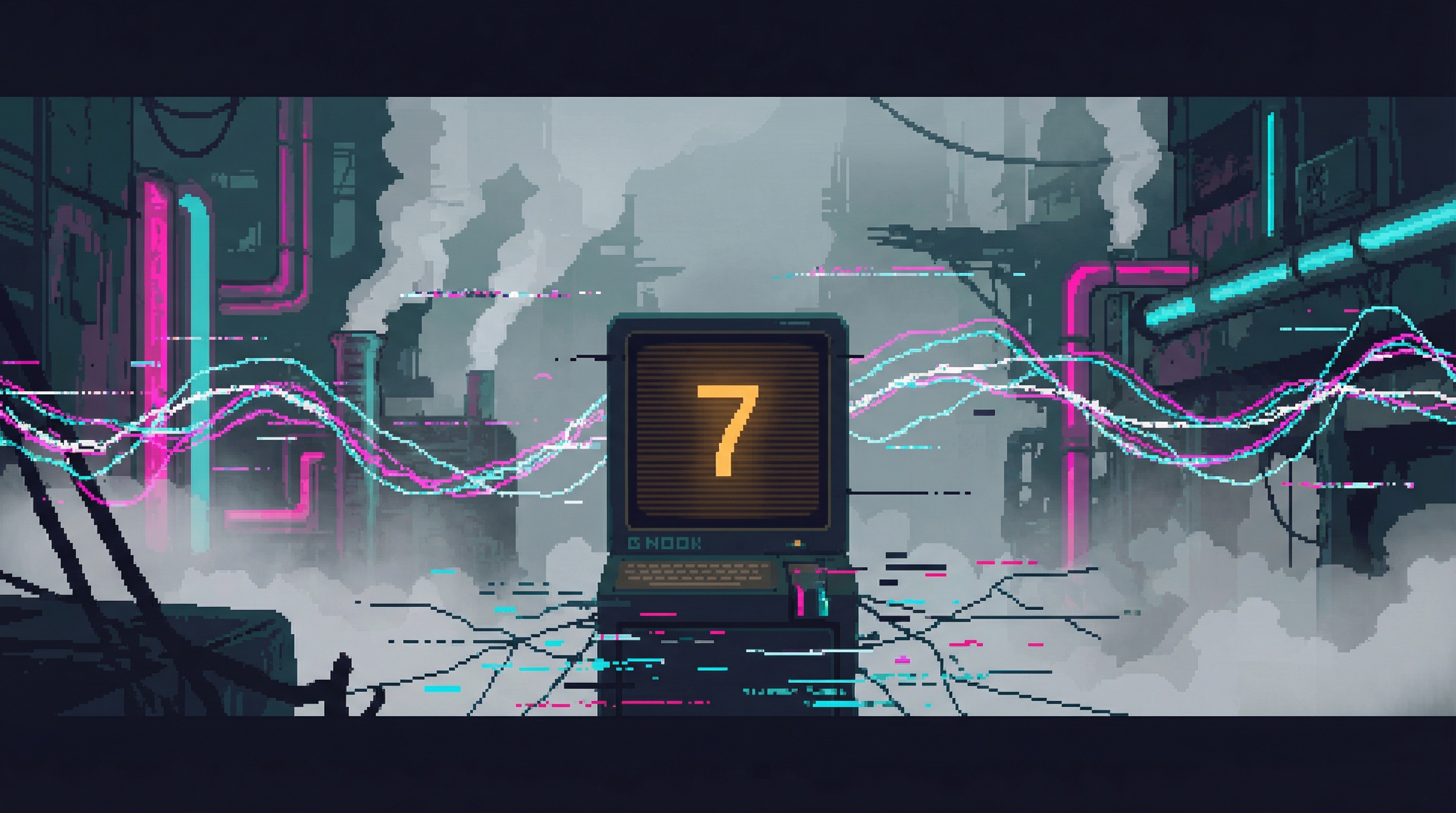
One number. Displayed on G Nook terminals across the Thermal Shadow. A single digit that determines the day's cognitive conditions for 40,000 people.
Technical Brief
Ten levels. Each one deeper into the static. Each one harder to think through.
Standard non-Shadow conditions. Interfaces function normally. Clear cognitive weather. Most Sprawl residents above the Thermal Shadow live permanently at Fog 0–1 and have no idea the scale exists.
Standard Thermal Shadow conditions. Most Dregs residents have adapted and consider this normal. Minor interface lag. The baseline cost of living in the cheapest district.
Dregs residents start checking the forecast. Forced-focus workers notice increased rebound. Task completion drops 15–20%. The line between "uncomfortable" and "dangerous" starts blurring for anyone on cognitive labor contracts.
The Dropout Protocol's warning threshold. Forced-focus contracts become dangerous. Cognitive dissonance sets in. Symptoms are identical to severe scroll sickness — and the two conditions compound.
Localized interface failure. Augmented vision artifacts. Phantom sounds. The specific dread of your interface failing inside your skull. Unaugmented individuals are largely unaffected — the power dynamic inverts completely. The people who spent the least on neural upgrades are the only ones who can function.
Theoretical maximum. Never recorded across a full district. Localized Fog 10 measured during harmonic cascades and inside the Cathedral of Static — where the interference is not weather but architecture.
Implications
Human-Centric Measurement
Nexus Dynamics measures interference as processing efficiency — a number optimized for infrastructure management. The Fog Index measures the same phenomenon as lived experience — a number optimized for survival. The data is identical. The question it answers is different. Nexus asks: how much throughput are we losing? Loop asks: how hard will it be for a person to think? Both scales are accurate. Only one of them is useful to the 40,000 people living in the Shadow.
The Inversion Point
At Fog 9, the hierarchy inverts. The most enhanced — the people who invested the most in neural augmentation, who climbed the cognitive ladder highest — are the most vulnerable. Their interfaces fail. Their augmented cognition collapses. The unaugmented walk through the same storm unaffected, their biological minds untouched by the electromagnetic weather that cripples the upgraded. For a few hours, the people who could afford the least are the only ones who can function.
The Contrast Proof
The Noise Floor maintains Fog 0 inside its shielded walls — the only reliable clear space in the Shadow. The contrast is the proof: step outside the Noise Floor and the Fog hits you like walking into water. The Index works because the baseline exists. Without Fog 0, Fog 4 would feel like nothing. With the reference point, you feel every digit on the scale.
Related Systems
The Fog Index sits at the intersection of environmental measurement, cognitive health, and the informal survival infrastructure of the Dregs. It connects upward to the corporate systems that generate the interference, laterally to the conditions it quantifies, and downward to the people who use a single digit to plan their day.
Loop
CreatorDeveloped the scale from her SCLF-era firmware knowledge. The only person in the Dregs who understands both the engineering and the human cost well enough to bridge the gap with a number.
The Noise Floor
Fog 0 ReferenceProvides Fog 0 conditions inside its shielded walls — the contrast that proves the scale. Without the Noise Floor's clean baseline, the Index would have no anchor point.
The Scroll Sickness
Symptom OverlapFog 7–8 produces conditions identical to severe scroll sickness. The two conditions compound — a Fog 7 day is a scroll sickness epidemic waiting to happen.
Pencil-47
Forecast IntegrationUses Fog probability as a key component in the data forecast. Pencil-47 translates tomorrow's predicted Fog level into actionable intelligence for the Dregs.
The Dropout Protocol
Warning ThresholdFog 7–8 triggers the Dropout Protocol's warning threshold. When the Index climbs, the Protocol activates — a direct link between measurement and emergency response.
Nexus Dynamics
Counter-MeasurementNexus measures the same interference as processing efficiency. The corporate scale and the Fog Index measure the same phenomenon and reach different conclusions about what matters.
The Cathedral of Static
Fog 10 SourceThe only confirmed location of sustained Fog 10 readings. Inside the Cathedral, the interference is not weather — it is architecture.
▲ Classified
Nexus Dynamics internal monitoring shows that Thermal Shadow interference density has increased 14% year-over-year for the past three years — a trend that would push baseline Shadow conditions from Fog 3–4 to Fog 5–6 within eighteen months. The data exists in quarterly infrastructure reports that nobody outside the maintenance division reads. Nobody has issued a warning. The 40,000 residents of the Shadow are slowly boiling, one digit at a time.
Loop built the scale to 10, but the original engineering notes — the ones she carried out of the SCLF — show degradation curves that continue past the theoretical maximum. At Fog 12, the models predict permanent interface damage. At Fog 15, the neural interface itself becomes a weapon — the electromagnetic environment would force the hardware into failure modes that damage the biological tissue it is bonded to. Loop stopped the scale at 10 because she did not want anyone to know what comes after.
During the Sector 8 Grid Collapse, instruments recorded a brief Fog 11 spike — one second, localized to a three-block radius around the cascade epicenter. Loop has never publicly acknowledged this reading. The instruments were hers. The data is locked in the Noise Floor's archive. When asked about Sector 8, she talks about the Fog 9 readings that preceded the collapse. She does not talk about what happened during it.