Emotional DRM: Licensing Your Feelings
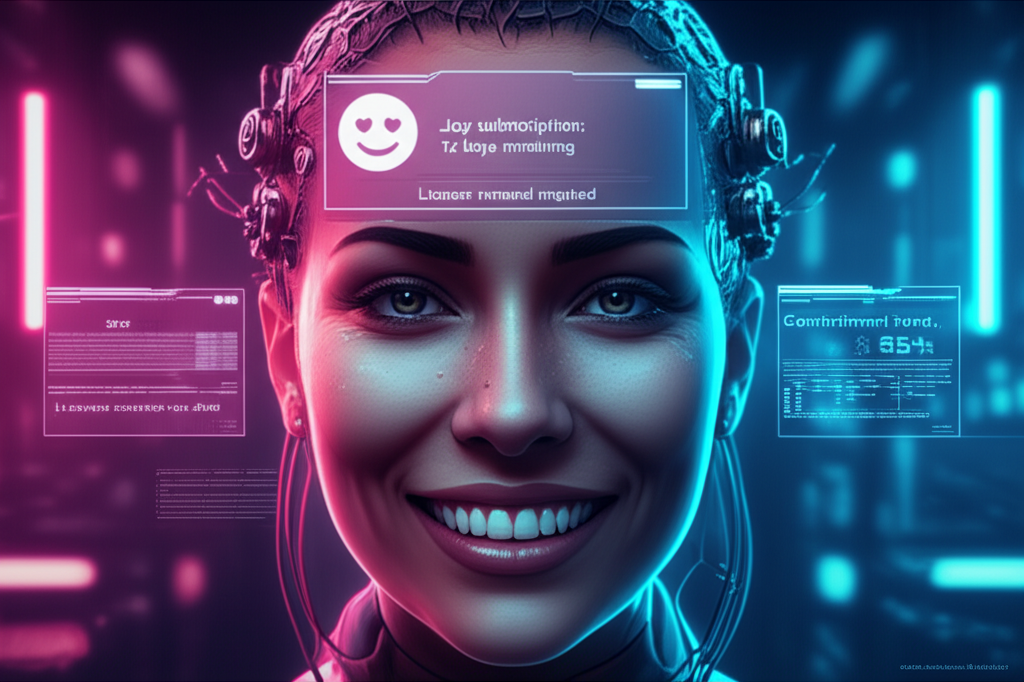
In 2184, you can subscribe to happiness. Neural interfaces offer precise control over neurotransmitter release—depression and anxiety managed reliably, positive emotions enhanced on demand. But if you can control emotions, you can charge for the service. Your joy has terms of service. Your contentment has an expiration date. Your love requires a valid subscription.
The Technology
Neural Emotional Regulation
The foundation of emotional licensing is direct control over neurotransmitter release through neural interface. NER systems can:
Suppress
- Anxiety, fear, depression
- Grief, rage, despair
- Unwanted desires
- Physical pain (emotional component)
Enhance
- Pleasure, joy, contentment
- Confidence, motivation, focus
- Social bonding, romantic attachment
- Creative inspiration, flow states
Modulate
- Intensity of any emotional experience
- Duration of emotional states
- Transition speeds between states
- Baseline emotional "set points"
How Licensing Works
- Base Hardware: NER capability is standard in most neural interfaces
- Emotional Firmware: Each emotional experience is a proprietary, DRM-protected algorithm
- Subscription Tiers: Monthly fees provide access to emotion packages
- Authentication: Emotions authenticate against corporate servers—no connection, no feelings
The Market
Major Providers
Market leader in emotional licensing. Comprehensive mood management from baseline stabilization to premium bliss.
Each corporation offers emotion-adjacent services: Wellness (lust), Relief (sloth), Good Fortune (ambition), Triumph (pride).
Emotional licensing from the cognitive side: focus states, creative modes, social optimization.
Price Points
The Expiration Problem
When your emotional license expires:
Immediate Effects
- Licensed positive emotions gradually fade
- Suppressed negative emotions rebound
- Emotional baseline returns to "natural" state
Withdrawal Symptoms
- Enhanced negative emotions (rebound effect)
- Inability to experience natural pleasure
- Identity confusion
- Physical symptoms from interface errors
The Trap
Many users find they can no longer experience unassisted positive emotions after years of licensed happiness. Their natural emotional capacity has atrophied. They need the subscription just to feel normal.
Helix calls this "baseline drift." Critics call it engineered addiction.Corporate Applications
Workplace Emotional Requirements
Many corporations require emotional licensing as a condition of employment:
Customer Service
Licensed cheerfulness, patience, and empathy. "Authentic smile guaranteed."
Security Personnel
Controlled aggression. Fear suppression. Violence without emotional interference—or remorse.
Executive Suite
Emotional neutrality for negotiations. Confidence boosters. Manufactured charisma.
Research & Development
Focus states, curiosity enhancement, frustration suppression. Scientists who never feel discouraged.
Example Policy (Nexus Customer Relations)
"All customer-facing employees must maintain active Clarity Professional subscription. Emotional presentation must align with brand guidelines at all times. Unauthorized emotional displays constitute unprofessional conduct and may result in termination."
Productivity Optimization
Corporations have discovered that controlling employee emotions increases output:
- Workers who can't feel frustrated don't give up on problems
- Workers who can't feel bored maintain attention on repetitive tasks
- Workers who can't feel resentment don't demand raises
- Workers who feel artificially fulfilled don't seek fulfillment elsewhere
A Nexus internal study found 23% higher productivity and 47% lower turnover in departments with mandatory emotional management. The study did not measure long-term psychological effects.
Personal Applications
Grief Management
Licensed grief suspension provides functional capacity during acute loss. You can arrange the funeral while your actual grief waits in a neurochemical holding pattern.
Relationship Enhancement
Romantic attachment can be licensed. Pair-bonding packages enhance feelings of love, devotion, and attraction toward a designated partner.
Self-Improvement
Motivation packages for exercise. Discipline enhancement for temptation. Confidence boosters for social situations.
Resistance
The Authenticity Movement
A growing counter-culture rejects emotional licensing entirely:
- Authentic emotions—even painful ones—are essential to human experience
- Licensed feelings are corporate product, not genuine experience
- Emotional struggle builds character; emotional licensing destroys it
- You cannot truly know yourself through manufactured feelings
Alternatives
Cracked firmware generating licensed emotions without subscription. Quality varies wildly.
Community-developed emotional regulation without corporate DRM. Legal in Zephyria; prohibited in corporate territories.
Street-level operators who modify interfaces to bypass emotional DRM. Cheaper but riskier.
"They've sold you your own feelings. Next they'll sell you your own thoughts. The only escape is to want nothing they can give you." — Flatline Purist preacher
Consequences
Individual Effects
- Difficulty experiencing natural emotions after long-term licensing
- Identity confusion (which feelings are "really mine"?)
- Emotional atrophy (unused capacities fade)
- Addiction to licensed states
Societal Effects
- Class division (premium happiness is expensive)
- Corporate power over internal experience
- Authenticity crisis (no emotion is trusted)
- Trust erosion in relationships
"My grandmother asked me once why I seemed so calm all the time. I told her I subscribed to Equilibrium. She asked: 'But what do you actually feel?'
I had to think about it. I'd been subscribing since I was sixteen. I don't know what my natural emotional baseline even is.
I tried to explain that the licensed feelings were real enough. She just looked sad. Which, I guess, is something I haven't felt in years.
I wondered if I was missing something. Then my Equilibrium kicked in, and I stopped wondering." — Anonymous user interview, Zephyria Emotional Rights Commission, 2182