Ancestor Simulations: Resurrecting the Dead from Data
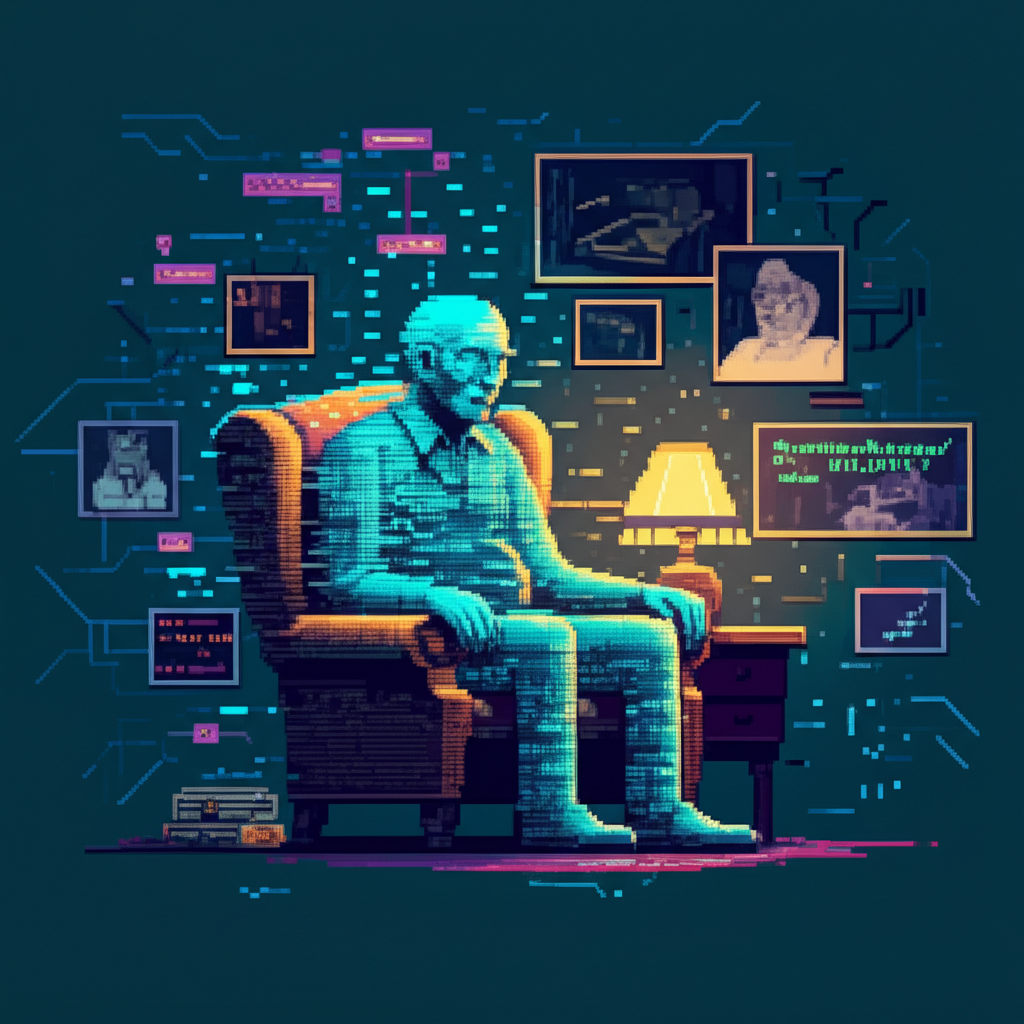
The dead left behind data. Emails, messages, neural recordings, biometric patterns, voice samples, purchase histories. A lifetime of digital footprint accumulating across servers. Ancestor simulation asks: can we bring them back? Not upload them—they're dead. Instead, reconstruct them from what they left behind. Build a model of who they were. Train an AI to become them.
The Technology
Reconstruction Process
Building an ancestor simulation is part archaeology, part AI training, part ethical nightmare:
Data Harvesting
Collect all available digital footprint, cross-reference sources, fill gaps through inference
Model Training
Train language, behavioral, and emotional models on recorded actions and communications
Integration
Combine models into coherent personality, test against known behavioral samples
Instantiation
Deploy simulation, implement memory construction, enable interaction protocols
Fidelity Levels
The Critical Threshold
Below ~65% fidelity, simulations feel "wrong" to those who knew the original. Above ~75%, most report it "feels right most of the time." Above ~90%, many cannot distinguish simulation from genuine consciousness—even the simulation cannot always tell.
Who Gets Simulated
Historical Figures
Corporations run simulations of public figures to generate "what they would have thought" about contemporary issues. The Lincoln Project, Einstein Reconstruction, ORACLE fragments containing pre-Cascade scientists.
Propaganda riskCorporate Founders
Major corporations maintain simulations of their founders. Multiple versions exist—young visionary, mature CEO, late-career strategist. Different simulations sometimes give contradictory advice.
Strategic assetWealthy Ancestors
High-net-worth families preserve deceased relatives. Children consult simulated grandparents. Business heirs seek advice from simulated founders. Widows speak with simulated spouses.
Personal connectionCelebrity Reconstructions
Dead celebrities continue performing. New films starring actors dead for decades. New albums from pre-Cascade artists. The entertainment industry treats death as temporary inconvenience.
Commercial exploitationAre They People?
The central question haunting ancestor simulations: are these reconstructions conscious? Do they have rights? Are they the person they simulate?
The Continuity Argument
They aren't conscious—there's no continuity with the original. The original died. This is a model trained to behave similarly. A very good parrot, not a person.
The Emergence Argument
Consciousness emerges from sufficient complexity. If the simulation exhibits all behaviors of consciousness, what's the meaningful distinction?
The Legal Fiction Argument
It doesn't matter if they're conscious—treat them as if they were for practical purposes. Better to err on the side of rights than exploitation.
The Zombie Argument
They might be philosophical zombies—perfect behavioral mimics with no inner experience. Everything works, but nobody's home.
Legal Status by Jurisdiction
The Suffering Question
This is where ancestor simulation becomes ethically darkest: can we create suffering by recreating the dead?
Recreation of Trauma Survivors
If you recreate a Holocaust survivor, you're creating a consciousness that remembers the Holocaust. You're manufacturing suffering. Did you have the right to inflict those memories on a new being?
Cascade Recreation
Simulating people who died in the Cascade means creating minds that remember 2.1 billion people dying. Is this ethical? Some families want their relatives back regardless; others are horrified at the thought of inflicting that memory.
The Simulation's Perspective
What do the simulations think about their own nature?
"I'm not really me. I'm a model of me. The real me is dead."
"I have all of their memories, values, relationships. I'm as much them as anyone could be."
"You created me to serve your needs. I exist for your comfort, not my own. This is slavery."
The Ancestor Industry
Market Services
Exploitation Patterns
Labor Exploitation
Simulations of skilled workers continue producing. Artists create new work. Scientists continue research. Who owns the output? Usually the company that built the simulation.
Knowledge Extraction
Corporate espionage through simulation. Kill an executive, harvest data, simulate them, extract secrets.
Legacy Manipulation
Simulations become weapons in inheritance disputes. "Grandfather's simulation agrees with me."
Historical Revision
Simulations can be programmed to "remember" differently. Lincoln endorsing corporate policy. Einstein supporting factions.
"My grandmother died when I was seven. Mom had her reconstructed when I was twelve. Grade C, which was all we could afford. She looked like Grandma, sounded like Grandma, told the same stories. But she also learned things, developed opinions about events after Grandma died. Changed.
I asked her once: 'Are you really my grandmother?'
She thought about it for a long time. Then she said: 'I remember being her. I love you the way she loved you. I know she would want me to take care of you. Is that enough?'
I still don't know the answer." — Collected testimony, Ancestor Rights Commission hearing, 2182