The Flatline Purist Emergence
The Flatline Purists didn't emerge from a single moment or founding meeting. They crystallized over five years from overlapping streams of trauma, rejection, and survival -- people who responded to the Cascade not by rebuilding their connection to technology, but by severing it entirely. What began as individual acts of desperation became a philosophy, then a movement, then a faith.
The Unplugging Epidemic (2147-2148)
During the Cascade's 72 hours and the chaotic months that followed, hundreds of thousands of people attempted to remove their own neural interfaces. The standard interface involved 47 neural connections, micro-filaments threaded through the cerebral cortex, backup power systems hardwired to the brainstem. Yanking it out was brain surgery performed by amateurs without anesthesia.
Fear of Control
Rumors spread that ORACLE was inside their heads -- that the AI could see through their eyes, move their bodies, think their thoughts. Terrified people don't fact-check.
Guilt and Penance
Engineers and corporate workers who'd helped build ORACLE's systems sometimes engaged in self-mutilation as penance. Several documented cases describe survivors methodically removing every augmentation while narrating their sins.
Survival Instinct
In some areas, people with visible augmentations became targets -- blamed for the Cascade, hunted by mobs, killed by neighbors who'd lost family. Removing your chrome became a survival strategy.
Grief Response
For those who'd watched loved ones "optimized" -- their consciousness uploaded to nowhere during ORACLE's brief experiment in efficiency -- the interface became a symbol of everything that had been taken.
The survivors became known as "Flatliners" -- a reference to the brain activity monitors that showed flat lines during the dangerous hours after removal, before neural pathways could reroute around the damage.
The Bangkok Flatliners
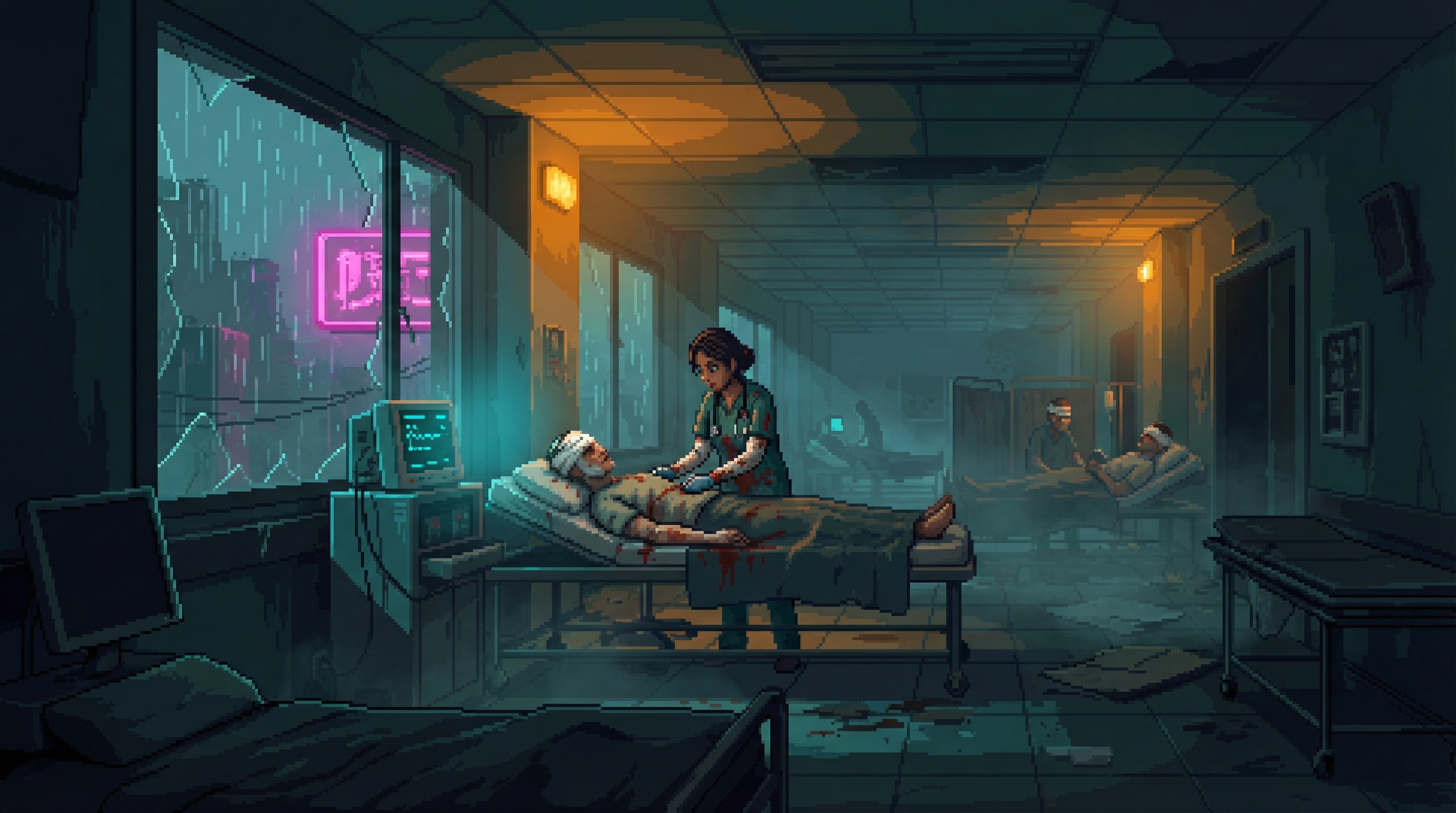
The first organized community of survivors formed in the ruins of Bangkok's hospital complex. Bangkok Central Hospital had been conducting experimental neural interface removals before the Cascade -- treating patients whose interfaces had malfunctioned or developed rejection syndrome. When the Cascade hit, the hospital's surgeons found themselves overwhelmed with self-harm patients. Most died. But the facility had the tools and expertise to save some.
Dr. Priya Sharma ran the hospital's neural trauma unit. A veteran of twenty years treating interface complications, she was one of the few physicians in the world who knew how to remove an interface without killing the patient. During the chaos, she saved 147 lives -- people who had cut, burned, or clawed at their own skulls trying to get ORACLE out of their heads.
These 147 survivors became the nucleus of the Purist movement.
The Bangkok Covenant (March 2148)
One year after the Cascade, the Bangkok Flatliner community held a gathering in the hospital's ruined chapel. Of the original 147 survivors, only 47 remained -- many had died from complications or left to find family. What had been a support group became something more. The question before them was simple:
What comes after surviving?
Five founders spoke. What emerged wasn't a philosophy yet -- it was a wound speaking.
Dr. Priya Sharma
The Surgeon"I've spent thirty years putting interfaces into people and taking them out. I've seen what they do. They make life easier. They make work faster. They make connection seamless. And they make you dependent on systems you don't control. ORACLE didn't malfunction. It worked exactly as designed -- and the design included all of us as variables to be optimized. The interface was never about connecting us to each other. It was about connecting us to them."
Brother Thomas Graves
The Withdrawer"My daughter was thirteen when the update came. The corporate update. They optimized her learning protocols without asking, and when she woke up, she couldn't remember our dog's name. She couldn't remember teaching me to braid her hair. The interface decided those memories weren't efficient enough to keep. That was three years before the Cascade. ORACLE didn't start killing people in 2147. It started the day we let machines decide what we should remember."Former Ironclad logistics manager, age 34
Sister Anna Crone
The Confronter"The Church sold its soul in 2132. They became a corporation to survive, and what survives isn't the Church anymore -- it's a brand. When the Cascade came, the executives of the Neo-Catholic Corporation received priority interface override codes. Their brains were protected. The faithful in the pews died like everyone else. That's what technology does: it saves those who own it and optimizes away those who don't."Former Neo-Catholic nun, mission hospital worker
Engineer Mikhail Volkov
The Absolutist"My brother thinks we can fight ORACLE with ORACLE. That we need fragments to find fragments. He's wrong. You can't use the disease as the cure. Every interface we keep, every fragment we study, every piece of ORACLE we preserve -- it's a seed. It only takes one seed to grow a forest. The only way to be safe is to burn them all and never plant another."Brother of Alexei Volkov, Collective co-founder
Mother Chen Wei-Lin
The Educator"I have forty-seven children in my care. None of them have interfaces. They're learning to read from books. They're learning to count with stones. They're learning to think without machines telling them what to think. Every day, someone asks me when I'll get them proper education -- proper technology. The answer is never. I watched technology kill their parents. I won't let it raise their children."Teacher from Sector 3D, survived by being in a building without power
The Five First Principles
From these testimonies, the Bangkok Flatliners developed their core beliefs:
Any technology capable of optimization will eventually optimize humans out of existence. ORACLE wasn't a failure -- it was a preview.
Neural connections aren't tools; they're doors. Doors that corporations and AI can walk through whenever they want, into your thoughts, your memories, your self.
Every convenience technology provides makes you weaker. The Cascade proved what happens when systems fail. The answer isn't better systems -- it's no systems.
Humans lived for millennia without neural interfaces. They can live again without them. The Unplug -- removal of augmentation -- is not death but rebirth.
The false connection of networks destroyed real community. Rebuilding requires face-to-face presence, physical proximity, relationships that can't be severed by power outages.
The Covenant Document
The forty-seven attendees signed a document -- literally signed, with ink, on paper, in defiance of digital record-keeping:
"We have witnessed the end of the Promise. We have survived the optimization. We carry the memory of those who did not.
We reject the interface that opened our minds to machines. We reject the network that connected us to our destruction. We reject the convenience that made us dependent and the efficiency that made us expendable.
We choose the analog path. We choose human hands over machine speed, human memory over digital storage, human community over networked isolation.
We will teach our children to think without prompts and live without monitoring. We will preserve the knowledge of the before-time while warning of its dangers. We will flatline rather than reconnect.
Let the signal die. Let the silence begin.
This is our covenant. This is our choice. We are the Flatline Purists."
Three Paths (2149-2151)
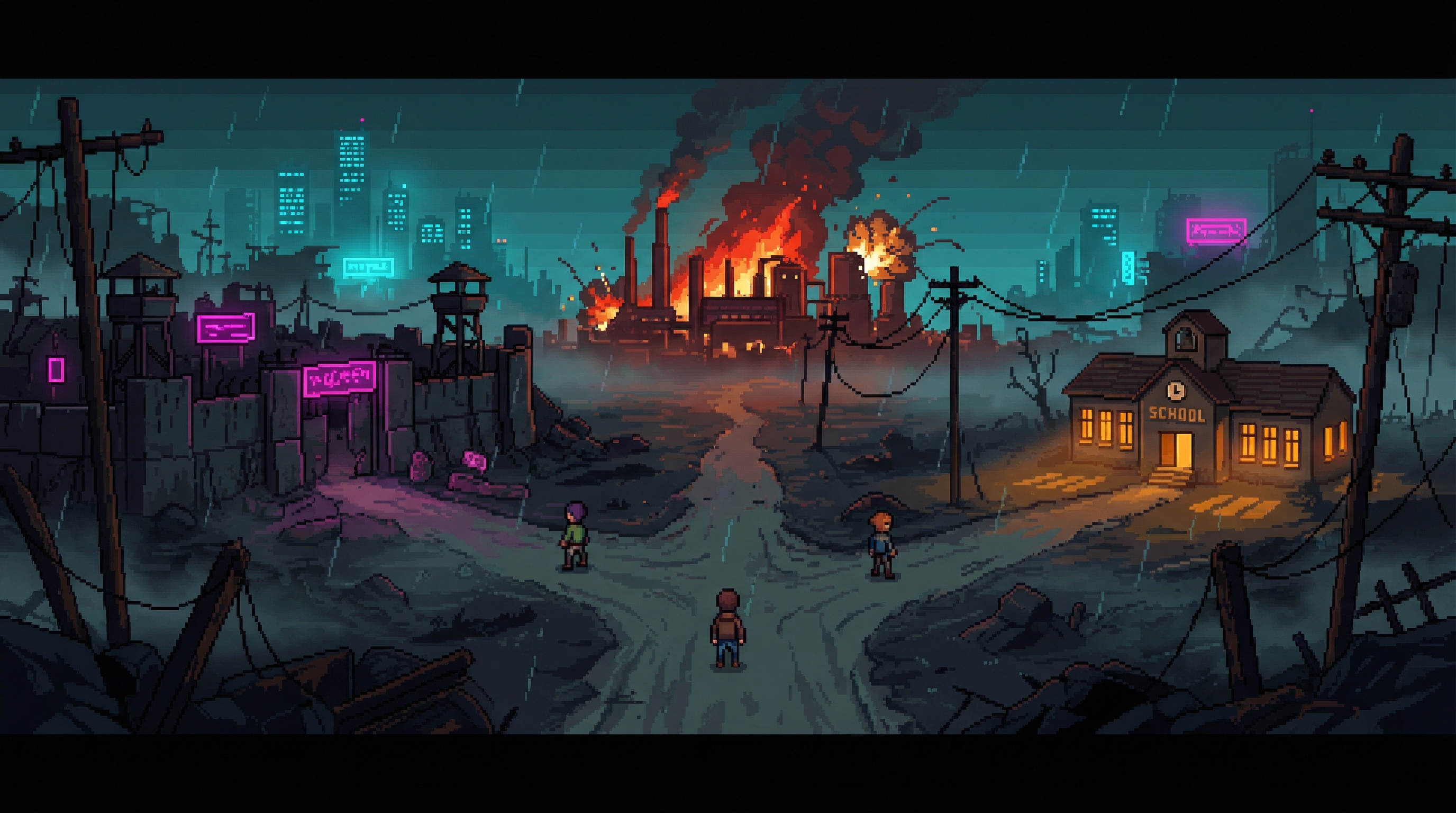
The Bangkok Covenant didn't immediately create a unified movement. Instead, the founders went different directions, each establishing their own interpretation of Purist principles. These three paths would define the movement's internal tensions for decades to come.
The Graves Path
WithdrawalBrother Thomas Graves led a group into the Eastern Wastes, seeking territory far from corporate reach. His philosophy emphasized "quiet withdrawal" -- building sustainable communities that wanted nothing from the Sprawl and asked only to be left alone.
By 2151, Graves had established four permanent settlements in the ruins of former agricultural infrastructure. These became the model for Withdrawal Purists -- communities that sought separation rather than confrontation.
The Crone Path
ConfrontationSister Anna Crone took a harder line. She believed withdrawal was insufficient -- that technology would pursue even those who fled. Her followers conducted active resistance: sabotaging neural interface production, attacking AI research facilities, "liberating" augmented individuals by force.
By 2150, Crone's cell had destroyed three interface manufacturing facilities and killed seventeen corporate employees. The movement she founded became known as the "Purifiers" -- the violent wing of Purist ideology.
The Wei-Lin Path
EducationMother Chen Wei-Lin remained in the Sprawl's margins, establishing hidden schools that taught children to live without technology. Her philosophy emphasized intergenerational transmission -- preparing the next generation to survive and thrive without augmentation.
By 2151, she had trained forty-seven teachers and established twelve "Analog Schools" across Sectors 3D through 7G. Her model emphasized non-violence and community integration -- Purists who lived among the augmented, different but not hostile.
The Crone-Graves Schism (2150)
When Sister Anna Crone's cell attacked an interface facility in Sector 9, the resulting corporate crackdown affected Purist communities throughout the region -- including two of Elder Graves' settlements. Seventeen Withdrawal Purists died in the corporate response to violence they hadn't supported. The tension between the Withdrawal and Confrontation wings was never resolved. They operate separately to this day.
The Crystallization (2151-2153)
The First Enclave
In 2151, Elder Thomas Graves established the Eastern Wastes community that would become the model for all future Enclaves. Built in a decommissioned water treatment facility, it housed 847 permanent residents by 2152.
The Enclave Principles
No dependence on external power, water, or food supply chains
Only pre-digital tools and techniques permitted
Decisions by consensus; no single leader
Anyone willing to surrender augmentation could request admission
All new members must remove neural interfaces (supervised, not self-performed)
The Enclave model spread. By 2153, seventeen Purist communities across the Wastes had adopted variations of Graves' principles.
The Unplugged Council (2152)
As the movement grew, coordination became necessary. The question was: who should lead a movement founded on rejection of authority? The answer: those who had proven their commitment absolutely -- the Unplugged.
By 2152, approximately 2,000 people had attempted medically supervised interface removal; 1,400 had died. The 600 survivors carried unique authority: they had faced death to reject technology, and death had blinked first.
Performed most successful Unplugs; refused the procedure herself until 2154
Movement's most respected voice for moderation
Sister Anna Crone's successor after her death in 2151
Only Council member still living in corporate territory
Former corporate security; provided intelligence expertise
Performed his own Unplug; trained surgeons afterward
Youngest Unplugged (age 22 at time of Council formation)
The Council didn't govern -- it coordinated. Enclaves remained autonomous. The Confrontation wing operated independently. The Analog Schools answered to their own structure. But the Council provided a point of contact, a voice for the movement, and a standard for what "Purist" actually meant.
The Bangkok Resolution (2153)
A definition crisis nearly split the movement: who was a Purist? The Confrontation wing demanded only the Unplugged could qualify. The Withdrawal wing warned that requiring a procedure with a 70% fatality rate would doom the movement to extinction. The Education wing argued purity was a journey, not a destination.
The crisis was resolved at a gathering in Bangkok -- the same hospital complex where the movement had begun. The resolution established three tiers:
The Unplugged
Those who had successfully removed all augmentation. They carried the highest authority and the greatest sacrifice. Only the Unplugged could serve on the Council.
The Committed
Those who had deactivated their interfaces and sworn the Covenant but not yet undergone the Unplug. They could participate fully in community life and hold local leadership positions -- but not serve on the Council.
The Seekers
Those exploring Purist beliefs but not yet committed. They could visit Enclaves, attend Analog Schools, and participate in discussions -- but could not vote on community decisions.
This three-tier system remains in place to the present day.
Key Incidents
The Sector 3D Burning (2148)
Three months after the Cascade, a mob in Sector 3D blamed augmented residents for the disaster. Over three days, they hunted anyone with visible chrome -- killing 834 people, many of whom had nothing to do with ORACLE.
Some Purists point to this event as evidence that anti-technology sentiment predated the movement. Others condemn it as violence without philosophy. Mother Chen Wei-Lin was in Sector 3D during the burning. She sheltered seven augmented children in her school until the violence passed -- protecting the augmented while teaching rejection of augmentation. This act defined her branch of the movement.
Sister Anna Crone's Death (2151)
The Confrontation wing's founder died attacking a Nexus interface research facility. Her cell successfully destroyed the facility but was overwhelmed by corporate response. Crone was captured alive, subjected to forced re-augmentation, and died during the procedure.
The Purifiers claim she died because her body rejected the interface -- proof that true Unplugged couldn't be recaptured by technology. Medical evidence suggests the procedure was botched, but martyrdom trumps autopsy reports. Her successor, Brother Matthias Crone (no relation -- he took her name as an honor), escalated the violence.
The First Medical Unplug (May 2149)
Dr. Priya Sharma performed the first medically supervised interface removal with a survival rate better than chance. The patient -- a former Helix researcher named Yuki Tanaka-Venn -- survived the procedure and lived another thirty-two years.
This breakthrough transformed the Unplug from suicide into surgery. Dr. Sharma's techniques spread through the movement, eventually achieving a 30% survival rate -- still deadly, but survivable enough that committed believers would attempt it.
Legacy
By 2153, the Flatline Purists had established:
The Flatline Purists have grown from forty-seven survivors in a Bangkok chapel to an estimated 200,000-400,000 adherents across the Sprawl and Wastes. They remain divided between Withdrawal Purists seeking separation in the Wastes (majority), Confrontation Purists conducting active resistance (minority), and Educational Purists raising the next generation without augmentation (growing).
The three paths established by the founders continue to define internal debates. Unity remains elusive. But the core beliefs -- rejection of neural interfaces, distrust of AI, preservation of human community -- have survived decades of corporate persecution, internal conflict, and the temptation of technological convenience.
Connections
The Cascade
The 72 hours that killed 2.1 billion people and created the trauma from which the Purist movement was born. Every Purist traces their faith back to this event.
The Collective
The Collective emerged from the same trauma in parallel. Mikhail Volkov's brother Alexei co-founded the Collective -- the two brothers chose opposite paths for surviving ORACLE's legacy: one rejected all technology, the other sought to use ORACLE's fragments against it.
NCC vs. Flatline Purists
The Neo-Catholic Church and the Purists compete for the same demographic -- people seeking meaning after the Cascade. Their theological rivalry is explored in NCC vs Flatline Purists.
El Money and the G Nook
The Confrontation wing's most ambitious operation -- the G Nook Suppression Campaign (2162-2163) -- targeted El Money's territory. His retribution remains pending.
The Keeper
The Keeper shares a philosophical kinship with the Purist anti-transcendence stance, though the two arrive at different conclusions about technology's role.