The Feast emerges. The Lords barely notice—another warlord who would burn out.
They were wrong.
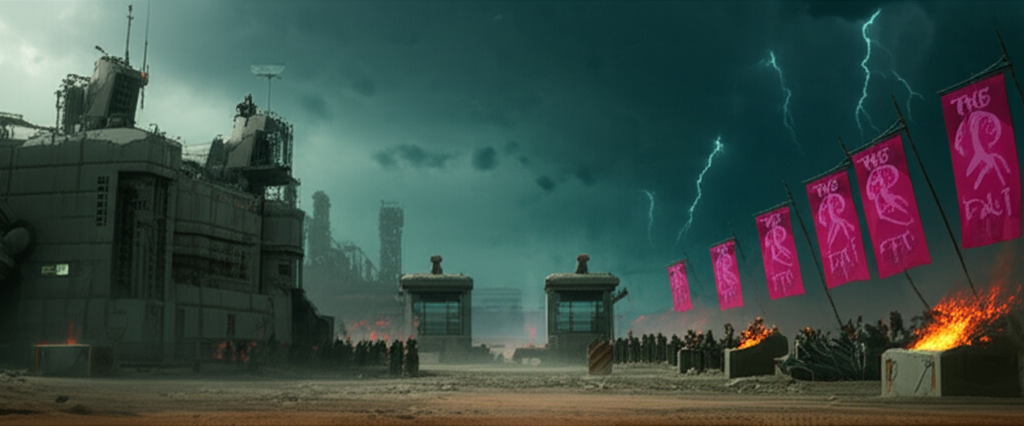
The Waste Lords controlled the ungoverned territories for thirty years. Then The Chef arrived with her hunger, and the rules changed.
12-15 independent power brokers
Unified army under The Chef
The Feast emerges. The Lords barely notice—another warlord who would burn out.
They were wrong.
The Chef conquers the Saltflats—Duchess Steel's primary southern trade route.
"We can negotiate passage rights."
"There is no negotiation. Join The Feast, or be consumed."
The envoy's bones were left at the border as a message.
The Feast controls significant territory and continues expanding. The Lords face a choice:
The Rustbelt
Hostile but cautious
She's building something—schools, clinics, infrastructure. Can't risk it in all-out war. Can't afford to look weak either.
The Chef: "She thinks she's building a nation. Nations are just feasts waiting to happen."
The Bleach
Cautiously cooperative
The Bleach is poison. Nothing The Chef wants. But disposal services? The Feast generates... waste. Bodies. Failed experiments. Evidence.
"She'll conquer everything except what's not worth having. I made sure my territory isn't worth having."
The Green Sea
Extreme tension
The Shepherd controls food production. The Feast needs food. This is the most dangerous border in the Wastes.
"She consumes. I nurture. We cannot coexist. One of us ends the other."
Eastern Data Centers
Wary intelligence exchange
Controls information, not physical land. Sells corporate intel to The Feast. Doesn't sell his archives. The Chef hasn't forced the issue... yet.
"I've made certain that destroying my facilities triggers data releases. Mutually assured disclosure."
The Cradle
Too distant to conflict (currently)
The Feast's expansion hasn't reached Australia's interior. Yet. Mother Mercy watches and prepares.
"She's not a warlord. She's a contagion. Eventually, someone has to develop immunity."
| Resource | Original Control | Current Status |
|---|---|---|
| Southern salvage route | Duchess Steel | Feast-controlled |
| Eastern data relays | King Circuit | Contested |
| Central water basin | Minor lord (fallen) | Feast-controlled |
| Northern passage | Duchess Steel | Threatened |
| Agricultural surplus | The Shepherd | Standoff |
The Lords didn't become Lords by trusting each other. Their rise involved eliminating competitors, breaking treaties, and exploiting weaknesses. Decades of grudges can't be forgotten overnight.
Each Lord calculates The Feast differently. Some see existential threat. Some see manageable customer. No consensus means no coordination.
Whoever moves first bears the cost. The Chef would concentrate on that target while others watched. No one wants to be the sacrifice that benefits rivals.

Never attack two Lords simultaneously. Concentrate force, achieve overwhelming victory, move on.
Offer impossible terms. "Join or die" ensures rejection, which justifies conquest.
Make examples. The Saltflats envoy's bones sent a message.
Exploit divisions. When The Feast moves against one Lord, the others calculate whether to help or benefit from the distraction.
Everything has accelerated because Sage is dying. The Chef needs resources—medical facilities, research data, specialist knowledge. Lord territories contain some of what she needs.
The conquest isn't just territorial anymore. It's a desperate search disguised as imperial expansion.
Lords fall one by one as they refuse to unite. Within five years, The Feast controls most Waste territory. The "Waste Lords" become historical footnotes.
Something forces the Lords to cooperate. They form a defensive alliance and halt The Feast's expansion. Likelihood: Low. Trust runs too deep.
The Feast's expansion loses its driving purpose. The Chef might accelerate into pure destruction, collapse into despair, or find a new purpose entirely. The Lords know about Sage. Some pray for the dog's death. Some fear what follows more.
The Lords built their power on pragmatic arrangements—with corporations, with each other, with anyone who could pay the price. The Chef doesn't negotiate. She consumes.
Can pragmatism survive against absolute hunger?