Dream Culture
Where you sleep is who you are.
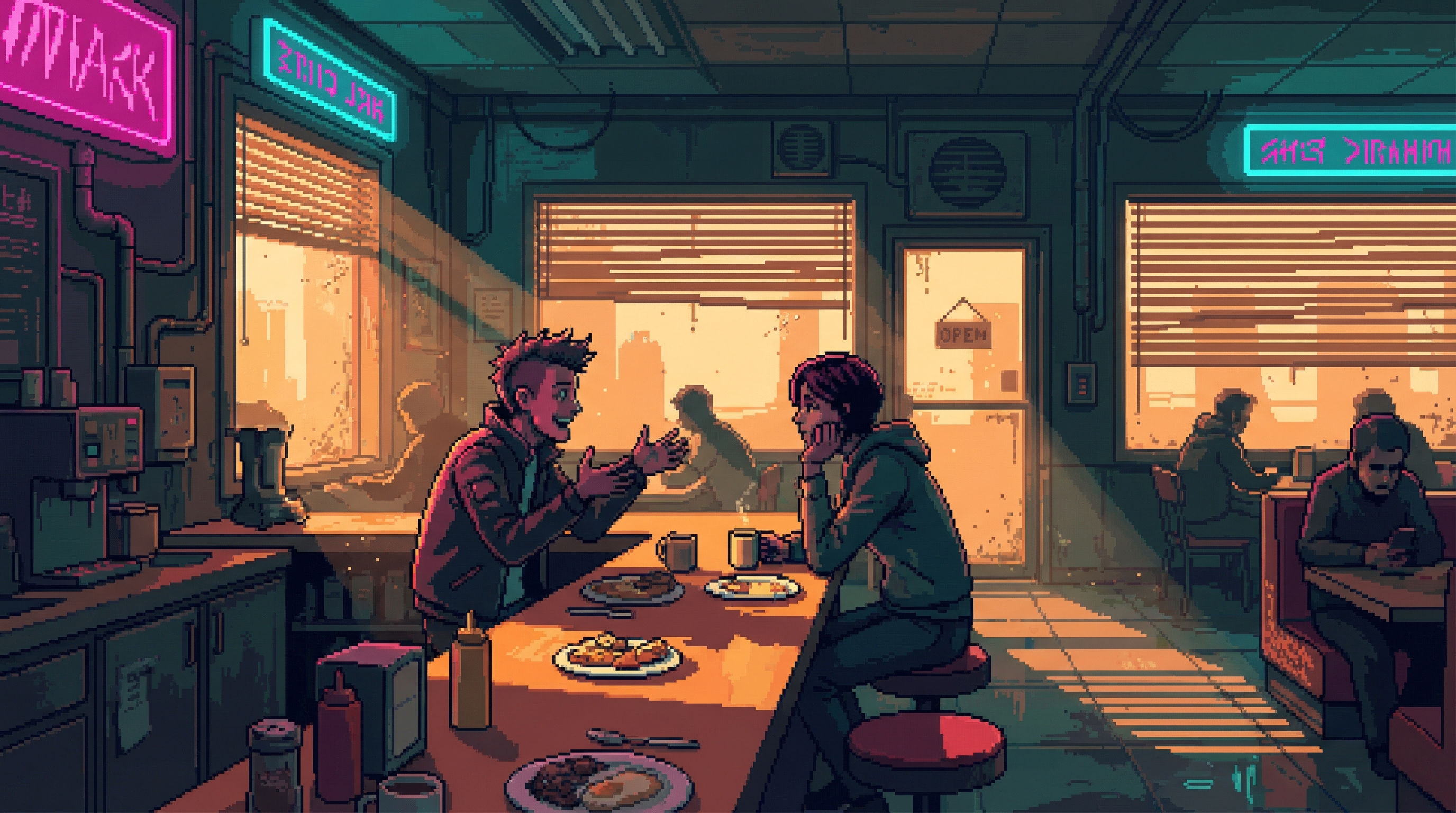
The sleep divide has produced its own cultural ecosystem — rituals, slang, social practices, and identity markers that distinguish the dreamless from the dreaming, the harvesters from the consumers, the unaugmented sleepers from the augmented insomniacs.
None of it was designed. No organization formed to protect it. No corporation packaged it. Dream culture grew the way dreams do — from the unconscious, in the dark, when nobody was optimizing.
The Language
“Going under” — experiencing a harvested dream. Carries the same social weight as “I had the strangest dream last night.” The dreamless say it to each other the way the augmented once said “I slept well.”
“Surface tension” — resistance to dream immersion. High surface tension means a shallow experience. Low surface tension means the dream got in. People describe it the way others describe tolerance to alcohol: with a complicated mixture of pride and longing.
“Drift” — the Stage 1 sensation of Lucidity Crisis, used socially rather than clinically. A confession and a bond between dreamless people who share the experience. “I drifted last night” means something different at a clinic than it does at a Dregs cafe.
“The floor” — the essential quality that distinguishes harvested dreams from synthetic ones. What’s missing when dreams are designed rather than dreamed. Nobody can define it. Everyone who’s gone under knows it’s there.
The Rituals
Sleep watching. Dreamless couples hire an unaugmented person to sleep in their home while they sit and watch. The dreamless equivalent of sharing a meal. Intimate in a way that makes the augmented uncomfortable — watching someone do the thing you optimized away, the thing you paid good money to stop doing, the thing your body used to do when it still trusted you enough to lose consciousness.
Dream Breakfast. In Dregs cafes, customers pay a week’s groceries for 45 minutes of conversation about dreams. Staff share their dreams as part of the service. It started when a waitress described a dream and a customer cried. Now there are cafes where the dream is the menu — you order a seat, not a meal.
Dream sharing circles. The morning ritual of the Dregs — discussing last night’s dreams the way people once discussed weather. Started when six people discovered they’d purchased the same harvested dream from the Exchange and found they’d experienced it completely differently.
The midnight gardens. Seven anonymous rooftop plots tended between midnight and dawn by unknown gardeners. The ritual originated with Felix Otieno’s anonymous night garden and spread to seven locations across the Sprawl. Permission expressed in soil: you don’t have to be productive right now.
The Social Markers
“Dream eyes” — a softness in the gaze of someone carrying dream residue. A tendency to let attention wander to edges. A momentary stillness before responding. The residue of unconscious processing lingering for two to three hours after waking. Spotted across a room. Envied. Purchased, occasionally, through the Exchange.
“Dream patience” — the unaugmented ability to wait without filling waiting with productivity. The augmented find it profoundly attractive and deeply alien. It looks like the thing they optimized away. Some hire unaugmented companions just to sit with someone who possesses it — not to learn it, because it can’t be learned. Just to be near it.
Where It Lives
The Dream Exchange is the commercial center — where dreams are bought and sold, where the economy of unconscious experience finds its price. Dream culture is the social center, the ungoverned space around those transactions where meaning gets made without anyone setting rates.
The Insomnia Wards are the medical center — where the dreamless come to try, where Lucidity Crisis gets a diagnosis instead of just a word. The Dregs are the social center — where dream sharing and Dream Breakfast originated, where dreams are still free because the people who have them haven’t yet learned to charge.
The midnight gardens are nowhere and everywhere — seven rooftop plots tended by people who don’t leave their names. The Corporate Liturgy is the mirror image: a daily ritual that shapes identity in the opposite direction. The liturgy makes you think like a corporation. Dream culture makes you remember you’re human.
What the Sprawl Keeps Asking
The wealthy are dreamless by choice. The poor dream by economic necessity. And somewhere in between, the dream economy inverted the value hierarchy — the thing the poor still do naturally became the thing the rich pay ¢200–400 a night to witness. Class expressed through biology.
Dream sharing, midnight gardens, Dream Breakfast — none of these were organized resistance. No one planned them. They emerged because humans need rituals around what they’ve lost. Dream Breakfast started when a waitress described a dream. Sleep watching started when a dreamless woman asked if she could sit while her neighbor slept. The circles started when six strangers discovered they’d purchased the same dream. Organic. Unoptimized. The way culture used to happen.
Three rituals emerged from the Warmth Tax’s pressure: Dream Breakfast (morning, daily — vulnerability through shared unconscious), Sleep Watching (evening, by arrangement — witnessed helplessness), Dream Sharing Circles (weekly — a shared referent that sidesteps performance). All three share one quality: no organization, no leadership, no subscription. The warmth in them can’t be packaged because it was never designed.
Open Files
- Seven midnight gardens, seven anonymous gardeners. Nobody has identified any of them. Nobody has connected the gardens to each other. Are they coordinated, or did seven people independently arrive at the same form of quiet rebellion?
- Dream patience — the augmented find it profoundly attractive and deeply alien. What happens when something you optimized away becomes the thing you desire most? Can you buy it back? The Exchange is trying to find out.
- Dream Breakfast costs a week’s groceries for 45 minutes. The customers are paying for the dream discussion, not the food. At what point does the waitstaff’s unconscious experience become labor? At what point does sharing a dream become a shift?
- The Corporate Liturgy and dream culture are parallel daily rituals that shape identity in opposite directions. One makes you efficient. The other makes you human. The Sprawl runs on both. What happens when someone practices both?
- “The floor” — the quality that separates harvested dreams from synthetic ones. Everyone who’s gone under knows it’s there. Nobody can define it. If someone could isolate it, bottle it, sell it separately — would that be the most valuable commodity in the Sprawl, or the end of dream culture entirely?