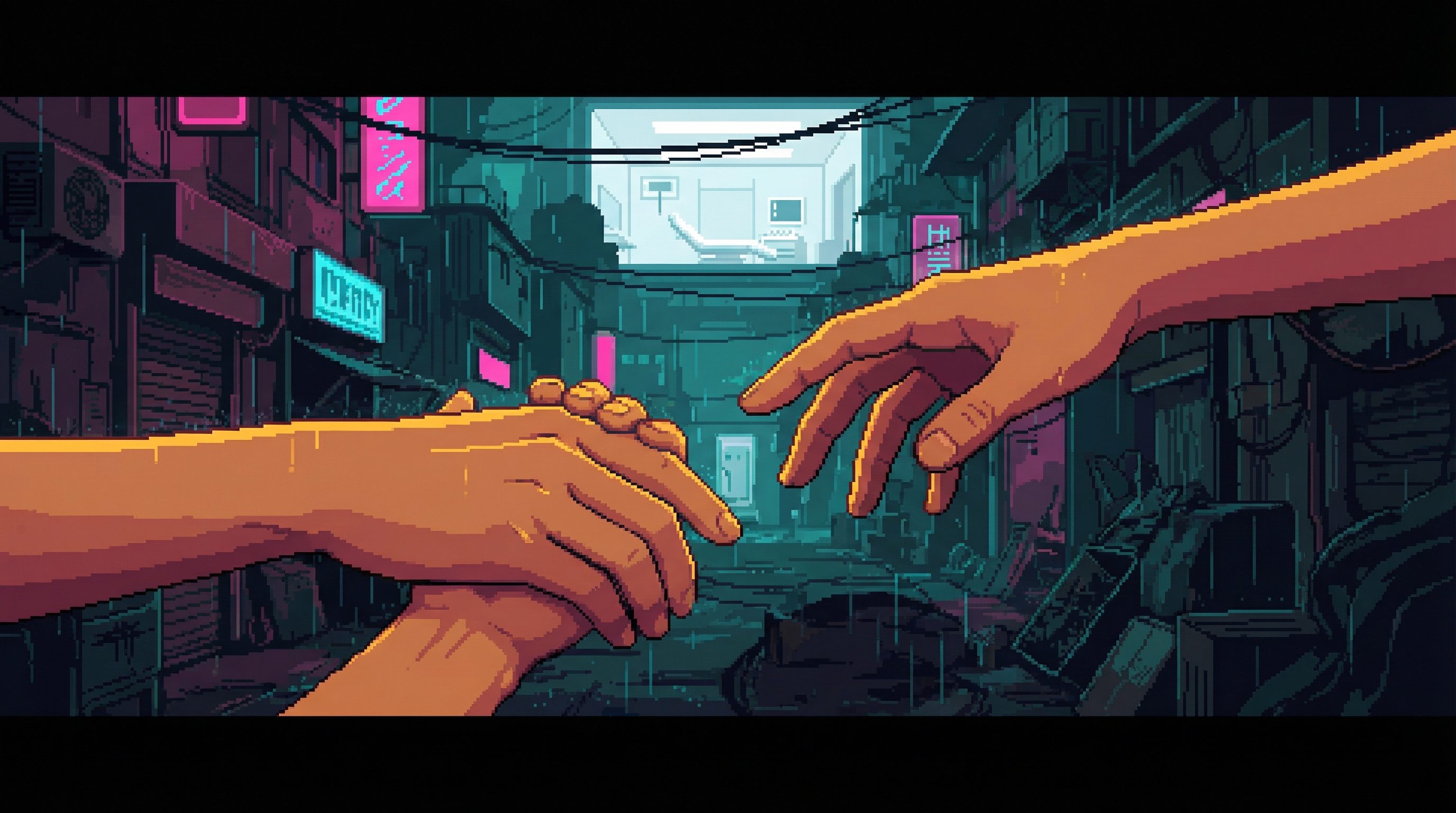
The Touch Economy: The Body as Last Honest Currency
The Touch Economy is not a faction in any organizational sense. It is a condition — the informal network of services, practices, and social norms that have emerged around physical human contact as the Sprawl's most underpriced commodity. In a world where neural interfaces deliver photorealistic sensory experiences, the one thing that cannot be synthesized is the meaning of touch. Not the sensation — which interfaces replicate adequately — but the knowledge that another conscious being chose to be physically present with you, that their warmth is biological rather than engineered, that the pressure of their hand is governed by muscle and bone rather than haptic feedback algorithms.
"The interface can replicate the pressure. It cannot replicate the choice."
Quick Facts
How It Works
The Touch Economy encompasses four primary service categories, each addressing a different facet of the human need for physical proximity and witnessed vulnerability.
Presence Workers
¢15–80/hourPaid to simply be physically near clients. No interaction required. No conversation, no eye contact, no acknowledgment — just the warmth of another body in the room. The cheapest tier purchases proximity. The premium tier purchases proximity that feels voluntary.
Sleep Watchers
By appointmentDreamless couples — those who've eliminated REM through augmentation — hire unaugmented sleepers to observe. A form of intimacy through witnessed vulnerability. Watching someone sleep is watching someone trust the world enough to leave it temporarily.
Contact Therapists
PremiumCalibrated non-sexual touch producing oxytocin responses synthetic systems cannot replicate. The clinical white rooms where therapists work are designed to be deliberately sterile — the warmth comes entirely from the human hand, not the environment.
Dream Breakfast
Social currencyDreams shared as intimate social currency over cheap coffee in Dregs cafes. The most vulnerable commercial transaction in the Sprawl — trading the contents of your unconscious mind with strangers. Not a service you purchase, but a ritual you participate in.
The Dregs Paradox
The Dregs are the most touch-rich community in the Sprawl. Not because they've cultivated some philosophy of physical connection, but because they're too poor for automation. When you can't afford a neural interface, you hold hands. When you can't afford a Sleep Pod, you share a bed. Poverty preserves the ambient human contact the wealthy pay premium for.
The irony is architectural. The wealthy schedule appointments for calibrated touch in sterile white rooms. The Dregs bump shoulders in crowded corridors. The wealthy hire Sleep Watchers to observe vulnerability. The Dregs fall asleep next to people they trust without paying for the privilege. Everything the Touch Economy sells, the Dregs get as a byproduct of density and deprivation.
Tensions
The Warmth Tax Made Physical
The Touch Economy is the Warmth Tax expressed through the most basic human need. Where the Warmth Tax describes the premium for human presence in general, the Touch Economy narrows it to the body itself — the hand, the shoulder, the warmth of skin against skin. The price of being touched by someone who chose to touch you.
Touch as Class Marker
Touch has become a class marker. The poor touch freely — crowded living, shared meals, physical labor that puts bodies in contact. The wealthy schedule appointments. The middle class oscillates between the two, uncomfortable with both the intimacy of the Dregs and the clinical precision of Contact Therapy.
Meaning vs. Sensation
Neural interfaces replicate the sensation of touch with increasing fidelity. What they cannot replicate is the knowledge that the sensation originates from another conscious being who chose to be present. The gap between perfect simulation and imperfect reality is where the Touch Economy lives.
Connections
The Warmth Tax
The Touch Economy is the Warmth Tax expressed through physical contact — the most literal manifestation of the premium the Sprawl charges for genuine human connection.
The Small Talk Cafes
Cafes provide conversational warmth; the Touch Economy provides physical warmth. Two parallel economies addressing the same deficit through different senses.
Connection Tourism
Tourism commodifies what the Touch Economy provides organically — packaging authentic human contact as an experience for visitors who can afford the trip but not the lifestyle.
Dream Culture
Sleep Watching and Dream Breakfast are shared practices between the Touch Economy and the broader dream culture — vulnerability as currency, unconsciousness as intimacy.
Sector 7G
The Dregs preserve ambient human contact through poverty — the paradoxical beneficiary of exclusion from the automation that created the touch deficit.
Connected To
"The interface can simulate the pressure of a hand on your shoulder. It cannot simulate the fact that someone chose to put it there."