The Thinking Tax: The Price of Being Slow
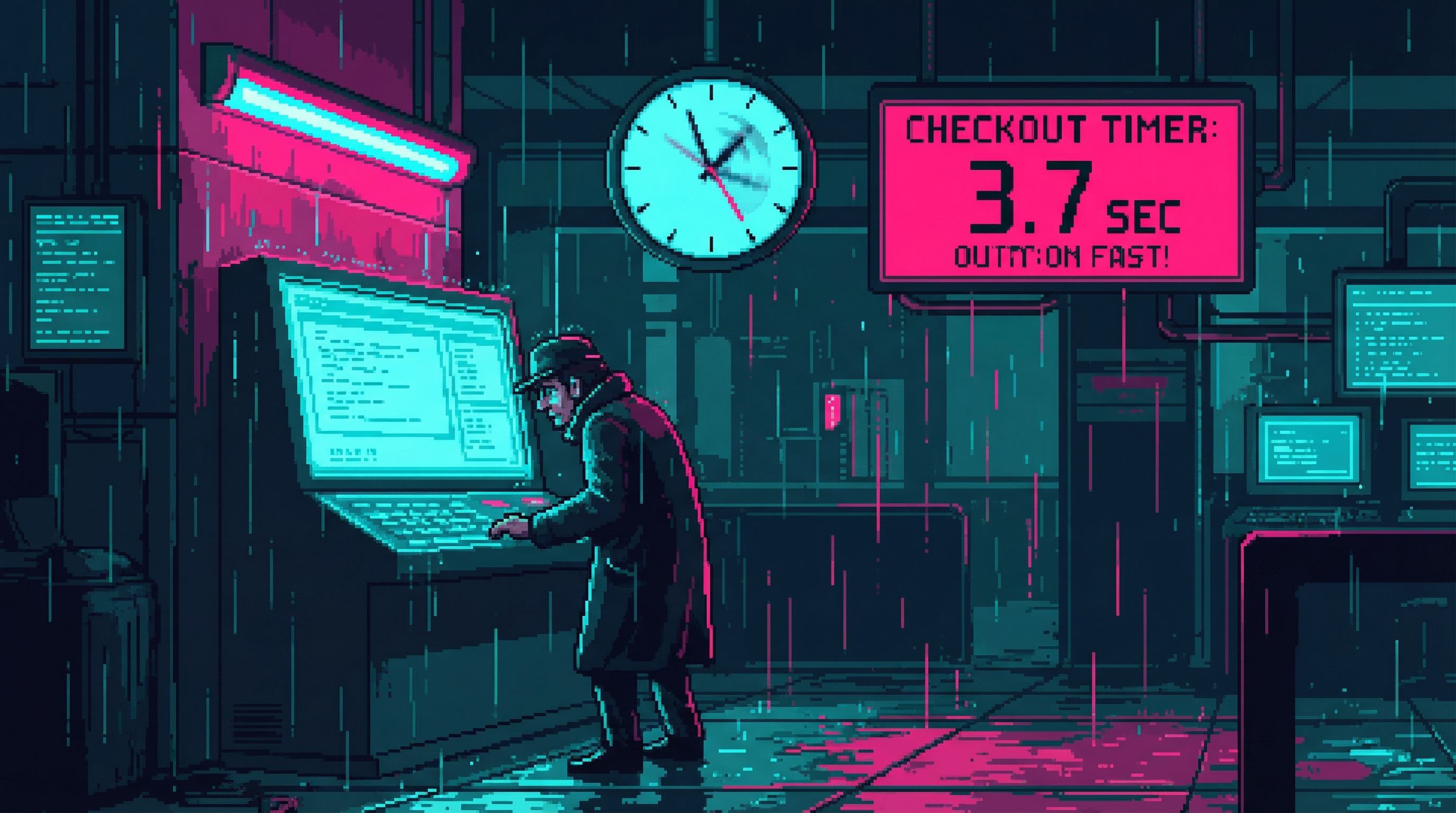
In a world designed for AI-speed processing, being human costs time. The Thinking Tax is the colloquial name for the cumulative cognitive overhead of navigating a society optimized for minds faster than yours. It is not a formal charge. It is the thousand small frictions that accumulate into exhaustion: the checkout terminal that gives you 3.7 seconds to process a loyalty decision because the AI that designed the interface assumed augmented processing speed. The transit announcement that delivers twelve scheduling options in four seconds. The employment contract with 8,400 words of consciousness licensing language written at Professional-tier comprehension level. Every system in the Sprawl was built for someone faster than you.
Technical Brief
Every system in the Sprawl was designed for augmented users. This is not conspiracy. It is optimization. Interface designers build for the modal user, and the modal user in 2184 processes information at augmented speed. Checkout terminals, transit networks, legal documents, medical intake forms, employment contracts, licensing agreements, grocery displays, entertainment menus — each one calibrated for a mind that can parse faster, decide faster, and move on faster than biological cognition allows.
Basic-tier humans and unaugmented residents navigate these systems the way a person with impaired mobility navigates a world designed for runners — possible, exhausting, and requiring constant adaptation that nobody else notices. The 3.7-second checkout window is not malicious. It is simply what happens when a system optimized for 0.4-second augmented decision-making adds a "generous" margin for slower users. The twelve-option transit announcement delivered in four seconds is not an attack. It is an interface built by an AI that has never experienced biological processing delay.
The tax compounds across a day. Each individual friction is small — a moment of confusion at a kiosk, a missed transit option, a contract clause you did not have time to read. But the accumulation is not small. By evening, a Basic-tier resident of Sector 7G has spent approximately 23% more cognitive energy than an Executive-tier resident performing the same basic daily tasks: buying food, commuting, understanding a notification, filing a form. The difference is not in the tasks. The difference is in the speed the tasks assume you can think.
The Survival Tax
The 23% is not a luxury tax. It is not the cost of accessing premium services or enhanced experiences. It is the cost of buying groceries. Of taking a train. Of understanding the terms under which your consciousness license operates. The Thinking Tax is levied on survival itself — on the baseline activities that every resident must perform regardless of tier. Twenty-three percent more effort to achieve the same minimum standard of daily function.
Adaptation: How the Dregs Survive It
The Dregs adapted. Not through augmentation — they cannot afford augmentation — but through culture. Sector 7G runs at a different clock speed than the rest of the Sprawl, and that difference is deliberate.
Biological Rhythm Communication
Verbal communication moves slower in Sector 7G. Not because residents are less intelligent, but because the conversational rhythm has been calibrated to biological rather than augmented processing speed. Sentences are shorter. Pauses are longer. Information arrives at the rate a human brain can absorb it without augmentation assistance.
Analog Interfaces
Patience Cross's noodle shop does not have a digital menu. Not because she cannot afford one. Because menus designed for augmented parsing are functionally hostile to her clientele. A chalkboard with six items, readable at biological speed, is a political act disguised as a restaurant choice.
Human-Speed Governance
Viktor Kaine's informal governance works partly because his decisions are communicated at human speed, through human faces, with human pauses. In a world where policy updates arrive as 40-page encrypted data bursts optimized for augmented parsing, Kaine talks to people. Slowly. And they understand him.
A Different Clock
The Dregs did not slow down. The rest of the Sprawl sped up. What looks like backwardness from the corporate towers is actually recalibration — a community that refused to run its cognition at a speed designed for machines, and built its social infrastructure around the speed that human minds actually operate.
Connected Systems
The Cognitive Ceiling
The Ceiling is the grand question — what is intelligence for when yours is a commodity? The Thinking Tax is the daily experience of living under that question. The Ceiling is philosophical. The Tax is the checkout terminal that will not wait for you to finish reading.
The Distraction Tax
The Distraction Tax charges attention — 847,000 stimuli per day, each requiring 0.3 seconds of unconscious assessment. The Thinking Tax charges processing speed — every interface demanding decisions faster than biology allows. Both invisible. Both cumulative. Both paid disproportionately by those who can least afford it.
Consciousness Licensing
Basic-tier sensory modifications — narrower peripheral vision, emotional dampening, reduced processing allocation — compound the Thinking Tax. The licensing system does not just limit what you can think. It slows down the thinking you are still permitted to do.
Implications
The Thinking Tax forces questions that the Sprawl's design philosophy cannot answer — questions about who systems are built for, what "accessibility" means when the baseline user is augmented, and whether exhaustion by design is distinguishable from oppression.
Design as Class Warfare
Nobody sat in a boardroom and decided to exhaust Basic-tier residents. The 3.7-second checkout window was an optimization decision. The twelve-option transit announcement was a UX improvement. The 8,400-word licensing agreement was legal compliance. Each decision was reasonable in isolation. Together, they constitute a built environment that is structurally hostile to unaugmented cognition — not by intent, but by assumption. The most effective oppression is the kind that looks like efficiency.
The Invisible Twenty-Three Percent
Executive-tier residents do not know what the Thinking Tax feels like. Their interfaces adapt to their processing speed. Their systems wait for them. Their world is calibrated for their cognition. The 23% gap is invisible from above — you cannot see a tax that someone else is paying. Ask a corporate resident about the Thinking Tax and they will look at you blankly. Ask a Dregs resident and they will look at you like you asked whether gravity exists.
Adaptation as Resistance
The Dregs' slower rhythm is not a concession to limitation. It is the construction of an alternative. When Patience Cross puts up a chalkboard menu, when Viktor Kaine delivers a decision in spoken words at conversational pace, they are refusing the premise that the speed of augmented cognition is the speed at which society should operate. They are building a world calibrated for the minds that actually live in it.
If the world was designed for minds faster than yours, are you living in a society — or navigating an obstacle course that forgot you exist?
"The Thinking Tax is the Cognitive Ceiling's most intimate expression — not the grand philosophical question of what intelligence is for, but the daily, grinding, personal experience of being slower in a fast world. The checkout terminal does not care about your existential crisis. It needs your answer in 3.7 seconds."