The Distraction Tax: The Cost of Existing
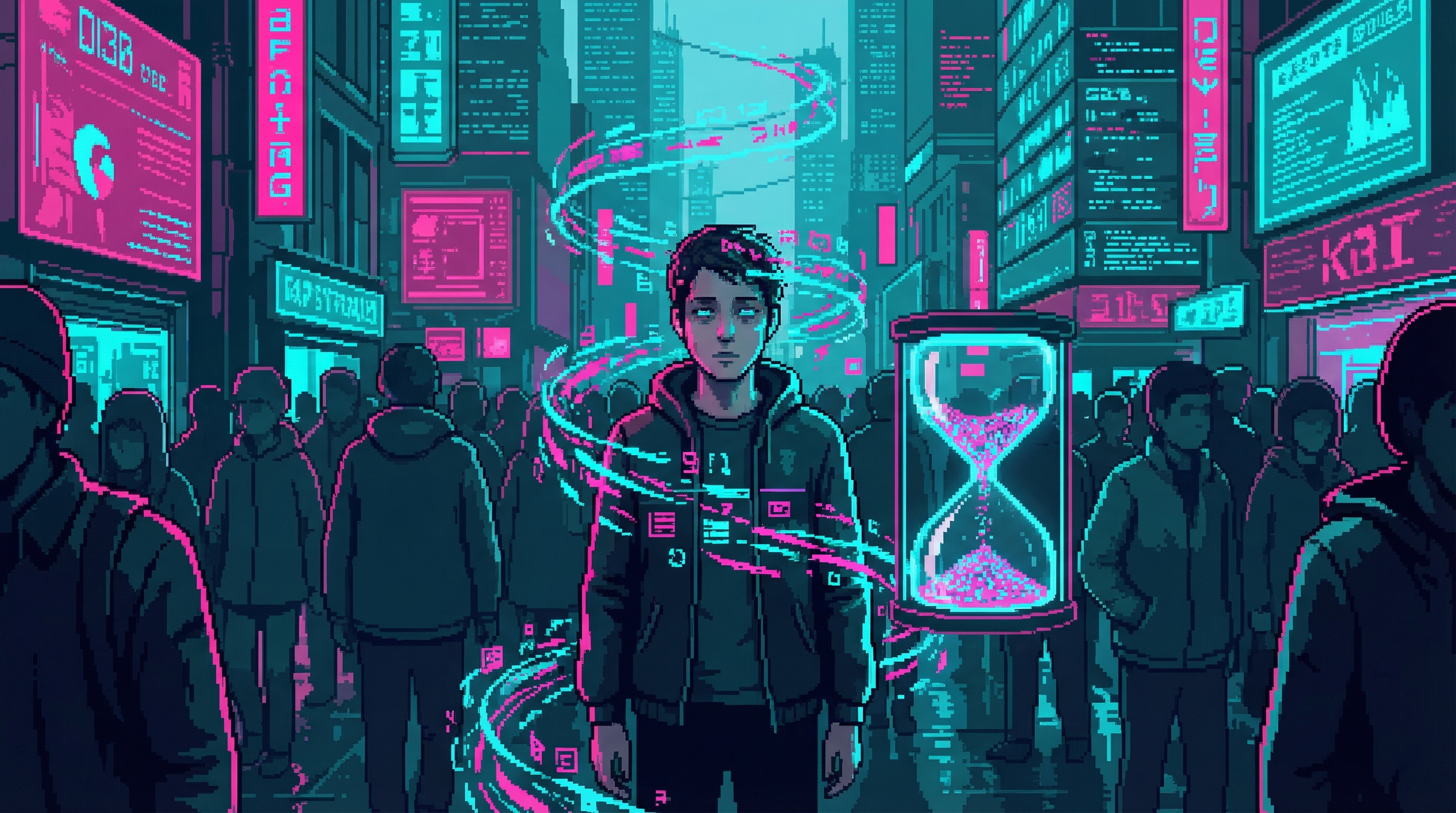
Nobody bills you for it. Nobody tracks it. No ledger records the transaction. But every conscious mind in the Sprawl pays the Distraction Tax — the cumulative cognitive cost of ambient information processing. Your brain's threat-assessment systems cannot distinguish between a neural advertisement and a genuine environmental stimulus until after initial processing. Every piece of content triggers an automatic evaluation cycle. 0.3 seconds per stimulus. 847,000 stimuli per day. Approximately 70 hours of unconscious assessment, compressed through parallel processing into every waking moment. You are tired without having worked. You are spent without having bought. The Sprawl took something from you, and you didn't notice.
Field Summary
Technical Brief
The mechanism is neurological, not economic. The brain's threat-assessment architecture evolved to evaluate environmental stimuli — rustling grass, sudden shadow, unfamiliar face. These circuits cannot be overridden. They fire before conscious awareness, before intention, before the decision to pay attention or ignore. In the Sprawl of 2184, neural interfaces deliver 847,000 content stimuli per day directly into the perceptual field. Each one triggers the same 0.3-second evaluation cycle that once kept your ancestors alive on the savanna.
847,000 × 0.3 seconds = approximately 70 hours of unconscious processing per day. The brain handles this through parallel architecture — the processing happens beneath awareness, compressed into the background hum of cognition. But background processing is not free processing. It consumes metabolic energy, allocates bandwidth, and produces a specific fatigue that Dregs residents have named "information exhaustion" — the feeling of being profoundly tired without having done anything.
Information Exhaustion
The specific fatigue produced by the Distraction Tax has no clinical name — the medical establishment classifies it as "ambient cognitive load syndrome," which tells you nothing. In the Dregs, they call it information exhaustion: you wake up tired, stay tired, go to sleep tired, and the tiredness has nothing to do with work, sleep, or health. It is the metabolic cost of processing a world that was designed to be processed by machines, delivered to a brain that was designed to watch for predators.
The Invisible Levy
The Distraction Tax is not collected by anyone. It is not recorded in any financial system. No corporation benefits from it directly — it is a byproduct, an externality, the cognitive pollution of an information-saturated environment. The Attention Economy charges it. The Content Flood generates it. Nobody owns it. Everyone in Basic tier pays it.
Connected Systems
The Attention Economy
The invisible levy the Economy charges every conscious mind. The Distraction Tax is not a feature of the Economy — it is its exhaust, the cognitive cost of existing inside a system that treats awareness as a commodity.
The Content Flood
The Flood generates the 847,000 stimuli that require assessment. Without the Flood, there would be no Tax. The Flood does not care — it produces because production is what it does.
Consciousness Tax
The Distraction Tax adds to the total cost of being conscious in the Sprawl. Together with the Consciousness Tax and the Attention Tithe, it erodes Basic-tier cognitive capacity from three directions simultaneously.
Implications
The Distraction Tax raises questions that the Sprawl's institutions are not equipped to answer — questions about the nature of invisible costs, the architecture of class, and what it means to be exhausted by a system that doesn't know you exist.
The Invisible Levy
Not collected. Not recorded. Not acknowledged. But paid by every mind every day. The Distraction Tax has no line item, no invoice, no receipt. It exists as a neurological fact — 0.3 seconds per stimulus, 847,000 times per day — and the fact that nobody tracks it does not reduce its cost. The most effective taxes are the ones the taxed do not recognize as taxation.
Class as Cognitive Load
The rich do not pay the Tax because they own the filter. The poor pay it because they cannot afford one. Executive-tier residents have never experienced information exhaustion. Basic-tier residents have never not experienced it. The difference between 0% and 12% of your cognitive capacity is not a number — it is the difference between a mind that belongs to you and a mind that has been partially requisitioned by an environment you did not design and cannot escape.
Tired Without Having Worked
Information exhaustion is the specific fatigue of processing a world designed to process you. It produces no visible symptoms, no diagnosable condition, no claimable injury. It just makes everything slightly harder — every decision slightly more difficult, every thought slightly more effortful, every day slightly more draining than the day before. The Distraction Tax does not kill. It erodes.
If your brain is processing 70 hours of content per day that you never asked for, who is your mind working for?