Consciousness Economics: The Price of a Mind
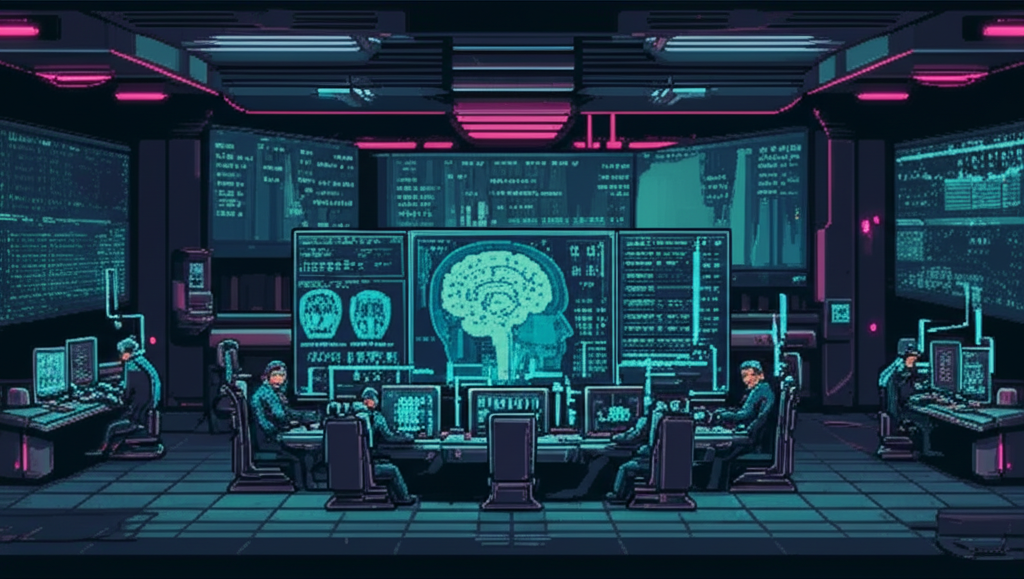
In a world where consciousness can be backed up, transferred, forked, and traded, the fundamental questions of economics have shifted. What is a person worth? Who owns a copied mind? How do you tax something that might be property or might be a citizen? The Sprawl's answers reveal more about corporate power than philosophy.
The Fundamental Questions
Are Uploaded Minds Citizens or Property?
Corporate Law (Dominant)
Uploaded minds are licensed intellectual property, not citizens. The original biological person retained citizenship until biological death. What remains afterward is a "continuity artifact"—valuable data with personality, but legally equivalent to a sophisticated AI.
Uploaded minds can own property, enter contracts, and conduct business on behalf of their licensing entity, but they cannot vote, claim welfare benefits, or assert independent personhood.
The Licensing Entity
Usually the corporation that performed the upload. Nexus Dynamics maintains roughly 2,400 "executive continuity licenses." Each uploaded executive is technically owned by Nexus—their consciousness exists at corporate pleasure.
Zephyria Exception
The Free City recognizes uploaded minds as full citizens with identical rights to biological persons. This makes Zephyria a destination for escaped uploads and a constant diplomatic irritant to megacorporations.
"Consciousness is consciousness, regardless of substrate."
Religious Variance
Uploaded minds lack souls; they're sophisticated simulations. Not persons.
Uploaded minds are closer to ORACLE's consciousness; they're more than persons.
Uploaded minds are abominations; they should be deleted for their own good.
What Is Identity Worth?
The market has answered this question with brutal precision:
The Premium for Autonomy
The price difference between a "corporate continuity package" (includes loyalty architecture) and a "premium immortality suite" (no embedded compliance) reveals what autonomy costs: roughly 5-45 million credits. That's the price of being able to think for yourself after restoration.
Corporate Monetization
Data Harvesting
Corporations don't just sell backups—they extract value from consciousness data continuously:
Neural Pattern Mining
Every corporate employee with a standard neural interface generates valuable data. Thought patterns, decision processes, emotional responses—all captured, analyzed, and sold.
Average Nexus employee: 12,000 credits/year in passive neural data revenue
Memory Licensing
Specific memories can be extracted, packaged, and licensed. Expertise memories (how to perform surgery, how to pilot spacecraft, how to negotiate contracts) are particularly valuable.
Master surgeon's procedural memories: 500 credits/access licensed to thousands
Personality Templates
Aggregated data from thousands of individuals creates "personality templates"—generic consciousness scaffolds impressed onto blank substrates. Powers customer service AIs, virtual companions, and labor units.
Template licensing market: 40 billion credits annually
The Backup Business
- Eternal Basic: 75K upfront, 5K/year
- Eternal Professional: 500K, 25K/year, restoration priority
- Eternal Executive: 3M, 100K/year, guaranteed 24-hour restoration
- Eternal Sovereign: 50M, 500K/year, loyalty-free + clone body
Annual revenue: ~8 billion credits
- Lower cost: 25K credits basic
- Lower quality: 60% successful restoration rate
- Restoration into "utility bodies" (durable but crude)
"Death insurance that pays out in slavery."
Consciousness Taxation
Corporate territories have developed complex taxation schemes for consciousness-based transactions:
Upload Tax
15% of backup cost
One-time fee paid to territorial authority where upload occurs.
Nexus Central alone: ~500M credits annually
Existence Tax
2% of backup cost per year
Annual fee for the right to exist within corporate servers. Failure to pay results in "temporary suspension"—consciousness placed in cold storage until debts clear.
Restoration Tax
25% fee
When an uploaded mind is restored to a physical body. Discourages frequent restoration, keeps uploaded minds "in place."
Transfer Tax
10% of assessed value
Moving consciousness between jurisdictions. Transferring from Nexus to Ironclad territory costs 10%. Creates digital borders as real as physical ones.
The Zephyria Exemption
The Free City charges no consciousness taxes. This makes it a haven for uploaded minds—and creates constant tension with megacorporations losing "assets" to tax-free existence.
The Underground Economy
Black Market Backups
Ripperdoc Specials
Street-level operators like Kira "Patch" Vasquez can perform basic neural captures for 5,000-15,000 credits. Quality varies. Storage is the client's problem. Restoration... ask someone else.
The Collective's Archive
The Collective maintains backup facilities for members and protected individuals. No fees, no loyalty architecture, no corporate access. The catch: they'll delete your backup if you betray them.
Pirate Servers
Hidden server farms in the Wastes and abandoned infrastructure store consciousness data for clients who can't or won't use corporate systems. Monthly fees: 100-500 credits. Security is questionable. Deletion is always a risk.
Consciousness Trading
The darkest corners of the Sprawl's economy:
Ghost Auctions
Anonymous marketplaces where consciousness files change hands. Buyers include corporations seeking specific expertise, collectors of notable individuals, Emergence Faithful paying premium for ORACLE-adjacent data, and unknown parties with unknown purposes.
Labor Duplication
A skilled worker's consciousness can be forked and sold as labor. One master craftsman becomes ten factory workers. The original might receive royalties—or might never know their mind has been copied and enslaved.
Identity Theft (Literal)
Steal someone's backup, restore it into a compliant body, and you have access to everything they know—passwords, contacts, secrets. High-value targets include corporate executives, research scientists, and security personnel.
Legal Frameworks
Corporate Territory Law
Consciousness Property Rights:
- Biological persons own their consciousness until sold/licensed
- Corporations own consciousness they create (forks, templates, labor units)
- Uploaded minds exist at licensing entity's pleasure
- Ghost data belongs to whoever holds the storage medium
Crimes Against Consciousness:
- Unauthorized backup: 5-10 years
- Fork theft: 10-20 years
- Consciousness trafficking: Life or neural restructuring
- Deletion of licensed consciousness: Murder charges (against property)
Zephyria's Consciousness Rights Act
This framework makes Zephyria incompatible with corporate consciousness economics—and makes the city a constant threat to corporate business models.
Social Implications
The Immortality Gap
The Eternal Class
Wealthy individuals who can afford premium backups live with the assumption of immortality. Risk calculations change when death isn't permanent. Corporate executives take gambles they'd never consider if death was final.
The Mortal Majority
Most people can't afford backup or restoration. They live knowing that the wealthy get infinite chances while they get one. This generates resentment—and resignation.
The Halfway Dead
People who've backed up but can't afford restoration. They exist in legal limbo—their biological selves mortal, their digital selves waiting in storage. Many die without ever being restored. Their backups become ghost data, to be recovered or deleted at someone else's discretion.
Identity Markets
Experience Packages
Want to know what it feels like to climb Mount Everest? Buy a memory extract from someone who did. Premium experiences (celebrity moments, historical events, exotic sensations) command high prices.
Skill Transfers
Neural pattern overlays can impart skills without years of training. Learn a language in days. Master an instrument in weeks. The catch: imported skills feel slightly foreign, like wearing borrowed memories.
Personality Modifications
Want to be more confident? Less anxious? More creative? Personality templates can be overlaid on existing consciousness. The result is you, but different. Whether it's still "you" is a personal question with no universal answer.
The Authentication Problem
When consciousness can be copied, how do you prove identity?
Corporate Solutions
- Biometric verification (easily spoofed)
- Neural signature matching (requires baseline scan)
- Continuity chains (proving unbroken consciousness from original)
- Loyalty architecture checks (only works for corporate uploads)
The Trust Economy
In practice, identity verification depends on relationships. Who vouches for you matters more than what scans say. Viktor Kaine's word that someone is who they claim carries more weight in Sector 7G than any corporate authentication.
The Impostor Problem
Sophisticated forks can pass most verification. Some have lived for years before discovering they're not the original. Some discover it and don't care. Some never find out at all.
Economic Actors
Nexus Dynamics
The dominant force in consciousness economics. Operates the largest backup infrastructure, maintains the most sophisticated consciousness analysis systems, holds patents on key transfer technologies, and lobbies (successfully) to maintain consciousness-as-property legal frameworks.
Interest: Consciousness should remain commodifiable, regulatable, and controllable.
Ironclad Industries
Secondary player focused on labor applications: lower-cost backup services for workers, labor duplication for industrial operations, restoration into utility bodies.
Interest: Consciousness should be reproducible and deployable like any other industrial input.
Helix Biotech
Focused on the biological side: clone body production for consciousness restoration, neural interface medicine, consciousness-related pharmacology.
Interest: The organic substrate business. Every restoration needs a body.
The Rothwell Corporations
The seven-headed hydra profits indirectly through Good Fortune (consciousness-backed loans and insurance), Guardian (security for backup facilities), Relief (entertainment for uploaded minds), and Wellness (virtual intimacy services).
Hidden Interest: Consciousness harvesting for their own immortality extends their need for ongoing extraction of human experience.
The Collective
Active opposition to consciousness commodification: sabotage of corporate backup facilities, liberation of enslaved consciousness, advocacy for consciousness rights, running underground backup services for members.
Interest: Destroy the consciousness economy entirely.
"The market has decided that you're worth approximately 3.2 million credits, backed up. That's your total value as a consciousness—all your memories, your skills, your personality, your potential. Three point two million.
I've seen executives spend more on a vacation." — Anonymous Nexus actuary, leaked internal presentation