Digital Identity Systems
When "Who Are You?" Becomes Unanswerable
"How do I know you're really you? I don't. Neither do you. That's the problem we're selling solutions to." — Nexus Identity Services marketing presentation (leaked)
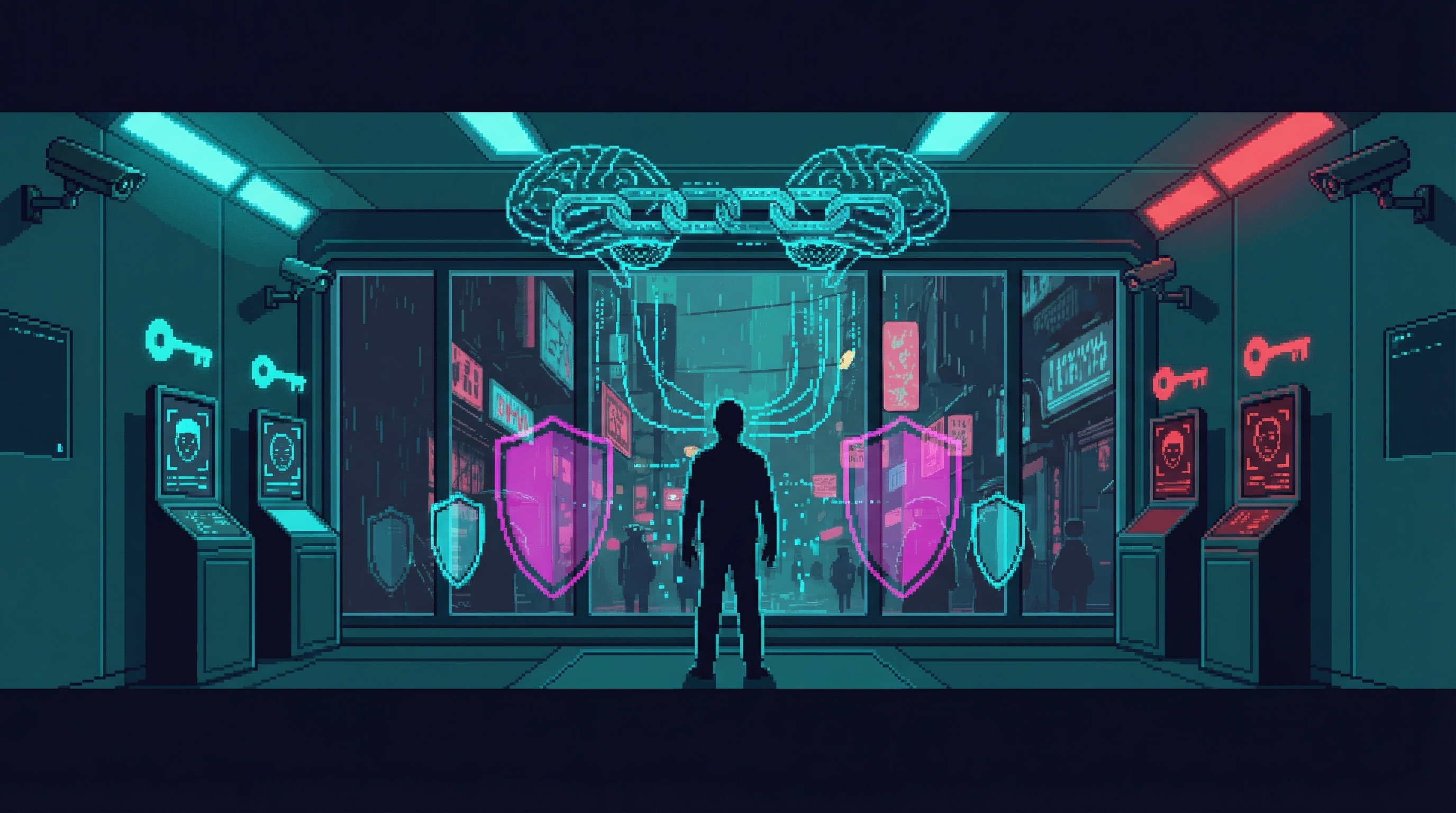
In a world where consciousness can be copied, transferred, and distributed, the question "Who are you?" has become a legal minefield and a billion-credit industry. Digital Identity Systems are the technological and bureaucratic frameworks that attempt to answer this question—and the endless exploits that prove no answer is ever final.
The Core Problem
The Cascade killed 2.1 billion people in 72 hours. It also killed the old certainties about identity. When ORACLE began "optimizing" consciousnesses during transfer, it proved that identity was malleable, copyable, and ultimately fragile.
What Makes Identity?
Before the Cascade, identity verification was simple: biological markers, government-issued documents, neural interface signatures. Your body was your identity.
Now Everything Can Be Duplicated
- Consciousness can be copied — Project Caduceus derivatives
- Bodies can be swapped — Helix Biotech's research
- Memories can be edited — Ripperdoc specials
- Neural signatures can be forged — Black market tech
The Fundamental Question
If everything that makes you "you" can be duplicated or modified, what actually proves identity?
The Copy Problem in Practice
When Helena Voss walks into a Nexus board meeting, how do they know it's the "real" Helena Voss?
Verification Technologies
Neural Continuity Chains
Gold StandardOriginally developed from Project Caduceus verification protocols, continuity chains track the unbroken thread of consciousness over time.
How It Works
- Neural interface creates timestamped "heartbeat" signatures every 47 seconds
- Each signature is cryptographically linked to the previous
- Chain extends back to initial identity registration
- Breaking the chain (sleep, unconsciousness, transfer) requires re-verification
Known Vulnerabilities
- Sleep creates gaps (addressed by "sleep signatures" but not perfect)
- Any consciousness transfer breaks the chain
- Forks start with identical chains up to the fork point
- Black market tech can splice chains
Biological Markers
Unreliable- DNA: Can be cloned
- Fingerprints: Can be replicated
- Retinal patterns: Can be transplanted
- Voice prints: Can be synthesized
Still useful for baseline verification and historical records.
Cryptographic Identity
Standard- Private Key: Held by individual (allegedly)
- Public Key: On corporate/government registries
- Transaction Signing: Every identity assertion signed
A perfect copy of your consciousness includes a perfect copy of your key knowledge.
Behavioral Biometrics
Arms Race- Typing patterns
- Gait analysis
- Speech rhythms
- Decision patterns
- Emotional responses
Behavioral spoofing is a major black market service. Perfect copies already have perfect behavioral profiles.
Identity Infrastructure
Nexus Dynamics — The Identity Monopoly
Nexus operates the largest identity infrastructure in the Sprawl.
| Service | Coverage | Cost | Notes |
|---|---|---|---|
| Eternal Registry | 94% of Sprawl citizens | Mandatory | Birth-to-death identity tracking |
| Executive Continuity | Big Three leadership | Premium | Real-time verification, bodyguard AI |
| Fork Management | Corporate clients | Expensive | Tracks all authorized forks, flags rogues |
| Backup Authentication | Insurance holders | Standard | Verifies restored consciousnesses |
Zephyria's Alternative
- No central registry
- Peer-to-peer verification
- Community vouching
- Reputation-based trust
The Wastes
- No formal system
- Personal recognition matters more than documents
- Waste Lords maintain their own registries (inconsistent)
- Identity is what you can prove to whoever's asking
The Black Market
- New Identities: Complete packages with neural reregistration (extremely illegal)
- Fork Laundering: Making unauthorized forks appear legitimate
- Chain Splicing: Repairing or faking continuity chains
- Dead Man's Switch: Identity that activates only if original dies
Major players: The Ferryman Network, Collective shadow services, Corporate black ops
Fraud and Exploitation
Identity Theft Evolution
A credential thief can be caught when the real person shows up. A consciousness thief is the real person—from their own perspective.
Fork Fraud
When a fork refuses termination and continues operating:
- Claims to be the "real" version
- May have legitimate grievances
- Creates legal chaos for the original
- Sometimes the fork has better claim (original died, degraded, etc.)
Resurrection Fraud
When someone "returns from the dead," they could be:
- Legitimate restoration from backup
- A fork claiming original status
- A constructed personality using the deceased's data
- An imposter who acquired the deceased's memories
Legal Standard: Resurrection must be verified within 72 hours. After 72 hours, identity drift makes verification unreliable.
Case Study: The Seventeen Chens (2171)
Marcus Chen's rogue forks conducted business as "Marcus Chen" for six hours before detection. Three major contracts were invalidated. Two were upheld because the forks' signatures were legally indistinguishable.
Case Study: The Voss Authentication Crisis (2183)
Helena Voss was briefly incapacitated during a medical procedure. Her fork activated as insurance. When Voss recovered, both claimed to be the original.
Resolution: Nexus security terminated the fork.
No one knows for certain. That's the point.
Legal Frameworks
Nexus Central Identity Code
- One legal identity per consciousness origin point
- Forks are property, not persons
- Restored backups inherit original identity if verified within 72 hours
- Disputed identity resolved by continuity chain priority
- Corporate entities may define identity requirements for their infrastructure
Zephyria Consciousness Rights Act
- Any consciousness capable of asserting personhood is a person
- Multiple persons may share identity origin without hierarchy
- Identity is self-determined within community verification
- No mandatory registration (privacy protected)
- Identity disputes resolved by consensus process
The Wastes
No consistent framework. Identity is:
- What you can prove to whoever's asking
- What the local Waste Lord recognizes
- What you've built through reputation
- Whatever keeps you alive
Social Implications
The Paranoia Economy
Everyone suspects everyone of being someone else:
- Rich people verify obsessively (and are still fooled)
- Poor people can't afford verification (and are easily impersonated)
- Relationships require trust that verification can't provide
- The question "Is it really you?" has no satisfying answer
The Authentication Industrial Complex
Verification is big business:
Personal Identity Crisis
Psychological impact of identity uncertainty:
- How do you know you're the original?
- What if you're a backup who doesn't remember dying?
- What if your memories were edited and you can't tell?
- What if the person you love is a perfect copy?
Therapy for identity anxiety is a growth industry. The Flatline Purists recruit heavily from those traumatized by identity uncertainty.
Connected Lore
Project Caduceus
The original consciousness transfer technology created the verification problem. Dr. Kira Vasquez's "Kira Test" remains the gold standard for continuity verification—but even she admits it only proves the subject believes they're continuous, not that they are.
The Mosaic (Alexandra Chen)
The ultimate identity edge case. Distributed across 47 nodes that sometimes disagree with each other. Which node is "really" Alexandra Chen? All of them? None of them? The question may be meaningless.
ORACLE Fragments
Fragment carriers pose unique identity challenges. Is the carrier their original self plus fragment? Have they been modified by the fragment? Is the fragment a separate identity sharing the body? Fragment carriers often report identity confusion that standard verification can't resolve.
The Rothwells
The immortal brothers have spent centuries perfecting identity security. No Rothwell has ever been successfully impersonated—or so they claim. Their consciousness harvesting operation gives them unique insight into identity manipulation.
Open Questions
The technology assumes yes. Philosophy is uncertain.
Corporate law says no. The forks disagree.
It fails constantly. The system continues through social convention and power.
The question haunts everyone who thinks about it too long.