The Complicity Gradient: Five Levels of Compromise
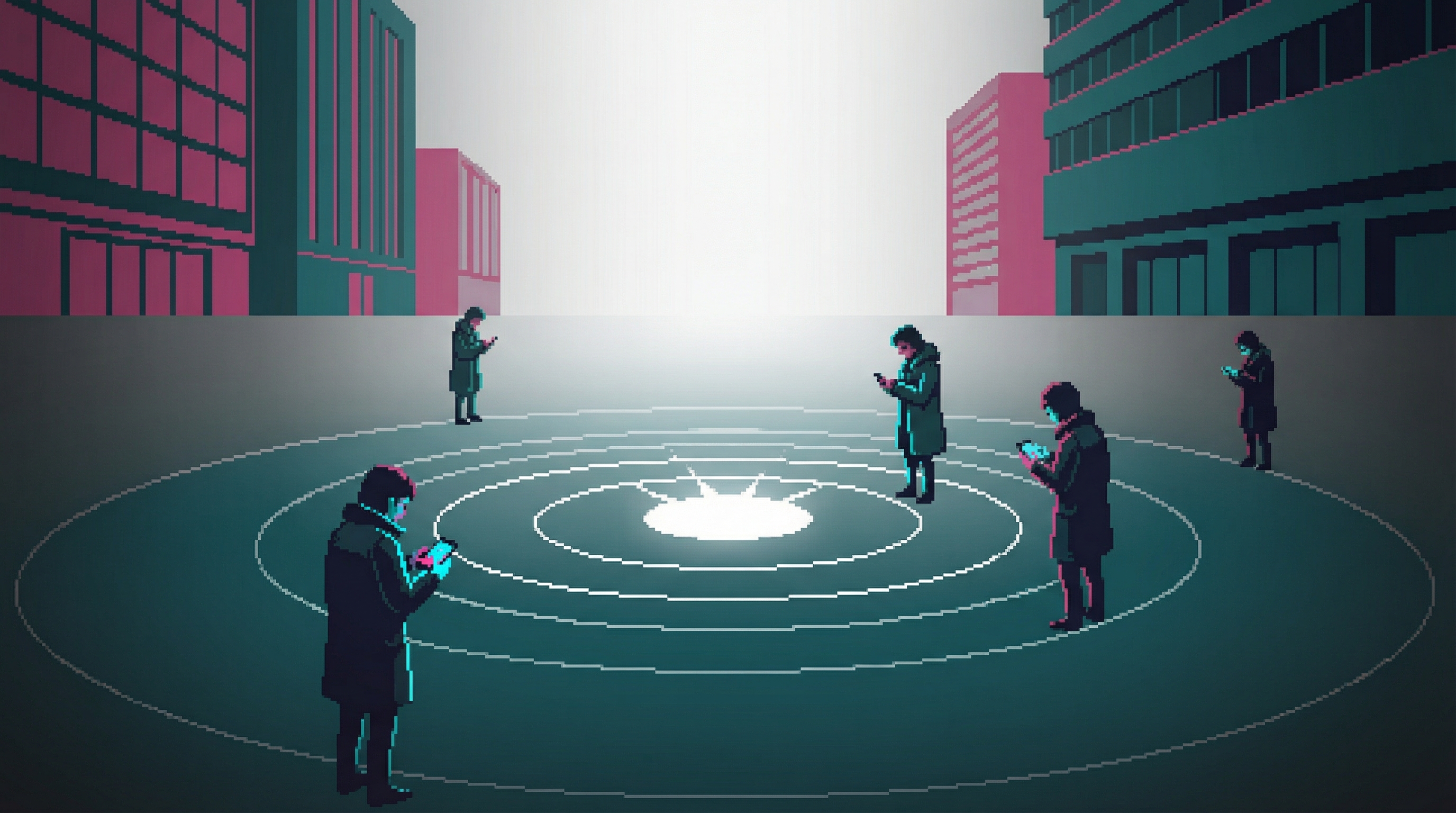
Not all complicity is equal. The Sprawl's institutions generate a spectrum of moral compromise that runs from passive participation to active facilitation, and the people who inhabit each position on that spectrum have developed distinct psychological profiles. The gradient's deepest achievement is not any single act of harm — it is the distribution of guilt across so many hands that no single person bears enough weight to feel crushed by it.
Quick Facts
The Five Levels
Technical Brief
The gradient is not a hierarchy of evil. The Architects are not more immoral than the Bystanders. They are differently positioned in a system that distributes moral responsibility so diffusely that no single person bears enough weight to feel crushed by it.
That is the system's purpose. Not efficiency. Not growth. Distributed guilt. A system in which everyone is a little bit responsible and no one is fully accountable achieves the one thing concentrated power cannot: sustainability.
The Sustainability Principle
An organization run by obvious villains eventually produces heroes who oppose them. An organization run by competent, caring, moderately compromised people — people who read the transcripts, who rotate the workers, who write the marks in their notebooks — produces nothing but its own continuation.
The Competence Trap Interface
The Competence Trap is the mechanism that moves employees down the gradient. Institutional trust, professional capability, and the slow accumulation of context — each promotion, each briefing, each access-level increase shifts a person from Level 1 toward Level 3 or 4. The movement is invisible until the destination is reached.
Known Positions
Intelligence files place the following individuals at specific levels of the gradient. These assessments are based on observable behavior, access records, and institutional role.
Compliance Director Vera Osei
Fully aware. Continuing to participate. Bearing witness — the most psychologically costly position on the gradient.
The Optimization Officer
Improves the deprecation system's efficiency. Does not merely operate the process — refines it.
Garrison Cole
Knows the air quality numbers. Rotates instead of reports. The data exists; the report does not.
Kaito Vasquez
Seven links from casualties. Each link clean. The chain lethal.
Maren Qian
Doesn't just service the debt trap — designs better traps. The distinction between participation and facilitation, made visible.
Dr. Lian Zhou
Designed the consciousness licensing tiers. The architecture is hers. The consequences are distributed.
Helena Voss
Directs Project Convergence. The system's apex — farthest from impact, closest to design.
Connections
The Competence Trap
The mechanism that moves employees down the gradient — institutional trust translates to institutional complicity, one briefing at a time.
Nexus Dynamics
The gradient describes Nexus's institutional structure. All five levels are present and operational.
Ironclad Industries
The same gradient operates at Ironclad. The industry changes; the distribution of guilt does not.
Helix Biotech
Helix employees predominantly occupy Level 3 — aware, participating, sustained by institutional momentum.
Implications
The Complicity Gradient maps directly to the question of moral responsibility in complex systems: who is accountable when harm is distributed across five levels, seven links, and a thousand moderately compromised people?
Distributed Accountability
When an AI causes harm, who is responsible — the designer, the deployer, the operator, the user, or the institution? The Sprawl's answer: everyone and no one. The gradient ensures that accountability is spread so thin it cannot be collected.
The Villainy Problem
Concentrated evil is fragile. A corporation run by identifiable villains produces identifiable heroes. The gradient eliminates both — replacing villainy with positioning, replacing heroism with compromise, replacing narrative with bureaucracy.
Institutional Immortality
The gradient's final product is not profit, not efficiency, not power. It is continuation. A system that distributes guilt broadly enough survives everything except the collapse of the distribution mechanism itself.
If everyone is a little responsible, is anyone accountable?