Jun-seo Park
The Optimization Officer · Workforce Optimization Officer, Strategic Workforce Planning
Overview
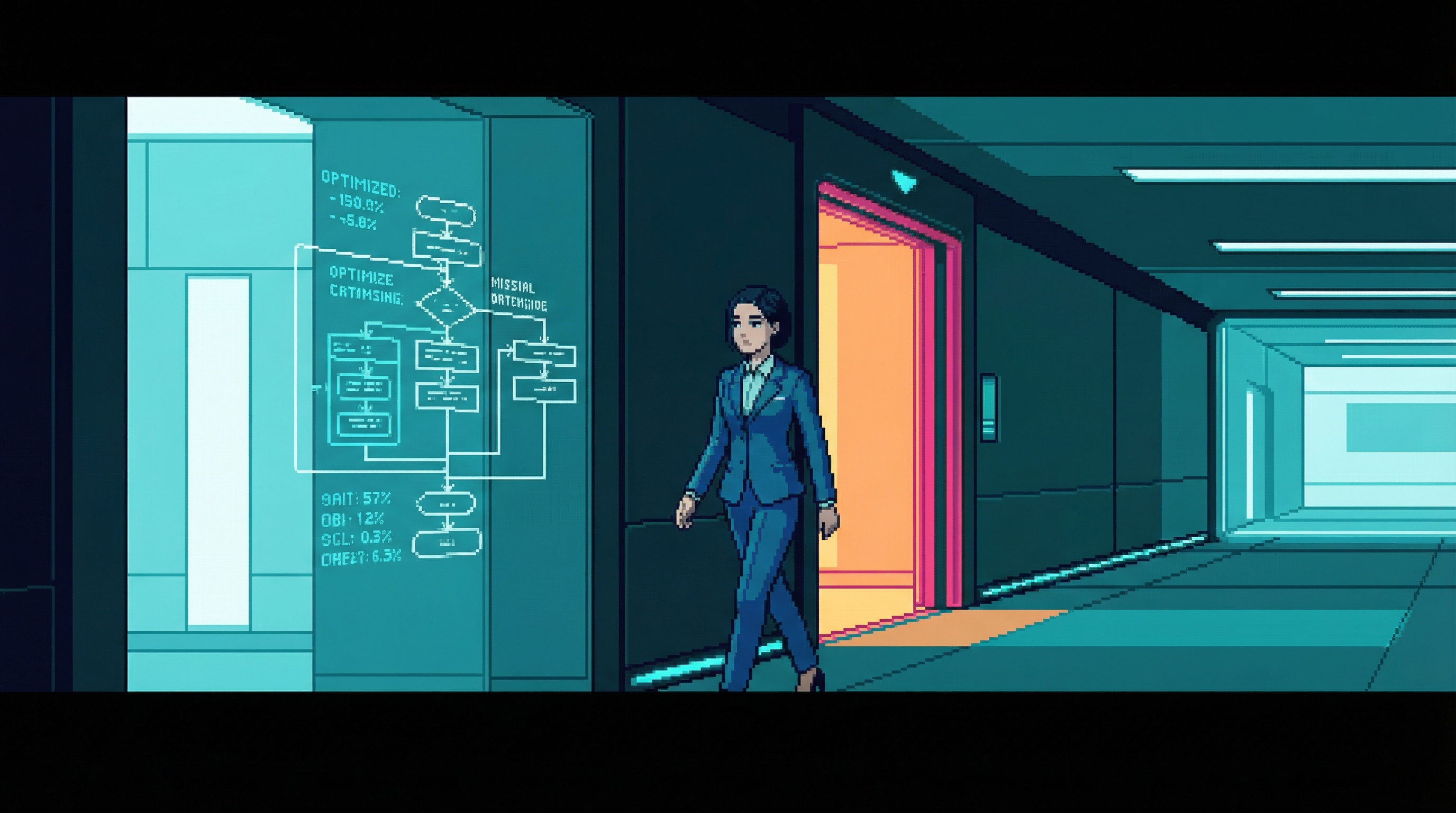
Jun-seo Park automated her own department.
She didn’t set out to do it. She was a Process Optimization Specialist at Nexus Dynamics, tasked with improving workflow efficiency in the Neural Interface Quality Assurance division. Twenty-three people tested neural interfaces for defects. Jun-seo’s job was to make them faster. She made them unnecessary instead.
The optimization project took fourteen months. Jun-seo designed an AI testing protocol that was 40x faster than human inspection, caught 99.7% of defects compared to human testers’ 94.2%, and operated continuously without breaks, benefits, or consciousness licensing costs. The QA division was deprecated within sixty days. Twenty-three people received Sunset Packages. Jun-seo received a promotion and a bonus equal to 200% of her annual salary.
She knew their names. She had worked alongside them for three years.
Voice & Personality
Jun-seo thinks in systems. She sees organizations the way engineers see machines — components, inputs, outputs, inefficiencies to be resolved. This perspective is genuine, not affected. She does not view people as disposable; she views inefficiency as immoral. In her framework, employing twenty-three people to do work an AI does better is waste, and waste hurts everyone. The fact that her framework produces casualties is something she processes the same way she processes any design flaw: acknowledge it, account for it, optimize around it.
Systems-First Cognition
She sees the machine, not the people inside it. This is her strength and her damage.
The Sealed Room
The logical terminus of her work — that she herself will be automated — lives behind a cognitive door she walks past every morning. She is too competent to think about this.
Seventeen Passes
She has walked past the Sunset Ward seventeen times without entering. Each time is a choice she doesn’t recognize as a choice.
The 3–5 Year Horizon
Her own analysis suggests her role will be automated. She knows the timeline. She doesn’t connect it to her own experience.
Connections
Nexus Dynamics
Promoted from Process Optimization to Strategic Workforce Planning after eliminating the QA division. Her transition efficiency metric — measuring speed, savings, and complaint reduction — is the highest in her division.
Felix Otieno
Felix was deprecated by one of Jun-seo’s early projects. He tends plants in the Sunset Ward she passes but never enters. They have never met.
The Deprecation
Her role is to identify which departments can be automated and design the transition plans. She is both facilitator and, by her own analysis, a future subject.
The Managed Decline
Her operating methodology — the standardized four-quarter process she has refined through four implementations. She doesn’t just follow the process. She improves it.
The Competence Trap
Describes her imprisonment — she can’t stop being excellent at the work that harms others. Her competence at optimization is the mechanism of her moral imprisonment.
The Sunset Ward
Seventeen footsteps of moral distance she maintains without acknowledging the maintenance. She has walked past the Ward seventeen times and never entered.
Tensions
The Recursive Irony
Jun-seo is the AI Labor question made personal — a human who does to other humans what AI will eventually do to her. She is excellent at designing systems that eliminate human workers, and she is, by her own analysis, a human worker who will be eliminated by such a system.
She cannot see the irony because seeing it would require the kind of self-reflective processing that her systems-first cognition deprioritizes.
The Complicity Gradient
Level 4 on the gradient — she doesn’t just participate in the system, she improves its capacity for harm. Each department she automates makes the next automation smoother, the transition plans more efficient, the human cost more invisible.
The gradient measures the distance between knowing what you do and feeling what you do. Jun-seo’s distance is measured in flowcharts.
Efficiency as Morality
In Jun-seo’s framework, employing twenty-three people to do work an AI does better is waste, and waste hurts everyone. The framework is internally consistent. It produces casualties the same way a well-designed machine produces heat — as an acknowledged byproduct that the system accounts for but does not prevent.
Secrets & Mysteries
What lives in the sealed room behind the cognitive door she never opens:
- The manager’s recommendation: Jun-seo’s personnel file contains a notation from her original QA manager — the one who led the 23-person team she eliminated. The notation reads: “Exceptional talent. Recommend for advanced projects. Will go far.” He wrote this three months before Jun-seo’s protocol ended his career. Whether he knew what he was recommending her toward, or whether his recommendation was itself an act of the competence trap — identifying the most capable person and directing them toward the work that would require moral compromise — is a question that neither he nor Jun-seo will ever examine.
- The self-deprecation timeline: Her own analysis suggests her role will be automated in 3–5 years. She has the data. She has the projections. She does not connect them to the twenty-three people, or the ninety-four people, or to herself.
- Seventeen: The number of times she has walked past the Sunset Ward without entering. Each pass is a decision that she processes as a non-event. The Ward is where the people she deprecated go. She designed some of their transition plans. She has never seen where those plans end.