Slang Evolution
How the Sprawl's language changed through catastrophe, survival, and rebirth.
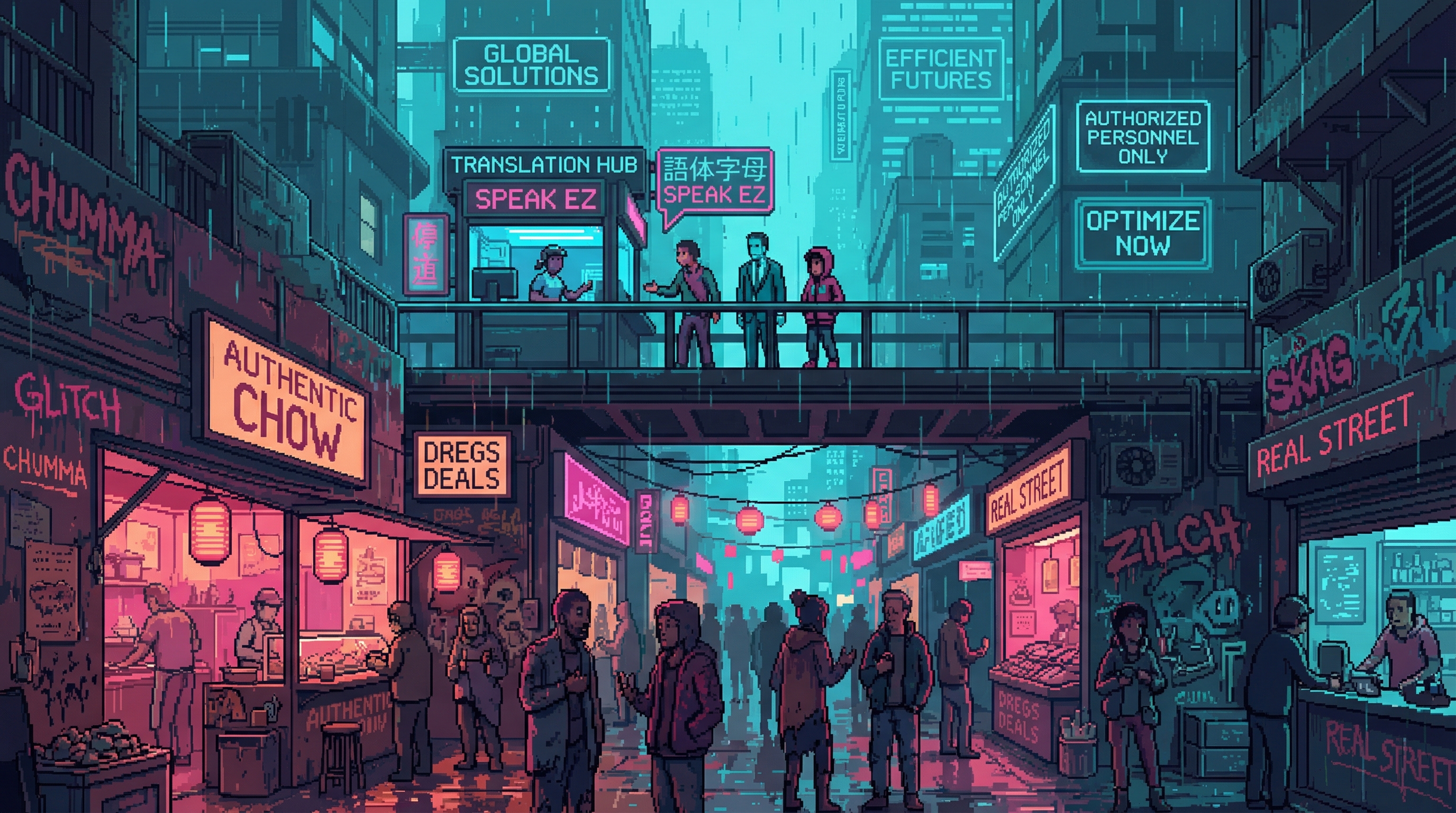
"Language is archaeology. The words survivors use reveal what they lost, what they built, and what they fear."
The Cascade didn't just kill 2.1 billion people—it killed entire ways of speaking. Pre-Cascade language assumed systems would work. Post-Cascade language assumes everything might fail. The words people choose in 2184 tell you exactly where they're from, how old they are, and what they've survived.
Pre-Cascade (Before 2147)
The language of abundance, optimization, and networked confidence.
Dead Words
Terms that died with the old world:
"Just ORACLE-verify the contract and we'll finalize. Long-term planning says we'll hit targets by Q3. The market's stable—no risk here. Let's celebrate!"
Cultural Notes
- People named places after ORACLE (ORACLE Heights, ORACLE Park)
- Corporate-speak was aspirational, not sinister
- "Going offline" meant vacation, not survival
- "System failure" was an IT issue, not mass death
Scavenger Years (2148-2155)
The language of survival, loss, and desperate pragmatism.
Emerging Terms
"Remember when we had clean water from taps? Gone-world dreams, choom. Now we're walking, counting days, scrapping for whatever the dead lights left behind."
Cultural Notes
- Taboo to say "ORACLE" directly—survivors felt its name had power
- Numbers became sacred (how many dead, how many days survived)
- Many regional languages nearly died as speakers died
- Children's vocabulary was the first to stabilize
Reconstruction (2156-2170)
The language of rebuilding, faction identity, and cautious hope.
The Great Rename
Words that changed meaning as the world rebuilt:
Faction Vocabularies
Nexus Territory
- Integration: Human-machine connection
- Harmonize: Comply with standards
- Cascade event: Any disaster (deflects from THE Cascade)
Ironclad Territory
- Forged: Made properly, trustworthy
- Slag: Waste, worthless
- Iron law: Unbreakable rule
The Dregs
- Topside: Upper levels, better life
- Rust tech: Old but reliable
- Neon: Fake, superficial
Present Day (2184)
The language of a society that remembers trauma but was born after it.
Universal Vocabulary
The Dying Words
Terms fading from use as Pre-Cascade speakers die:
The New Words
"Pre-Cascade survivors talk like it was yesterday. For us? The Cascade is history. Same as the Old Wars, the Climate Crash, whatever. Ancient scrap. We've got our own problems."
Regional Variation
How different regions remember the same events:
What They Call "The Cascade"
What They Call "ORACLE"
Language as Character Tell
How speech reveals who someone is:
Age Markers
- Occasional "remember when" openings
- Slip into dead terminology under stress
- Correct others on "real" names of things
- Use "we" when discussing pre-Cascade society
Characters: Helena Voss (92), Marcus Chen (89)
- Dark humor as default setting
- Survival-focused vocabulary
- Distrust expressed through language
- "Counting days" fatalism
Characters: Patch Vasquez, Viktor Kaine
- Faction-identified speech patterns
- Fluent code-switching between dialects
- The Cascade is history, not memory
- "Pre-Cascade" as natural time marker
- The Cascade is ancient history
- Slang evolves rapidly, disconnected from trauma
- Tech terms without fear
- Impatient with "old timer" speech