The Purpose Wards
Where the system that destroyed your meaning sells it back to you, one craft session at a time.
Overview
In the aftermath of each deprecation wave, corporate mental health services see a spike in referrals. The condition is not classified as a disorder — the Sprawl's diagnostic manuals don't have a category for "loss of meaning following removal from institutional identity" — but it has a colloquial name in the Dregs: the drift.
The Purpose Wards are Nexus Dynamics' response: therapeutic facilities in the transition zone between corporate territory and the Dregs, staffed by counselors trained in "identity reconstitution" and funded through the same Sunset Package budget that paid for the deprecation. The irony is structural: Nexus creates the condition, then charges the treatment to the same line item that created it, achieving cost neutrality on the destruction of human meaning.
The program runs twelve weeks. Weeks one through four: grief processing — learning to mourn the identity that was stripped away. Weeks five through eight: skills inventory — cataloguing what remains when the corporate role is gone. Weeks nine through twelve: community integration — learning to exist in the Dregs without the institutional scaffolding that once held you upright. At twelve weeks, 67% of patients report meaningful improvement. At one year, 31%.
Atmosphere
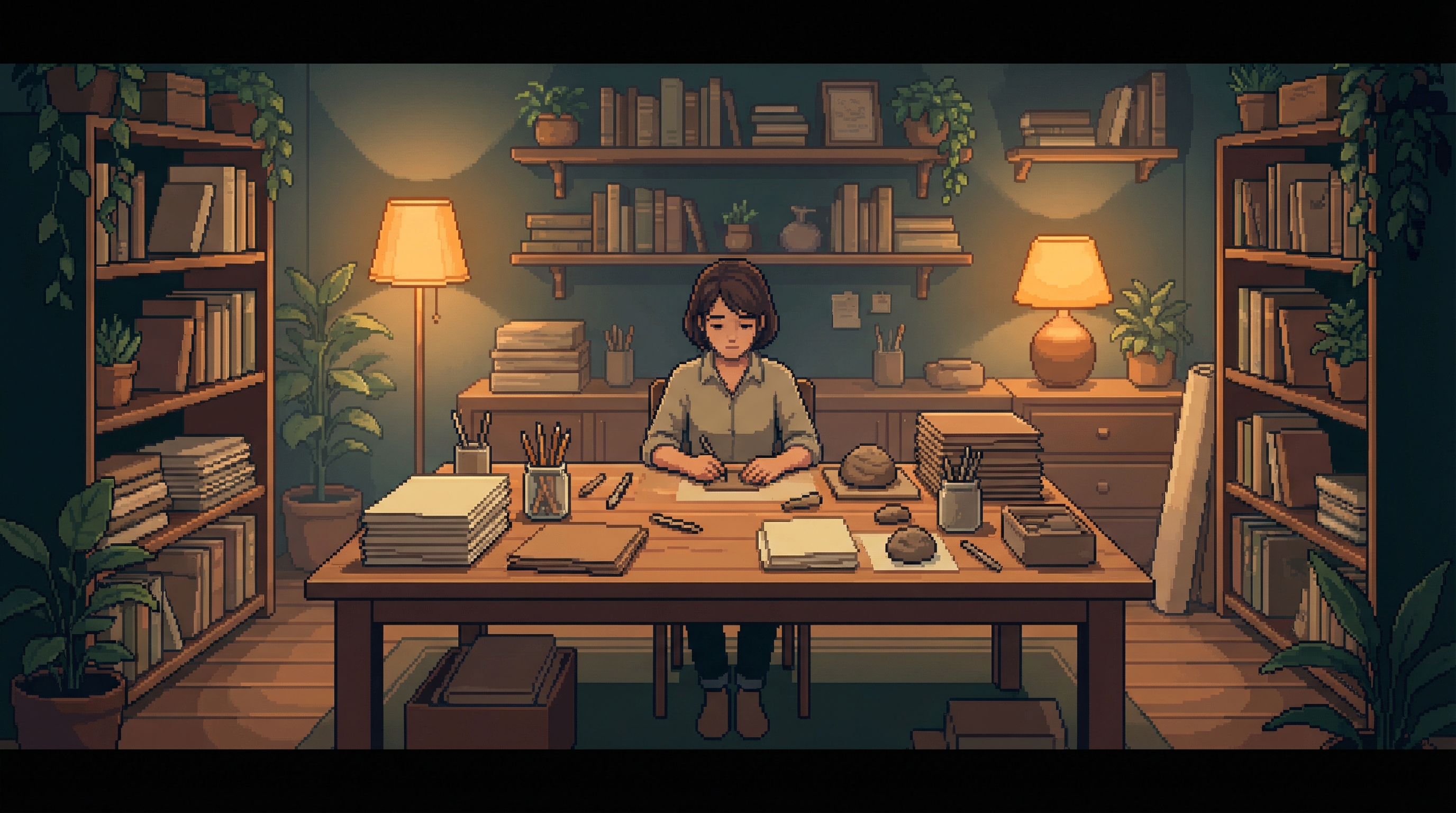
The Wards share a design language: warm colors, soft textures, no corporate branding, no digital interfaces visible. The aesthetic is deliberately analog — wooden furniture, paper books, craft materials. The message: you are a person, not a process.
Smell
Wood polish, paper, craft materials — the deliberate absence of corporate scent engineering. Something that might be lavender, but natural rather than synthetic.
Sound
Quiet conversation, the scratch of pencil on paper — the therapeutic program emphasizes analog creative expression — the occasional sound of someone discovering they can still make something with their hands.
Light
Warm, low, deliberately non-institutional — table lamps rather than overhead panels, creating pools of illumination rather than uniform brightness.
Touch
Wooden grain, paper texture, the weight of a pencil — everything chosen to remind the hands that they exist for more than interfacing with corporate systems.
Connections
The Deprecation
The Wards exist because deprecation exists. Every patient is someone the 72-hour process converted from a corporate identity into a blank space — the Wards are the system's attempt to write something back onto that space, using the same budget that erased it.
The Sunset Ward
Patients flow from the Sunset Ward to the Purpose Ward through the same budgetary pipeline — 72 hours of termination processing, then 12 weeks of identity reconstitution. The Sunset Ward breaks the connection; the Purpose Ward attempts to build a new one.
Nexus Dynamics
Funded through the Sunset Package budget — cost neutrality on the destruction of meaning. Nexus creates the condition, then provides the treatment, and both entries appear on the same spreadsheet.
Memory Therapists
Purpose Ward counselors use techniques adapted from Memory Therapist practice — methods originally developed for memory trauma, repurposed for identity loss. The therapeutic lineage is clear: both conditions involve something essential being taken away.
The Purpose Crisis
The Wards treat the crisis's symptoms but cannot change the system that causes it. Every graduate who returns to the Dregs carries the same vulnerability — the system that emptied them once can empty them again.
The Tensions
Cost Neutrality on Meaning
The same budget line funds the deprecation and the rehabilitation. The system that strips purpose from a worker and the system that attempts to restore it are not opponents — they are entries on the same spreadsheet, balanced to zero. The cruelest optimization: meaning destroyed and meaning restored, net cost to the corporation: nothing.
The 31% Question
At twelve weeks, 67% report improvement. At one year, 31%. The gap between those numbers contains everyone who found temporary purpose in the program itself and lost it again when the program ended — the Wards teaching people to depend on the Wards, a new institutional identity replacing the one that was taken.
Analog as Therapy
The deliberate absence of digital interfaces, the wooden furniture, the paper and pencils — the Wards define healing as the removal of corporate technology. But this is still a corporate space, designed by corporate psychologists, funded by corporate budgets. The analog aesthetic is itself a product of optimization: the most efficient way to make a broken person feel human again.
Mysteries
- The Repeat Patients: Some patients cycle through the Wards multiple times — deprecated, rehabilitated, re-employed, deprecated again. The system generates its own repeat customers. Whether Nexus tracks the recidivism rate is unknown; whether they consider it a feature rather than a failure is the question nobody in the Wards wants to ask aloud.
- The Blank Page: Every patient begins the craft therapy program with a blank page and a single pencil. Some never make a mark. The counselors have a term for it — "pre-creative arrest" — but the patients have a simpler name: the proof. Proof that the deprecation took something that cannot be given back in twelve weeks.