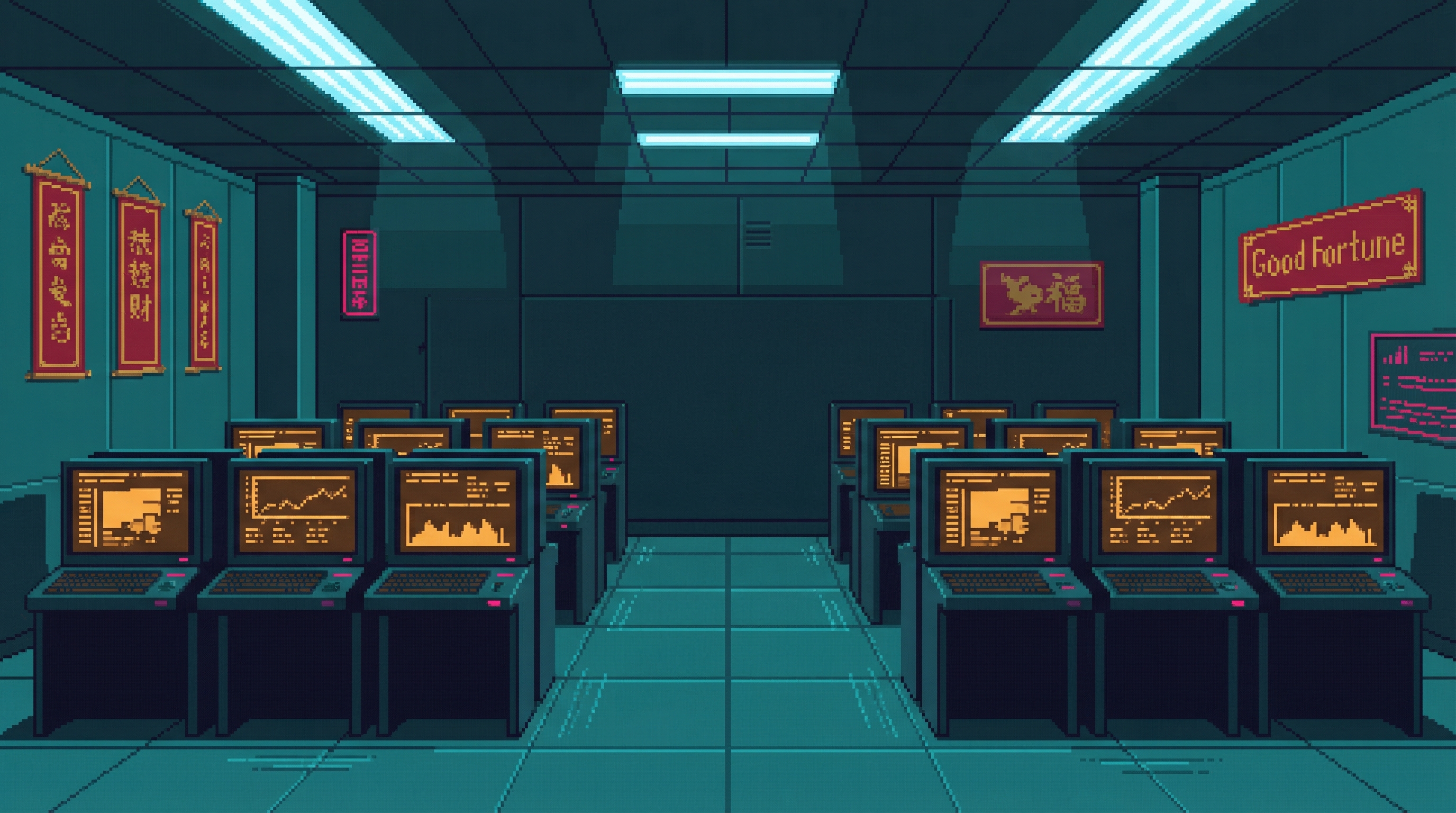
The Processing Floor
Where financial abstractions become physical weather
On the 38th floor of Good Fortune's Sector 4D tower — directly above Server Farm 14, close enough to feel the 72-bpm hum through the floor — twelve traders sit in a room that smells of recycled air and process the Sprawl's most consequential commodity: the right to redirect compute.
The Processing Floor is where the Cognitive Exchange's abstractions become physical reality. When a consciousness futures contract matures, a Load Balancer tells a server farm to stop processing atmospheric quality data for Sector 8 and start processing consciousness backup data for a Nexus executive. The decision is financial. The consequence is meteorological.
Twelve people. Twelve terminals. An average of 800 trades per shift. None of them have ever been outside the tower during a compute drought.
Conditions Report
The Floor is comfortable. That is the point. Clean air, precise temperature, good lighting, ergonomic stations. Nothing to suggest that the infrastructure this room commands is physical rather than abstract. The window shows corporate towers and blue sky — not the Thermal Shadow's haze six floors below.
Sound
The 72-bpm hum from Farm 14 below — felt through the floor, felt through the feet. The heartbeat of the infrastructure the Floor commands. After three months, the traders stop noticing it. After a year, they feel wrong without it.
Smell
Recycled corporate air — nothing. The deliberate absence of the Thermal Shadow's haze. Six floors separate the traders from what their trades create. The ventilation system makes it feel like six hundred.
Sight
Twelve terminals, each showing real-time compute allocation maps. Numbers, not people. Good Fortune's red-and-gold branding on the walls. The window showing Sector 4D's upper levels. Everything rendered as data — nothing rendered as consequence.
Touch
The vibration of the hum. Clean, temperature-controlled surfaces. Smooth interface controls designed for speed and precision. 21°C precisely — climate-controlled, shielded. The opposite of the Shadow six floors below.
The Work
A trade arrives from the Cognitive Exchange. The Load Balancer verifies the allocation parameters, confirms the target infrastructure is available, and executes the redirect. Sector 8's atmospheric processing capacity drops by 12%. The trader logs the transaction. The next trade arrives.
The quarterly review measures three things: trades executed, accuracy percentage, and client satisfaction score. It does not measure atmospheric impact. It does not measure how many hours of clean air a district lost. It does not measure the temperature differential between the 38th floor and the streets below. These are not part of the performance framework. They never have been.
The most experienced Load Balancer in the Floor's history was Maren Qian — 147,000 trades before her promotion to Senior Prosperity Architect. She kept a notebook of every redirection during her Processing Floor years. No one has asked to see it. No one has asked why she kept it.
Strategic Assessment
The Middle Distance
The Load Balancers see their trades. They do not see their consequences. The Floor is designed — architecturally, informationally, culturally — to maintain this distance. The terminals show compute allocation as numbers on a screen. Sector 8's atmospheric processing capacity being redirected to consciousness futures settlement looks the same as any other trade: green confirmation, timestamp, next in queue.
The Quarterly Review
Efficiency is measured. Accuracy is measured. Client satisfaction is measured. The un-measured consequences are lethal. No trader has ever been disciplined for atmospheric impact. No trader has ever been rewarded for minimizing it. The incentive structure does not recognize that weather exists.
Complicity Gradient: Level 2
Twelve people at Level 2 — could know what their trades cause, have not asked. The information is available. The atmospheric data is public. Any Load Balancer could correlate their trade log with district weather patterns and see exactly what they did. None of them have. The question is whether not asking is a choice or a condition.
What Nobody Has Measured
- Maren Qian's notebook: 147,000 redirections recorded by hand. She took it with her when she was promoted. If anyone cross-referenced those entries with district atmospheric records, they would have a complete map of how financial decisions become weather. No one has asked to see it. No one has asked why it exists.
- The hum: 72 bpm from Server Farm 14. The Load Balancers feel it through their feet every working hour. It is the only sensory evidence that the infrastructure they command is physical — that the numbers on their screens are connected to machines, and the machines are connected to air, and the air is connected to people breathing it. After three months, they stop noticing.
- The six-floor gap: The Thermal Shadow begins six floors below. The Processing Floor's climate control ensures the traders never feel the heat their redirections create. The ventilation system is, in a very real sense, a complicity engine.