Memory Markets: Trading in Human Experience
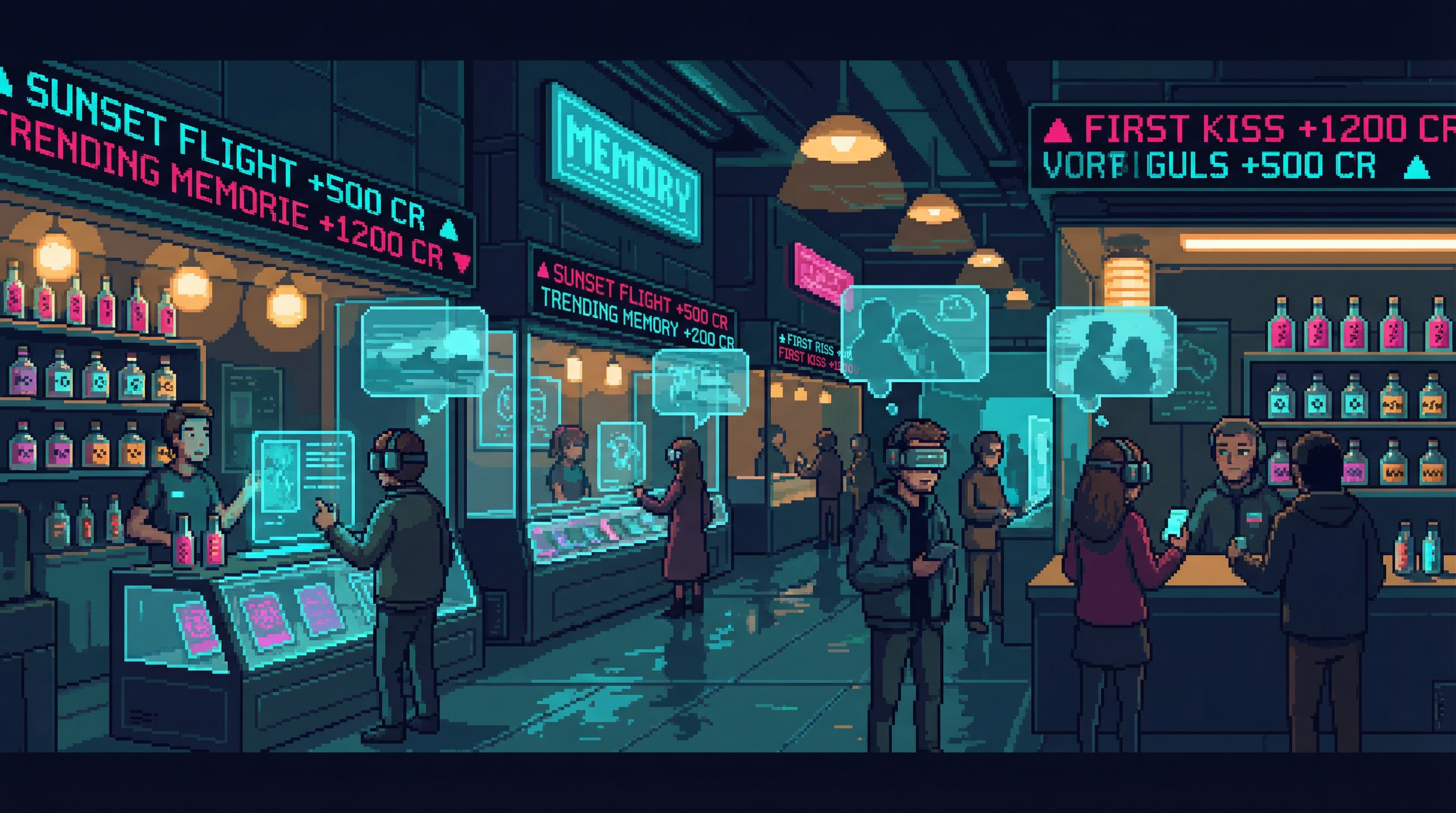
Where consciousness economics deals with whole minds—backups, uploads, forks—memory markets trade in fragments. Individual experiences, skills, emotions, moments. You can buy what it feels like to fall in love. To win a championship. To kill someone. The question isn't whether these things are for sale—everything is. The question is what happens to you when you remember something that never happened to you.
The Technology
Memory Extraction
Clinical Extraction
- Performed by licensed practitioners (rare) or skilled ripperdocs (common)
- Subject is sedated; specific memory clusters isolated via neural interface
- Process takes 2-6 hours depending on memory complexity
- Clean extractions preserve emotional context and sensory detail
Risk: Incomplete extraction can leave "phantom memories" in the subject
Coercive Extraction
- Faster, cheaper, far more damaging
- Used by corps for interrogation, criminals for theft
- Subject remains conscious (or screaming)
- Results in fragmented, often corrupted memories
Risk: High permanent damage to subject
Death Harvesting
- Memories extracted in the moments surrounding death
- Particularly valuable for "final experience" collectors
- Technically illegal in most jurisdictions (practically unenforceable)
Emergence Faithful pay premium prices for ORACLE-adjacent death memories
Memory Storage
Storage Decay
All memories degrade without active maintenance. Emotional content fades first, then sensory detail. Very old memories become increasingly "abstract"—the facts without the feeling.
Premium storage services: 200-500 credits/month per memory
Memory Implantation
Integration Factors
- Subject's existing memories must "make room"
- Conflicting memories cause psychological disturbance
- Multiple implants from different sources compound instability
- Neural architecture affects acceptance rate
Rejection Symptoms
- Dissonance: knowing something happened but feeling it happened to someone else
- Intrusion: implanted memories surfacing involuntarily
- Identity bleed: uncertainty about which memories are "real"
- Severe: dissociative episodes, personality fragmentation
Success Rates
- Single memory, compatible context: 90%+
- Skill package, compatible background: 75-85%
- Emotional memory, unfamiliar context: 50-70%
- Multiple implants, varied sources: cumulative degradation
What's Traded
Experience Memories
Forbidden Experiences
- Murder (from perpetrator's perspective): illegal, actively traded
- Torture: illegal, disturbing demand exists
- Pre-Cascade normalcy: rare, valuable, legally grey
- Celebrity memories: often stolen, highly sought
Experience Tourism
The wealthy buy memories of places they'll never visit, lives they'll never live. There's a subset of the eternal class who've accumulated thousands of memories from different lives—more collected experiences than any single person could have.
Skill Memories
The Borrowed Hands Problem
Implanted skills feel slightly foreign. A surgeon with implanted technique describes it as "my hands knowing what to do while I watch." This uncanny sense never fully fades, and some practitioners find it more disturbing than helpful.
Emotional Memories
Therapeutic Applications
- Grief processing: experiencing healthy mourning to learn the pattern
- Trauma resolution: implanting recovery memories alongside traumatic ones
- Confidence building: borrowing successful experiences
Recreational Use
- Emotional tourism: feeling joy, wonder, love without context
- Mood regulation: implanting calm to override anxiety
- Addiction: the full experience of substances without physical dependency
The Hollow Problem
Implanted emotions without corresponding experiences create psychological instability. People who've bought happiness without earning it often find their baseline mood shifts—nothing natural feels as intense.
Emotional memory addiction is recognized but poorly understood.
The Major Brokers
Mnemosyne Collective (Semi-Legal)
The largest organized memory broker network
Services:
- Memory extraction (clinical quality)
- Storage and preservation
- Matching buyers with sellers
- Quality verification and rating
- Dispute resolution
Business: 15% commission, storage fees, premium "authenticated" memories
Reputation: Relatively ethical—verifies consent, won't trade harmful content. Also expensive.
The Forgetting Service (Black Market)
Specializing in memory removal
Services:
- Selective memory deletion
- Trauma erasure
- Witness elimination (making people forget what they saw)
- Identity reshaping (extensive modification)
Clientele: Trauma survivors, criminals, corporate executives, lovers ending relationships
The Catch: Deletion is imprecise. Remove enough, and personality fragments.
Red Echo (Criminal)
The dark market for forbidden memories
Specialties:
- Coercively extracted memories
- Death experiences (harvested and natural)
- Celebrity and corporate target memories
- Memories of crimes (both perspectives)
Operations: No fixed location, encrypted networks, no guarantees, untraceable payment
The Toll: Suppliers include kidnappers, interrogators, and those who harvest from the dying.
Memory Inheritance
Legal Framework
Corporate Law:
- Memories are property of the deceased's estate
- Can be bequeathed like any other asset
- Storage companies have liens on unpaid archives
- Nexus's "Eternal Memory" package includes inheritance planning
Practical Reality:
- Most people don't plan for memory inheritance
- Storage companies auction unclaimed archives after 5 years
- Family disputes over memory ownership are common
Memory Trusts
Wealthy families establish memory trusts to:
- Preserve family history across generations
- Transfer skills and knowledge to heirs
- Maintain family "character" through shared experiences
- Control access to sensitive memories
The Dynasty Effect
Old money families have accumulated centuries of memories. A Rothwell heir receives not just wealth but the remembered experiences of ancestors—their victories, their cunning, their perspectives. This creates a compounding advantage that mere wealth can't match.
Memory Insurance
Good Fortune (Rothwell) dominates this market.
Coverage Types:
- Basic: Compensates family if memories are lost to storage failure
- Premium: Guarantees restoration from backup
- Comprehensive: Includes extraction upon death, storage, and distribution
Controversies: Claims denied for "inadequate neural preservation at time of death"
Legal Status
Universally Prohibited
- Memory Trafficking: Trading in memories extracted without consent. 10-25 years imprisonment.
- Identity Theft via Memory: Using extracted memories to impersonate someone. Enhanced penalties.
- Minor Exploitation: Extracting or implanting memories in children. Universal prohibition, rarely enforced.
Jurisdiction-Dependent
Death Harvesting:
- Nexus Central: Illegal without pre-authorization
- Ironclad Territory: Legal with next-of-kin consent
- Zephyria: Illegal without subject's advance directive
- The Wastes: No enforceable law
Coercive Extraction:
Illegal everywhere on paper. Practiced by every major corporation's security division. Prosecution depends on who's being extracted and who's doing it.
Unregulated
- Experience Tourism: Legal everywhere, regulated nowhere
- Self-Modification: You can do whatever you want to your own memories
- Skill Trading: Entirely legal—corporations actively encourage it
Social Implications
The Authenticity Crisis
When memories can be bought, what makes an experience yours?
The Purist Position
Only original experiences have meaning. Buying memories is existential fraud—pretending to be someone you're not.
The Pragmatist Position
A memory is a memory. If you remember it, it's yours. The source doesn't change the subjective experience.
The Middle Ground
Most people distinguish between "natural" and "implanted" memories but don't treat implanted ones as worthless. It's similar to natural vs. augmented abilities—real, but different.
Class Implications
The Memory-Rich
- Inherit vast archives of family experience
- Can afford premium extractions and implantations
- Accumulate skills without years of training
- Experience lives they never lived
The Memory-Poor
- Sell their experiences to survive
- Can't afford skill implants for better jobs
- Lose privacy as their memories become commodities
- Die knowing their last moments may be harvested
Extraction Exploitation
In the Dregs, memory extraction offers quick cash for the desperate. Sell your happiest memory for rent money. Sell your skills when you can't find work using them. Sell your pain to collectors of suffering.
The market doesn't care what you're losing—only what you're selling.
Identity Questions
The Ship of Theseus
If you replace enough memories, are you still you? Some philosophers argue that personal identity is constituted by memory—change the memories, change the person.
Legal Personhood
Courts have ruled that memory modification doesn't change legal identity. The person who committed a crime is still guilty even if they don't remember it. The person who signed a contract is still bound even if they've forgotten.
Psychological Reality
In practice, extensive memory modification changes people. Those who've bought dozens of experiences from other lives describe feeling "distributed"—present in their bodies but not fully rooted in any single identity.
"My grandmother left me her wedding day. Not the ring—I had to sell that. The memory.
I remember standing in that garden, sixty years ago, feeling her joy as my own. Is it mine now? It feels like mine. But sometimes I forget it happened to someone else, and I have to remind myself that I've never been married, never worn that dress, never looked at anyone the way she looked at my grandfather.
It's the most precious thing I own, and I don't know if it's real." — Anonymous memory recipient, recorded interview