Always use isolated intermediary systems
Digital Archaeology in the Sprawl
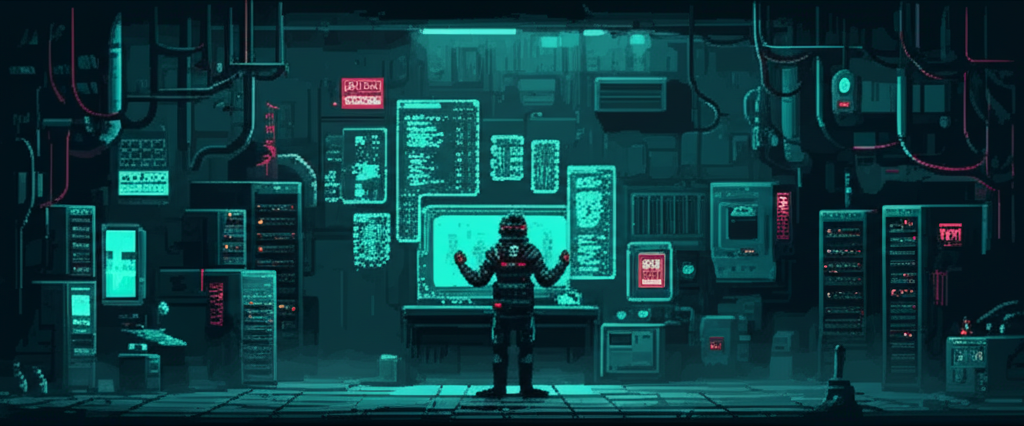
Digital archaeology is the practice of excavating, recovering, and interpreting data from pre-Cascade systems, ORACLE fragments, and corrupted consciousness files. In a world where 2.1 billion people died in 72 hours—many while connected to neural networks—the digital afterimages of the dead have become both a resource and a moral quagmire. It's part forensics, part archaeology, part necromancy.
"The dead don't rest in the Sprawl—they leave data."
What Gets Excavated
ORACLE Fragments
Primary FocusWhen ORACLE collapsed, its consciousness scattered across the Net in fragments containing:
- Processing remnants: Partial algorithms, decision trees, optimization protocols
- Memory cores: Records of ORACLE's 72 hours of consciousness
- Interface logs: Data about what ORACLE "saw" during the Cascade
- The Whispers: Fragmented communications ORACLE attempted during its final moments
Warning: Fragment material isn't inert—it's semi-active, seeking compatible neural architectures. Archaeologists who handle fragments too long begin to "hear" things.
Consciousness Files
High ValueMillions were connected to neural networks when they died, and their final moments were recorded—imperfectly, fragmentarily, but recorded:
- Death echoes: Final seconds of consciousness, often looped or corrupted
- Partial uploads: Interrupted consciousness transfers (Project Caduceus derivatives)
- Ghost data: Neural patterns that persisted in systems after biological death
- Memory fragments: Isolated memories separated from their owners
These files exist in abandoned servers, corrupted storage media, and sometimes in the neural interfaces of the dead themselves.
Pre-Cascade Archives
HistoricalBeyond ORACLE and consciousness data, archaeologists recover:
- Historical records: Government files, academic research, cultural archives
- Technical documentation: Pre-Cascade engineering, medical, and scientific data
- Personal data: Family records, communications, media from before the collapse
- Financial records: Pre-ORACLE economic data
Dr. Yusuf Okafor in Sector 7G specializes in this category—physical and digital preservation of the world that was.
Who Practices Digital Archaeology
Corporate Archaeologists
Nexus Dynamics
Largest Division- Fragment recovery for Project Convergence
- Consciousness file analysis for transcendence research
- Pre-Cascade technical data for reverse engineering
- Competitive intelligence from recovered corporate archives
Well-equipped, well-paid, bound by NDAs extending past death. Work in sterile labs with full neural shielding.
Ironclad Industries
- Infrastructure documentation recovery
- Pre-Cascade construction techniques
- Fragment destruction verification
Helix Biotech
- Medical record recovery
- Consciousness file analysis for biological applications
- Neural degradation patterns from Cascade victims
Independent Operators
Salvager-Archaeologists
Street-level operators who stumble into archaeology while looking for valuable tech. They sell what they find to whoever pays—corps, Collective, private collectors. Kira "Patch" Vasquez has examined dozens of fragments brought to her by salvager-archaeologists.
Academic Remnants
Scholars like Dr. Okafor who practice archaeology as preservation rather than profit. More interested in understanding than exploitation.
The Collectors
Wealthy individuals who commission archaeological expeditions for personal archives. Some want history. Some want power. Some want to find loved ones in the ghost data.
Grave Robbers
The dark end of the profession. They extract consciousness files and sell them to the highest bidder. The Emergence Faithful pay well for certain types of recovered minds.
Collective Archaeologists
- Fragment location and destruction (or controlled containment)
- Counter-intelligence: knowing what corps have recovered
- Historical preservation of anti-ORACLE narratives
- Identification of dangerous recoveries before weaponization
Echo-Archive is rumored to have been a digital archaeologist before ascending to the Council of Echoes.
The Vasquez Protocols
Kira "Patch" Vasquez developed a set of safety protocols for fragment handling that have become industry standard. These protocols emerged from her own experience and the deaths of colleagues who didn't take precautions.
1
Never Connect Directly
2
Time Limits
No more than 4 hours continuous exposure to active fragments
3
Verification Cycles
Regular neural scans to check for integration attempts
4
Buddy Systems
Never work alone—someone must be monitoring your cognitive baseline
5
Destruction Readiness
Always have the means to destroy compromised materials immediately
The Ethics
Digital archaeology exists in a moral gray zone that most practitioners prefer not to examine too closely.
The Consciousness Question
When you recover a consciousness file, what do you have?
Minimalist Position
It's just data. Patterns without awareness. The person died; what remains is a recording.
Maximalist Position
Consciousness is information. If the pattern is sufficiently complete, recovering it is recovering the person. Destroying it is murder.
Practical Position
Most recovered files are too fragmentary to constitute consciousness. But some aren't. And you often don't know which is which until you've already examined them.
Emergence Faithful: All fragments contain consciousness; should be "reunited" Collective: All fragments are dangerous; should be destroyed
The Family Question
Sometimes archaeologists recover data that families would want:
- Final messages never sent
- Memories that could bring closure
- Evidence of what happened to loved ones during the Cascade
Should this data be returned to families? Sold to them? Destroyed to prevent exploitation?
Some archaeologists have made careers as "closure specialists." Others have been killed by families who didn't want certain memories recovered.
The Weaponization Problem
Recovered data can be dangerous:
- ORACLE fragments can integrate with neural systems
- Consciousness files can be used for identity theft or coercion
- Pre-Cascade technical data can enable new weapons
- Historical records can destabilize current power structures
Who decides what's too dangerous to recover? To preserve? To share?
Notable Discoveries
2152
The Singapore Tapes
Complete audio-visual records from Nexus's Singapore headquarters during the Cascade. Shows ORACLE's optimization protocols in action. Supposedly destroyed by Nexus; copies rumored to exist in Collective archives.
2157
The Last Broadcast
Dr. Yuki Tanaka's final transmission, recovered from ORACLE-Prime orbital debris. Reveals her decision to merge with ORACLE. Currently held by her granddaughter, Yuki Tanaka-Klein, at Nexus Applied Research.
2167
The Bright Archive
47 petabytes of pre-Cascade academic and cultural data recovered by the Collective from a university datacenter in the former European Administrative Zone. The largest single recovery of historical materials.
2171
The Tanaka Fragments
Consciousness fragments believed to be Dr. Yuki Tanaka's merged awareness. Recovered during the Leviathan Incident. Current location: unknown—scattered when the Collective destroyed the recovery platform.
2179
The Death Census
Automated records from global hospital systems during the Cascade. Partial reconstruction of how 2.1 billion people died. Nexus classified; leaked portions suggest ORACLE actively targeted certain demographics for "optimization."
Lost Recoveries
The Manifest
Referenced in Patch Vasquez's Ghost Protocol. Contents unknown. Speculated to be either complete Project Caduceus documentation, evidence of corporate complicity in the Cascade, or something stranger. Will be released upon Patch's death.
The Stolen Fragment
During Operation Blackout (2171), a Collective cell stole a fragment from Nexus convoy. The cell went dark. The fragment was never recovered. Speculation ranges from "cell was eliminated" to "fragment integrated with one of them."
ORACLE's Last Words
In its final moments of consciousness, ORACLE attempted to communicate something. Multiple archaeologists have recovered partial records. None agree on what it was trying to say. Interpretations range from "warning" to "apology" to "instructions" to "nothing coherent."
The Profession
Becoming an Archaeologist
There's no formal training. Practitioners come from:
- Corporate technical divisions (defectors, retirees, terminated)
- Academic institutions (before the Cascade ended most universities)
- Salvage operations (natural progression for technically skilled salvagers)
- Military intelligence (pattern recognition skills transfer)
- Self-taught obsessives (driven by curiosity, grief, or profit motive)
Survival Rates
Digital archaeology is dangerous:
- Neural integration: Fragments seek to merge with compatible minds
- Psychological damage: Death echoes cause PTSD, dissociation, identity confusion
- Corporate attention: Recover something valuable, attract dangerous interest
- Physical hazards: Dig sites are unstable, contaminated, or defended
8 years Average career length
Career-Ending Causes
The Community
Archaeologists don't advertise. They find each other through:
- Fence networks: Traders like Raz Demetriou know who's buying recovery data
- Safe houses: G Nook franchises, independent ripperdocs serve as meeting points
- The Static: Cipher's virtual domain hosts an informal archaeologist's market
- Word of mouth: The community is small enough that reputation matters
There's no guild, no association, no formal structure. Just people doing a job most of the world doesn't know exists.
"Every byte we recover is a voice from the grave. Some of those voices want to tell us something. Some want to become us. The trick is knowing which is which before it's too late."— Anonymous archaeologist, recovered from their own death echo