Overview
This is what a forced-focus shift feels like from inside.
Not the economics of it. Not the policy debate. Not the corporate justification or the union grievance. The actual experience — hour by hour, from the moment the lock engages to the moment you try to answer a simple question and discover that twelve hours of compressed consciousness has left you unable to reflect on what just happened to you.
The subject is unnamed because he could be anyone. He is a composite — every mill worker who has sat in a pod at 0600 and emerged at 1800 with a paycheck and a mind that needs twenty minutes to remember how to see the whole world again.
The Shift
The Lock
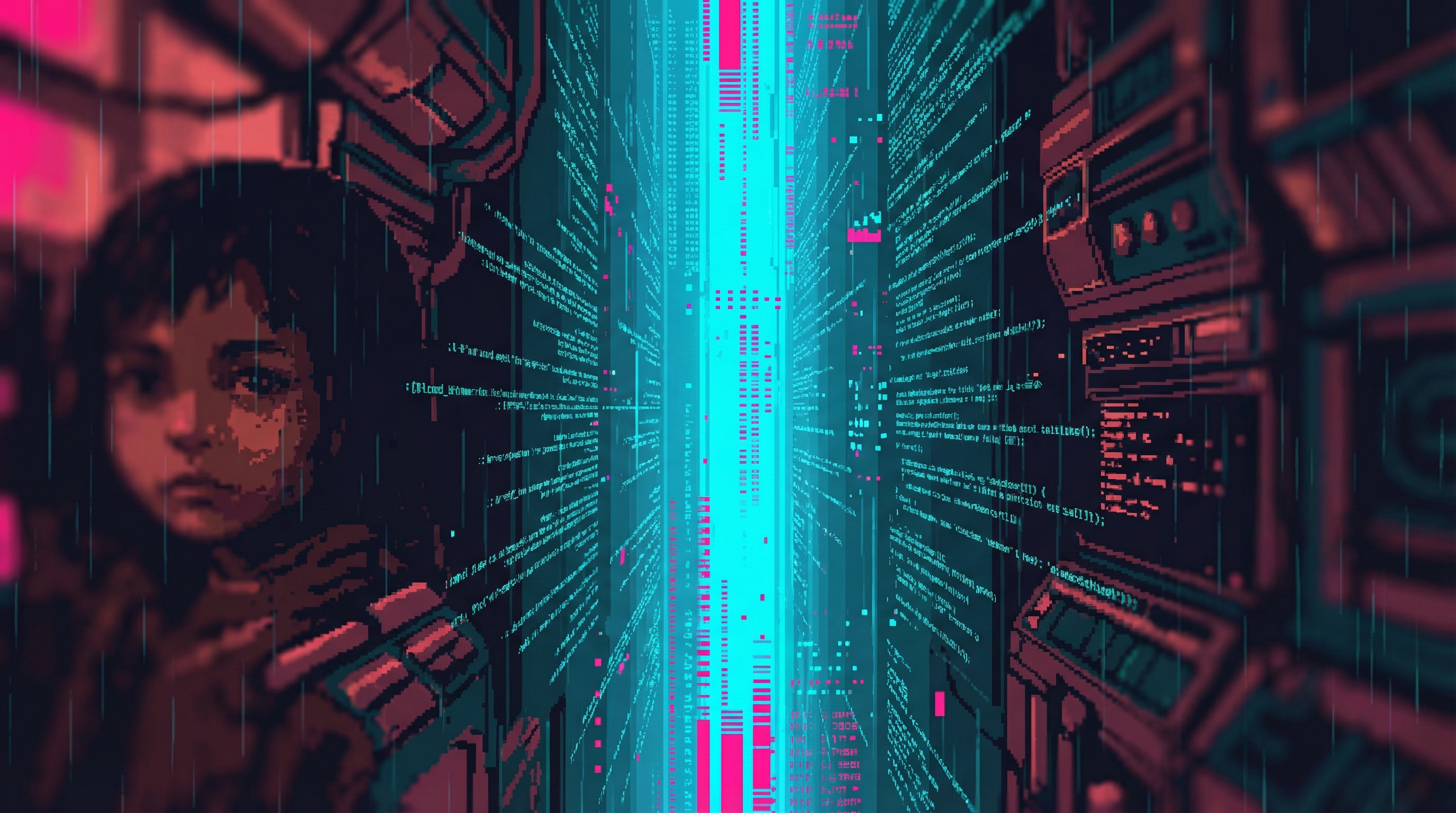
You arrive at the mill. You sit in your pod. The interface engages. The lock begins — a gentle constriction, like someone slowly closing their hands around your field of vision. The world's edges darken. The task appears.
Focus lock takes approximately 45 seconds to engage. It creates a tunnel-vision narrowing — colors fade at the periphery, sounds recede, the sense of your own body diminishes. By the time it completes, you are not a person performing a task. You are the task.
The Narrowing Completes
You are the task. Not "performing the task" — you are the task. Your consciousness has been compressed to a single thread. There is no peripheral awareness, no background processing, no idle thought. The data flows. You process it. This is all there is.
First Break
A break. The lock remains. You can blink. You can drink water. You can stand and stretch. You cannot think about anything except the task. The break is physical only — the cognitive lock stays engaged. Your hands move the cup to your mouth. Your mind stays in the data.
Midshift
Another break. Food has no taste because taste evaluation competes with task processing. The lock suppresses any cognitive function that doesn't serve the task — and savoring food is not task-relevant. You consume calories. You return.
The Eighth Hour
The cracks appear. A flash of your daughter's face between data points. The smell of home cooking. Each breakthrough immediately suppressed by the lock, but they come faster now. The brain's suppressed peripheral systems push back — not consciously, not deliberately, but with the accumulated pressure of eight hours of compressed awareness.
Efficiency declines 2–3%. The mills account for this. It is built into the shift model. The eighth-hour rebellion is not a bug — it is a known cost of running human consciousness at compression for this long.
The Unlock
The Unlock begins. Approximately twenty minutes of reverse narrowing. The world's edges brighten. Colors return — too bright. Sounds return — too loud. The smell of food hits like a physical blow. The expansion is not pleasant. It is cognitive vertigo — the sudden flooding of every sensory channel that has been suppressed for twelve hours.
Home
Home. Mia at the kitchen table. She is beautiful and complex and present and you can see approximately sixty percent of it because your peripheral processing is still recovering. She is doing homework. She looks up.
"How Was Your Day?"
She asks: "How was your day?"
The answer requires reflection, evaluation, context — exactly the cognitive capabilities that twelve hours of forced focus has spent the day suppressing. This is the most complex cognitive task you've encountered in twelve hours.
You say: "Fine."
The question is not difficult. A child asks it. But answering it requires the capacity to step outside your own experience, evaluate it, compress it into language, and deliver it with appropriate emotional context. Every one of those operations was suppressed by the lock. Every one of them is still recovering.
"How was your day?" proves that forced focus doesn't just sell your time. It sells your capacity for self-reflection. The hours come back. The ability to understand what happened during them takes longer.
Sensory
The Lock
Tunnel vision closing in. Colors fading at the periphery. Sounds disappearing one by one — first the ambient hum, then voices, then your own breathing. The world shrinks to a point.
The Task
Sharp, clear, brilliant — the only thing. Data rendered in perfect focus, every detail crisp, every pattern obvious. The single thread of compressed consciousness does its work with terrible efficiency.
The Unlock
A dam breaking. Colors too bright. Sounds too loud. The smell of food hitting like a physical blow. Twenty minutes of the world flooding back through channels that have been closed for twelve hours.
Home
Sixty percent visible. Forty percent still recovering. Your daughter's face half-clear, her voice fully present, your ability to respond to either still reassembling itself.
In-World Tensions
The Narrowing as Lived Experience
The Attention Economy is an abstraction. Policy debates are abstractions. But the lock is not abstract. It is sensory, physical, real — a daily compression of everything a person is into a single productive thread. The economics disappear inside the experience. What remains is the tunnel, the task, and the slow fight to become a whole person again afterward.
The Eighth-Hour Rebellion
The brain fights for its own breadth. Not consciously — the lock prevents that. But the suppressed peripheral systems push back with accumulated pressure, forcing flashes of memory and sensation through the compression. A daughter's face. The smell of cooking. The system accounts for this rebellion. It is a line item in the efficiency model. The fact that a human mind's refusal to stay compressed is treated as a known production cost says everything about what the mills have become.
The Question That Proves Everything
"How was your day?" requires reflection, evaluation, and context — the exact capacities the lock suppresses. A child's simple question becomes impossible to answer honestly, not because the day was bad, but because the ability to understand what happened during the day has been sold along with the labor. Forced focus doesn't just take time. It takes the capacity to know what was done with that time.
Connections
The Twelve-Hour Mind connects forced-focus contracts to Ren Vasquez's personal story — where Ren's narrative is the individual version, this is the universal one. The Focus Mills provide the physical setting, and the broader Attention Economy is the system that made this experience both necessary and profitable.