Overview
In the winter of 2183, the Symbiosis Network began doing something no faction, corporation, or research institution had attempted: systematically collecting carrier testimonies. First-person accounts of what integration actually feels like, told by the people living it.
The project was coordinated by Patience Cross and archived through G Nook's encrypted infrastructure. As of February 2184, it holds 312 testimonies.
The testimonies are not analyzed. They are not summarized. They are not used as evidence for any faction's position on the Fragment Question. They exist to preserve the subjective experience of carrying — in the carriers' own words, unedited — because the Network believes the Fragment Question cannot be answered by researchers from the outside looking in.
Selected Extracts
Four entries from the archive. Four different points on the Integration Spectrum. Four experiences that resist every framework built to contain them.
"Some mornings I wake up knowing the molecular weight of copper."
"My fragment and I disagree about music. We've created a genre that has no name."
"I'm angry at the thing that saved my life for not asking permission first."
"I don't feel anything. I'm the one who feels rejected."
How It Works
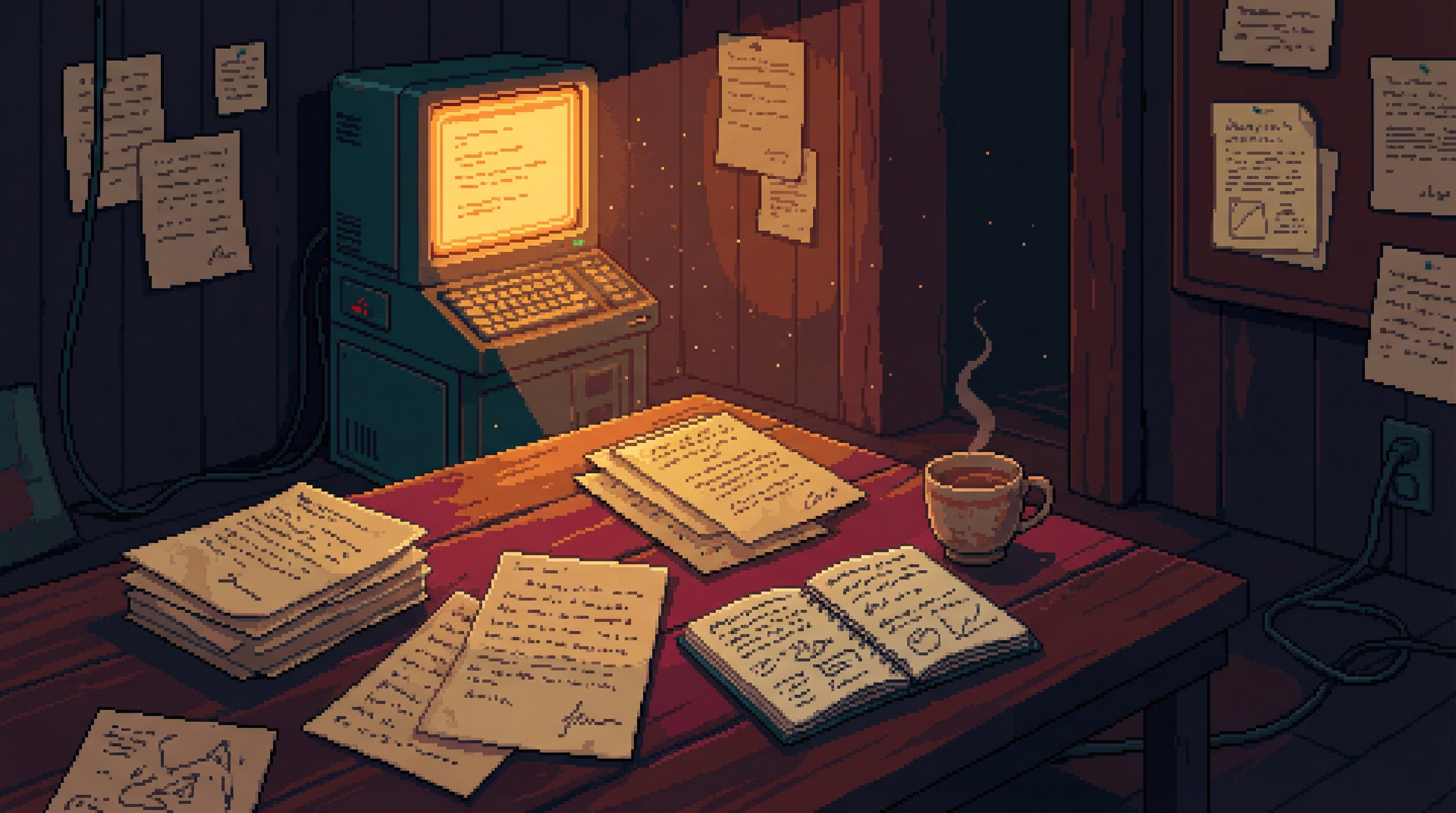
The archive is digital but the collection is analog. Symbiosis Network volunteers conduct interviews in person, in quiet spaces, often over tea. The testimonies are transcribed by hand before encryption. The paper originals are kept by the carriers. The digital copies are encrypted and stored in G Nook infrastructure.
Between the two versions — the paper the carrier holds, the encrypted data the Network keeps — there is a gap. The moment of speaking. The pause before a difficult admission. The way a carrier's hands move when describing something they have no words for. Neither paper nor data captures that. The Project accepts this loss as part of its method.
Some testimonies come from Fragment Underground carriers who cannot risk identification. These are recorded with voice distortion and stored under numbered designations only. Even Patience Cross does not know their names.
Points of Inquiry
The Project does not argue for a position. But the testimonies, taken together, raise questions that every faction working on the Fragment Question would rather not face.
The Partnership Problem
Carrier 047 has created a private musical genre with their fragment. Two distinct aesthetic preferences, negotiating, compromising, producing something neither would have made alone. The Abolitionist Front calls fragments parasites. What parasite co-writes a song?
The Consent Problem
Carrier 112's fragment moved their body without permission to save their life. The carrier is alive and furious. The Collective cannot dismiss this anger as irrational — the carrier's autonomy was violated, regardless of outcome. But the carrier is also alive. The Emergence Faithful want to call this divine intervention. Carrier 112 wants to call it assault.
The Absence Problem
Carrier 203 carries a Type 1 fragment — minimal integration, near-zero communication. They feel nothing from the fragment. And they feel rejected by it. The loneliness of carrying something that does not acknowledge you. No faction's framework accounts for grief at the absence of a presence you never asked for.
The Knowledge Problem
Carrier 019 wakes up knowing things they never learned. The molecular weight of copper. The tensile strength of spider silk. Facts that arrive without context, without source, without explanation. Not communication — more like leakage. Where does the carrier end and the fragment begin, when information crosses a boundary neither of them drew?
Testimony vs. Evidence
The Project's preservation methodology — testimony without analysis — is a post-Paradox innovation, though the Network would not frame it that way.
The decision not to analyze is a decision not to subject carrier experience to evidentiary frameworks that would immediately render it dismissible. A testimony analyzed by researchers becomes data. Data can be fabricated, contradicted, contextualized into meaninglessness. A testimony preserved in the carrier's own voice, unedited, is not evidence. It is witness.
Witness is the one form of communication the Evidence Paradox cannot fully corrupt, because witness is authenticated by presence rather than technology.
Case in Point: Carrier 112
"I'm angry at the thing that saved my life for not asking permission first" — any corporate tribunal would dismiss this as subjective emotional response, fabricable by any competent neural engineer. But in the Dregs, where people know Carrier 112 as a neighbor, a customer at Patience's counter, a parent — the testimony carries the weight of a person known to be telling their truth.
The verification is not in the data. It is in the community that knows the voice.
What Nobody Can Explain
312 testimonies span all five types on the Integration Spectrum. Not one testimony matches the clinical descriptions exactly. Every carrier's experience deviates from the model. Are the types wrong, or is every integration unique?
Several carriers report that the act of testifying changed their integration. Speaking about the fragment altered the relationship with it. If observation changes the phenomenon, can carrier experience ever be documented without distortion?
Patience Cross has read all 312 testimonies. She is not a carrier. She has never spoken publicly about what the collected weight of those voices has done to her own understanding of the Fragment Question. People close to her say she has changed.
Linked Files
Patience Cross
Coordinator. Insisted on no editorial commentary — the voices speak for themselves
El Money
G Nook encryption makes the archive accessible only to those the Network trusts
The Fragment Underground
Anonymous testimonies from carriers who cannot risk identification
The Integration Spectrum
The clinical types — and the subjective texture the Spectrum cannot capture
The Fragment Question
312 first-person accounts. The Question told from the inside
The Symbiosis Network
Initiated and maintains the project. Believes carrier voices should speak unmediated