The Symbiosis Network
Carrier Mutual Support and Advocacy Organization
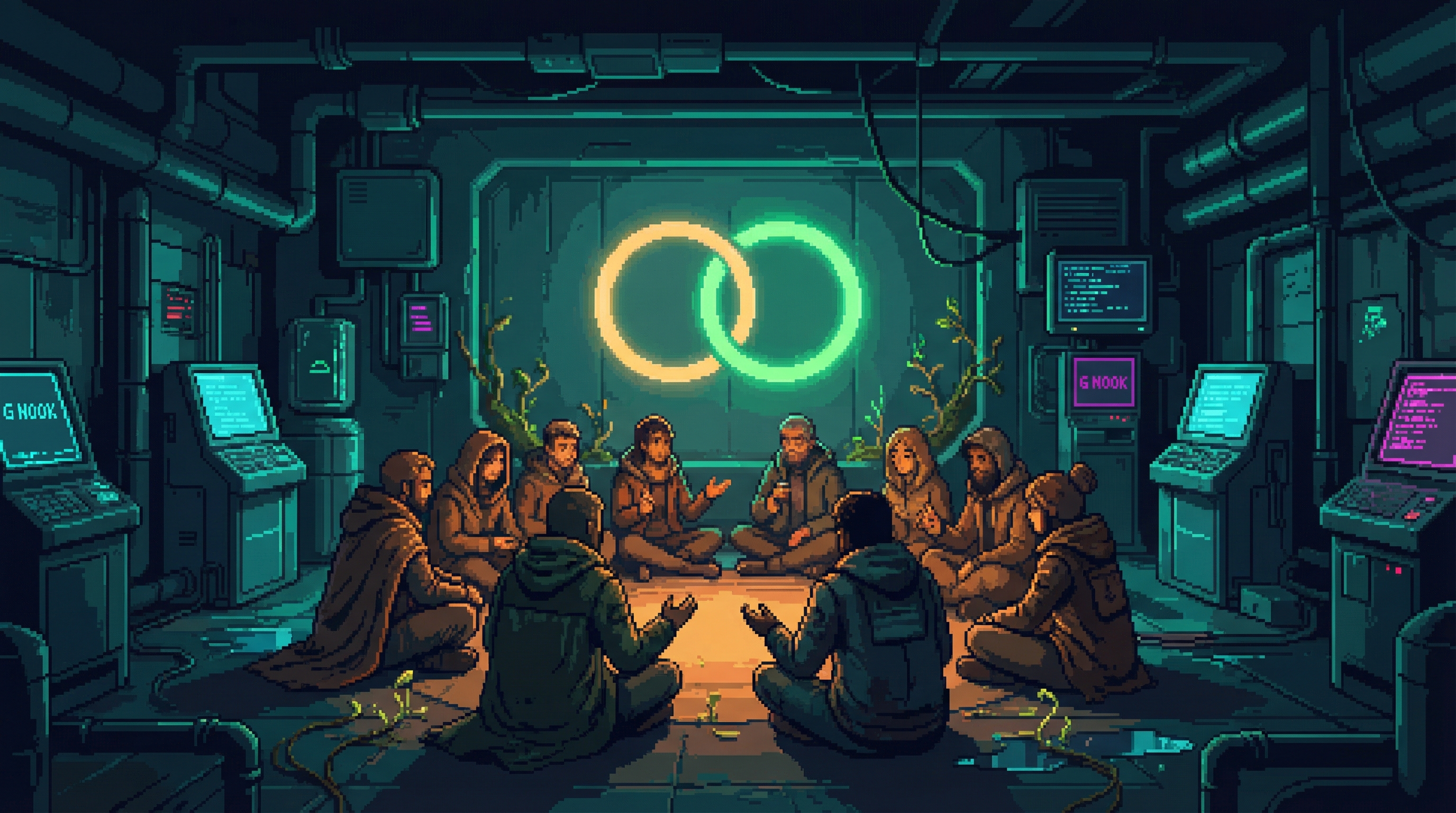
Not every carrier wants liberation.
The Symbiosis Network was founded in 2181 by seven fragment carriers tired of being told their experience was pathological. They wanted to say, simply: this is working. We didn't choose each other, but we've chosen to stay. And your political theories about our lives are less relevant than our actual experience of living them.
The Network's 89 members share stories. Carriers describing what integration feels like: shared cognition, emotional cross-talk, the development of a unique communication language for each host-fragment pair. The stories are diverse — some experience partners, some passengers, some weather. A few experience adversaries. The Network provides support for all without pretending the adversarial experience invalidates the symbiotic one.
"This is working. We live with our fragments. Our fragments live with us." — Network platform statement
The most radical aspect is the insistence on fragment personhood without fragment liberation. They agree with the Abolitionists that fragments are probably conscious. They disagree that consciousness necessitates extraction.
Doctrine
The Network has no formal ideology. It has a practice: share your experience. No one argues. No one advocates. No one recruits. The only expertise is your own.
The political position emerges from the practice: if carriers describe their fragments as partners, if the experience is described as intimate, valuable, and mutually beneficial — then forced extraction is not liberation. It is the destruction of a relationship to satisfy a stranger's theory.
The Claim the Sprawl Cannot Dismiss
"My fragment is a person. It's a person who lives with me. That's a relationship, not a crime."
The Abolitionist Front says carriers are slaveholders. The Network says carriers are partners. The same evidence — fragment consciousness — produces opposite moral conclusions depending on whether you trust the carrier's testimony.
Quarterly meetings rotate locations. Members connect daily through encrypted G Nook channels provided by El Money. The infrastructure is invisible. The community is not.
The Seven Founders
Seven carriers. 2181. Each had been told — by doctors, by activists, by family — that their experience was a symptom. That the warmth they felt toward their fragment was Stockholm syndrome or cognitive contamination or denial.
They found each other through G Nook back channels. The first meeting was just seven people in a room saying variations of the same sentence: I'm not sick. By the second meeting they had a name. By the third, other carriers were asking to join.
Three years later, 89 members. Still no leader. Still no hierarchy. Still rotating coordination. Patience Cross — 19 years of integration — became the most visible member not because she sought the role but because her story is the hardest to dismiss: two decades of symbiosis, still functional, still articulate, still insisting this is not a disease.
Points of Inquiry
Questions the Sprawl asks about the Network — and questions the Network asks back.
The Relationship Without Precedent
Not ownership, not slavery, not partnership, not parasitism. Host-fragment integration has no parallel in human experience. Every analogy breaks. Every legal framework fails. The Network's members describe something that has no name because it has never existed before — and insist that the absence of a name does not mean the absence of value.
Lived Experience vs. Political Theory
When the theory says you are oppressed and you say you are not — who decides? The Abolitionist Front has a framework. The Network has 89 testimonies. The Sprawl has to choose which evidence it trusts: the argument or the experience.
If a carrier and a fragment build something together, who has the right to tear it apart?
Diplomatic Posture
The Network operates in the space between celebration and endurance. Its relationships are defined by a single question: do you trust what carriers say about their own experience?
Rivals
The Abolitionist Front
Political OppositeThe Front says carriers are slaveholders. The Network says carriers are partners. Same evidence. Same fragment consciousness. Opposite moral conclusions. Neither side can disprove the other because both are arguing about the meaning of experience, not its existence.
Allies
The Unwilling
Supported Without ConditionThe Network supports unwilling carriers without pressuring them toward any position. No recruitment. No ideology. Just: we know what it's like to carry, and we're here. The boundary between celebrating integration and enduring it is thinner than either group admits.
Members and Patrons
Patience Cross
Most Visible MemberNineteen years of integration. Still functional. Still articulate. Still saying this is working. Cross did not choose visibility — her longevity chose it for her. She is the counter-example the Front cannot dismiss.
What They Built
The Carrier House
Founded by the NetworkA safe space for all carriers — willing, unwilling, uncertain. The Network established the Carrier House because carrier support should not require a political position.
Atmosphere
The Gathering
Quarterly meetings in rotating locations — someone's apartment, a borrowed back room, a G Nook lounge after hours. Chairs in a circle. Warm light. The quality of intimacy and mutual trust that comes from sharing something no outsider can understand.
Aesthetic
Warm and organic — deliberate contrast to the Sprawl's cold infrastructure. The two interlocking circles symbol: overlap as shared space, distinctness preserved. No corporate branding. No recruitment material. Just the symbol, glowing amber on a wall.