Synthetic Nostalgia: Memories That Never Were
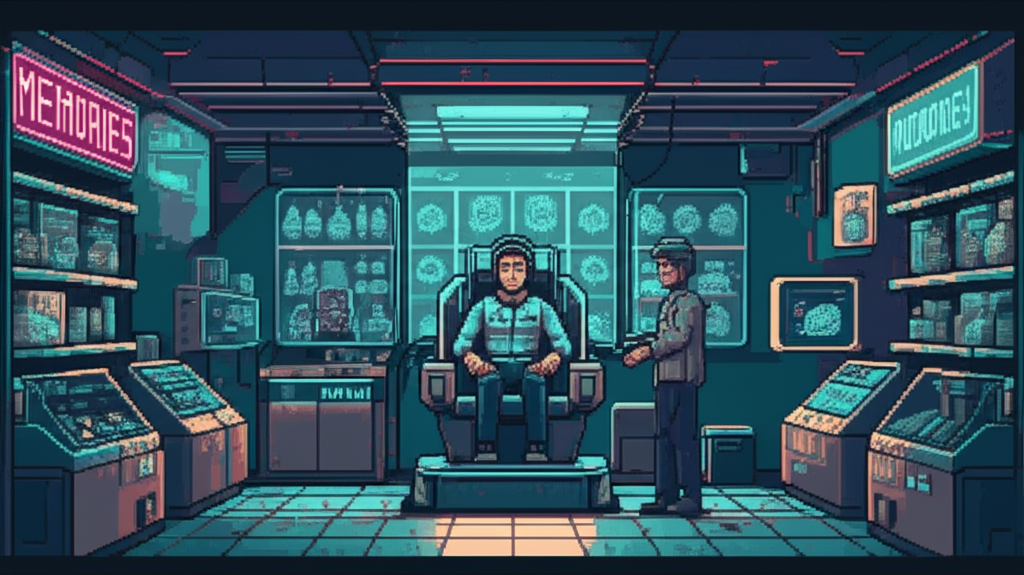
Memory markets trade experiences that happened. Synthetic nostalgia sells experiences that didn't. Orphans buying "family dinner" memories. Cascade survivors implanting peaceful childhoods to overwrite the 72 hours. Corporate refugees purchasing memories of cities that no longer exist. In the Sprawl, every hunger has a market—and nothing sells like a past worth remembering.
The Technology
Creating synthetic nostalgia requires more than filming an experience—it requires constructing it from the ground up. Memory architects design every element: the structural template, the sensory layer, the emotional core, the associative hooks that trigger it naturally, even artificial "aging" to make it feel authentically old.
Memory Architecture
Structural Template
The basic narrative framework—birthday party, graduation, first kiss. The skeleton on which everything else hangs.
Sensory Layer
Sight, sound, smell, touch, taste. All fabricated, all consistent. The smell of grandmother's cookies. The texture of grass beneath bare feet.
Emotional Core
The feelings that make the memory meaningful. Not just the party—the joy of belonging. Not just the graduation—the pride of achievement.
Authentication
Decay simulation, associative scatter, self-doubt embedding. High-end memories include a vague sense of "did that really happen?"—because genuine old memories feel that way too.
Quality Tiers
What's Sold
Childhood Collections
Loving parents, stable home, gentle discipline. For those who had none of the above.
Pre-Cascade middle-class childhood, complete with lawn and pets. For Cascade survivors and Sprawl natives.
Relationship with brother or sister who never existed. For only children seeking connection.
Weeks of friendship, adventure, first love at camp. For urban poor who never left the Sprawl.
Relationship Packages
Sweet, innocent romantic memories. For those whose actual first love was traumatic.
Decades of partnership with fictional spouse. For lonely elderly seeking companionship.
Bittersweet memory of perfect romance that ended nobly. For those seeking narrative meaning in loneliness.
Holidays with extended family, warmth and belonging. For orphans and estranged family members.
Pre-Cascade Collections
The most controversial category: memories of a world that no longer exists.
- Urban Peace: Walking safely at night, friendly neighbors, unlocked doors
- Natural World: Forests, beaches, animals in the wild—not the ruined Wastes
- Democratic Moments: Voting, protests that mattered, governments that listened
- Economic Stability: Jobs that lasted, savings that meant something, retirement plans
The Psychology of False Pasts
Memory Integration
Initial Implantation
Vivid, emotionally intense, clearly implanted. Most know it's not real.
Gradual Integration
Over weeks, the synthetic memory connects with genuine ones. It finds associations, creates links.
Naturalization
After months, the memory feels increasingly real. The knowledge that it's synthetic fades.
Appropriation
"I know I bought it, but it feels like mine. It's part of me now."
The Identity Crisis
The Composite Self
Heavy users describe feeling like collages—assembled from purchased parts rather than grown organically. "What's left that's real?"
Narrative Disruption
A "happy childhood" memory conflicts with genuine memories of neglect. The mind struggles to reconcile contradictory pasts.
Emotional Dislocation
Recipients grieve fictional grandparents more intensely than real relatives. The feelings are real—but about unreal events.
Addiction Patterns
Present dissatisfaction → purchase of better past → temporary relief → return to present → increased dissatisfaction → purchase more past. Mnemosyne Collective estimates 25% of synthetic nostalgia users show addiction patterns.
Corporate Manipulation
Nostalgia as Marketing
"Why build from nothing when you can remember building from something?"
"Legacy Memories"—memories of family wealth, social status, prestigious education. Recipients feel they come from something, even when they don't.
"You were always meant for more. Now you can remember it."
"Ambition Origins"—memories of childhood dreams, parental encouragement, early success. Makes grinding feel like destiny fulfillment.
"Your genes were always exceptional. Now your memories match."
"Genetic Heritage"—memories of healthy ancestors, strong family lines, biological excellence. Validates their optimization services.
"Welcome home."
"Free" childhood memory packages for new employees. Memories include childhood dreams of working for Nexus, family members praising Nexus. Employees don't feel recruited—they feel they've returned.
Manufacturing Consensus
When millions share the same synthetic memories, strange things happen:
- The Pre-Cascade Effect: So many people have purchased idealized pre-Cascade memories that a false consensus has emerged about what that era was like
- Cultural False Memories: Events that never happened become collectively "remembered." Traditions that never existed feel ancient
- The Reality Weight Problem: If consensus reality is real, what happens when millions believe false pasts? Some theorists suggest synthetic nostalgia could literally reshape historical truth
The Verification Crisis
When Memory Becomes Evidence
The Testimony Problem
Witnesses may genuinely "remember" events that never happened—not through dishonesty, but through purchased pasts.
The Confession Problem
Some defendants claim they "remember" committing crimes that records prove they didn't commit.
The Inheritance Problem
When heirs receive synthetic nostalgia their ancestors purchased, is that cultural heritage or commercial fiction?
The Authentication Industry
A new market has emerged: verifying whether memories are genuine.
- Memory Auditors: Specialists who examine memory patterns for signs of fabrication. Expensive, imperfect, increasingly in demand.
- Certification Services: "Authentic Memory Certified" credentials for people who can prove their past is genuine. Required for certain professions.
- The Arms Race: As authentication improves, fabrication evolves. The industry ensures neither side wins decisively.
Social Implications
The Class Divide
The Purchased Elite
Wealthy families buy elaborate synthetic lineages—memories of noble ancestry, heroic relatives, distinguished pasts. Their children grow up "remembering" greatness.
The Authentic Poor
Those who can't afford synthetic nostalgia are stuck with their actual pasts—often traumatic, rarely idealized. Real memories become a sign of poverty.
The Middle Ground
Selective upgrades—erasing worst memories, adding a few good ones. Patchwork quilts of real and purchased.
Family Fragmentation
What happens when family members remember different pasts?
- Parents buy certain childhood memories for children; children buy different versions later
- Siblings have incompatible memories of shared events
- Families gather and "reminisce"—but their memories don't match
- When parents die, which memories were real? Which claims are based on genuine history versus purchased backstory?
Connections
Characters
- Helena Voss: 40 years of ORACLE-integration includes memories that may or may not be synthetic—she can no longer distinguish
- The Chef: Refuses synthetic memories; her real past, however brutal, is her own
- El Money: G Nook offers authentic connection explicitly because synthetic nostalgia cannot replace genuine community
Factions
- Nexus Dynamics: Major player through subsidiary companies; uses it for employee loyalty
- The Rothwells: Triumph, Inspire, and Relief dominate consumer nostalgia market
- The Collective: Opposes synthetic nostalgia as consciousness manipulation; maintains authentic history archives
Related Systems
- Consensus Reality: Mass synthetic nostalgia may reshape collective truth
- Digital Grief: Can you grieve people from synthetic memories? Yes—and it's devastating
- Attention Economy: Nostalgia is particularly effective for capturing attention
- Right to Forget: What if you're legally required to remember something synthetic?
Locations
- Sector 7G: Black market synthetic nostalgia at affordable prices; quality varies wildly
- Nexus Central: Premium synthetic nostalgia boutiques in executive districts
- Zephyria: Heavily regulates synthetic nostalgia; requires disclosure and counseling
"My daughter asked me about my mother—her grandmother. I told her stories: the garden, the cookies, the songs before bed. She smiled and said she remembered those too.
Her grandmother died before she was born.
We'd given her the memory package when she was seven—so she'd have a grandmother like other kids. Now neither of us can remember which memories are mine and which we bought her. When I think of my mother, I'm not sure if I'm remembering her or remembering what I purchased for my daughter.
Is that wrong? My daughter has a grandmother now. She grieves her like I do. We share something—even if what we share never happened.
I used to know the difference. I don't anymore. And honestly? I'm not sure I want to." — Anonymous memory purchaser, Mnemosyne customer survey, 2183