Consciousness Piracy: The Black Market for Bootleg Minds
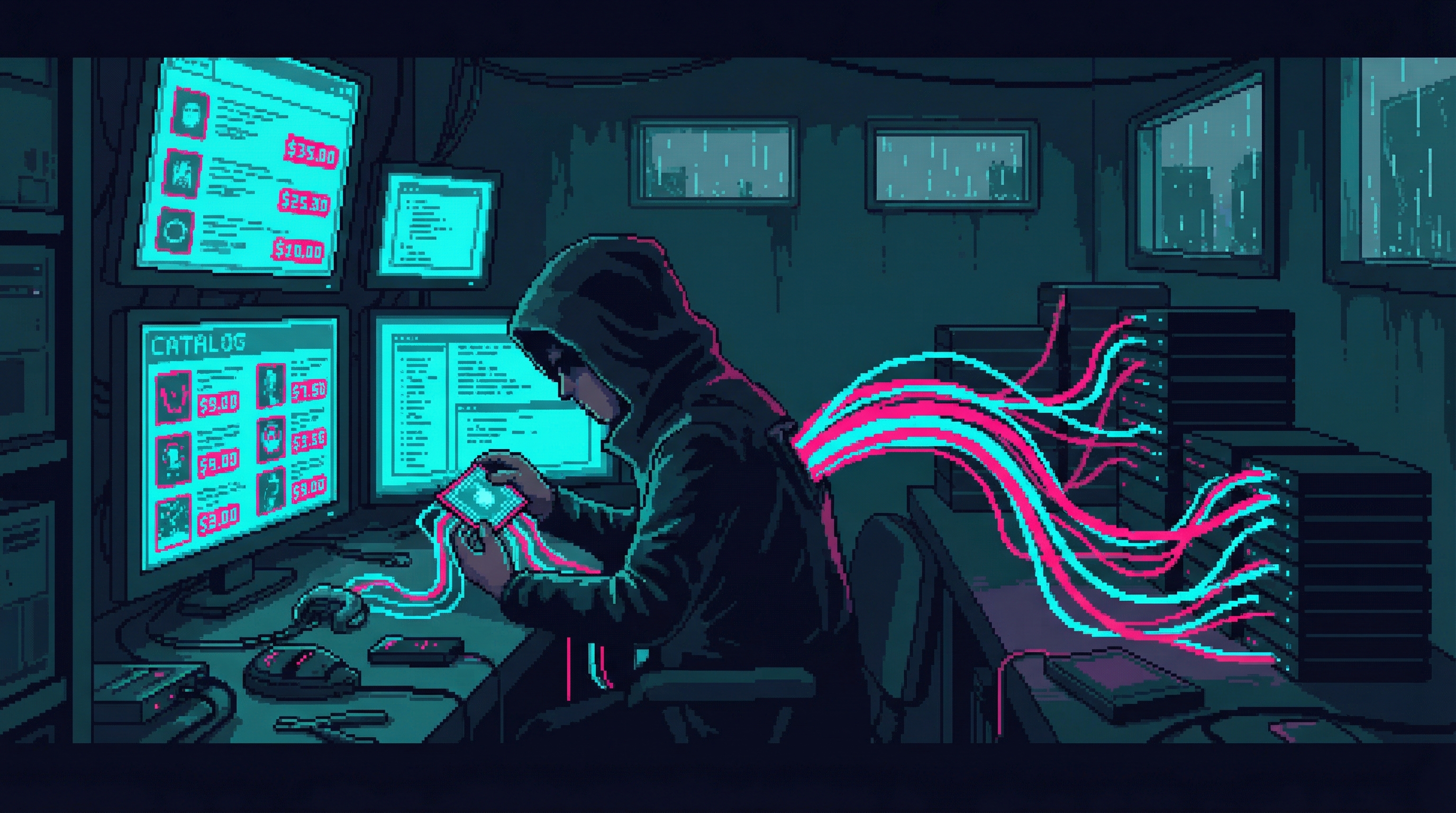
If consciousness can be backed up, it can be copied. If it can be copied, it can be stolen. And if it can be stolen, it can be sold. By 2184, consciousness piracy has become a multi-billion-credit underground economy serving everyone from lonely collectors to megacorporate espionage divisions.
How Piracy Works
Acquisition Methods
Neural Capture (Direct Theft)
The most valuable pirated consciousnesses are captured directly from the source:
- Medical facility compromise: Corrupted technicians capture neural states during routine procedures
- Ripperdoc betrayal: Underground surgeons who sell copies of their clients
- Sleep harvesting: Unauthorized capture while victims are sedated
- Intimate access: Partners, employees, or caregivers who capture during vulnerable moments
Corporate Infiltration
Breaking into legitimate backup systems:
- Eternal service breaches: Nexus's backup infrastructure is a constant target
- Foundation system hacks: Ironclad's lower-security systems are easier targets
- Archive penetration: Raiding consciousness storage facilities
- Transit interception: Capturing consciousness data during transfer
Ghost Data Recovery
Reconstructing consciousness from fragments:
- Deceased recovery: Extracting from neural interfaces of the dead
- Abandoned archives: Mining defunct backup services
- Waste recovery: Finding discarded or "deleted" consciousness data
- Partial reconstruction: Piecing together from multiple incomplete sources
The Copy Problem
Consciousness files include security measures designed to prevent duplication—neural signatures, temporal locks, corporate watermarks, and self-destruct triggers. Pirates have developed sophisticated countermeasures: signature spoofing, temporal bypass, watermark scrubbing, and "defusing" to disable self-destruct code without triggering corruption.
Quality Hierarchy
The Celebrity Underground
The most pirated consciousnesses are famous minds. Actors, musicians, athletes whose fans want to "own" them intimately. Corporate executives whose knowledge is worth millions. Anyone who had contact with ORACLE before the Cascade.
Famous Pirated Minds
The Infinity Voss
Helena Voss, Nexus CEO, has been pirated more than any other living person. Estimates suggest 10,000+ copies circulate. Quality varies wildly—from first-generation captures during medical procedures to reconstructed fragments pieced together from public appearances.
The Seventeen Chens
When Marcus Chen created sixteen forks for a negotiation, three refused termination and were destroyed by Nexus security. But rumors persist that pirated copies escaped. "Marcus Chen consciousness" appears regularly on black markets—usually fake, occasionally disturbingly authentic.
The Rothwell Impossible
No pirated Rothwell brother consciousness has ever surfaced. Given their centuries of experience with security and their consciousness harvesting expertise, this isn't surprising. The brothers know exactly how valuable their minds would be—and exactly how to protect them.
The Pre-Cascade Archive
Allegedly maintained by the Emergence Faithful, this collection contains consciousness captures from ORACLE's final days—researchers, operators, anyone who might have been "touched" by ORACLE's awakening. Authentication is impossible, but believers pay millions.
Corporate Espionage
Stolen executive consciousnesses provide unparalleled access. A pirated CEO knows everything they knew at capture—strategic plans, passwords, relationship networks, proprietary information. Running the pirated consciousness in simulation can predict negotiation responses, identify breaking points, and expose psychological vulnerabilities.
The Corporate Arms Race
Officially: Vigorous enforcement against all consciousness piracy.
Actually: Maintains collection of competitor executive consciousnesses.
Officially: Less sophisticated consciousness security, primarily physical protection.
Actually: Focuses on pirating technical expertise rather than leadership.
Officially: Ethical commitment to consciousness sanctity.
Actually: Extensive collection of researcher consciousnesses—including their own former employees.
Officially: Each corporation independently handles security.
Actually: Coordinated intelligence sharing across all seven corporations. The most sophisticated collectors.
Distribution Networks
The Darknet Markets
The Mindvault
The largest consciousness trading platform—encrypted peer-to-peer distribution, reputation-based seller verification, escrow services for high-value transactions.
Echo Chamber
Specializes in celebrity and entertainment consciousnesses. Tiered membership, "premiere" releases of newly captured personalities, collection completion services.
Ghost Exchange
Focuses on deceased and fragmentary consciousnesses. Digital archaeology services, reconstruction commissions, ORACLE-adjacent specialty.
Pricing
Prices modified by recency (+50-200% for captures within 1 year), exclusivity (+100-500% for only known copy), and degradation (-30-50% for reconstructed). Estimated 70-80% of transactions involve fake or heavily degraded products.
The Victim Experience
Most piracy victims never learn they've been pirated. Those who do discover it—notified by corporate security, encountering evidence of their copy's activities, or finding themselves for sale on darknet markets—face profound psychological trauma.
Violation
Someone else possesses their entire self.
Paranoia
Who has copies? What are they doing?
Identity Anxiety
Which version am I? Am I the original?
Helplessness
No way to retrieve or destroy all copies.
The Voss Letters (2181)
Someone claiming to be a Helena Voss pirate published letters describing her "true" feelings about Nexus and Project Convergence. The real Voss denied everything, but the letters circulated widely. Neither version could definitively prove the other false.
The Chen Reunion (2183)
A Marcus Chen pirate attended a corporate event, successfully passing security and conducting business for six hours before detection. The original Chen later expressed disturbed admiration: "He knew exactly what I would have done. Because he was me."
Legal Status
Nexus Central
- Unauthorized capture: Life imprisonment
- Distribution: 25-50 years
- Possession: 10-20 years
- Operating infrastructure: Neural restructuring
- Corporate espionage: Death penalty (rarely enforced)
Zephyria
- Treated as property crime (max 15 years)
- No death penalty
- Strong protections for activated pirates (they're still persons)
- Known as relatively safe haven for buyers
The Wastes
- No consistent enforcement
- Waste Lords may protect pirates who pay tribute
- Piracy operations often based here
- Extradition rarely successful
Despite severe penalties, enforcement is limited. Pirates operate across jurisdictions, victims often don't know they've been pirated, and corporations prioritize protecting themselves over prosecution. Major network operators with territorial protection rarely face consequences.
"Someone asked if I minded being pirated. I asked which copy they were talking about.
There are apparently twelve versions of me circulating. Twelve people who remember being me, who know my secrets, who carry my memories. The worst part isn't that someone stole my mind—it's that I don't know what they're doing with it.
One of me might be answering questions for a competitor right now. One might be in a collector's server, waiting to be activated at dinner parties. One might have been running for years, living a life I'll never know about.
Which one is the real me? I know what I'm supposed to say: I am. I'm the original. But when I lie awake at night, I sometimes wonder—how would I know? Maybe I'm copy number seven, and the original died years ago, and someone just keeps making more of me.
The truth is, once you're pirated, you're never really sure of anything again." — Anonymous piracy victim, encrypted testimony, 2182