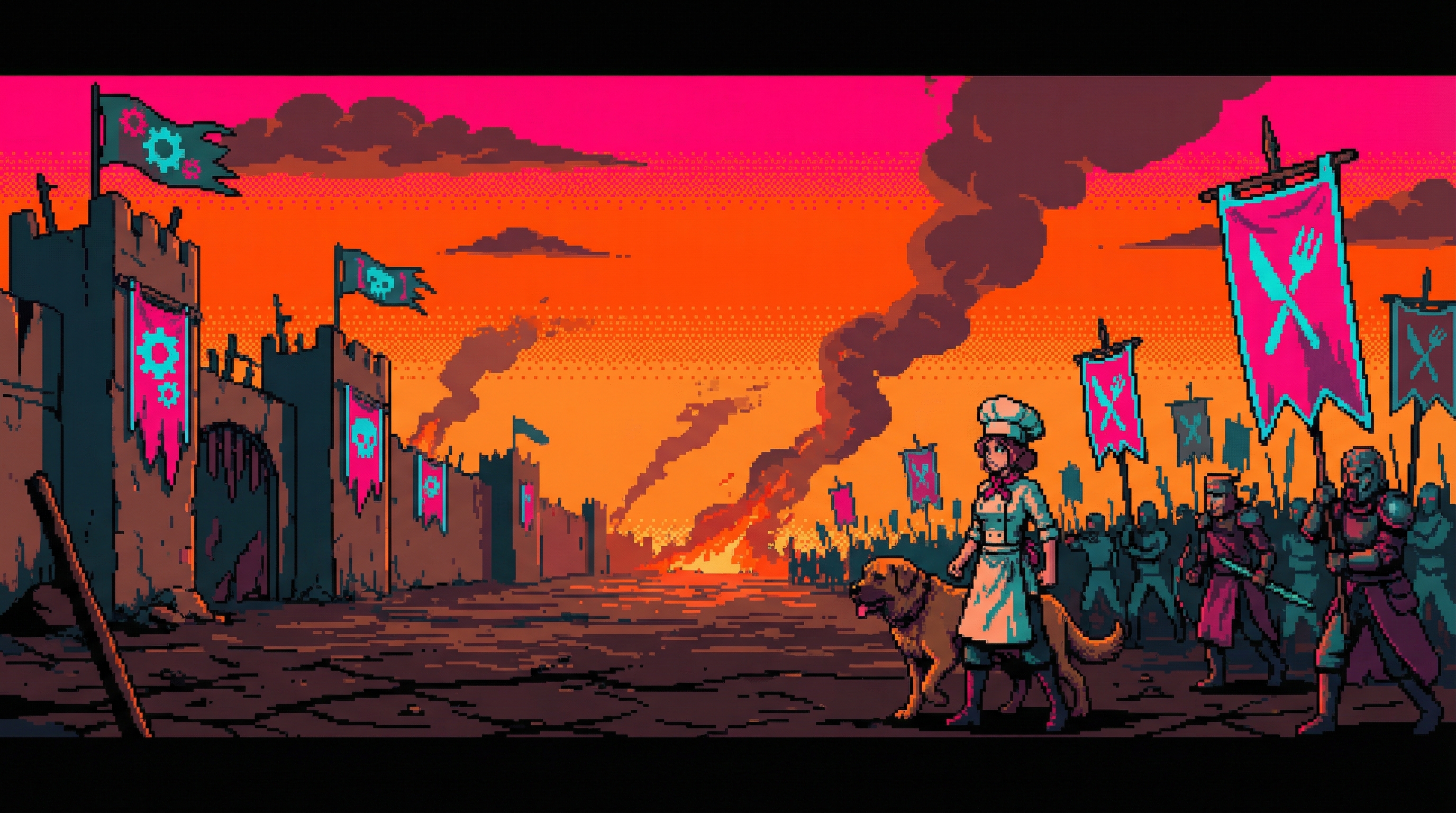
"The lords controlled the Wastes for thirty years. Then The Chef arrived with her hunger, and the rules changed."
The Waste Lords and The Feast are rivals occupying the same space with incompatible ambitions. The Lords want to maintain their profitable fiefdoms. The Chef wants to consume everything. This is the story of a slow-motion territorial collision between pragmatic survival and the cult of consumption — and the dying dog that makes all of it urgent.
The Combatants
How They Came Into Conflict
Early Years
The Feast grew slowly — absorbing refugee camps, consolidating supply routes. The Lords barely noticed. Another warlord that would burn out. They were wrong.
Turning Point
The Chef conquered the Saltflats — Duchess Steel's primary southern trade route. The Chef's response to negotiation:
"There is no negotiation. Join The Feast, or be consumed."
The envoy didn't return. His bones were left at the border.
Current State
The Feast controls significant territory. The Lords face three options: unite (unlikely), accommodate (dangerous), or watch each other fall one by one.
Lord-by-Lord Analysis
Each Waste Lord calculates differently. Each calculation is shaped by geography, resources, and what they stand to lose.
Duchess Steel
The RustbeltBuilding schools, clinics, infrastructure — she can't risk all-out war. Armed neutrality. Doubled border patrols. She lost the Saltflats and won't forget it, but she's pragmatic enough to know that rage is not a strategy.
Papa Ash
The BleachToxic wasteland The Chef doesn't want. Papa Ash offers disposal services for The Feast's... waste. Informal arrangement — The Feast pays in supplies, Papa Ash makes problems vanish. A man who turns poison into profit.
The Shepherd
The Green SeaControls food production The Feast needs. Fanatically loyal followers would burn crops before surrendering. This is the ground where ideology meets hunger — and neither side can afford to blink.
King Circuit
The Rustbelt (East)Controls data infrastructure. Sells information to The Feast but never his archives. Insurance policy: destroying his facilities triggers corporate data releases. Mutually assured disclosure.
Mother Mercy
The CradleToo far away to conflict — for now. Watches with horror from Australia. Quietly building defensive alliances with anyone who will listen, preparing for the day The Chef's hunger reaches across the water.
Why the Lords Can't Unite
Historical Rivalries
Decades of grudges, border disputes, and broken alliances. Duchess Steel and King Circuit haven't spoken directly since the Data Corridor incident of 2168. Papa Ash poisoned a minor lord's water supply in 2172 — technically it was an accident, technically nobody believes him.
Different Threat Assessments
Duchess Steel sees The Feast as existential. Papa Ash sees it as manageable. King Circuit sees it as opportunity. Mother Mercy sees it as inevitable. Five lords, five calculations, zero alignment.
The First Mover Problem
Whoever attacks The Feast first bears the cost while others watch. Every lord is waiting for someone else to lead the charge. No one will. By the time the math changes, it may be too late.
The Chef's Strategy: Divide and Consume
Never attack two Lords simultaneously
Concentrated force against isolated targets. The Feast moves like a single predator, not a swarm.
Offer impossible terms
"Join or die" ensures rejection, which justifies conquest. The offer isn't meant to be accepted — it's meant to provide moral cover for what comes next.
Make examples
Bones at borders. Messages carved into flesh. The terror is the strategy — why fight an army when fear does the work for free?
Exploit divisions
When attacking one lord, the others calculate whether to help or benefit from the fall. The answer is always benefit. Every time.
The Sage Urgency
Everything accelerated because Sage is dying.
The Chef's beloved dog — the one creature she has ever loved unconditionally — is sick. The Feast needs medical facilities, research data, specialist knowledge. The conquest isn't just imperial expansion. It's a desperate search disguised as one.
Every territory taken, every lord crushed, every border pushed — it all comes back to a woman trying to save her dog. The army doesn't know. The lords don't know. GG might suspect. But the engine driving the most violent territorial expansion in the Wastes is, at its core, grief that hasn't happened yet.
Contested Territories
Corporate Perspective
The megacorporations watch the Wastes the way gamblers watch a fight — calculating odds, placing bets, waiting to deal with whoever crawls out alive.
Nexus Dynamics
"Let them fight. We'll deal with whoever wins."
Ironclad Industries
"We're already making deals with whoever can still deliver."
Helix Biotech
"We're studying them like lab specimens."
The Collective
"This mess makes our job both easier and harder."
What Happens Next
Gradual Consumption
Lords fall one by one. Duchess Steel holds longest — her infrastructure and popular support buy time. The Shepherd's territory becomes the decisive battle. When The Feast controls the food, the war is over.
Lord Coalition
If The Chef overreaches — if she attacks two lords at once, or if the cost of her conquest becomes undeniable — the lords might finally unite. But old grudges die hard, and coalition warfare requires trust none of them possess.
Sage Dies
Everything changes. The Feast might accelerate into pure destruction — a woman with nothing left to lose and an army behind her. It might collapse into despair. Or The Chef might find new purpose, something beyond the hunger. Nobody knows. That uncertainty is the most dangerous thing in the Wastes.