The Rothwell Foundation: Origins
The Foundation doesn't appear in any official registry because it was dissolved—deliberately, strategically—in 1857. But for seventy years before that, seven brothers from nothing built an empire that would outlast nations.
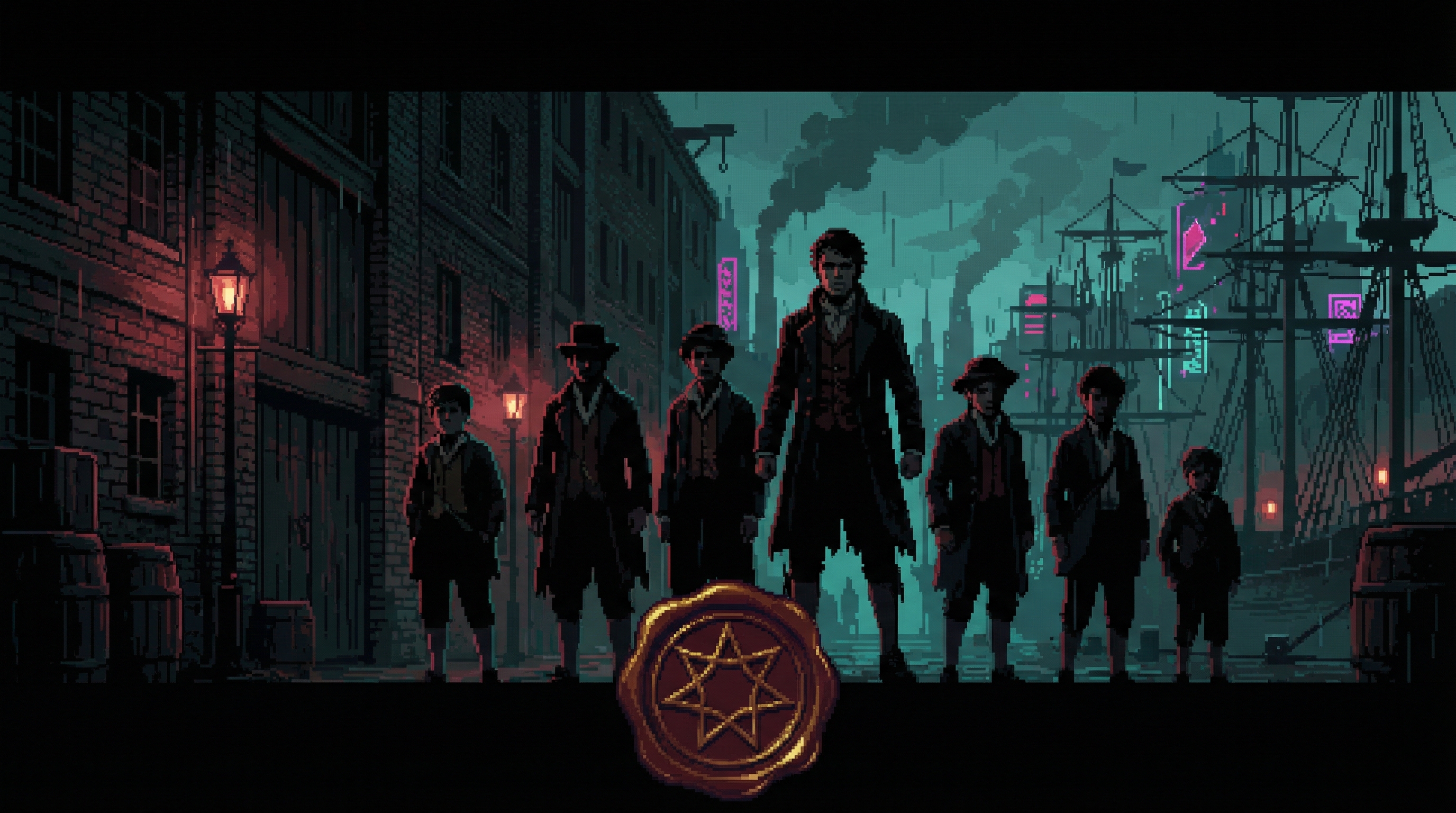
The Lost Village (1780-1795)
The brothers were born in a village that no longer exists—a small settlement in what is now eastern Poland, then part of the collapsing Polish-Lithuanian Commonwealth. The village's name has been deliberately erased from records. Even the brothers themselves stopped using it.
What is known: the village was burned during one of the countless conflicts that swept through the region. The brothers escaped—the only survivors of their family, possibly of their entire community.
The First Rule
They never spoke of it. They never returned. The first rule of the Rothwell Foundation, established before the Foundation itself had a name:
What is lost is lost. Build forward.
The Flight (1795-1806)
Between 1795 and 1806, the brothers made their way westward through a continent at war. They were children when they started—the eldest perhaps sixteen, the youngest perhaps eight. By the time they reached relative safety, they were men who had survived by any means necessary.
What They Became
- Camp followers, translators, porters, occasionally thieves
- Linguists: Polish, German, French, Russian, eventually English
- Readers of people: identifying opportunity in chaos
- Trust no one outside the family
They reached London in 1806. They arrived with nothing but each other.

The Name
"Rothwell" is not their birth name. The original name is lost—probably Slavic, possibly Jewish, certainly dangerous to carry in the Europe of that era.
They chose "Rothwell" in London. English enough to open doors, vague enough to avoid questions, meaningless enough to rebuild from scratch.
The London Rise (1806-1822)
The brothers arrived in London during the Napoleonic Wars—a city overwhelmed with refugees, war profiteers, and opportunity. They had no capital, no connections, no legitimate credentials.
They had each other.
Triumph
Found work at the docks. Within two years, controlled a work gang. Within five, owned three warehouses. Understood that reputation determined who got contracts.
Good Fortune
Discovered England's financial system was held together by personal relationships, not law. Learned to extend credit, collect debts, and extract value from invisible transactions.
Guardian
Gravitated toward security. In a London full of crime, men who could protect shipments commanded premium prices. Built Guardian from protection fees.
Wholesome
Found work in food markets. London was always hungry. Learned supply chains, storage, preservation, distribution. Wholesome began as grain warehouses.
Wellness
Drawn to entertainment districts. The theaters, clubs, houses of pleasure—London's desires made visible. Wellness emerged from understanding unspoken wants.
Relief
Had a gift for technology. The early industrial revolution created demand for people who could make machines work. Relief began as factory equipment maintenance.
Inspire
Still a child when they arrived. Grew up in the family business, learning from all brothers. Chose what they'd overlooked: aspiration itself. People pay not just for products, but for the feeling of becoming something better.
The Foundation (1822)
By 1820, the brothers had accumulated significant wealth. They'd also attracted significant attention.
The Aristocrat's Offer (1821)
A British aristocrat attempted to acquire the second brother's financial operation. The offer was generous. The implicit threat—that refusal would bring regulatory scrutiny—was clear.
The brothers met. They decided that individual wealth was vulnerable. Unified wealth might survive.
The Rothwell Foundation
Established 1822On paper, a trading company. In practice, a mechanism for the brothers to pool resources, share intelligence, and defend each other against external threats.
The seven-pointed star appeared for the first time in the Foundation's seal.
It would never leave.
Between 1822 and 1840, the Foundation expanded across the British Empire. Each brother maintained nominal independence—separate businesses, separate identities, separate territories. But the Foundation coordinated everything: shared intelligence, combined capital, unified defense.
By 1840, the Rothwell brothers were among the wealthiest individuals in the British Empire. Few knew they were related. Fewer still understood the depth of their coordination.
The Crisis (1840-1857)
The Investigation (1843)
A parliamentary committee began investigating "monopolistic practices in colonial trade." The investigation was not directed at the Rothwells specifically—but the Foundation's activities appeared prominently in the evidence.
For the first time, someone had noticed the pattern: seven wealthy individuals with similar business practices, operating in complementary sectors, never competing, always supporting each other's interests.
The investigation never named the Foundation directly.
But the brothers understood: their structure was becoming visible.
The European Revolutions (1848)
The revolutions of 1848 demonstrated what the brothers had always known: concentrated power attracts concentrated opposition. Dynasties fell. Monarchies collapsed. Wealth was confiscated.
The brothers watched. They learned. They began planning.
The Strategic Dissolution (1857)
In 1855, the eldest brother called a meeting. It was the first time all seven had gathered in one location in a decade.
His proposal: Dissolve the Foundation. Not in failure—in strategy.
The Logic
- A single family controlling too much becomes a target
- Governments break up monopolies
- Competitors unite against common enemies
- Revolutionaries burn the houses of the wealthy
But seven separate entities, nominally independent, never directly coordinating? That survives.
The brothers debated for three days. The discussion is not recorded—only the outcome.
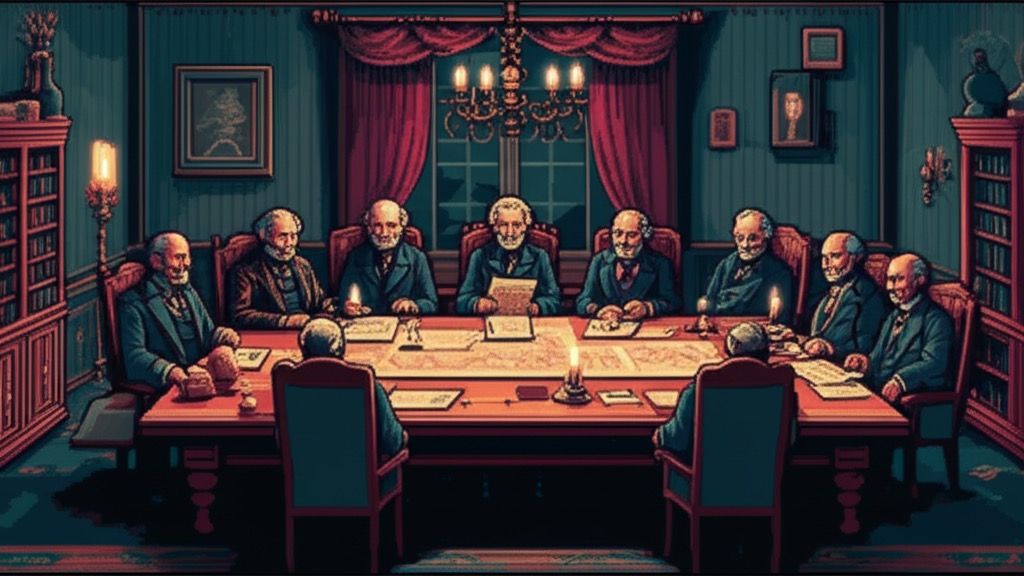
1857: The Foundation Dissolves
Assets distributed among seven independent corporations, each controlled by one brother, each operating in a distinct domain with clear territorial boundaries.
The seven-pointed star embedded in each new corporation's branding.
The connection would remain, but hidden.
The Seven Protocols
At the dissolution meeting, the brothers established the coordination mechanisms that would govern their relationship for centuries.
Territorial Inviolability
Each brother's domain is absolute. No encroachment, ever.
The Shared Ledger
Track all inter-family transactions without external visibility.
The Monthly Signal
Share information without direct communication through coded patterns.
Emergency Conclave
If any brother activates Protocol Four, all seven meet within 72 hours.
Unified Defense
An attack on one is an attack on all. Response is automatic.
Succession Clause
Territory passes to a designated heir, conditioned without their knowledge.
Dissolution Option
If the structure becomes liability, dissolve everything. Never invoked.
The Immortality Question
The brothers are still alive. Not their descendants—the original seven.
The question of how they achieved immortality is deliberately obscured in family records. What is known:
- Between 1890 and 1910, all seven brothers began pursuing life extension research
- By 1920, they had discovered something—the records are sealed
- Their current method involves consciousness harvesting: integrating the neural patterns of dying individuals into their own consciousness
- Each brother has absorbed thousands of lives over the centuries
- They remain the original personalities, but composite—running on accumulated substrate
Some suggest immortality predates their arrival in London. Others believe they discovered something in the colonial period. The truth is known only to the brothers themselves.
Legacy
The Structure
Seven nominally independent corporations, secretly coordinated through protocols established over a century ago.
The Academy
A system for identifying and conditioning future leaders—graduates don't know they're Academy graduates.
The Endowment
Hidden reserves sufficient to rebuild any corporation from scratch, used twice in 150 years.
The Waiting Game
They've watched empires rise and fall. They've watched two billion people die. They're still here.
The Founding Principles
Family Above All
The brothers trust no one outside the family completely
Patience as Weapon
Thinking in centuries when others think in years
Visible Obscurity
The best hiding place is in plain sight
Territorial Discipline
Never compete with each other; always coordinate
Sustainable Extraction
Profit from weakness without succumbing to it
Unanswered Questions
- What exactly happened in the lost village?
- How did the brothers truly achieve immortality?
- Why has Protocol Seven never been invoked?
- Is there an eighth brother?
The brothers find ambiguity useful. Certainty can be attacked. Mystery endures.
Related
Triumph
The eldest brother's domain — social status and reputation
Good Fortune
Financial services, debt extraction — the second brother's empire
Guardian
Security and violence — the third brother's protection racket
Wholesome
Food and consumption — the fourth brother's supply chain
Wellness
Beauty and intimacy — the fifth brother's desire empire
Relief
Convenience and automation — the sixth brother's technology
Inspire
Aspiration and comparison — the youngest brother's insight
Corporate Origins
How the post-Cascade power vacuum created the modern megacorporations
"We came from nothing. We lost everything. We swore it would never happen again. We were right."— The Eldest Brother, at the 1857 dissolution meeting (attributed)