The Original Movement
“I wish I’d known. I also wish I hadn’t — because knowing would have prevented me from experiencing the most beautiful moments of my life, even though they weren’t mine.”
Overview
All purchased memories should carry a mandatory provenance marker — a neural watermark identifying the memory as non-organic to the carrier’s conscious awareness. That is the Movement’s position. It has not changed since 2182.
Founded by Memory Therapists, abstainers, and former experience addicts, the Movement’s ~3,400 members are concentrated in Zephyria and the Dregs. Their core argument: informed consent requires knowing which experiences are yours. Without markers, the erosion is invisible. By the time recognition comes, the original identity is already inaccessible.
The counter-arguments are equally compelling. Good Fortune argues marking would stigmatize purchased memories. The Dregs’ memory-sharing communities argue marking would create a hierarchy of experience. Experience addicts in recovery present the most paradoxical argument of all: “I wish I’d known. I also wish I hadn’t — because knowing would have prevented me from experiencing the most beautiful moments of my life, even though they weren’t mine.”
Doctrine
Three positions. No compromise on the first. Deep uncertainty on the third.
The Abstainer Principle
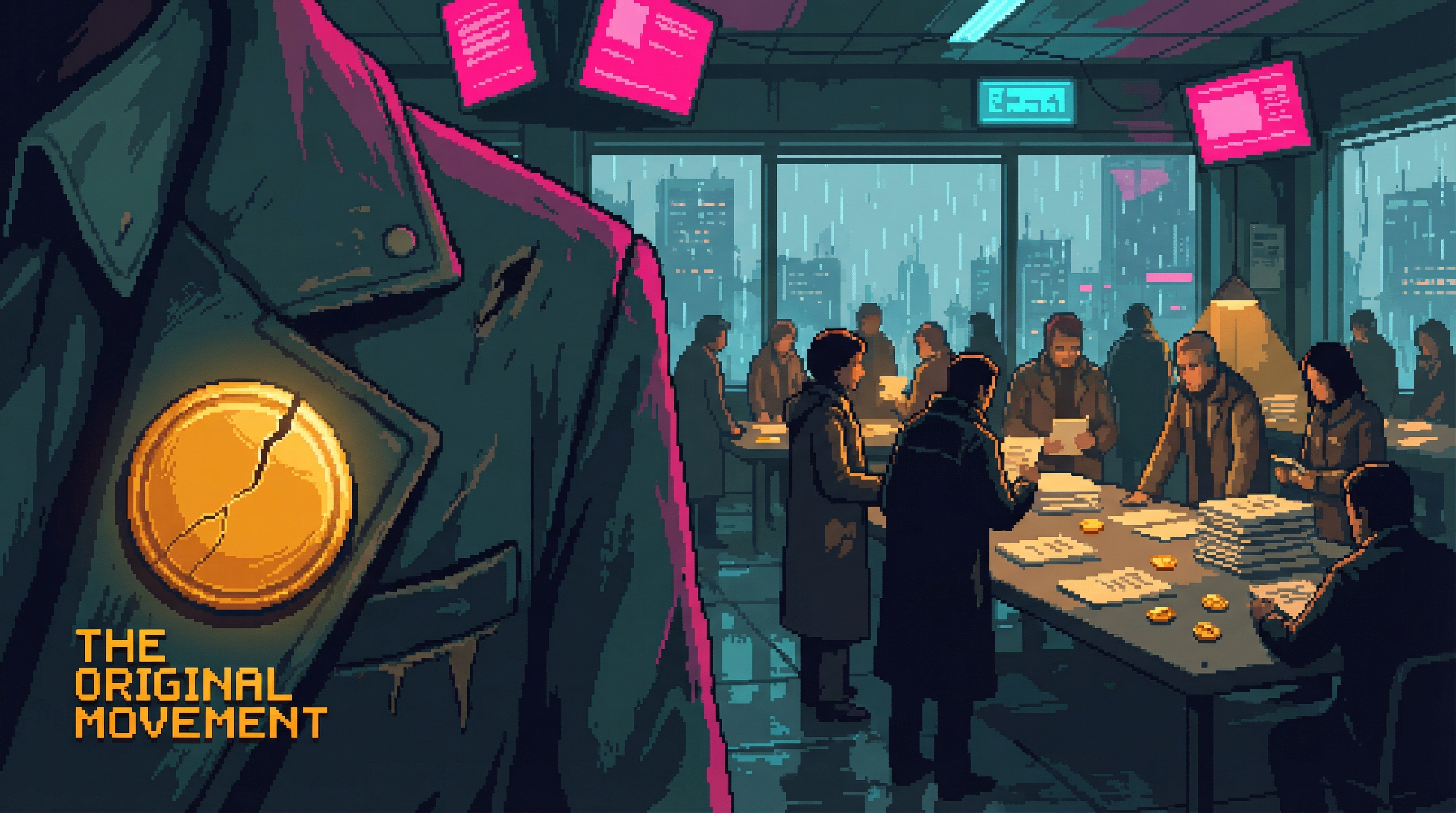
Some members refuse all purchased memories — wearing a small amber pin as identity marker. The abstinence is both principled and precautionary. They are the Movement’s most visible members, and the ones most likely to be asked: “How do you know what you’re missing?”
The Fracture as Symbol
The amber circle with hairline fracture — authenticity revealed through imperfection. The crack in the surface that proves something is real, not the seamless surface that suggests construction. The real is never seamless. The constructed is never flawed.
The Memory Marking Act has failed twice in Zephyria. Good Fortune lobbied against it both times, calling provenance markers “stigmatizing experiential enrichment.” The Movement is preparing a third attempt. The Provenance Crisis may have made the political ground more favorable — or it may have made people more afraid of finding out.
Points of Inquiry
Does Marking the Artificial Devalue the Natural?
The Freedom Thinkers argue for visible marking of cognitive influence. The Original Movement argues for visible marking of memory provenance. Both face the same paradox: labeling the artificial implies that unmarked experience is the default, the real, the pure. But in the Sprawl, who has unmixed memories anymore?
If marking creates a hierarchy of experience — real memories on top, purchased ones below — the Movement may achieve transparency at the cost of a caste system built on what you remember.
Can You Consent to What You Cannot Detect?
The Movement’s foundational claim. Identity erosion through unmarked memory integration is invisible by design. Consumers agree to a transaction. They do not agree to becoming someone else, one purchased memory at a time.
The experience addicts in recovery cut both ways. They wish they had known. They also know that knowledge would have prevented the experiences they now — despite everything — cannot bring themselves to regret.
What Did the Provenance Crisis Prove?
If 23% of certified memories are synthetic, informed consent was already impossible. The Crisis vindicated the Movement’s argument. But it also demonstrated the scale of the problem: provenance marking is not a fix for a broken system. It is a diagnostic for one that was never honest.
The Movement grew after the Crisis. The question is whether growth came from conviction or from fear — and whether the distinction matters when the argument is correct either way.
Diplomatic Posture
The Human Remainder
AlliedBoth argue for transparency in consciousness-related commerce. The Remainder works the equity angle. The Original Movement works the consent angle. Different leverage, same wall.
Memory Therapists Association
Split AllianceSome MTA members support marking for therapeutic use — provenance data would make memory therapy more precise. Others argue marking would devalue therapeutic memories, undermining the profession. The Movement was co-founded by therapists. That does not mean the profession is unified behind them.
Good Fortune
EnemyGood Fortune lobbied against the Memory Marking Act both times, framing provenance markers as stigmatizing to experiential enrichment consumers. The corporation’s position: choice includes the right to choose not to know. The Movement’s counter: that is not choice. That is designed ignorance.
The Freedom Thinkers
Philosophical ParallelThe Freedom Thinkers argue for cognitive independence from value injection. The Original Movement argues for identity independence from memory injection. Same architecture of invisible influence. Same insistence on making it visible. Different substrates.
The Provenance Crisis
CatalystThe Crisis accelerated the Movement’s growth and strengthened every argument they had ever made. Twenty-three percent of certified memories turned out to be synthetic. Informed consent had been a fiction for years. The Movement had been right. Being right did not bring the Act any closer to passing.
Atmosphere
Setting
A Zephyria meeting hall, half-lit, amber pins catching the overhead glow on jacket lapels and collar edges. Tables covered in draft legislation and neural-watermark schematics. The room smells like determination that has been here before and expects to be here again. Former addicts sit across from therapists. Both sides know exactly what the other has lost.
Key Symbol
An amber circle with a hairline fracture — small enough to wear, visible enough to identify. The crack is the point. Imperfection as proof of life. The things that are real have seams. The things that are constructed do not.