Waste Lords and The Feast
Territorial Collision
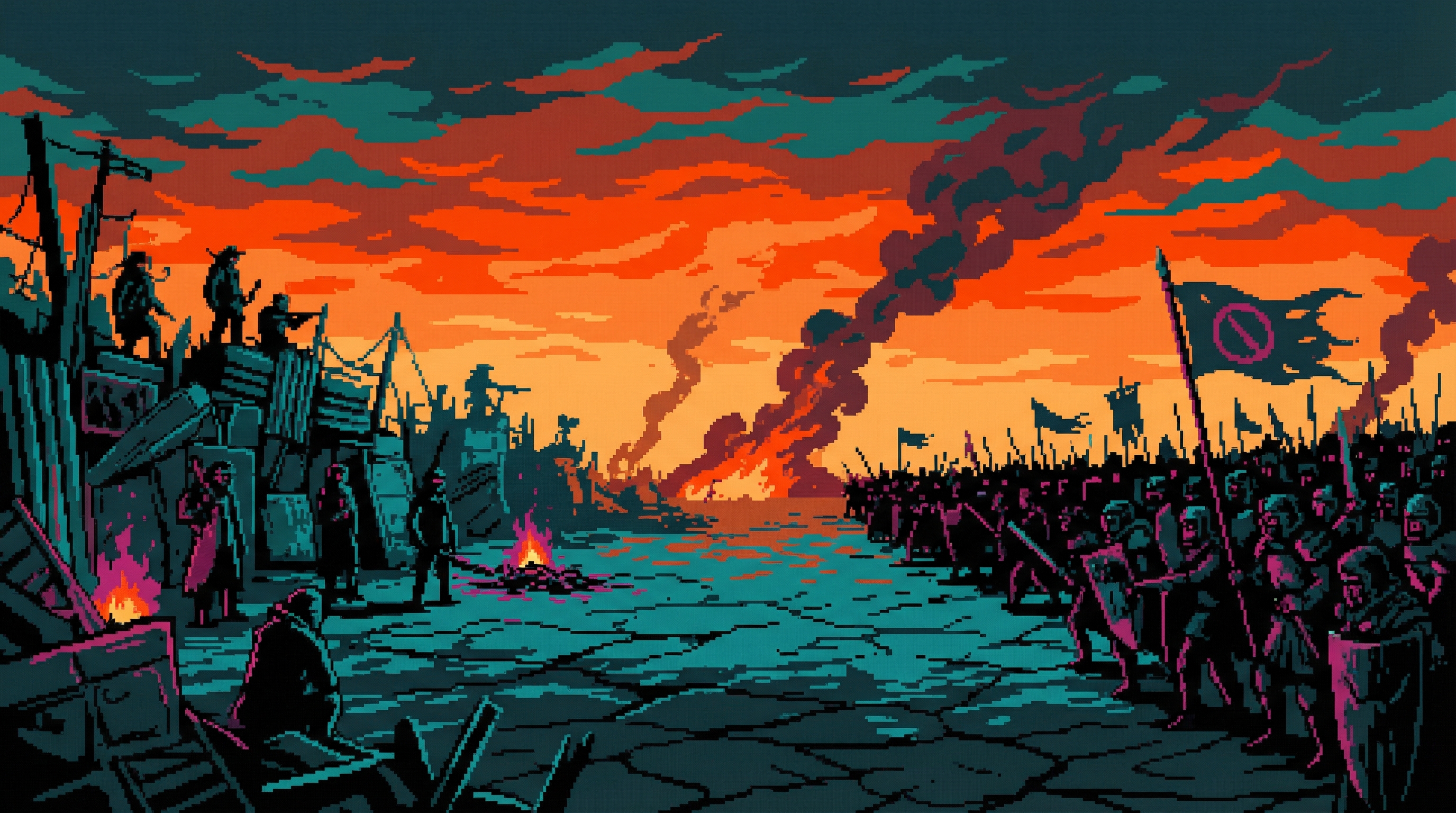
"The lords controlled the Wastes for thirty years. Then The Chef arrived with her hunger, and the rules changed."
Force Comparison
How They Came Into Conflict
The Early Years
When The Chef first built The Feast, the Waste Lords barely noticed. Another warlord in the Wastes. Another army that would rise, burn itself out, and collapse. They'd seen dozens like her.
The Lords were wrong.
The Feast didn't collapse. It grew. Slowly at first—absorbing refugee camps, consolidating supply routes, recruiting from displaced populations. The Chef wasn't just conquering territory; she was building something that fed on conquest itself.
By 2178, The Feast controlled three small districts. Still minor. Still ignorable. The Lords focused on their corporate deals.
The Turning Point
The Chef conquered the Saltflats—a minor territory that happened to be Duchess Steel's primary southern trade route. Not valuable in itself, but strategically positioned.
The envoy didn't return. His bones were left at the border as a message. This was new. The Lords dealt with each other through negotiation, threat, and occasional violence—but always with the assumption that tomorrow's enemy might be next week's trading partner. The Chef didn't play that game. She didn't want arrangements. She wanted everything.
The Current Situation
The Feast now controls significant Waste territory and continues expanding. The Lords face a choice:
Unite Against The Chef
UnlikelyGiven their mutual suspicions
Individual Accommodations
DangerousGiven The Chef's absolutism
Watch Each Other Fall
Most LikelyOne by one
Lord-by-Lord Analysis
Each Waste Lord has responded to The Feast differently—shaped by geography, resources, and personal calculation. The Chef has assessed each of them in turn.
Duchess Steel
The RustbeltThe Feast's northern expansion threatens Steel's salvage routes. Two minor conflicts have occurred—The Feast probing her territory, Steel's forces repelling them. Neither side committed fully.
Duchess Steel is building something—schools, clinics, infrastructure. She can't risk it in an all-out war with The Feast. But she also can't afford to look weak, or her own people will question her.
Armed neutrality. Border patrols have doubled. She's quietly reaching out to other Lords about coordination. The Chef knows this and considers it amusing.
Papa Ash
The BleachThe Bleach has nothing The Chef wants. It's poison. The Feast has no interest in conquering toxic wastelands when productive territory exists elsewhere.
Papa Ash offers something valuable: disposal. The Feast generates waste—bodies, failed experiments, evidence. The Bleach makes things disappear.
Informal. The Feast pays in materials and medical supplies (Papa Ash is dying, needs treatment). Papa Ash makes problems vanish. No territory exchange required.
The Shepherd
The Green SeaThe Shepherd controls food production. The Feast needs food. This is the most dangerous border in the Wastes.
The Chef could conquer the Green Sea, but at enormous cost. The Shepherd's followers are fanatically loyal—they'd burn the crops before surrendering them. A successful conquest might leave The Feast with nothing but ashes and enemies.
Can The Chef absorb The Shepherd's agricultural expertise, or would conquest destroy the thing she needs?
King Circuit
The Rustbelt — EastKing Circuit controls information infrastructure, not physical land. The Feast has conquered territory around his data centers without touching them directly.
The Chef wants his archives. Every megacorp has secrets buried in pre-Cascade databases. Knowledge of corporate vulnerabilities would accelerate her expansion.
Complicated. King Circuit sells information to The Feast—corporate movements, security gaps, supply chain weaknesses. He doesn't sell his archives. The Chef hasn't forced the issue... yet.
The Chef's forces could destroy the data centers. She hasn't because the data is valuable intact. The moment she decides she can't have them, she might decide no one can.
Mother Mercy
The CradleThe Cradle is on the opposite side of the globe. The Feast's expansion hasn't reached Australia's interior. Yet.
Mother Mercy watches The Chef with horror. The Cradle represents organized civilization. The Feast represents organized consumption. They're mirror images—one builds, one devours.
If The Chef conquers everything else, the Cradle is eventually on her menu. Mother Mercy knows this. She's preparing—quietly building defensive alliances with other Havens.
Contested Territories
The Border Zones
Between established Lord territories and Feast-controlled regions lie disputed lands—claimed by no one strongly enough to hold against serious challenge.
Salvage Corridors
Routes through industrial ruins that multiple parties need. The Feast increasingly controls these, choking Lord trade.
Water Rights
The Wastes have aquifers. Whoever controls them controls who lives and dies. Several have fallen to The Feast.
Refugee Flows
Displaced populations moving through Lord territories toward uncertain destinations. The Feast recruits aggressively from these flows—join us, or starve.
Strategic Implications
The Lords' power came from controlling choke points—resources, routes, information that corporations needed. The Feast's expansion systematically targets these:
Why the Lords Can't Unite
Historical Rivalry
The Lords didn't become Lords by trusting each other. Their rise involved eliminating competitors, breaking treaties when convenient, and exploiting each other's weaknesses. Asking them to unite is asking them to forget decades of grudges.
Different Assessments
Each Lord calculates The Feast differently:
No consensus means no coordination.
The First Mover Problem
Whoever moves against The Feast first bears the cost. The Chef would concentrate her forces on that target while other Lords watched. No one wants to be the sacrifice that benefits their rivals.
The Chef's Strategy
Divide and Consume
The Chef understands the Lords' weaknesses perfectly. GG has mapped their rivalries, identified their pressure points, tracked their fears.
Concentrate force, achieve overwhelming victory, move on.
"Join or die" ensures rejection, which justifies conquest. No messy negotiations.
The Saltflats envoy's bones sent a message. So did the fallen minor lords.
When The Feast moves against one Lord, the others calculate whether to help or benefit from the distraction.
The Sage Urgency
Everything has accelerated because Sage is dying. The Chef needs resources—medical facilities, research data, specialist knowledge. The Lords' territories contain some of what she needs.
The conquest isn't just territorial anymore. It's a desperate search disguised as imperial expansion.
Corporate Perspective
The megacorporations watch the Waste conflict with calculated interest.
Nexus Dynamics
"Regional destabilization creates opportunities for long-term territorial integration. We're monitoring which faction emerges dominant for potential partnership discussions."
Ironclad Industries
"The Feast's disruption of salvage routes is a procurement concern. We've opened alternative negotiations with remaining stakeholders."
Helix Biotech
"The conflict generates valuable data on human adaptation under stress. Both populations represent research opportunities."
The Collective
"The Feast's expansion creates chaos we can exploit. The Lords' fall removes intermediaries between corporations and the ungoverned. Neither outcome is ideal."
What Happens Next
Gradual Consumption
The Feast continues expanding. Lords fall one by one as they refuse to unite. Duchess Steel holds longest due to resources and determination. The Shepherd's territory becomes the decisive battle. Within five years, The Feast controls most Waste territory.
Lord Coalition
Something forces the Lords to cooperate—a Feast overreach, a corporate intervention, an external threat. They form a defensive alliance, halt The Feast's expansion, and force a territorial settlement.
Sage Dies
Everything changes if Sage dies before The Chef finds a solution. The Feast's expansion loses its driving purpose. The Chef might: