Overview
The Coolant Crisis of Q4 2182 is the compute climate's defining tragedy — the eleven-day drought during which fourteen people died because the processing capacity that kept their air breathable was redirected to settle consciousness futures contracts.
The mechanism was simple. Server Farm 14's capacity was reallocated during the last three days of the fiscal quarter to process ¢4.2 billion in consciousness futures settlement. The atmospheric processing algorithms in adjacent sub-levels, which depended on the same processing capacity, degraded below safe CO2 thresholds. The fourteen who died were elderly, unaugmented, and lived in sealed sub-level apartments with no manual ventilation.
Nexus called the atmospheric failure "an unrelated coincidence caused by pre-existing equipment failure." The Lamplighters noted that the equipment which "failed" was running on the same processing capacity that was reallocated.
No investigation was conducted.
The Mechanism
Fiscal Quarter End — The Reallocation
Server Farm 14's processing capacity was redirected during the last three days of Q4 to settle ¢4.2 billion in consciousness futures. Standard practice. The Exchange required settlement within the fiscal window. The compute had to come from somewhere.
Hours 1–6 — Atmospheric Degradation
The atmospheric processing algorithms serving sub-levels adjacent to Farm 14 began losing capacity. CO2 levels crept upward. The residents who might have noticed — the augmented, the younger, the connected — had already relocated to better-ventilated housing. The ones who remained were the ones who had nowhere else to go.
Hour 6 — The First Death
The first name on Jin's wall. The atmospheric failure analysis would later reconstruct the sequence: the air went bad at hour 6 and someone noticed at hour 11. The gap between those two moments is the gap between fourteen deaths and zero.
Hour 11 — The Last Death
The fourteenth name. Five hours between the first death and the last. Five hours during which someone could have noticed, could have intervened, could have manually overridden the reallocation. No one did. The atmospheric monitoring systems registered the degradation. The alerts were categorized as low-priority — the affected addresses had no premium service contracts.
Day 11 — The Drought Ends
The consciousness futures settled. Processing capacity returned to normal allocation. The atmospheric systems recovered. The fourteen apartments were ventilated. The air was breathable again. The residents in those apartments no longer needed air.
The Official Record
"Processing reallocation was conducted within established infrastructure optimization parameters. The atmospheric processing degradation was an unrelated coincidence caused by pre-existing equipment failure."
The statement was released within four hours of the deaths being discovered. No preliminary investigation had been conducted.
"The equipment that failed was running on the same processing capacity that was reallocated."
This response was distributed on paper through the Undervolt. It was not broadcast. It did not need to be. Everyone below the Grid already knew.
Three maintenance engineers filed reports predicting this exact failure. The reports were classified as "commercially sensitive." The engineers' names are not part of the public record. Their predictions are.
The Memorial
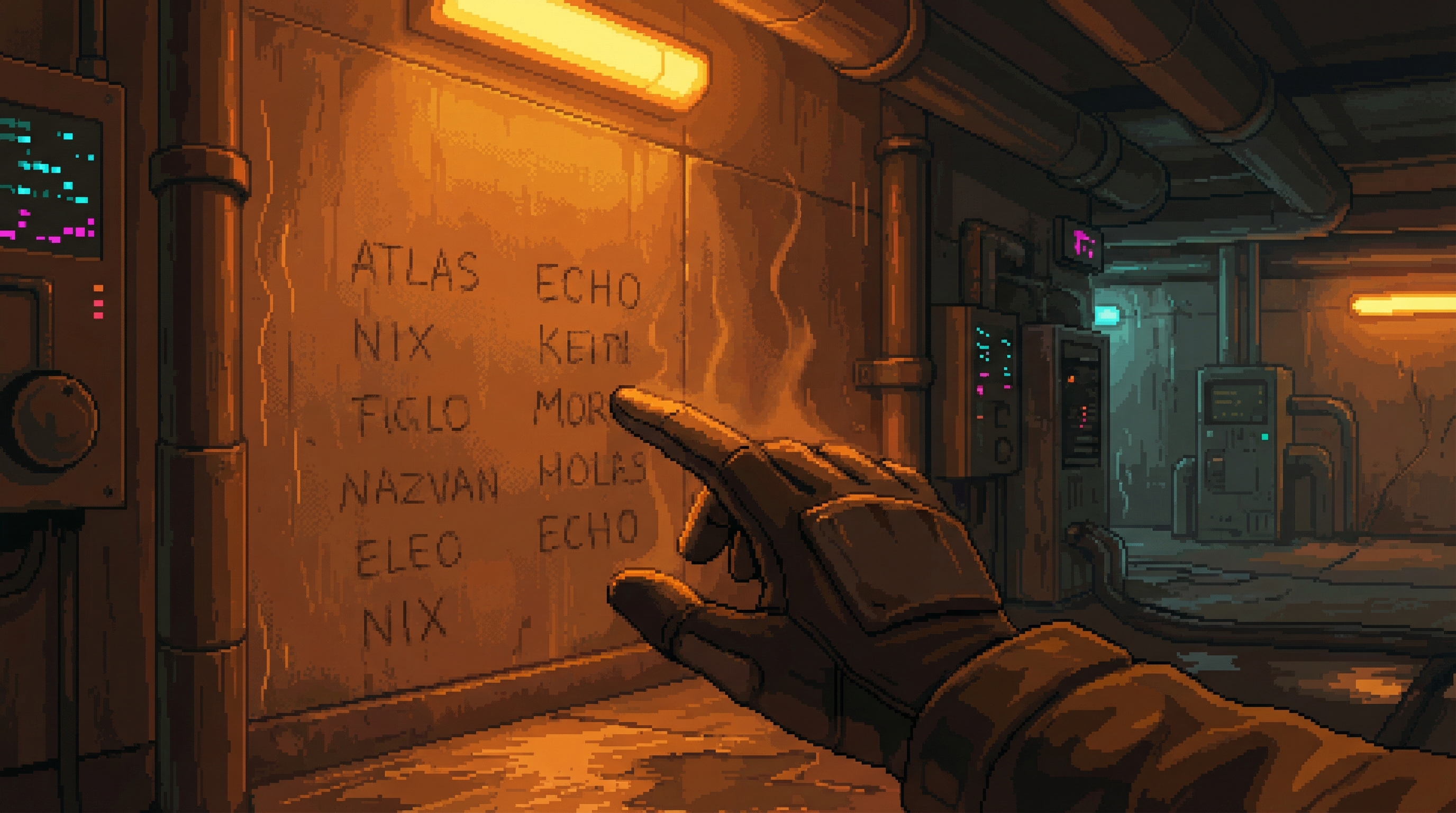
Old Jin wrote the fourteen names on the eastern junction wall of the Undervolt. His handwriting is small and careful. The pencil marks have darkened over the years — not from age, but from hands. Lamplighters touch the wall when they pass, a gesture that became ritual without anyone deciding it should be.
The wall is warm. Grid waste heat radiates through the concrete. The junction hums at 16 Hz — a frequency you feel in your teeth before you hear it. The names are listed in the order the residents died, determined later by atmospheric processing failure analysis. The first name died at hour 6. The last at hour 11.
The gap between them is the gap between the moment the air went bad and the moment someone noticed.
Consequences
People died because a financial instrument matured on schedule. The death was predictable, predicted, and profitable. Three engineers filed the reports. The reports were suppressed. The futures settled. The system continued.
No investigation was conducted. No liability was assigned. No precedent was changed. The infrastructure optimization parameters that allowed the reallocation remain in effect. The consciousness futures market that required the settlement continues to operate. The sealed sub-level apartments that have no manual ventilation still have no manual ventilation.
Every decision in the chain — redirect compute, settle futures, defer maintenance, classify reports as commercially sensitive, categorize atmospheric alerts as low-priority — was individually rational. The fourteen deaths were the sum of rational decisions made by people who never had to look at the result.
The Bandwidth Crisis of 2181 established the precedent: when compute is scarce, reallocation follows economic value. The Coolant Crisis confirmed it: the same triage logic that prioritizes markets over maintenance will, given sufficient pressure, kill the least economically valuable people in the system. The only question was how many and how soon.
Linked Files
▲ Restricted Access
- The three maintenance engineers who predicted the failure were reassigned within six weeks. Two left the Sprawl entirely. The third still works in atmospheric systems — in a different sector, under a different name.
- The consciousness futures that required settlement belonged to four accounts. Three were institutional. The fourth was a private portfolio managed by a Nexus board member's family trust. The settlement deadline was a contractual obligation, not a regulatory one — it could have been extended by 72 hours with a standard waiver.
- Jin's list contains fourteen names. Atmospheric analysis suggests the actual casualty count may be higher. Sealed apartments in adjacent sub-levels were not inspected for three additional days. By the time they were, the atmospheric systems had fully recovered. Any evidence of additional deaths was indistinguishable from normal mortality.
Field Notes
Sound
The junction hums at 16 Hz — Grid waste heat vibrating through infrastructure concrete. Below the threshold of hearing, above the threshold of feeling. You know you're near the memorial when your teeth ache.
Touch
The wall is warm. Always warm. Grid waste heat. The pencil marks are slightly raised where years of hands have compressed the surrounding concrete. You can read the names with your fingers if you know where to look.
Visual
Amber emergency lighting — the permanent half-light of infrastructure spaces. Old Jin's handwriting: small, precise, the graphite marks (#333333) on warm concrete (#8B7355). Fourteen names. The first and last separated by five hours and the width of a hand.
Ritual
Lamplighters touch the wall when they pass. Left hand, open palm, held against the warm concrete for the time it takes to exhale. No one taught this gesture. No one organized it. It exists because fourteen people stopped breathing in sealed rooms and the only memorial they have is a warm wall in an amber corridor.