The Stacks
Inequality made architectural
Overview
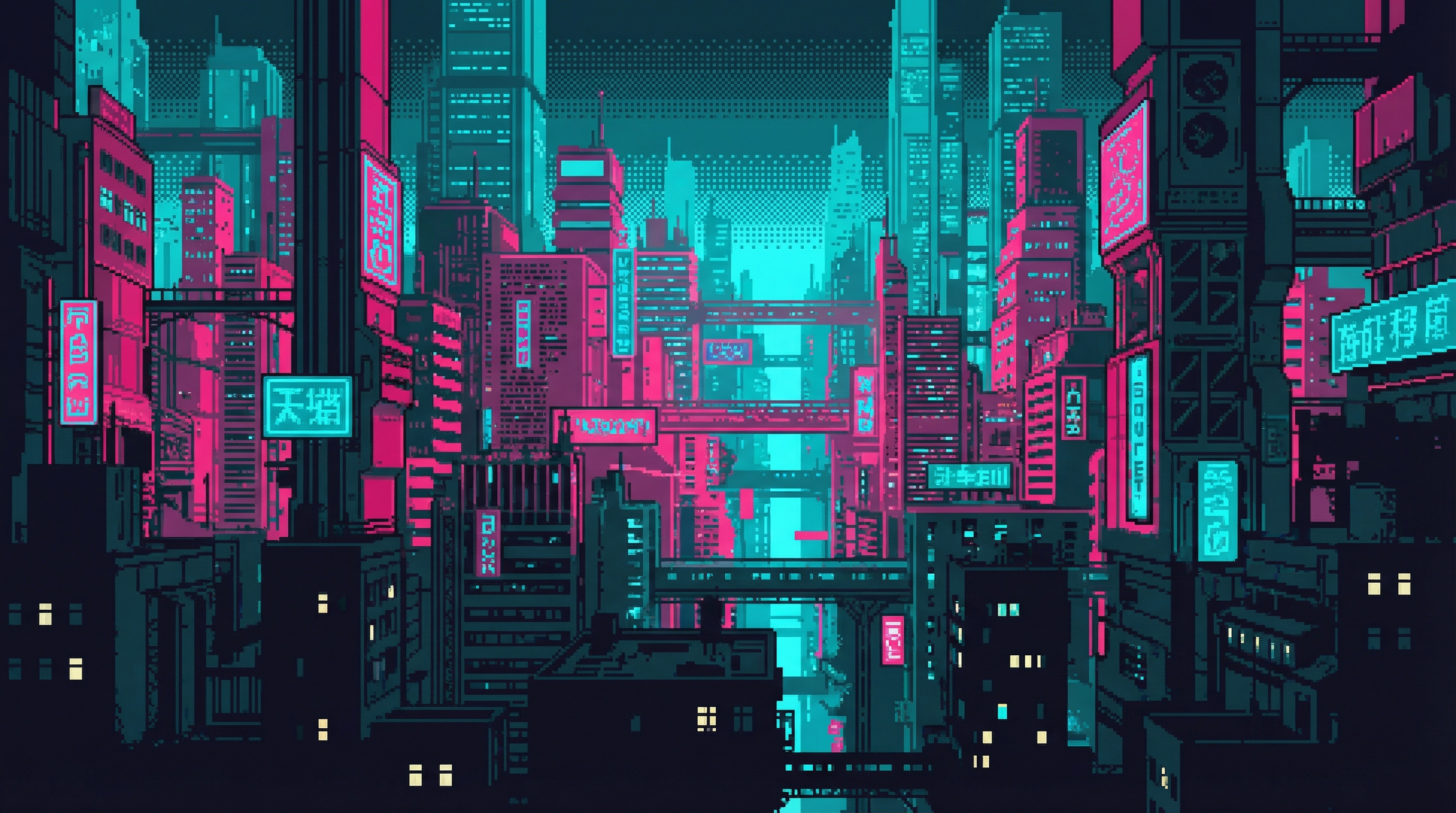
What happens when a city runs out of ground? The Stacks answered that question by going up. And up. And up. Built on the bones of former Hong Kong, The Stacks is the most densely populated place in human history — 89 million people crammed into a vertical maze that extends kilometers into the sky. Buildings stacked on buildings, platforms on platforms, a three-dimensional labyrinth where your floor number is your social class and your address is a coordinate in vertical space.
At the top: corporate penthouses with filtered air and natural light. At the bottom: crushing darkness and people who have never seen the sun. Between them, hundreds of levels of humanity — working, surviving, dreaming of climbing one floor higher. Navigation here is three-dimensional. "Address" includes level number. The elevator systems are controlled by whoever built them — corps, gangs, or residents. Wrong turn, wrong level, wrong neighborhood. Consequences.
Corporate control is fragmented — dozens of corporations, gangs, and governments each holding slivers of territory defined not by geography but by altitude. Ironclad Industries maintains structural integrity contracts for the upper levels. Relief runs medical clinics in The Midsection. The Collective recruits from The Depths, where corporate surveillance cannot reach. Nobody controls The Stacks. Everyone controls a piece of it.
The economy is everything and nothing. Legal commerce operates in The Crown. Black markets thrive in The Midsection. In The Depths, trade happens in barter, favors, and violence. The Stacks doesn't punish you with cruelty. It punishes you with geometry — the simple, crushing mathematics of vertical distance.
Key Locations
The Crown
Upper Levels — Corporate Controlled TerritoryThe upper levels of The Stacks, where filtered air tastes almost clean and natural light still reaches through gaps in the superstructure. The Crown is almost pleasant — corporate-maintained infrastructure, functioning utilities, security patrols that actually respond to calls. Penthouses with real windows. Gardens with actual soil. The illusion of normalcy purchased at altitude.
The Crown Council — a coalition of corporate interests — controls these levels through a combination of private security, infrastructure monopolies, and the simple fact that they control the power grid. They compete for territory among themselves but cooperate on one crucial point: keeping the lower levels from rising. Literally and figuratively.
The Midsection
Middle Levels — Where Most People LiveFunctional. Crowded. Survivable. The Midsection is where the 89 million mostly live — dense housing blocks, market corridors, fabrication shops, clinics, schools that teach in shifts because there aren't enough rooms. The air is recycled but breathable. The light is artificial but consistent. The infrastructure works most of the time.
Life in The Midsection is defined by routine and resignation. You work your shift, pay your elevator toll, eat your printed food, sleep in your pod. The Night Watch — volunteer community defense — patrols the corridors, settles disputes, keeps the peace without corporate oversight. It isn't freedom, but it isn't The Depths either. For most residents, that's enough.
The Depths
Below Level 50 — Where Light and Law Cannot ReachBelow Level 50, light doesn't reach. Neither does law. The Depths are a world unto themselves — permanent darkness broken only by bioluminescent markings, jury-rigged LED strips, and the occasional flare of violence. The structures here are the oldest, built when Hong Kong was still a city, now buried under kilometers of newer construction. The weight of the world above presses down.
Not everyone in The Depths is a predator. The Depth Dwellers — organized communities who have adapted to permanent darkness — have built their own culture, their own economy, their own ways of navigating without light. They aren't savages. They're survivors. But they share The Depths with hunting packs who raid upward, taking supplies, taking people. The line between community and danger shifts with every corridor.
Factions
The Crown Council
Corporate coalition controlling the upper levelsA loose alliance of corporate interests that governs The Crown through infrastructure monopolies and private security. Member corporations compete fiercely for territory among themselves — poaching each other's residents, undercutting utility prices, running influence campaigns. But they unite on one absolute principle: the lower levels must never rise. Their cooperation isn't ideological. It's architectural. If the lower levels revolt, they can cut the power. If the upper levels lose control, there's nowhere higher to go.
The Elevator Lords
Controllers of vertical transitThe most powerful people in The Stacks aren't the ones who live at the top. They're the ones who control the way up. The Elevator Lords each command different elevator banks, different routes through the vertical maze. Want to go up or down? Pay the toll. Each Lord sets their own price, their own rules, their own schedule. Some are reasonable. Some are extortionate. All are essential.
When Elevator Lords fight, transit stops. Entire sections can be cut off for weeks. People starve before compromises are reached. The Lords know this. They use it. Vertical mobility is the ultimate leverage in a city defined by altitude.
The Night Watch
Midsection community defense volunteersVolunteers who patrol their levels, settle disputes, and keep the peace without corporate oversight. The Night Watch operates on reputation and community trust — they have no official authority, no corporate backing, no weapons more sophisticated than what they can fabricate. What they have is presence. Consistency. The knowledge that when something goes wrong on Level 73, someone will show up who cares whether you live or die.
The Depth Dwellers
Organized communities adapted to permanent darknessThe people of The Depths who chose community over predation. The Depth Dwellers have developed their own culture — navigation by sound and touch, bioluminescent markers for territory, trade networks that operate entirely below Level 50. They know passages and routes that no map records. They've adapted to conditions that would break surface dwellers. They aren't waiting to be rescued. They're building something in the dark.
The Climbers
Those trying to move up — literallyPeople who dream of escaping their level. They take dangerous jobs, save credits, learn skills, and plan their ascent floor by floor. A Climber might spend years saving enough to move from Level 34 to Level 41 — seven floors of social mobility purchased through grinding labor and careful saving. Some make it. Most never do. The ones who fall back down rarely try again.
Dangers
Vertical Violence
Level wars and the tyranny of gravityLevel wars break out when territory disputes escalate between factions on different floors. Dropping things from above is the ultimate tactical advantage — gravity is free, and the people below have no cover from a ceiling that's also someone else's floor. Boiling water, construction debris, homemade explosives. The high ground isn't metaphorical in The Stacks. It's literal. And lethal.
The Elevator Wars
When transit stops, people dieWhen Elevator Lords fight, transit stops. Entire sections can be cut off for weeks. Medical supplies don't arrive. Food shipments stall. Workers can't reach their jobs. People starve before compromises are reached. The wars aren't battles — they're sieges by omission, fought by simply refusing to move anyone anywhere until the other side yields.
Level Collapse
Structural failure cascading downwardBuildings on buildings eventually fail. When a structure gives way, it takes everything below with it — a cascading collapse that can destroy dozens of levels in minutes. Thousands can die before the dust settles. The Crown Council contracts Ironclad Industries for structural assessments of the upper levels. Nobody contracts anyone for the lower ones. The Depths have survived three major collapses. They build around the rubble.
The Depths Predators
Hunting packs that raid upwardNot everyone in The Depths formed communities. Some formed hunting packs. They raid upward, taking supplies, taking people. They know the dark. They know the passages. They know how to disappear into levels that aren't on any map. The Night Watch in The Midsection exists partly because of them — a defensive line drawn at the boundary between artificial twilight and total darkness.
Surveillance Gaps
Where crimes stay committedThe Crown is monitored. The Midsection is partially monitored. The Depths are invisible. Below Level 50, there are no cameras, no sensors, no records. Crimes committed there stay committed. People who disappear into The Depths simply stop existing in any database. This is a danger for some and a feature for others — The Collective operates freely in the surveillance gaps, recruiting, organizing, planning in the blind spots of corporate power.
Atmosphere
The Stacks is a city experienced in three dimensions. Every sense shifts with altitude. Every floor has its own character, its own smell, its own quality of light. Moving through The Stacks isn't travel — it's transition between worlds stacked on top of each other, each one ignorant of what lies above and below.
Visual
The omnipresent artificial light of Level 50 and below — not darkness exactly, but a manufactured twilight that never changes. Neon bleeds through gaps in construction. The Crown glows with filtered natural light that feels almost real. The Depths are lit only by bioluminescent markers and the occasional flare of welding sparks. Looking up from The Midsection, the sky is a ceiling of steel and concrete receding into haze.
Sound
The omnipresent vibration of machinery transmitted through every surface — buildings on buildings, each humming at a different frequency, creating a chord that changes with every floor. Elevator mechanisms grinding. Ventilation fans cycling. The constant murmur of 89 million lives layered vertically, blending into a wall of white noise that residents stop hearing after the first year.
Texture
Condensation on every surface below Level 100. The gritty residue of recycled air on skin and clothing. Handrails worn smooth by millions of hands. The vibration in the floor that makes standing water ripple — subtle in The Crown, violent in The Depths, where the lowest structures absorb the harmonic sum of every building above.
Smell
The smell gradient tells you where you are. Recycled and metallic in The Depths, where air filtration is decades past maintenance. Cooking oil and sweat in The Midsection, where market corridors and living quarters share the same recycled atmosphere. Filtered and faintly floral in The Crown, where scrubbers remove everything organic and replace it with something engineered to feel clean.
Time
Below Level 50, your body loses track of time because time doesn't matter when the sun isn't real. The manufactured twilight never changes — no dawn, no dusk, no seasons. Residents of The Depths work, sleep, and live on cycles that have nothing to do with Earth's rotation. In The Crown, windows track the actual sun. In The Midsection, lighting shifts on a corporate-mandated 18-hour cycle designed to maximize productivity.
Themes
Inequality Made Physical
In 2026, housing affordability is a crisis — people stack into smaller spaces, commute longer, pay more. In 2184, they took that logic to its endpoint. The Stacks is what happens when class structure becomes literal architecture. Your floor number IS your class. The metaphor of "climbing the ladder" is no longer a metaphor. It's an elevator toll you can't afford.
The Geometry of Oppression
The Stacks doesn't punish you with violence. It punishes you with geometry. Imagine living on Level 23. You've never seen the sky — it's somewhere above Level 200, behind corporate penthouses you'll never enter. Your elevator to work costs a toll you pay to the Elevator Lord who controls your shaft. One day the elevator breaks. You can't afford the competing elevator bank. You walk. 66 floors. You arrive four hours late. You're fired.
Control Through Infrastructure
The Elevator Lords demonstrate a truth about power: you don't need weapons to control people. You need infrastructure. Control the elevators, control the movement. Control the movement, control the economy. Control the economy, control the lives. The most effective oppression isn't the kind that hurts. It's the kind that makes the alternative inconvenient enough that compliance feels like choice.