The Neon Mile
The brightest place in the Sprawl, and somehow the emptiest
Overview
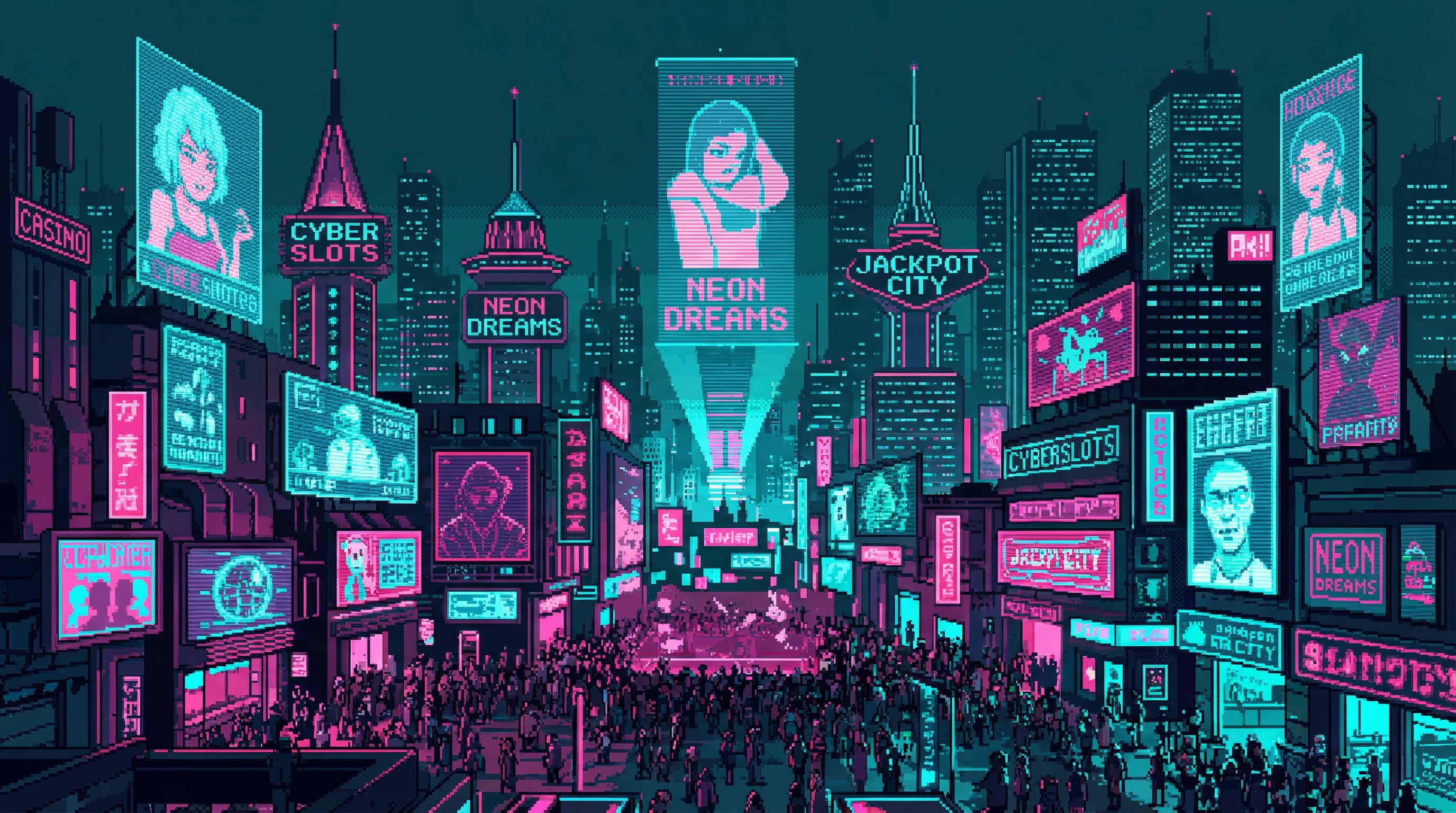
The Neon Mile is where the Sprawl goes to forget. Built on the bones of former Las Vegas, this entertainment zone is a temple to distraction — casinos, clubs, pleasure palaces, and experiences that would be illegal anywhere else operate openly here under the protection of the Entertainment Consortium. The consortium doesn't care what you do as long as you pay.
Twelve million people live in and around the district, a permanent population swelled by millions more transients passing through on any given night. The aesthetic is overwhelming — holographic advertisements covering every surface, music bleeding from every doorway, sensory stimulation designed at a neurological level to keep you spending. It's the brightest place in the Sprawl, and somehow the emptiest.
What happens when distraction becomes infrastructure? In the world before the Cascade, Las Vegas existed because humans need somewhere permission to self-destruct is the business model. In 2184, The Neon Mile is that impulse industrialized. Every surface is an advertisement. Every interaction is a transaction. Every pleasure is precisely calibrated to create the need for more.
The Mile is heavily policed — not by any government, but by the Consortium's private security. Violence is bad for business. Theft is bad for business. Anything that interrupts the flow of credits is bad for business. The result is a district that feels paradoxically safe and profoundly predatory. Nobody will hurt you here. But everyone will take everything you have.
Key Locations
The Eternal Night
Premier Casino — Running for 37 years straightA casino that literally never closes. Thirty-seven years of continuous operation — no maintenance shutdowns, no power failures, no breaks in the action. The Eternal Night is a monument to human compulsion, a cathedral of chance where the lights never dim and the tables never empty. Time loses meaning inside. There are no clocks, no windows, no indication of whether it's day or night outside. Patrons have been known to gamble for weeks straight, sustained by stim-packs and auto-feeders built into the chairs.
The house always wins. Not metaphorically. The Eternal Night's AI-driven gaming systems are calibrated to extract maximum revenue while keeping players engaged just long enough to empty their accounts. The margin of hope — the occasional small win, the near-miss — is engineered down to the neural response.
The Flesh Market
Body Modification & Cosmetic Surgery DistrictNot as sinister as it sounds — or perhaps more sinister than it sounds, depending on your perspective. The Flesh Market is the Neon Mile's legal body modification and cosmetic surgery district, a sprawling complex of clinics, boutiques, and operating theaters where you can become anyone. New face. New body. New species, if you've got the credits.
The cheap clinics do surface work — dermal grafts, eye color shifts, minor bone restructuring. The mid-range shops handle full-body modifications, cybernetic integration, and personality overlays. The high-end establishments, the ones you need an appointment and a background check to enter, do things that blur the line between medicine and art. Customers walk in human and walk out as something that has no biological classification.
The Memory Palace
Experience Sim Parlors — Live other people's memoriesFor two hundred credits, you can live someone else's happiest memory for an hour. Their wedding. Their child's first word. Their mother alive. You feel everything they felt. When you come out, your own memories feel thinner. Less vivid. Less real.
You go back. Everyone goes back.
The Memory Palace operates a chain of experience sim parlors across the Neon Mile, offering curated memory experiences sourced from willing donors — or so they claim. The premium tier offers celebrity memories, historical moments, experiences of wealth and love and triumph that most customers will never know firsthand. The economy tier offers simple comforts: a meal with family, a sunset on a beach that no longer exists, the feeling of being held by someone who loves you.
The economy tier is the one that destroys people. Not because the memories are bad, but because they're good. So good that your own life becomes unbearable by comparison. The Memory Palace's repeat customer rate is 94%. Their customer retention strategy is addiction by design. Corporations like Relief and Wellness profit from the downstream medical consequences.
Factions
The Entertainment Consortium
Ruling Power — Cartel of casino, club, and experience providersThe real government of the Neon Mile. A cartel of the district's largest casino operators, club owners, and experience providers who maintain peace through profit. The Consortium doesn't have laws — it has terms of service. Violate them and you're not arrested; you're banned. In a district where banning means losing access to the only economy that matters, it's a more effective deterrent than any prison.
The Consortium maintains a massive private security force that keeps the streets safe for spending. They fund infrastructure, manage utilities, and operate the holographic advertising network that covers every surface. Their cut of every transaction in the district is rumored to be between 8% and 15%. On a district that processes billions in credits daily, that makes them one of the wealthiest entities in the Sprawl.
The Dealers' Guild
Information Brokers — Behind every bartender, pit boss, conciergeInformation is the most valuable commodity in the Neon Mile, and the Dealers' Guild controls the flow. Operating behind every bartender, every pit boss, every concierge and doorman in the district, the Guild trades in secrets, debts, and leverage. They know who's winning, who's losing, who's desperate, and who's about to be.
The Guild is less an organization than a network — a web of informants and brokers connected by mutual profit and a strict code of professional discretion. They don't take sides. They don't make moral judgments. They sell information to anyone who can pay, and they sell it accurately. Their reputation depends on reliability.
The Neon Saints
Street Gang — "Security" for touristsA street gang that's evolved into something between a protection racket and a legitimate security service. The Neon Saints patrol the edges of the district — the transitional zones where the Consortium's security coverage thins and the Sprawl's ordinary dangers reassert themselves. They provide "security" for tourists, which means escorting them safely through the dangerous corridors for a fee, and making sure those corridors stay dangerous enough to justify the fee.
The Saints are tolerated by the Consortium because they serve a useful function: they keep the violence contained to the margins, where it doesn't affect revenue. In exchange, the Saints get access to the district's economy without paying the Consortium's cut. It's an arrangement that benefits everyone except the people who can't afford protection.
The Memory Thieves
Black Market — Copying and selling memories without consentThe dark underbelly of the Memory Palace economy. The Memory Thieves are black market sim traders who copy and sell memories without consent — harvesting experiences from unwitting donors through compromised neural interfaces, hacked sim rigs, and corrupted memory extraction hardware. The memories they sell are raw, unedited, and often intensely private.
Their product is cheaper than the Memory Palace's legitimate offerings, and for some customers, the illicit nature is the point. Stolen memories carry an authenticity that curated experiences lack — the rough edges, the imperfections, the moments that a willing donor would never share. The Memory Thieves trade in intimacy stolen at the neural level, and business has never been better.
Dangers
Debt Spiral
Economic — The district is designed to drain youThe Neon Mile is designed at every level to encourage spending. The holographic advertisements target your neural interface with personalized temptation. The casino algorithms calibrate hope to keep you playing. The credit systems offer easy lending at rates that compound into slavery. People arrive with savings and leave with nothing. Some don't leave at all — they join the permanent underclass of debt-workers, laboring in the Consortium's service industries to pay off balances that will never reach zero.
Sim Addiction
Neurological — Memory Palace experiences so good people stop livingThe Memory Palace's experiences are so compelling that a significant percentage of customers stop living their own lives entirely. Sim addiction manifests as progressive withdrawal from reality — customers spend increasing hours in borrowed memories, neglecting work, relationships, and basic self-care. In advanced stages, addicts can no longer distinguish their own memories from simulated ones. Their sense of self dissolves into a patchwork of other people's experiences. Medical treatment exists, but it's expensive, and the Memory Palace doesn't offer refunds.
Disappearances
Unknown — People vanish, sometimes reappear working off debtPeople vanish in the Neon Mile. Not frequently enough to cause alarm — the district processes millions of visitors — but consistently enough that patterns emerge. Some reappear weeks or months later, working off debt in the Consortium's less visible operations. Others never resurface. The Consortium's security forces don't investigate disappearances. The official position is that people leave the district voluntarily. The unofficial position is that some debts require more creative repayment.
Atmosphere
The Neon Mile assaults every sense simultaneously. It's designed to overwhelm — to flood your neural pathways with so much stimulation that critical thinking shuts down and the spending instinct takes over. The district never sleeps, never dims, never pauses. It is a machine for converting human attention into corporate revenue, and it runs with terrifying efficiency.
Sound
The synaptic buzz of competing holographic advertisements — a frequency just below hearing that makes your teeth itch if you stay too long. Music bleeding from every doorway, genres overlapping into a wall of rhythm that vibrates your sternum. The constant murmur of twelve million people spending, losing, hoping.
Sight
Every surface is an advertisement. Holographic displays layer reality with offers, promises, and enticements calibrated to your neural profile. The light is so bright it washes out the sky — you can't see stars from the Neon Mile, haven't been able to in decades. The aesthetic is beautiful and exhausting, a kaleidoscope that never resolves into stillness.
Smell
Recycled air flavored with synthetic jasmine and vanilla — a scent profile engineered to promote spending behavior. Underneath it, the wet heat of bodies packed into clubs, the chemical tang of stim-packs, the ozone bite of overworked holographic projectors.
Touch
The wet heat of packed crowds pressing against you. The vibration of bass notes through the floor. The subtle neural tingle of personalized advertisements interfacing with your implants. Everything in the Neon Mile wants to touch you, to make contact, to establish a connection that can be monetized.
Taste
Synthetic flavors designed to trigger nostalgia — meals that taste like childhood, drinks that taste like first love. Nothing in the Neon Mile tastes like what it is. Everything tastes like what you want it to be. The cuisine is a lie, and the lie is the product.
Themes
Distraction as Infrastructure
The Neon Mile isn't an accident or an indulgence — it's infrastructure. The Sprawl needs a place where people can discharge their despair without it becoming revolution. The Mile serves the same function as bread and circuses: keep the population entertained enough that they don't notice they're being consumed. Every holographic ad, every Memory Palace session, every spin of the Eternal Night's wheels is a pressure valve on a system that would otherwise explode.
The Algorithmization of Desire
Every experience in the Neon Mile is calibrated by AI systems that understand human desire better than humans do. The casinos don't rely on luck — they rely on behavioral prediction engines that know when you'll fold, when you'll raise, when you'll walk away. The Memory Palace doesn't curate memories randomly — it profiles your neural patterns and serves you exactly the experience that will bring you back tomorrow. Desire itself has been reverse-engineered and weaponized.
Memory as Commodity
The Memory Palace raises a question the Sprawl would rather not answer: if you can buy someone else's happiness, what is your own worth? When simulated joy is indistinguishable from real joy, what does "real" even mean? The Memory Thieves push this further — stealing experiences without consent, commodifying the most private moments of human consciousness. In the Neon Mile, nothing is sacred because everything is for sale.