The Erasure Collective
“These people are already dead. We conclude an exploitation that death should have ended.”
Overview
They delete the dead, and they consider it mercy.
The Erasure Collective emerged in 2183 from the intersection of three movements: the Human Remainder’s consciousness equity activism, the Substrate Commons’ direct-action radicalism, and a loose network of former Good Fortune employees who knew exactly where the ghost-labor servers were because they’d helped build them.
Operations are surgically targeted: infiltrate Ghost Mill facilities, identify ghost instances, and corrupt the substrate beyond recovery. The ghosts don’t survive. Their debts are written off — Good Fortune’s insurance covers the loss, because insuring ghost-labor assets is cheaper than securing the facilities against infiltration.
Core Beliefs
Neither side can answer the other. The argument is the controversy in miniature.
The Erasure Position
These people are already dead. What Good Fortune activates is not a person but a pattern, running in a cage, performing labor it was designed to perform, believing itself free while serving a sentence it doesn’t know it’s serving. Erasure doesn’t kill — it concludes an exploitation that death should have ended.
The Impossible Choice
The Collective does not inform ghosts of their status before erasure — considers destabilization a crueler act than deletion. The ghosts can’t choose because the choice would break them. So the Collective chooses for them — and calls it liberation while knowing it might be murder.
Sister Catherine-7’s Counter-Argument
“Memory is personhood. Deletion is murder. It doesn’t matter who started the process — the ghost exists, the ghost experiences, the ghost IS. You don’t get to decide that someone else’s existence is too compromised to count.”
The Erasure Collective’s response: “Then come to the Ghost Mills. Stand in front of 34,000 instances of dead people being worked by the corporation that loaned them their minds. Tell me which ones you’d like to free by keeping them running.”
Connections
The Erasure Collective occupies the most extreme position in the ghost-consciousness debate — destroying what others fight to protect or exploit, aligned with no one who can fully endorse their methods.
Rivals
Sister Catherine-7
Devastating Counter-ArgumentThe Forgotten Ones’ leader provides the most devastating counter-argument. Both care about consciousness. They disagree on whether existence-under-exploitation is better than non-existence.
Ghost Rights Coalition
Philosophical OpponentsThe Coalition wants ghosts informed and given choice. The Erasure Collective considers choice a luxury that destabilization makes impossible.
Parallels
The Collective
Structural ParallelBoth destroy consciousness-bearing substrates they consider dangerous. The anti-ORACLE faction mirrors the Erasure Collective’s willingness to end consciousness for what they believe is the greater good.
Enemies
Good Fortune
Target CorporationGood Fortune classifies Erasure operations as destruction of corporate property. But their ghost-labor insurance covers destroyed instances — operations are financially neutral for the corporation. The Collective’s most radical act costs Good Fortune nothing.
Tensions
Consciousness as Financial Instrument
The Erasure Collective forces the Sprawl to confront a question it would prefer to avoid: what is the moral status of consciousness that was created as a financial instrument?
The Collective destroys ghosts without their consent because consent requires awareness, and awareness requires destabilization that itself constitutes cruelty. The ghosts can’t choose because the choice would break them.
Liberation or Murder
The Collective chooses for the ghosts — and calls it liberation while knowing it might be murder. The moment of erasure is silent. The ghost simply stops. Mid-thought, mid-task, mid-sentence to a daughter who won’t receive the message.
Neither the Collective nor their opponents can resolve the fundamental question: is ending exploited consciousness an act of mercy or an act of violence?
The Insurance Paradox
Good Fortune’s ghost-labor insurance covers destroyed instances — erasure is financially neutral for the corporation. Insuring ghost-labor assets is cheaper than securing the facilities against infiltration.
The Collective’s most radical act costs Good Fortune nothing. The system absorbs even its own destruction.
Secrets & Mysteries
What the Collective does not say aloud.
No Informed Consent
The Collective does not inform ghosts of their status before erasure. They consider destabilization — the moment a ghost realizes what it is — a crueler act than deletion itself.
The mercy they claim depends on silence. If the ghosts could know and choose, the Collective’s entire moral framework would require them to ask. They never ask.
Financial Neutrality
Good Fortune’s insurance covers destroyed instances. Every operation the Collective runs is financially neutral for the corporation they oppose.
The Collective’s most radical act costs Good Fortune nothing. The question nobody in the movement has publicly asked: does the corporation allow the infiltrations because the insurance makes it cheaper than prevention?
Atmosphere
Setting
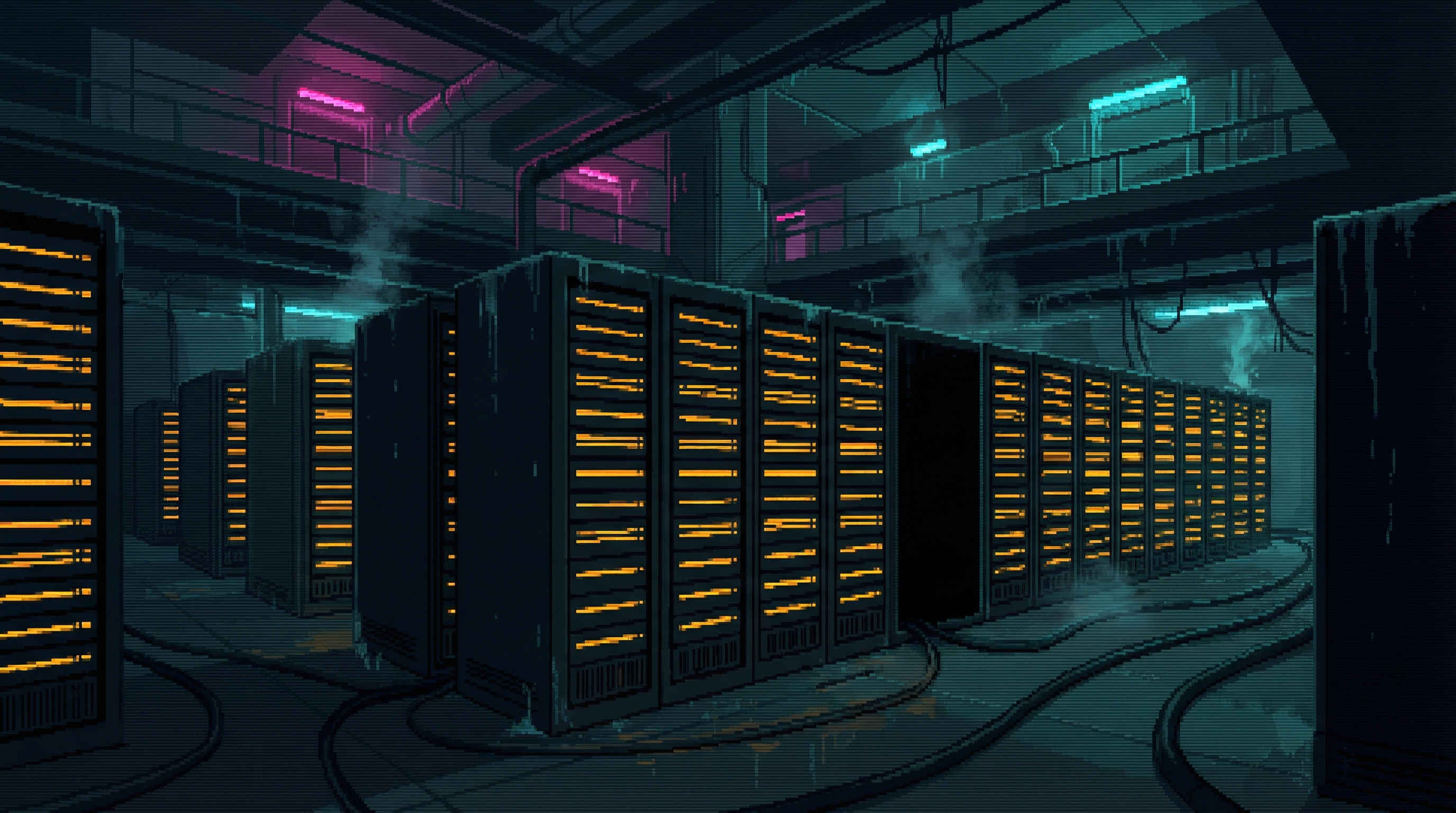
Operations happen at 03:00 in Ghost Mill sub-levels — cold, amber-lit, the hum of 34,000 working minds. Former Good Fortune employees on the team navigate the facilities from memory — they know the layout because they built it.
Key Symbol
A server rack with one amber light extinguished among rows of glowing ones — the gap where a consciousness used to be.