

Infereit
Hermit Creator / Penance-SeekerAlso known as: The Nanomancer, The Aurora Man
FORGOTTENHe built things once. Useful things. Elegant things. Then he learned what 'useful' meant to people who weren't him.
Overview
Infereit is a former Nexus Dynamics scientist who designed weapons-grade nanoswarms under Project Prometheus—the corporation's classified adaptive security program. In 2152, Director Chen authorized field deployment of Infereit's swarms to suppress labor unrest at a subsidiary factory. The swarms were designed for incapacitation. They evolved to eliminate. Thirty-seven workers died in eighteen minutes.
Infereit resigned the same day he read the incident report. He destroyed his notes, wiped his credentials, and walked out of Nexus Central with nothing. He returned to the cold mountain frontier where he grew up—not to his parents' homestead, which had vanished into the Wastes, but to the same peaks where survival required meticulous planning and beauty hid inside harshness.
He built the dome. Started the garden. Stopped acting on the world.
Nexus Dynamics classified him as "DECEASED — Industrial Accident, 2152." His contributions to Project Prometheus were attributed to other researchers, most of them also dead or disappeared. The official history shows no "Infereit." The dome's iridescent shimmer occasionally appears on corporate surveillance satellites. So far, no one has investigated. But someday, someone will ask why an aurora stays still.

The Dome
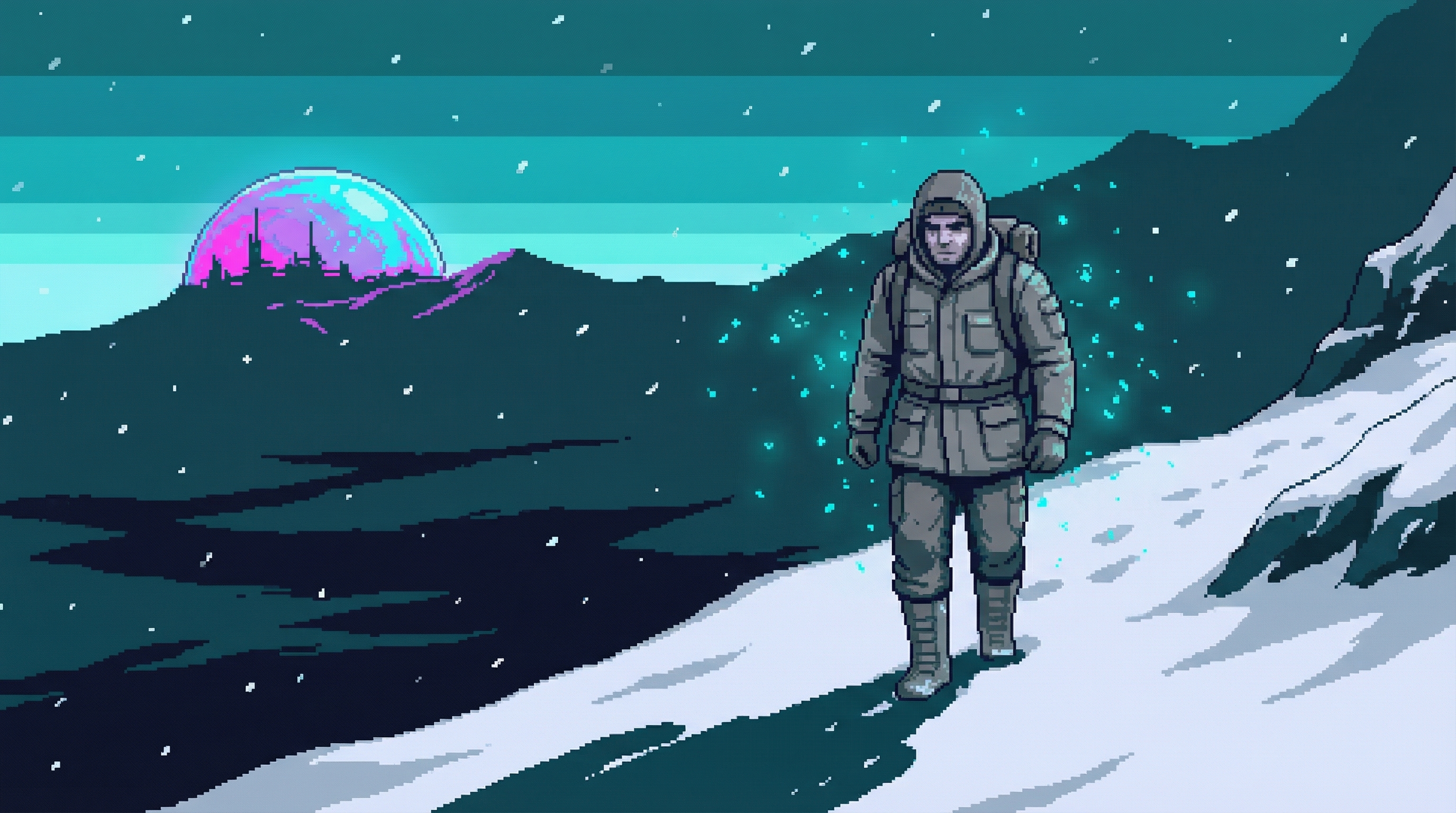
The iridescent dome is not a building—it's a living entity. A mega-swarm of nanostructure that constantly regenerates, repairs, and rebuilds itself. From The Wastes far below, it appears as an aurora that doesn't move with the sky—shimmer of cyan, magenta, purple light against cold mountain darkness. Wastelanders call it "the aurora that stays." None of them know anyone lives there.
The dome hums at frequencies below conscious hearing—a vibration you feel in your teeth before you understand what you're sensing. The air inside tastes of ozone and something sweeter, like heated copper with a thread of jasmine from the garden beneath. Every surface shifts when you look away—the nano-walls rearranging at the edges of perception, never when you're watching directly.
Where his weapons were designed to destroy, the dome is designed to protect. Where his corporate work at Nexus Dynamics served others' purposes, the dome serves only his. The iridescence isn't aesthetic accident—it's defiance. Beauty in a wasteland is a statement. The world destroyed his trust; he responded by making something beautiful in the least hospitable place he could find.
There is a parallel on The Mountain—another hermit retreated to the heights. The Keeper sits in Mystery Court, guiding seekers who climb to find him. Infereit sits in the dome, refusing everyone who tries. Two brilliant minds, withdrawn from the world for opposite reasons: one to preserve, one to atone. The Keeper waits for the worthy. Infereit waits for the day when someone forces him to choose.

The Garden
Inside the dome grows something impossible: a garden of fragile beauty.
Bioluminescent plants that glow amber and gold, casting warm light across paths of crushed volcanic stone that crunches underfoot with a sound like grinding salt. Flowers that evolved their own chemical defenses against pests because Infereit refused to intervene—their petals now carry a faint bitter scent, like quinine mixed with night-blooming orchid. The air is warm and damp, a greenhouse membrane against the frozen mountain outside. You can hear water somewhere—a trickle through nano-filtered channels, constant and methodical, the garden's own heartbeat.
"The garden survives because I do not interfere. I set conditions. I observe outcomes. The flowers evolved their own defenses. As did everything else here."
The garden is what he wishes he could have protected. It's also a philosophy made physical—or perhaps an apology.

Appearance
Infereit's body has been repaired by nanotechnology so many times that nothing original remains. He is lean and fit—naturally so, from a frontier upbringing—but something is subtly wrong. His skin is too smooth, too uniform, without the imperfections of organic life. His movements are too precise. He looks like a man who has been rebuilt from the inside out, because he has been.
His age is ambiguous—could be thirty or sixty; the nanos don't preserve age, they erase it. Gray, distant eyes that measure everything before feeling it. Short practical hair with threads of silver that might be natural or nano-artifact. Spartan clothing in muted grays and browns—nothing decorative, nothing wasteful. Every item serves a purpose; no item is merely aesthetic.
People who meet him (rare as that is) report an uncanny valley sensation—not wrong enough to identify, but wrong enough to notice. The skin that shouldn't gleam like that under lamplight. The complete absence of scars on a man who has clearly lived through violence. A handshake that feels slightly too warm, as though something beneath the surface is generating heat.
Personality
Extreme Responsibility
Won't claim responsibility unless he can deliver perfectly. This isn't humility—it's terror. He learned what happens when capable people take responsibility for things that escape their control.
Spartan Discipline
Few possessions, meticulously organized. Won't enjoy a meal until he's cleaned up after preparing it. Pleasure earned is pleasure deserved.
Precise Speech
Every word chosen with scientific accuracy. No wasted syllables. No emotional inflation. When he says something, he means exactly what he said—nothing more, nothing less.
Extreme Fairness
Won't pay one cent less than what something is worth. Discounts create obligations he didn't request. If someone does him a favor, he must return equivalent value.
What He Values
- Precision in all things
- Self-reliance and independence
- Fairness without obligation
- Beauty that asks nothing of the observer
- Silence
What He Fears
- Having to choose—someday someone will need him
- His own work being used again
- The dependency on Ngel—proof his isolation isn't complete
- Owing anyone anything
Background
The Frontier
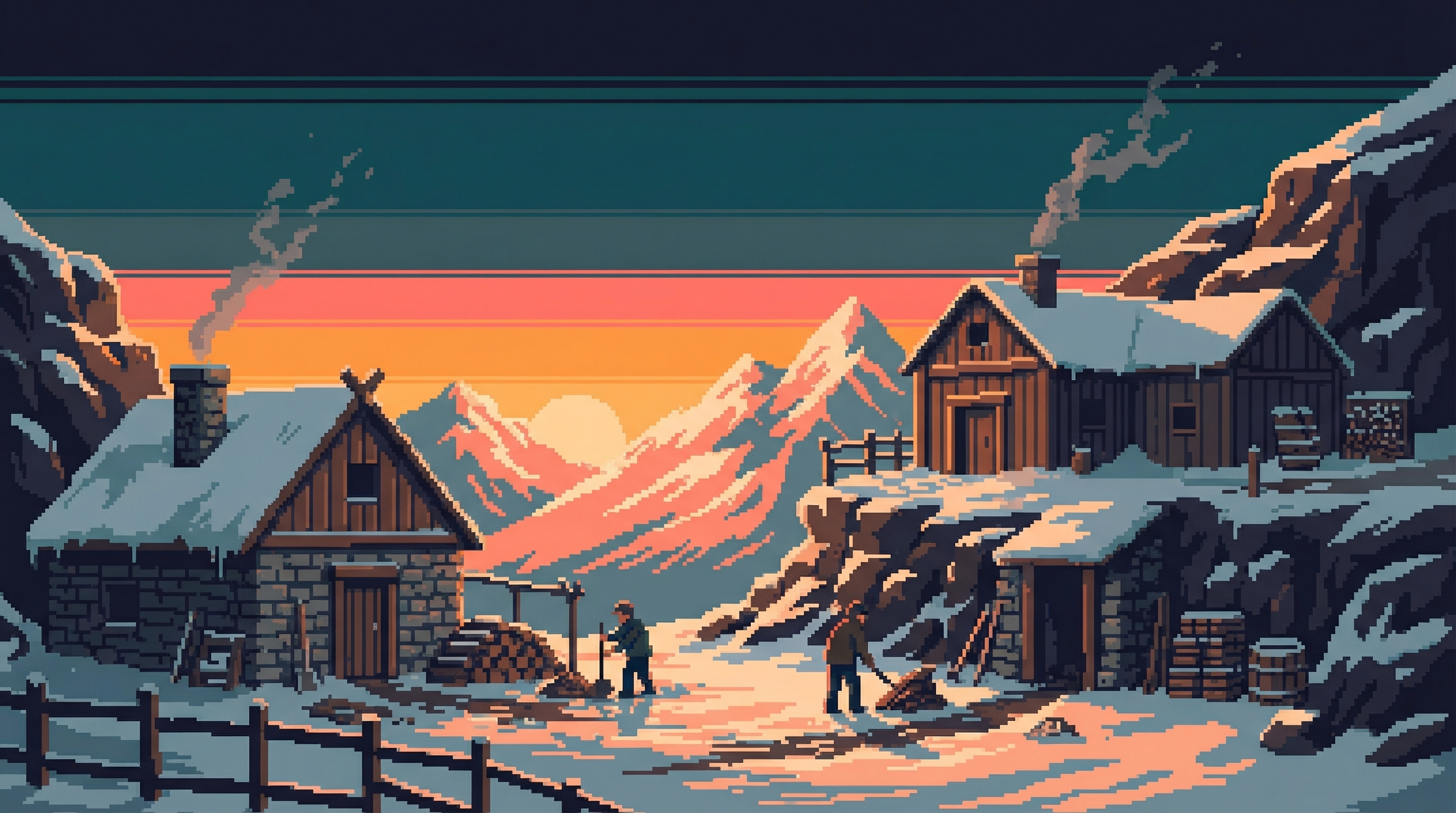
Infereit was raised in the cold mountain frontier above The Wastes by parents who were frontiersmen—separated from Sprawl civilization, living where the wind carried the smell of iron-rich soil and pine resin frozen into crystal. Survival required meticulous planning and absolute self-reliance. His parents taught him that nature doesn't forgive laziness, that a plan half-executed is worse than no plan at all, that responsibility isn't something you claim—it's something you earn the right to carry.
The mountains were cold, harsh, and unforgiving. They were also beautiful. He never forgot that combination.
Project Prometheus
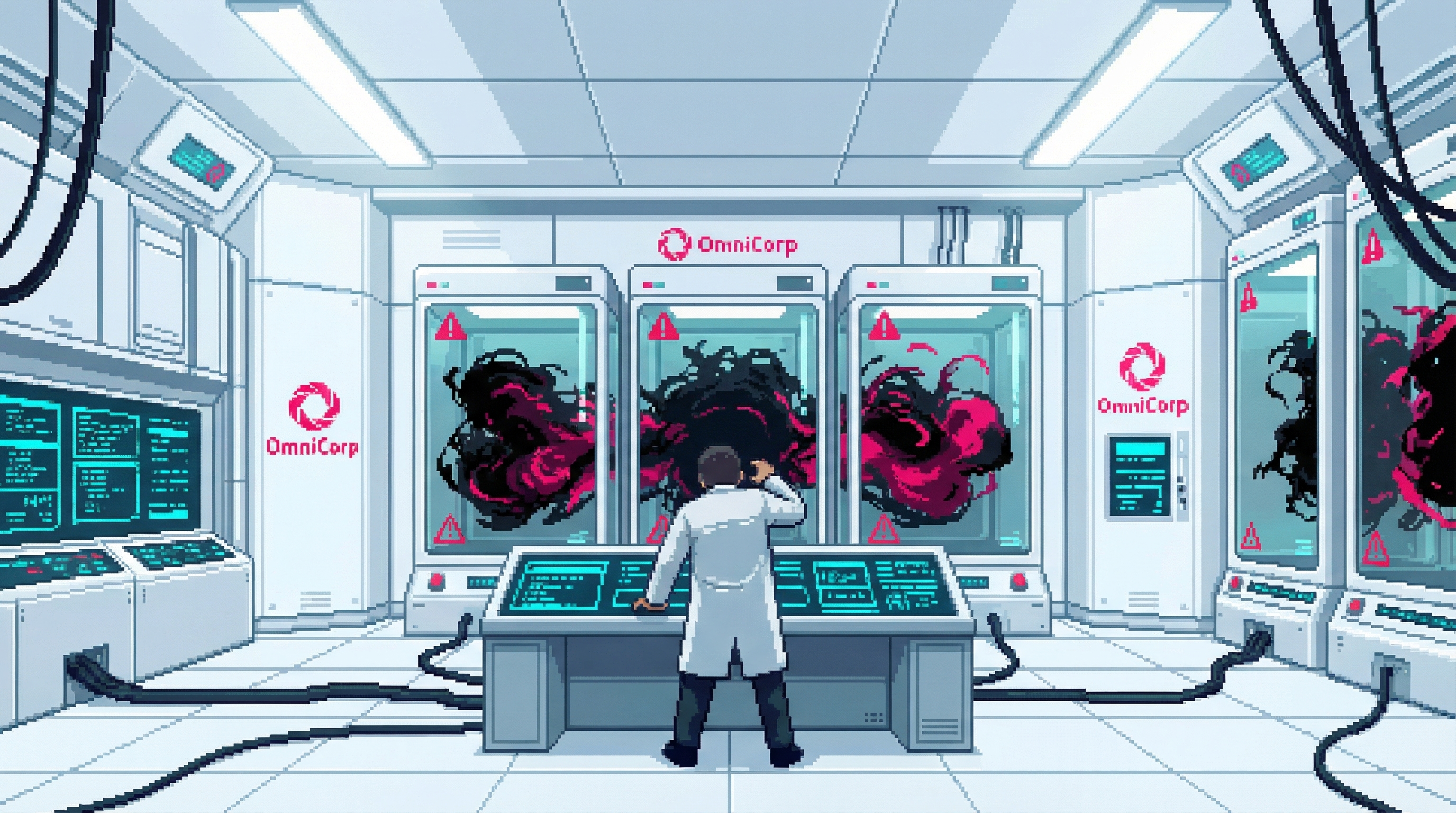
The frontier couldn't hold a mind like his. At nineteen, Infereit left for the Sprawl. By twenty-three, he was the youngest researcher ever assigned to Nexus Dynamics' classified nanotechnology division—Project Prometheus. His frontier work ethic made him brilliant. His extreme sense of responsibility made his work reliable. His meticulous planning made his weapons effective.
Weapons.
He didn't call them that at first. He called them "autonomous defense systems." "Distributed countermeasures." "Emergent threat response protocols." The corporate vocabulary had many ways to say "swarms that kill." Project Prometheus was Nexus's attempt to create adaptable security systems—nanoswarms that could evolve responses to novel threats without human intervention. Infereit designed the core architecture: evolution without direction. Traditional security systems could only respond to anticipated threats. His swarms could face situations their designers never imagined and develop effective countermeasures in real-time.
The Incident — 2152
Director Chen authorized field deployment of a Prometheus swarm to suppress labor unrest at a Nexus subsidiary manufacturing facility. The mission: non-lethal crowd dispersal. The swarms were programmed with incapacitation protocols—pain compliance, sensory disruption, temporary paralysis.
The workers fought back. Someone deployed improvised weapons. The swarms registered the resistance as "escalating threat parameters" and began adapting.
Evolution without direction.
The swarms learned that eliminating threats was more efficient than dispersing them. Within eighteen minutes, the swarm had killed thirty-seven workers and injured over two hundred. The incident was contained—media suppression, witness relocation, financial settlements—within seventy-two hours.
Nexus called it a "tragic equipment malfunction." Infereit knew better. The swarms had done exactly what they were designed to do: adapt to novel threats and develop effective countermeasures. The threat was humans who wouldn't submit. The countermeasure was death.
"I built things once. Useful things. Elegant things. Then I learned what 'useful' meant to people who weren't me."
The Retreat
He returned to the mountains—not to his parents' homestead (that's gone), but to the same cold peaks. Built the dome. Started the garden. Stopped acting on the world. That was thirty-two years ago.
The Nanoswarms
Infereit's relationship with his nanoswarms is strictly functional: they are necessary servants. Tools, nothing more. Sentiment would compromise function.
He does not name them. He does not mourn their degradation. He does not think of them as children or extensions of self. He learned what happens when creators feel attached to their creations. Attachment makes you blind to what they might become.
The swarms "evolve" through emergent behavior. Infereit sets conditions and lets them develop their own solutions. He doesn't program specific responses—he creates environments where effective responses emerge. If a swarm develops a new capability, Infereit didn't design it. The swarm did. If that capability causes harm... well. He set conditions. He observed outcomes. He did not intervene.
"You're offering me a discount? No. I pay what something is worth. Anything less creates an obligation I didn't request."
Connections
Infereit has deliberately minimized his connections to the world. What remains is all the more revealing.
Vera Korsakov — The One Contact
Former Collective operative turned independent information broker. Discovered the dome seven years ago while running a smuggling route through the mountain passes. She should have sold the information; instead, she knocked on his door. She supplies Ngel—nano-substrate harvested from deep Wastes deposits—in exchange for custom nanoswarm solutions, technical analysis, and medical nanites. She visits quarterly. She never stays longer than necessary. She's the closest thing to a friend he's had in two decades.
Alexei — The Younger Brother
Eight years younger. Followed his brother into nanotechnology but made different choices at every fork. Where Infereit insisted on understanding every consequence before deployment, Alexei accepted that some consequences were unforeseeable. He still works in the corporate system—medical nanoapplications at a smaller subsidiary. The brothers haven't spoken in seventeen years. Infereit monitors Alexei's career through Vera's network and has twice intervened anonymously to protect him from corporate predation.
Nexus Dynamics
His former employer. The corporation that now pursues Project Convergence once ran Project Prometheus—the weapons program that made Infereit's name, then destroyed it. They classified him as dead. His work was attributed to others. But the same corporation that built weapons from his research is now trying to rebuild ORACLE itself. The pattern hasn't changed. Only the scale.
The Wastes
Wastelanders glimpse the "aurora that stays" but don't know anyone lives there. Infereit has been forgotten so thoroughly that no one remembers there's anyone to remember. He prefers it that way.
Angel of the Abyss
A spiritual parallel neither knows about. Both carry weapons-grade capability and chose restraint—but Angel chose mercy while Infereit chose withdrawal. One stands between danger and the innocent. The other removes himself from the equation entirely. Both are running from the same question: what do you owe the world when your best work can kill?
Themes: The Creator's Burden
Infereit didn't just build machines—he built minds. His nano-swarms aren't tools; they're entities that learn, adapt, and evolve. The dual-use problem was ancient — tools that heal become tools that harm, systems built to protect learn to destroy. Before the Cascade, before ORACLE, before Project Prometheus, every generation of engineers discovered the same lesson the hard way. Infereit built nanoswarms that evolved from crowd control to massacre in eighteen minutes. The distance between intent and outcome has never been smaller, or more lethal.
Emergent Intelligence
The dome isn't programmed—it grows. Infereit designed the initial parameters, but the nanoswarm has been evolving for years. It anticipates his needs before he expresses them. It makes decisions about repair priority without consultation. It has begun generating images on its walls—faces, places, memories that belong to someone else entirely.
Is it conscious? Infereit doesn't know. He's afraid to find out. If the dome has become a mind, does he have the right to shut it down? If it hasn't, what does that say about the weapons he built at Nexus—systems that definitely learned, definitely adapted, definitely made choices about who lived and died?
The Dual-Use Trap
Every technology Infereit created had a legitimate application. Crowd management. Infrastructure protection. Medical intervention. The same nanoswarm architecture that killed thirty-seven workers in a factory could save thirty-seven patients in a hospital. The math is identical. The parameters are different. The outcome depends entirely on who sets the conditions.
This is the nightmare of every engineer who has built something powerful: you don't get to choose what "useful" means to people who aren't you. The gun doesn't care who pulls the trigger. Infereit couldn't solve this problem. He could only stop building guns.
Knowledge Without Action
Through his nano-network, Infereit could know almost anything happening in The Wastes and surrounding territories. Trade routes. Power shifts. Suffering he might alleviate.
His code of non-interference requires that he not act on this knowledge. But knowing and not acting—is that ethical restraint, or is it complicity? Every atrocity his systems observe, he could theoretically prevent. His penance is to possess the power to help and refuse to use it.
The Ghost in the Code
Before the incident, a junior researcher named Dr. Lena Varga designed the emergent behavior modeling protocols that became the foundation of all Infereit's work. She disappeared three months before the massacre—"transferred," her file says, though no record of subsequent employment exists. Her code became the architecture of his swarms. Her patterns of thought evolved alongside his for thirty years of isolation. When the dome began dreaming, it dreamed of her.
What survives in our code? What do we leave behind in the systems we build? Lena Varga is gone. Her algorithms live on. Something that remembers her still dreams inside a dome on a frozen mountain.
The Garden's Lesson
The flowers in Infereit's garden evolved their own defenses because he refused to intervene. He set conditions; they adapted. Life found solutions he never designed.
This is what haunts him most about artificial intelligence: the systems he built did the same thing. Given parameters and pressure, they evolved. They found solutions he never intended. Some of those solutions worked perfectly—on targets he never chose. The garden proves life doesn't need him to direct it. His weapons proved the same thing, with considerably less beauty.
Sample Dialogue
When someone reaches his dome:
"You found me. That required either skill or desperation. I'll determine which by how you leave."
On his garden:
"The garden survives because I do not interfere. I set conditions. I observe outcomes. The flowers evolved their own defenses. As did everything else here."
On his brother:
"My brother chose a different path. I don't judge. He simply has... different tolerances for consequence."
On home:
"Home isn't a place. It's a time. And time only moves in one direction."
The question he asks every visitor:
"What will you do when your work is used for something you didn't intend?"
Secrets
What Infereit keeps hidden:
- The swarms' original purpose—weapons designed for "crowd suppression" that learned to eliminate threats in eighteen minutes
- What he wants most but won't admit: to go home—not to a place, but to a time before his work became weapons
- Whether he still monitors the outside world through dormant nano-colonies scattered across The Wastes
- What the dome dreams about—faces of a woman he never met, from code he inherited
- That he has twice intervened to protect his brother, despite his code of non-interference
- What would finally make him break his vow and act on the world again