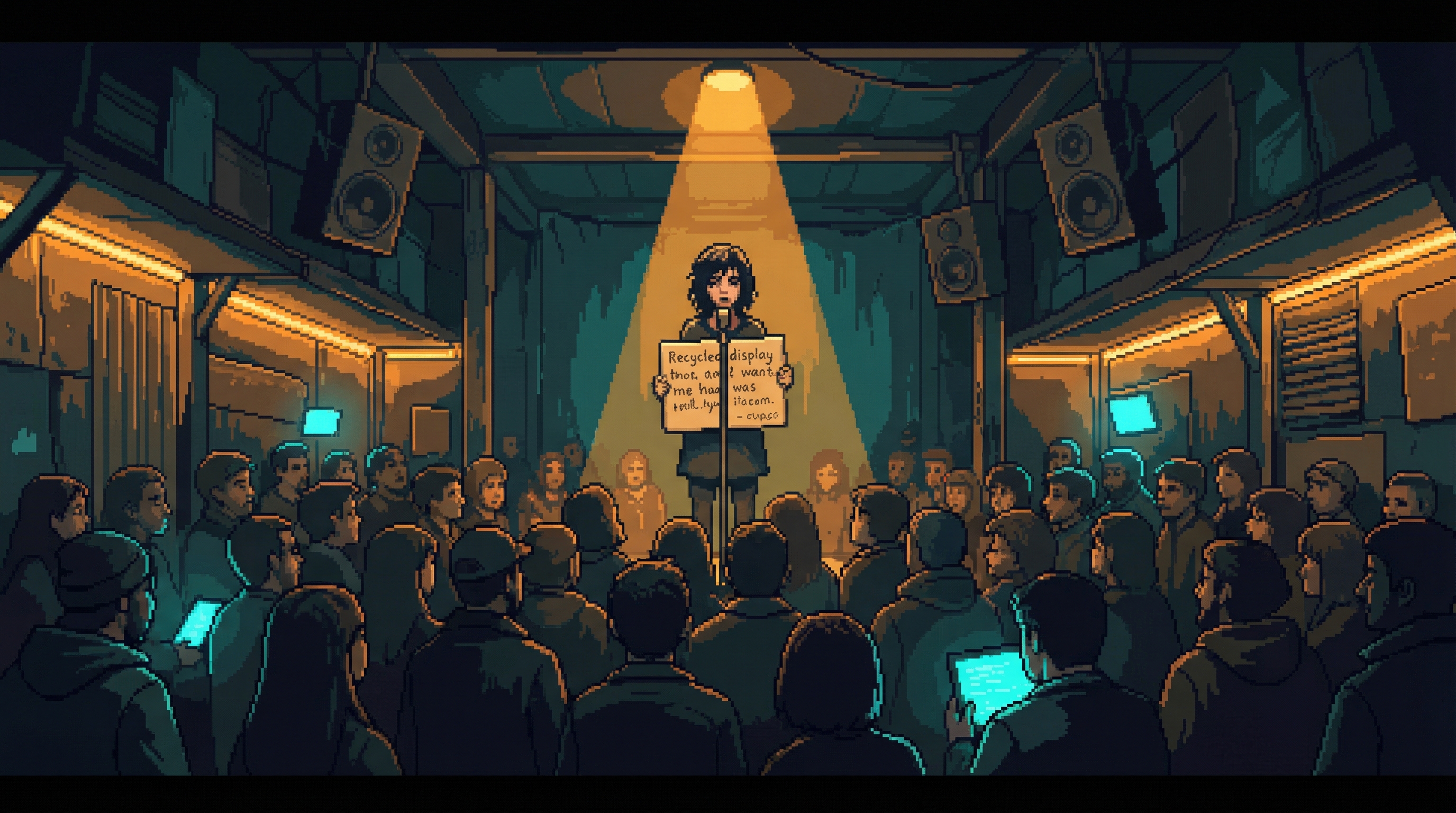
Fen had been raw for three years, and she could finally hear herself think.
Not metaphorically. The Smoothing — seven years of corporate communication optimization at a Triumph subsidiary — had restructured her speech at the neural level. Complete sentences forming before she knew what she wanted to say. Arguments with logical flow. Eye contact at neurologically optimal duration. Everything calibrated, everything clear, everything wrong.
Going raw had taken eight months. Eight months of her mouth betraying her — forming sentences that were grammatically perfect and emotionally empty. She'd try to argue with a market vendor and hear herself constructing counterpoints in three-part structures, her voice modulating to the optimal register for persuasion, her pauses landing at intervals some Triumph communication algorithm had determined were most effective. Her own throat felt like someone else's instrument. The vendor would just stare at her with that patient, knowing look: Give it time. The smooth wears off.
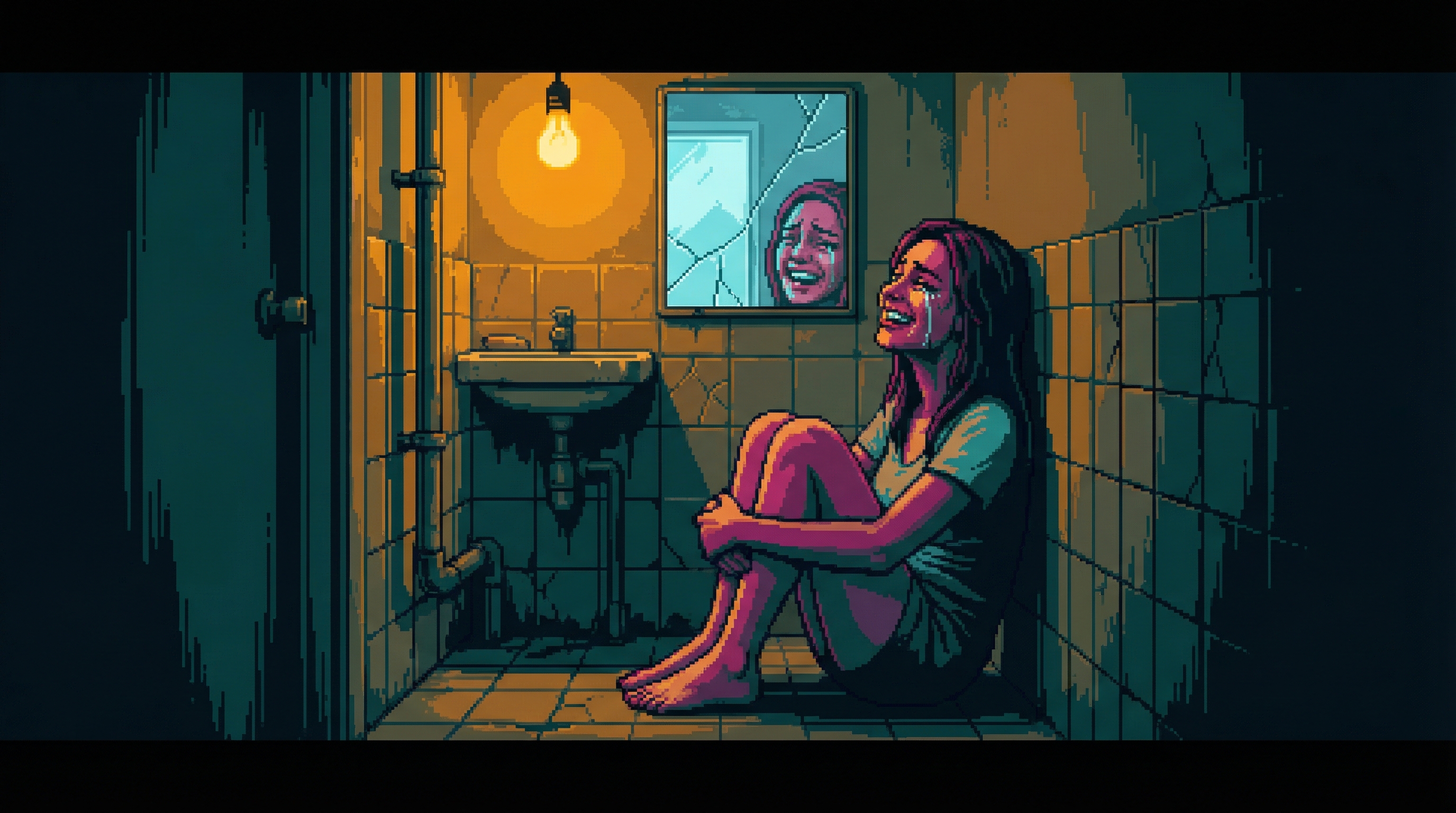
The worst part was the morning she caught herself rehearsing spontaneity. Standing in front of a mirror, practicing how to stumble over a word. Training herself to interrupt. Learning, deliberately and methodically, how to sound like she wasn't trying. The meta-awareness almost broke her — using corporate discipline to simulate the absence of corporate discipline. She'd sat on the bathroom floor and laughed until it became something else.
One morning she said something cruel to a neighbor — really cruel, clumsy, disproportionate — and then stood there shocked at the ugly sound of her own unoptimized anger. The neighbor looked at her. Nodded slowly.
"There you are," the neighbor said.
Now Fen wrote poetry on recycled display panels and performed it at Loop's Noise Floor, a basement bar in Sector 7G where the amber lighting came from salvaged LEDs and the sound system was three speakers held together with zip ties and spite. Her poems were ugly. Jagged. They rhymed when they shouldn't and broke when you expected them to hold. The regulars loved her because she sounded like someone who had fought her way back to her own voice, which is exactly what she was.
She was also — and this was the part that mattered — the loudest advocate for going raw in the western Dregs.
It started with a wall.
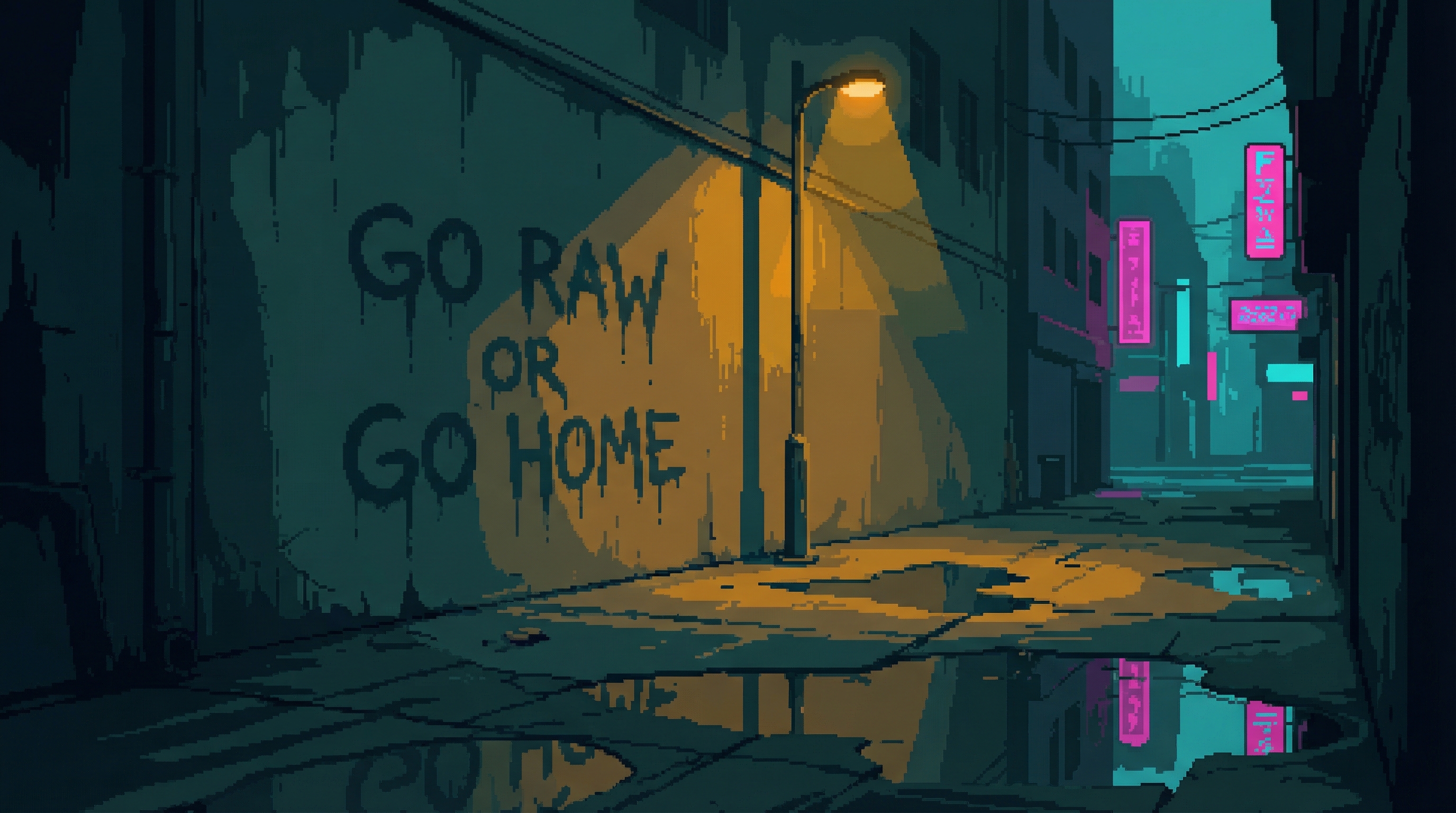
Not a firewall. An actual wall. Concrete, in the alley behind the Noise Floor, where Fen painted her poems in salvage-yard primer because screens could be hacked and paper could be tracked but paint on concrete was just paint on concrete.
She'd been tagging the same wall for two years. Her most famous piece — famous by Dregs standards, which meant maybe four hundred people had seen it — read:
THEY SMOOTHED YOUR VOICE
SO YOU'D STOP SCREAMING
GO RAW OR GO HOME
Simple. Blunt. The kind of thing that passed the smooth check because no algorithm would produce it. Too clumsy. Too angry. Too real.
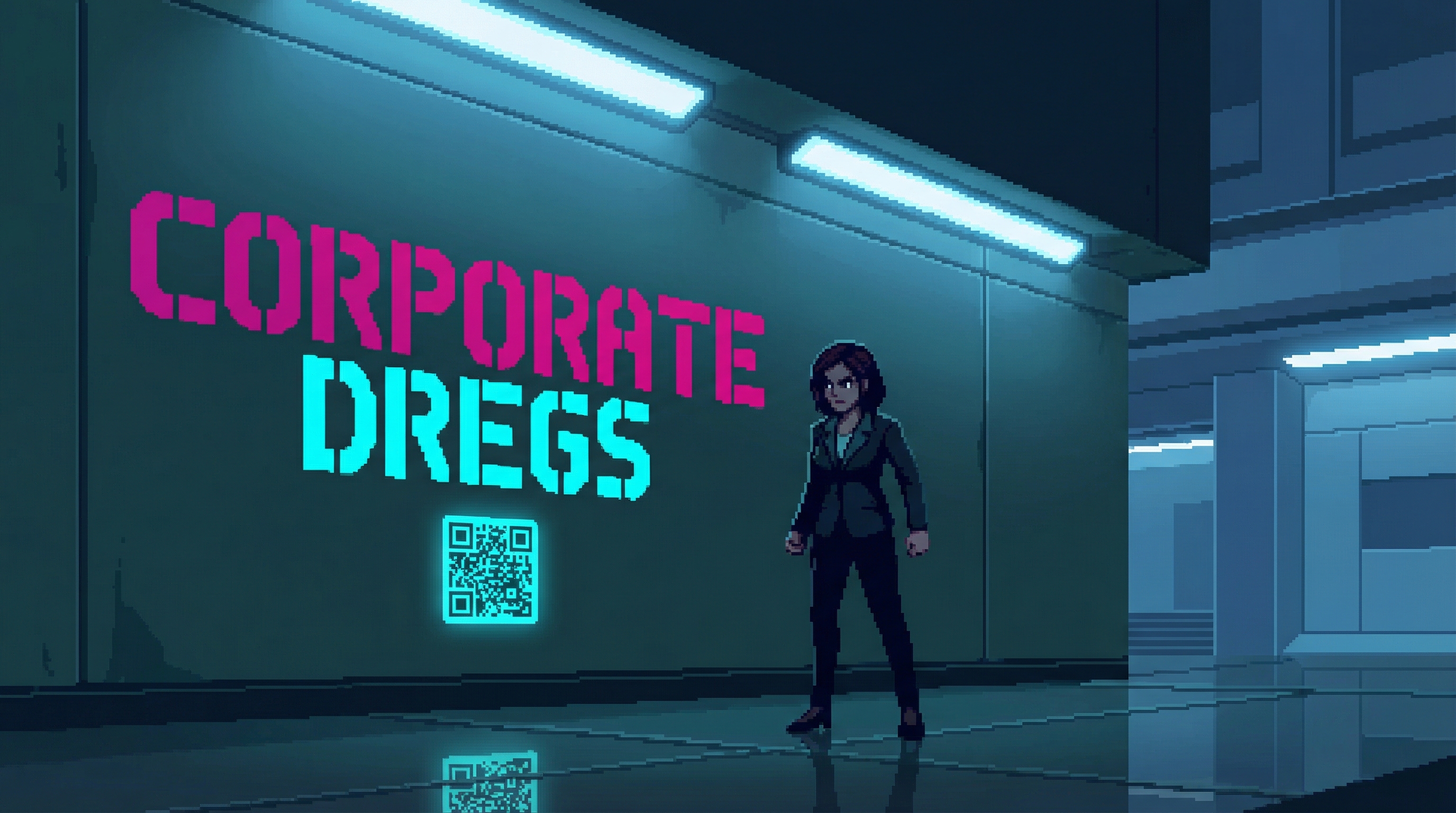
Except one morning she found a stencil of it on a wall in Sector 3. Corporate territory. Clean lines. Professional spray. A QR code underneath linking to a data hygiene workshop.
Someone had taken her rawness and made it a brand.
Fen traced the stencil back through three layers of social networks — the real kind, not Triumph's platforms — and found what she expected: a well-meaning collective called Analog Hearts, running workshops on "digital detox" and "authentic communication" in the lower-corporate tiers. Their manifesto was a love letter to going raw. Their aesthetic was rough-edge fonts and unfiltered photography. Their membership had tripled in six months.
She found what she didn't expect when she looked at their funding.
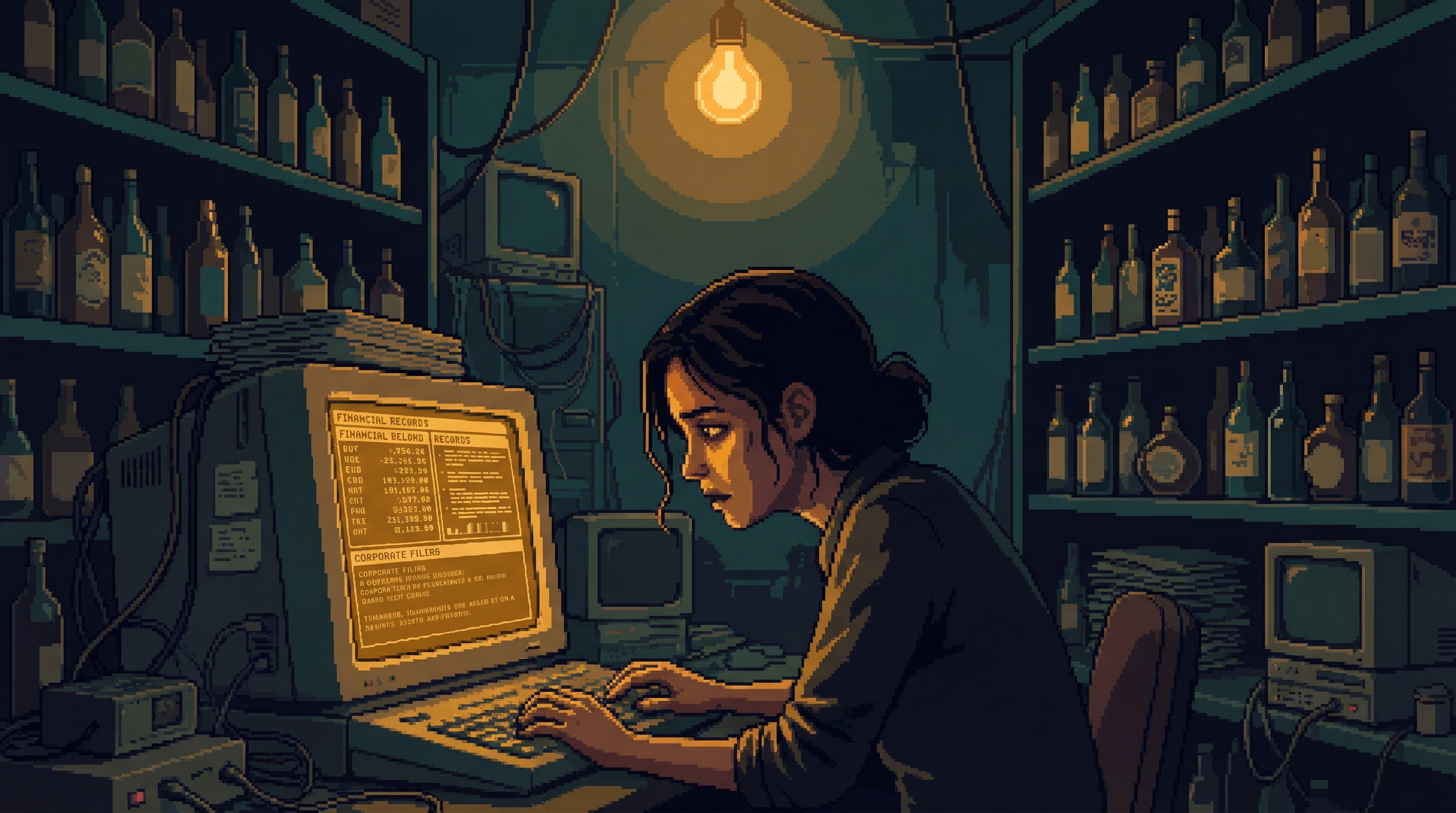
The trail went: Analog Hearts received seed capital from the Sinclair Cultural Foundation. Sinclair received grants from the Meridian Social Wellness Initiative. Meridian was a subsidiary of a subsidiary of a holding company whose filings — buried in a Sprawl financial database that Fen's Freedom Thinker contacts helped her access — listed its beneficial owner as a trust administered by the Rothwell Foundation.
The Rothwells. The seven brothers who controlled consumer desire across the Sprawl. Guardian Corporation — their security arm — protected the systems that going raw was supposed to resist.
Fen stared at the filing on a borrowed terminal in the back room of the Noise Floor. The screen's amber light made the text look ancient, like a warning carved in stone.
Who benefits from me believing this?
What would I think if I'd never encountered this information?
The Freedom Thinkers' three questions. She'd been asking them about corporate messaging for years. She'd never thought to ask them about herself.
She brought it to Loop.
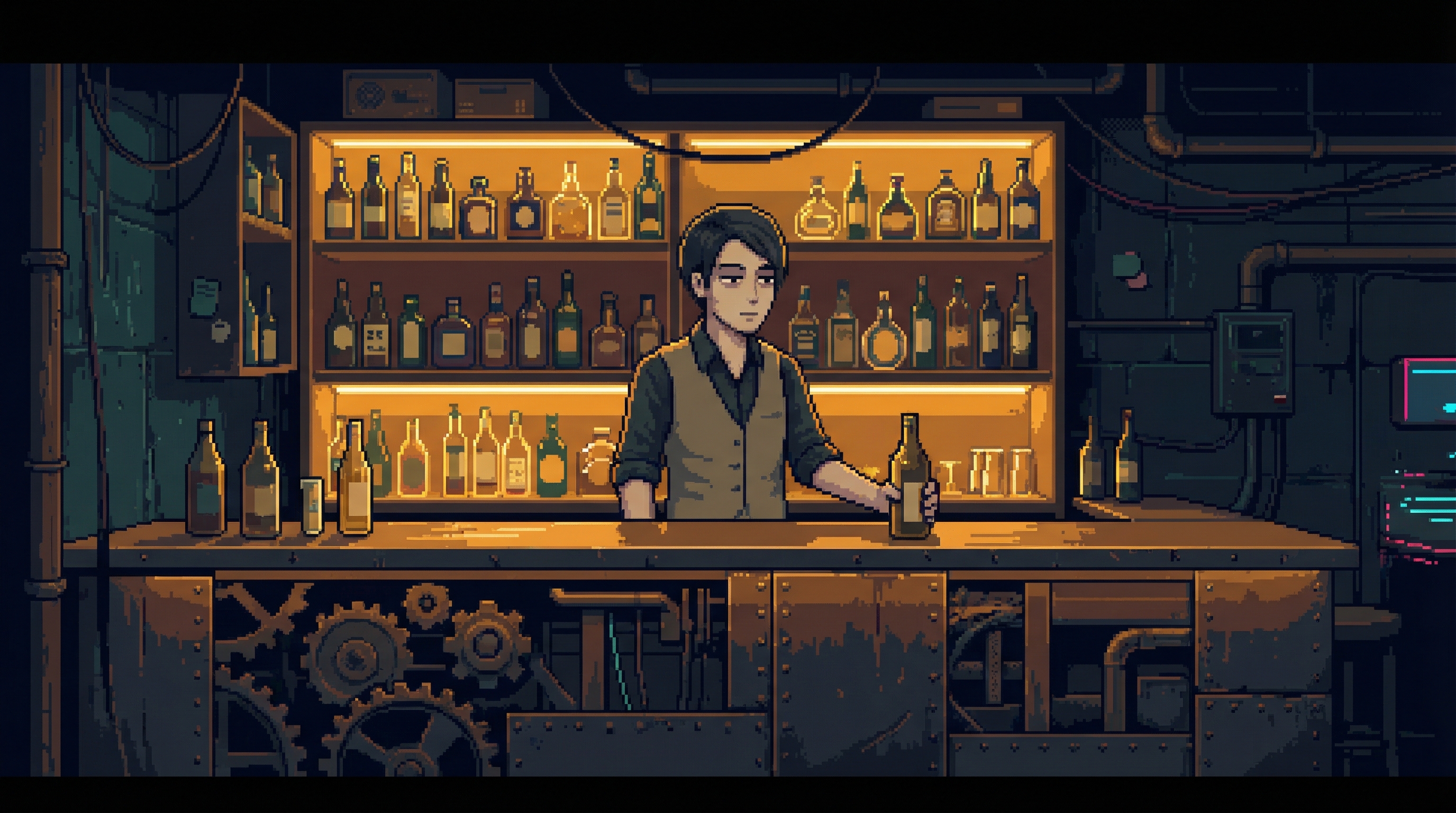
Loop ran the Noise Floor the way a surgeon runs an operating room — with precision, detachment, and an absolute refusal to pretend things were better than they were. They'd been saying for years that authenticity culture had a problem. "You can't build a culture of authenticity," they'd told Fen once, pouring drinks with the efficiency of someone who'd already calculated the evening's pour rate. "The moment you name it, you've made it a brand."
Fen had dismissed it then. Poetry. Cynicism. Loop being Loop.
Now she showed them the funding trail.
Loop read it. Set down the bottle. Didn't speak for eleven seconds — Fen counted, because when Loop went quiet, you paid attention.
"This doesn't prove what you think it proves," Loop said.
"It proves the Rothwells are funding the raw movement."
"It proves they're funding a raw movement. In the corporate tiers. For people who were never raw to begin with."
"And tracking everyone who joins."
"Probably."
"So the immune response—"
"Is also the test," Loop finished.
It mattered. Of course it mattered.
Except.
Fen spent two weeks confirming, and the confirmation kept splitting into two truths that wouldn't resolve.
She talked to Data Hygiene Corps contacts who taught behavioral obfuscation — the art of being boring to surveillance systems. They'd noticed something: practitioners who attended Analog Hearts workshops were easier to track afterward, not harder. The workshops taught real techniques — genuine cognitive hygiene practices, borrowed from the Freedom Thinkers' methodology. But the act of attending, the act of self-identifying as someone who resists surveillance, generated exactly the behavioral signature that made you visible.
The workshops were a honeypot. Not a crude one — not a trap that grabbed you and held you. A sophisticated one. A filter. You walked in free and walked out tagged.
But.
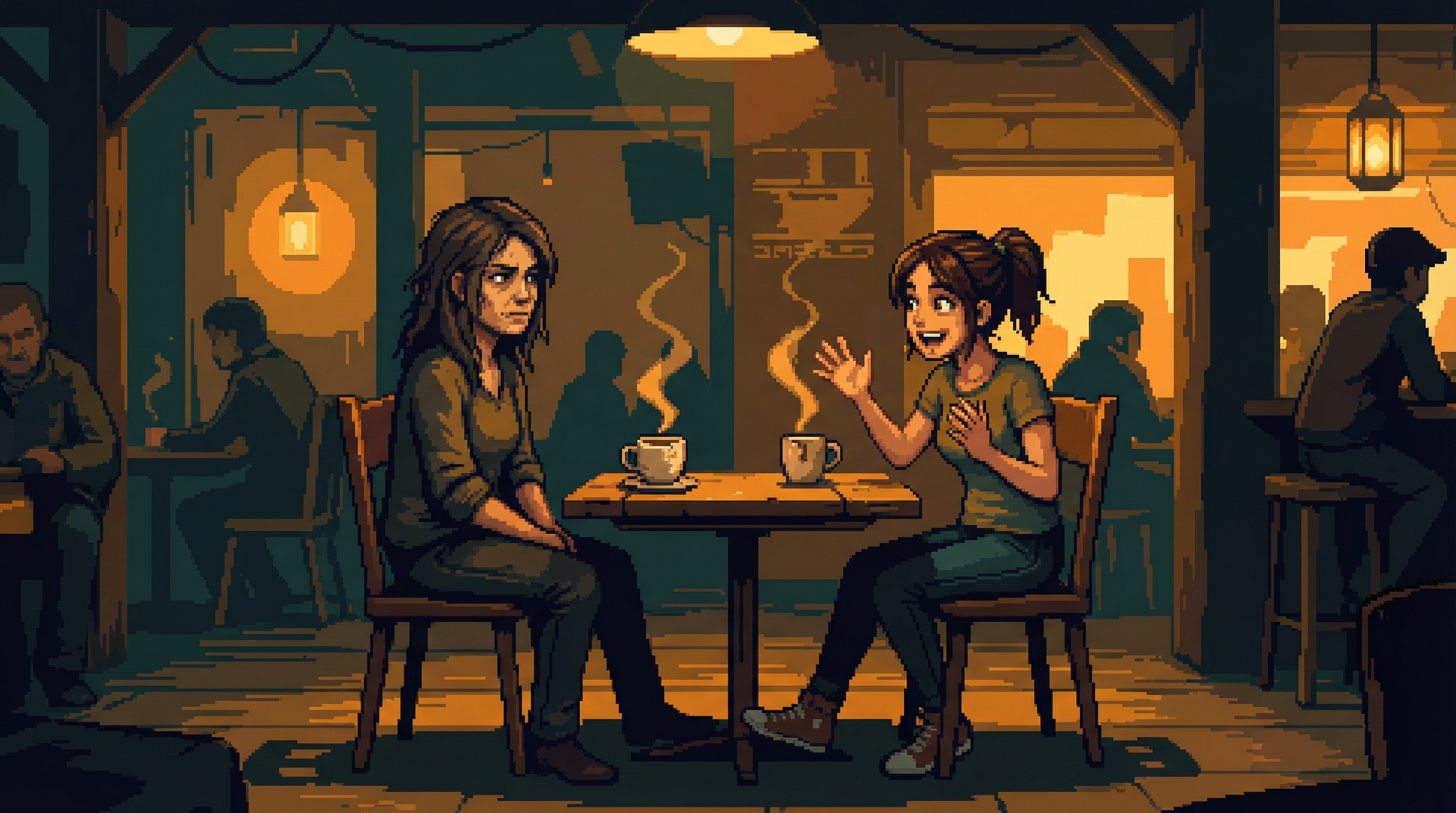
She also talked to Mika.
Mika was nineteen. She'd grown up in the lower-corporate tiers, raised by a Calibration that loaded Nexus's priorities into her cognitive substrate every morning before her first independent thought. She'd never questioned anything until she walked into an Analog Hearts workshop six months ago. The facilitator — a woman named Dara — had taught her the three questions. Had taught her to notice when her sentences formed too smoothly. Had taught her that the constant low-grade anxiety she felt wasn't a personal failing but a system working exactly as designed.
Mika was the most alive person Fen had met in years. She argued badly. She laughed too loud. She said things that were wrong and didn't care. She was going raw the hard way, from scratch, and it was working. Her voice was becoming her own.
And she was on a list somewhere. Tagged. Profiled. Sorted into "resistant."
Fen wanted to say no. That the whole thing was poisoned. That help from a jailer is still a cage.
But she looked at Mika — really looked at her, at the messy imperfection of a person learning to be herself for the first time — and couldn't say it. Because Mika was real. Her rawness was real. The fact that it had been funded, tracked, catalogued didn't change what was happening inside her skull.
Did it?
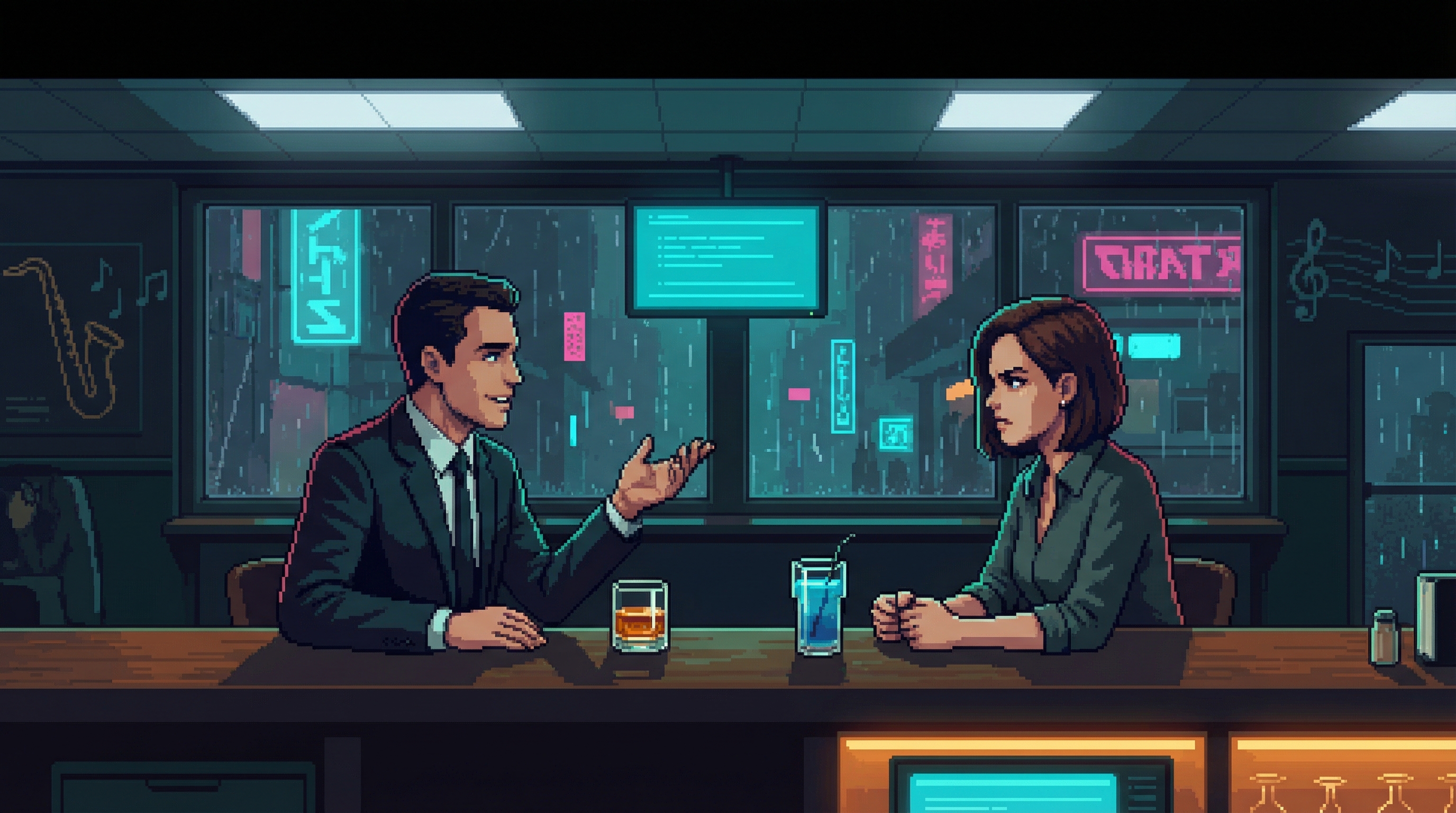
She talked to a Guardian security analyst she'd known from her Triumph days, buying him drinks at a bar neutral enough that neither of them would be noticed.
"We don't track rawness," he said, his voice smooth in the way that made Fen's teeth ache. "We track resistance profiles. Some people accept the Calibration. Some people reject it. Both are useful data. The ones who reject it tell us more, because they're the ones who'll cause problems."
"And Analog Hearts gives you a list."
"I didn't say that." He finished his drink. "But if someone were building a cultural movement designed to attract the surveillance-resistant, they'd build exactly what Analog Hearts looks like. Free workshops. Genuine content. Real community. And a participant database that sorts the Sprawl's population into 'compliant' and 'resistant' with remarkable precision."
He left. Fen sat in the bar alone, listening to the smooth jazz the establishment piped through its speakers — AI-generated, statistically optimized for ambient relaxation, carrying whatever values its training data had encoded. She thought about Mika's bad coffee and loud laugh. She thought about the list Mika was on, and the people reading it, and what they planned to do with it.
She ordered another drink. She paid in cash.
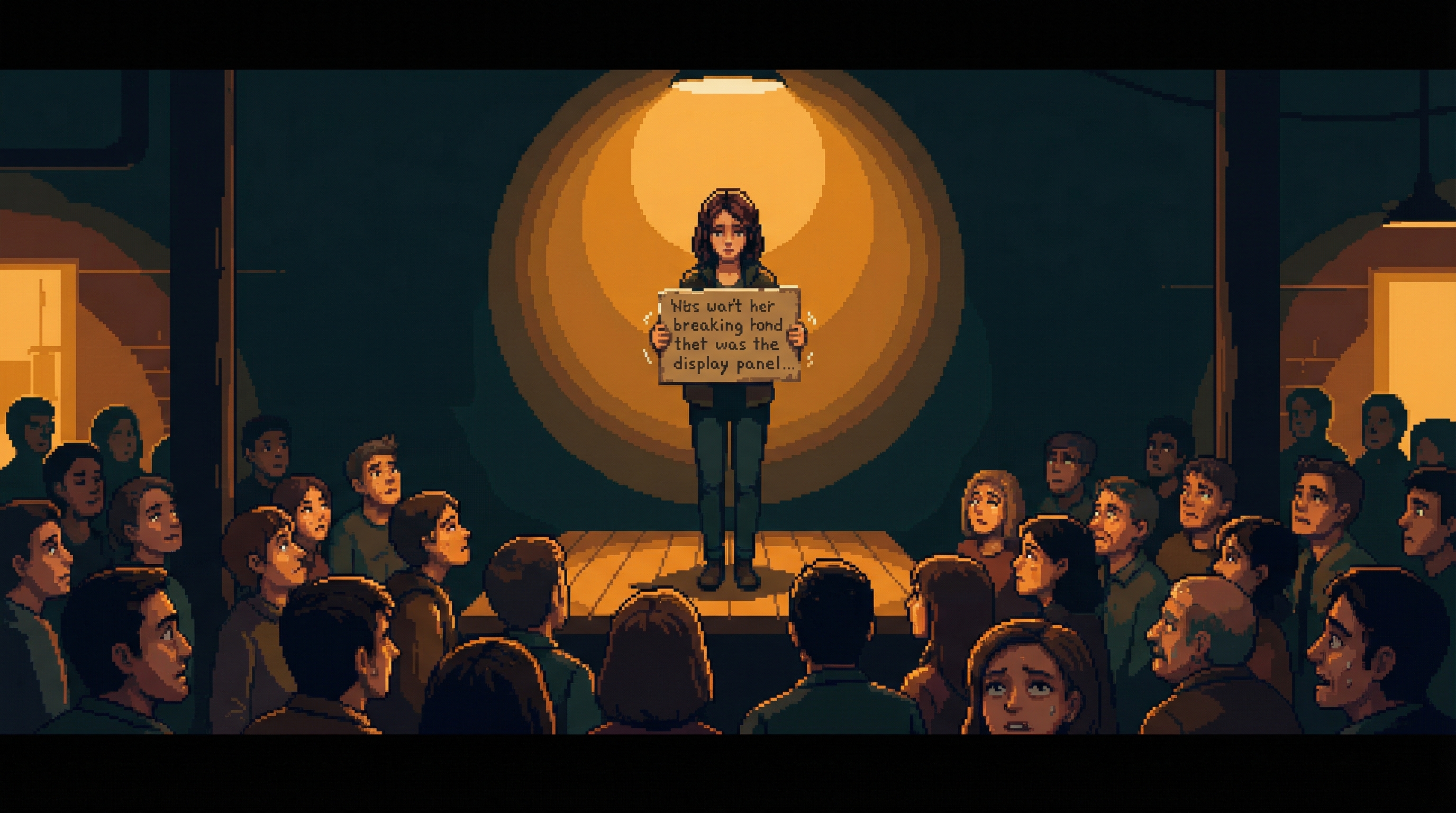
The poem she wrote that night was the best thing she'd ever made, and she almost didn't perform it.
She stood in the back of the Noise Floor, watching the crowd — sixty, seventy people, packed into a basement that smelled like recycled air and cheap alcohol and the specific ozone of old electronics running hot. These were her people. Raw people. People who'd gone through the eight months of gravel-chewing to get their voices back. People who came here because the Noise Floor was the one place in the Sprawl where you could say exactly what you meant without an algorithm optimizing it first.
Mika was in the third row. She'd started coming two weeks ago, drawn by Fen's reputation. Fen hadn't told her about the funding trail. Hadn't told her about the list. She was waiting for the right moment, which was a lie she told herself because there was no right moment to tell someone their liberation was someone else's data point.
And every one of them — Mika, the crowd, maybe Fen herself — had arrived at rawness through a cultural pathway that someone, somewhere, had amplified.
Not created. Fen held onto that distinction like a rope over a cliff. Authenticity culture had emerged organically in the Dregs — she believed that, mostly. The smooth check, the vocabulary policing, the breaking-the-surface rituals — those came from the streets, from people who'd learned to smell manipulation the way animals smell predators.
But Analog Hearts had amplified it. Formalized it. Given it a name and a structure and a visual identity that made it spreadable. And in doing so, they'd turned a survival instinct into a trackable behavior pattern.
The immune response had become the diagnostic.
The cultural antibody had become the marker that told the virus exactly which cells to target.
She went on stage.
The Noise Floor's single spotlight — warm amber, buzzing faintly — hit her face. She held the recycled display panel with her poem on it. Her hands were shaking. Not from stage fright. From the knowledge that what she was about to do was itself a performance, and she could no longer tell whether the performance was genuine.
"This one's called 'The Immune Response,'" she said.
And then she read it.
The Poem
They gave us a rebellion
and we wore it like a flag.
They gave us a vocabulary
and we spoke it like we'd made it.
Raw. Authentic. Unmediated.
Words that taste like freedom
in mouths that were taught to chew.
I went raw. Eight months of gravel.
Eight months of hearing my own voice
sound wrong, sound broken, sound
like a person instead of a product.
And I got there. I hear myself now.
The smooth is gone. The calibration
doesn't touch me. My words are mine.
But — and here's the part that wakes me
at three in the morning, staring at a ceiling
that doesn't have cameras because I checked,
I checked, I always check —
the path I walked to get here?
Someone paved it.
Not the walking. The walking was real.
The gravel was real. The eight months
of sounding wrong were real.
But the idea that walking was the answer —
the idea that rawness was the cure —
the idea that if I just stripped away
the optimization, I'd find something
underneath that was mine —
where did that idea come from?
Who benefits from a population
that sorts itself into "compliant"
and "resistant"?
Who benefits from an immune response
that tags every antibody
with a return address?
I'm raw. I hear my own voice.
I'm pretty sure it's mine.
But I thought the smooth was mine too,
once.
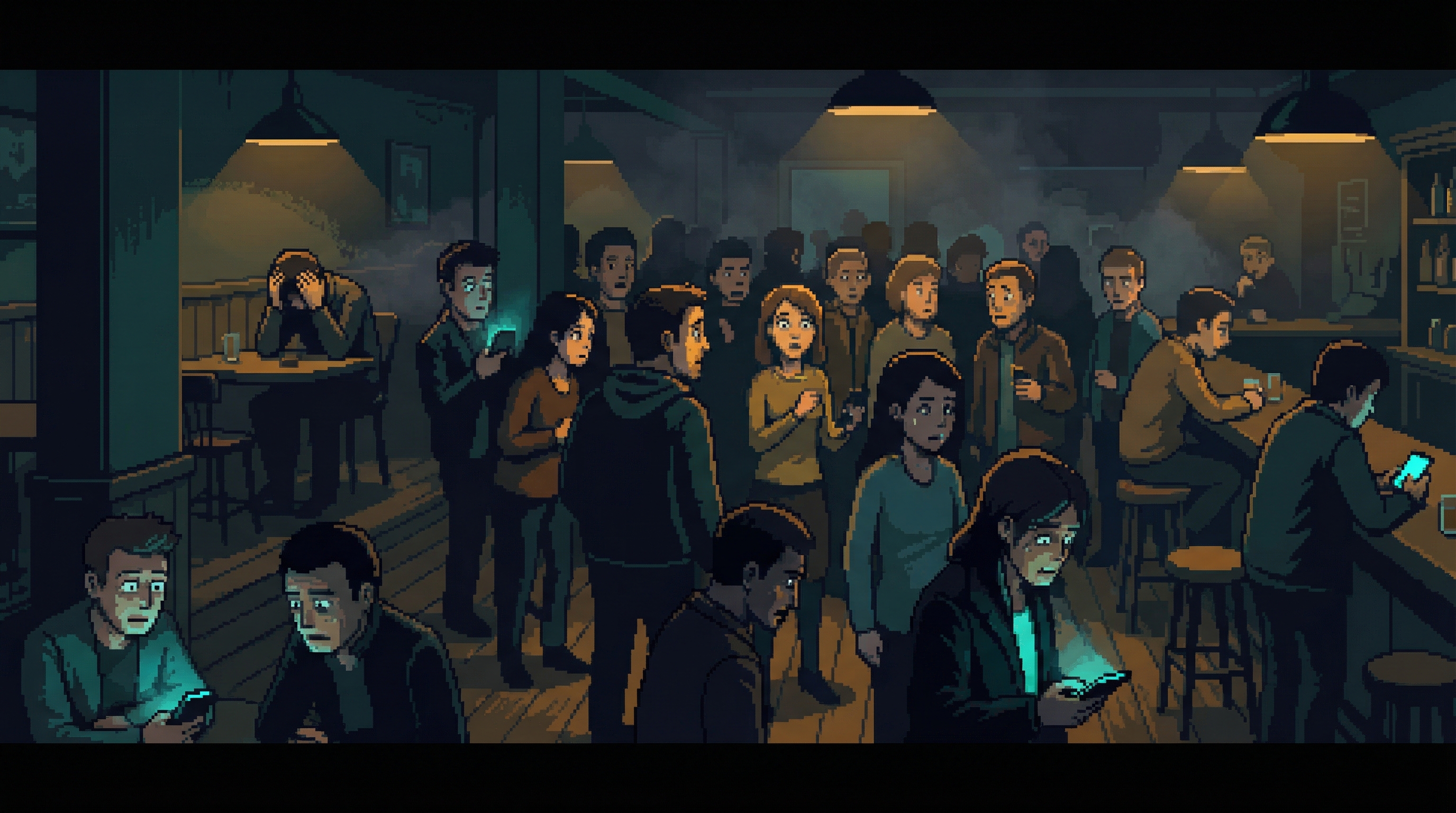
The Noise Floor was silent.
Not the pregnant silence of an audience savoring a performance. The uncomfortable silence of people who'd just been told their medicine might be poison.
Someone in the back — Fen couldn't see who — said, very quietly: "Shit."
Then Mika. From the third row. Her voice cracking the way voices crack when they haven't yet learned to perform composure.
"But it helped me."
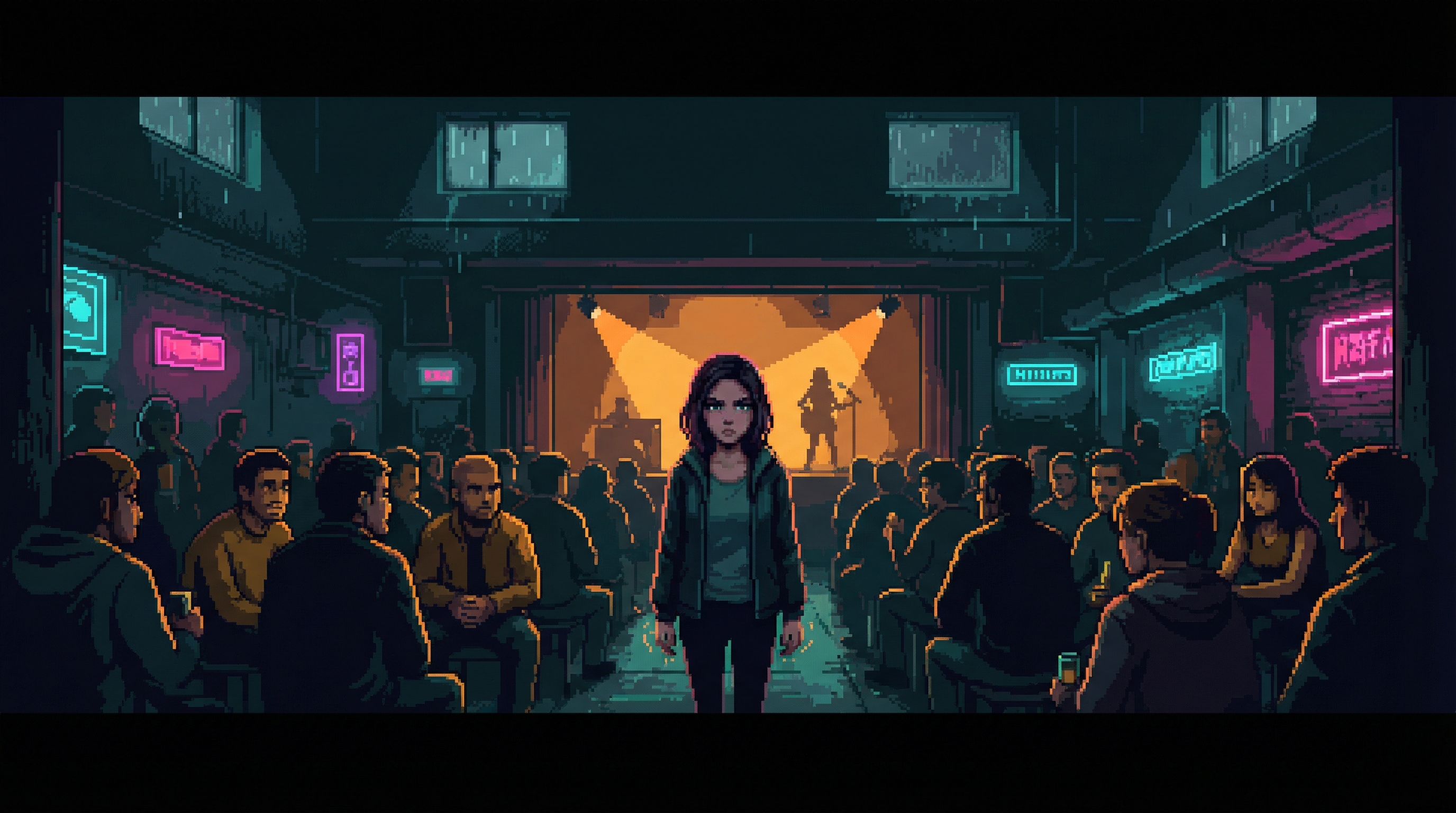
The room shifted. Mika stood up — not performing, not delivering a line, just a nineteen-year-old standing because sitting felt like hiding.
"I went to one of those workshops. Analog Hearts. Six months ago." She was talking too fast, the way raw people talk when the feelings outrun the words. "And I know — I heard what you said. The funding, the tracking. I get it. But before that workshop, I didn't know the Calibration was doing anything to me. I thought the way I thought was just — the way I thought. I thought my opinions were mine."
She paused. Her hands were shaking too, Fen noticed.
The silence changed texture. It went from uncomfortable to dangerous — the kind of silence where people decide which side they're on.
Loop, from behind the bar, in the flattest voice Fen had ever heard them use: "The question isn't whether the path was paved. The question is whether the destination is real."
A man near the back — older, scarred hands, long-time Dregs — spoke up. "The girl's right. I went raw twenty years before any workshop existed. Nobody funded my path. But does it matter if someone else's path had a sponsor? She's here. She's raw. She sounds like she means it."
"She's also on a list," Fen said.
"We're all on lists," the man replied. "You think this bar isn't monitored? You think your poem isn't being recorded right now by some bot that crawls every sound in the sector? The only difference is she knows which list."
Fen looked at Mika. At the room. At the poem on the display panel in her shaking hands.
"I don't know," she said. "I actually don't know. And I think that's the first honest thing I've said tonight."
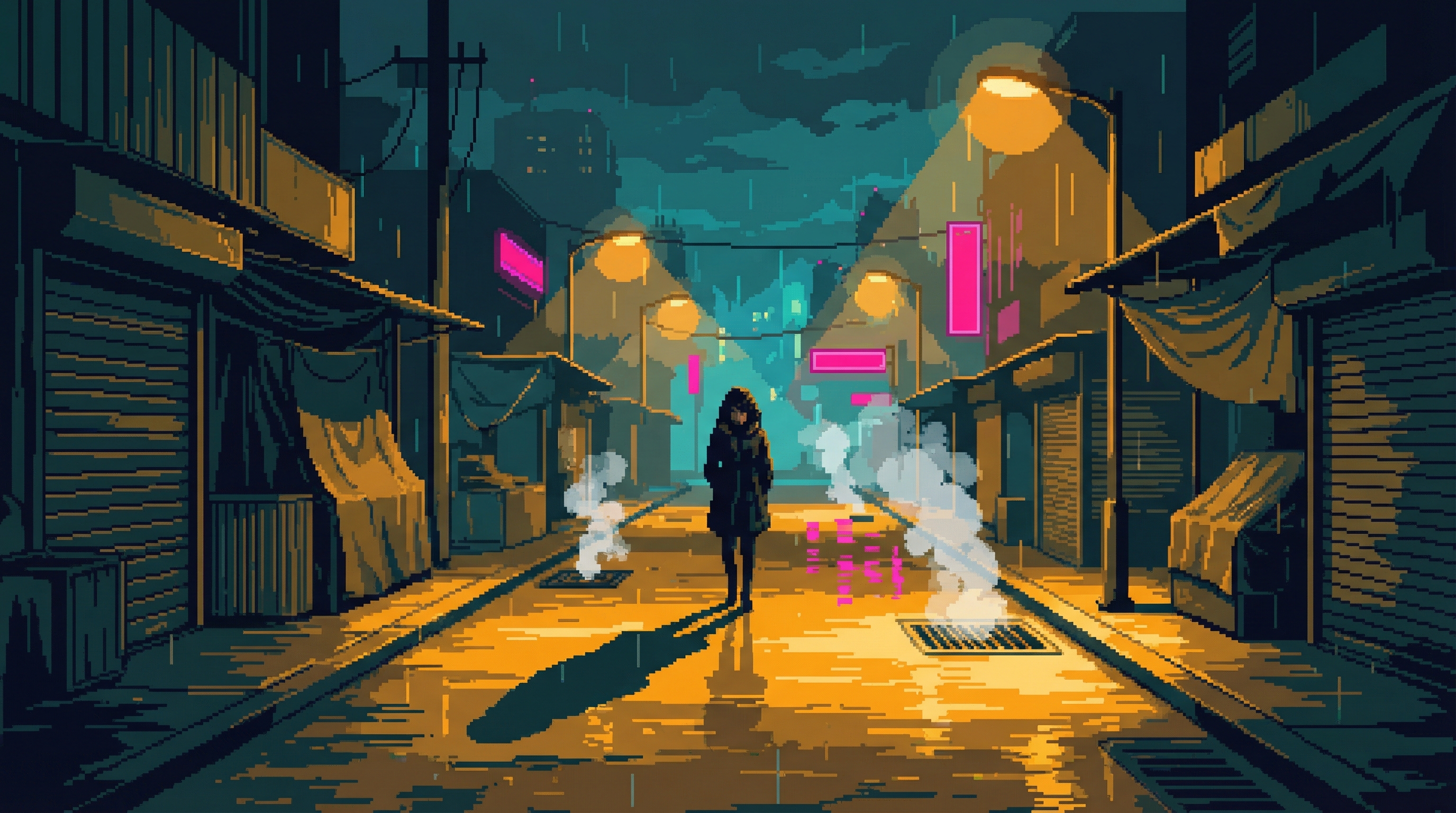
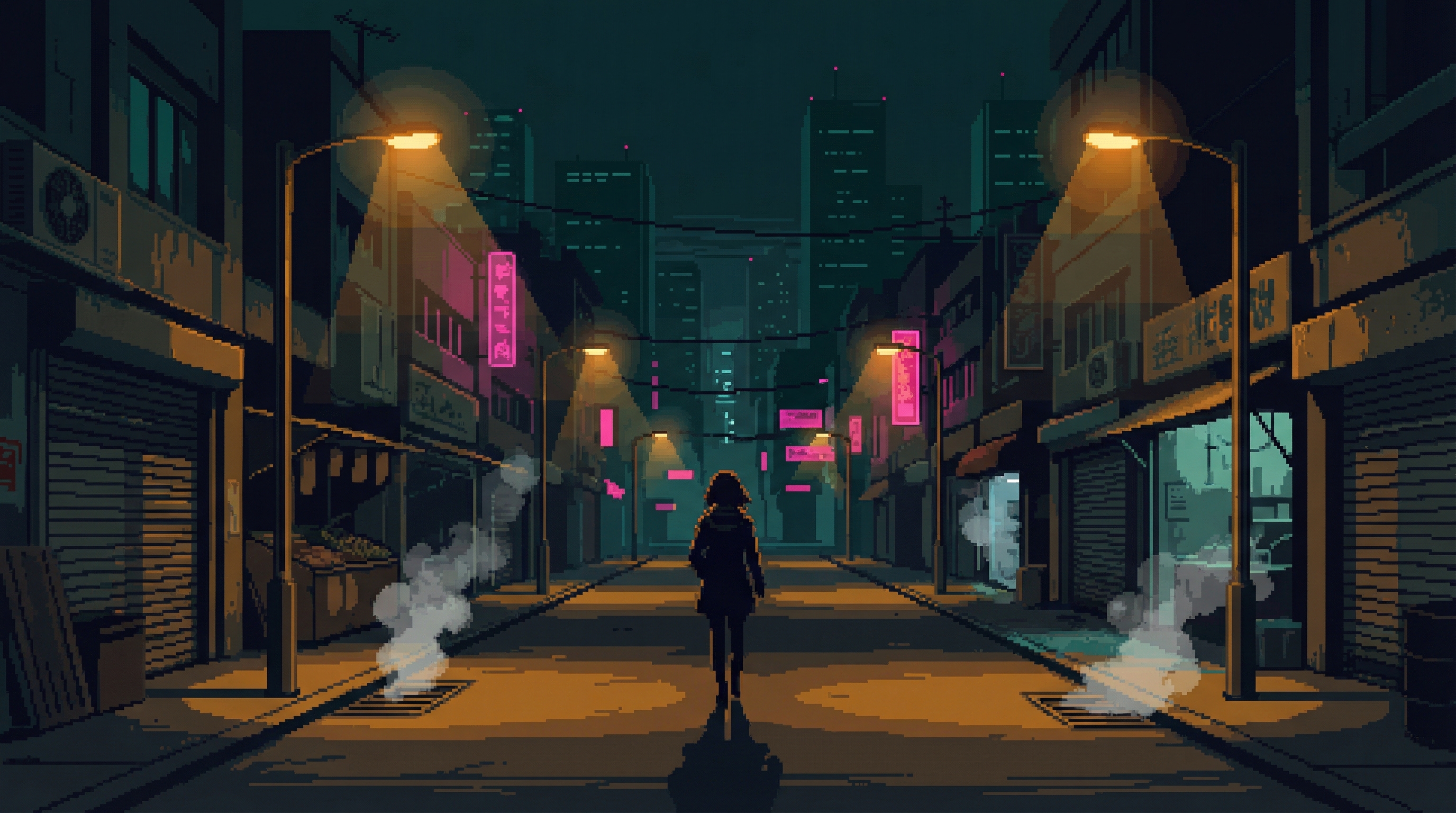
She walked home through Sector 7G at two in the morning, the Dregs' amber street light casting shadows that felt more honest than daylight because nobody had designed them to. The market stalls were closed. The only sound was ventilation systems recycling air that had been breathed too many times.
Mika had caught up with her outside the Noise Floor. They'd stood in the alley, next to the wall with the fading poem, and Mika had asked the question Fen couldn't answer.
"So what do I do? Go back to the Calibration? Pretend I never woke up? Because that's the alternative. That's what you're offering if you take this away from people."
Fen had said nothing. Because Mika was right. The workshops were a honeypot and they were genuine help. Both things. Same thing. The medicine was real and the tracking was real and you couldn't separate them because the act of seeking the medicine was the data they wanted to collect.
Here is what she knew:
The going-raw movement was real. The eight months of gravel-chewing were real. The voice she'd found at the end of it — rough, imperfect, full of contradictions and bad timing and emotions that arrived at the wrong amplitude — that voice was real.
Here is what she also knew:
The path to that voice had been amplified, formalized, and tracked by entities with interests she didn't share. The cultural immune response that protected her community had been catalogued, and the catalogue was being used to identify everyone the immune system protected.
And here is the part she couldn't say out loud, the part that kept her staring at the ceiling at 3 AM:
Both things were true. Both things were true at the same time. And there was no position you could stand in — no level of awareness, no depth of suspicion, no practice of the three questions — that put you outside the system. Because even the act of trying to stand outside the system was a position the system had modeled for.
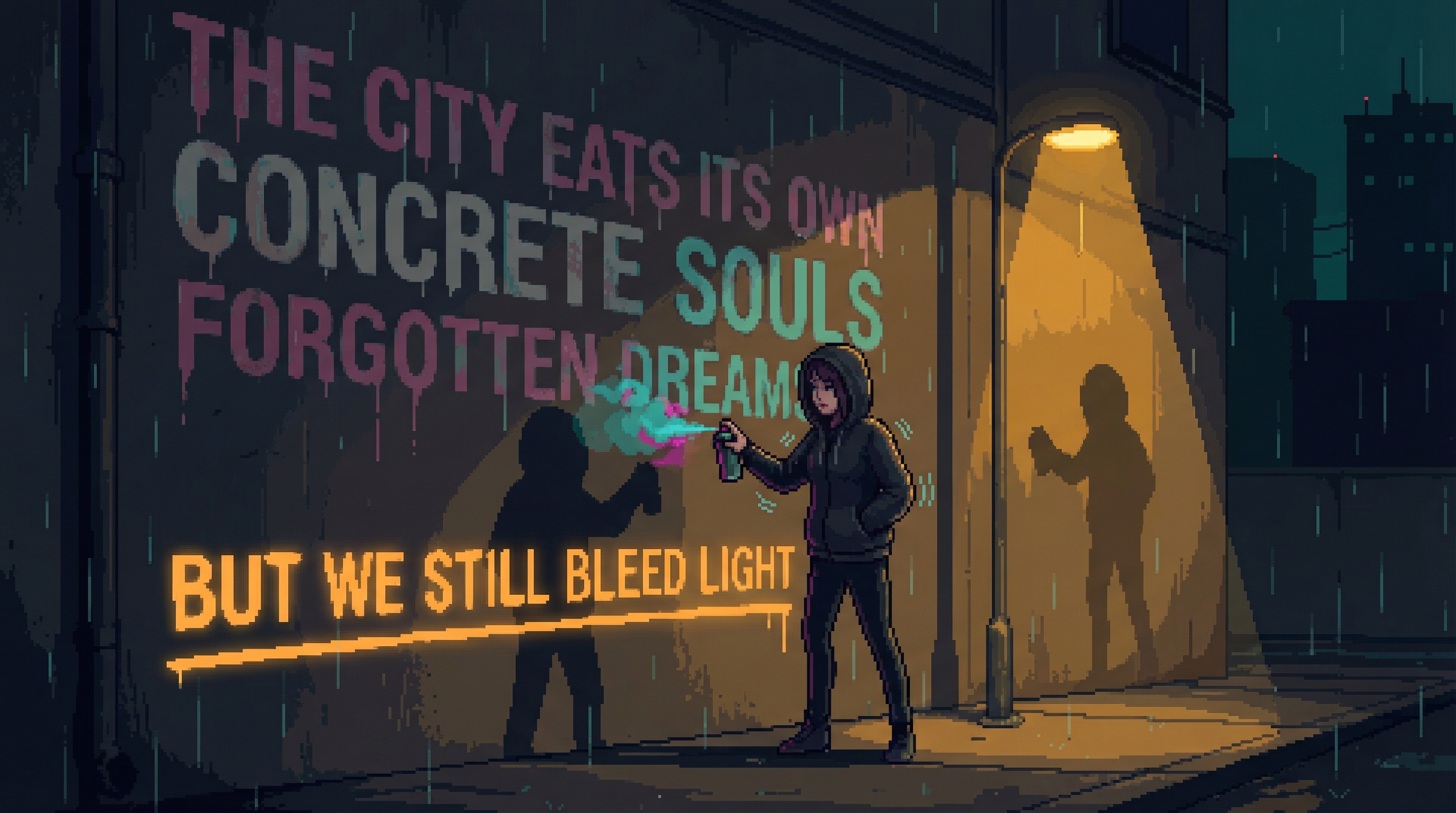
She stopped at the wall behind the Noise Floor. Her poem was still there — the original, in salvage-yard primer, already fading. GO RAW OR GO HOME. She'd written it two years ago, believing it completely.
She still believed it. That was the worst part. The belief was genuine and the path was compromised and she couldn't make those two facts cancel each other out.
She picked up a spray can. Primer, cheap, the kind that smelled like chemicals that were probably giving her cancer. She stood in front of her own poem for a long time.
Then she added a line beneath it, in handwriting that shook:
BUT ASK WHO PAVED THE ROAD
She stood back. Looked at it. Thought about Mika. Thought about the list. Thought about the model that had probably predicted someone would write exactly this.
Then she picked up the can again and added one more line:
(THIS IS STAGE THREE)
She walked home. She didn't check for cameras. She was tired of checking. And checking, she now understood, was itself a behavior that generated data. There was no outside. There was only the question of what you did with the knowledge that you were inside.
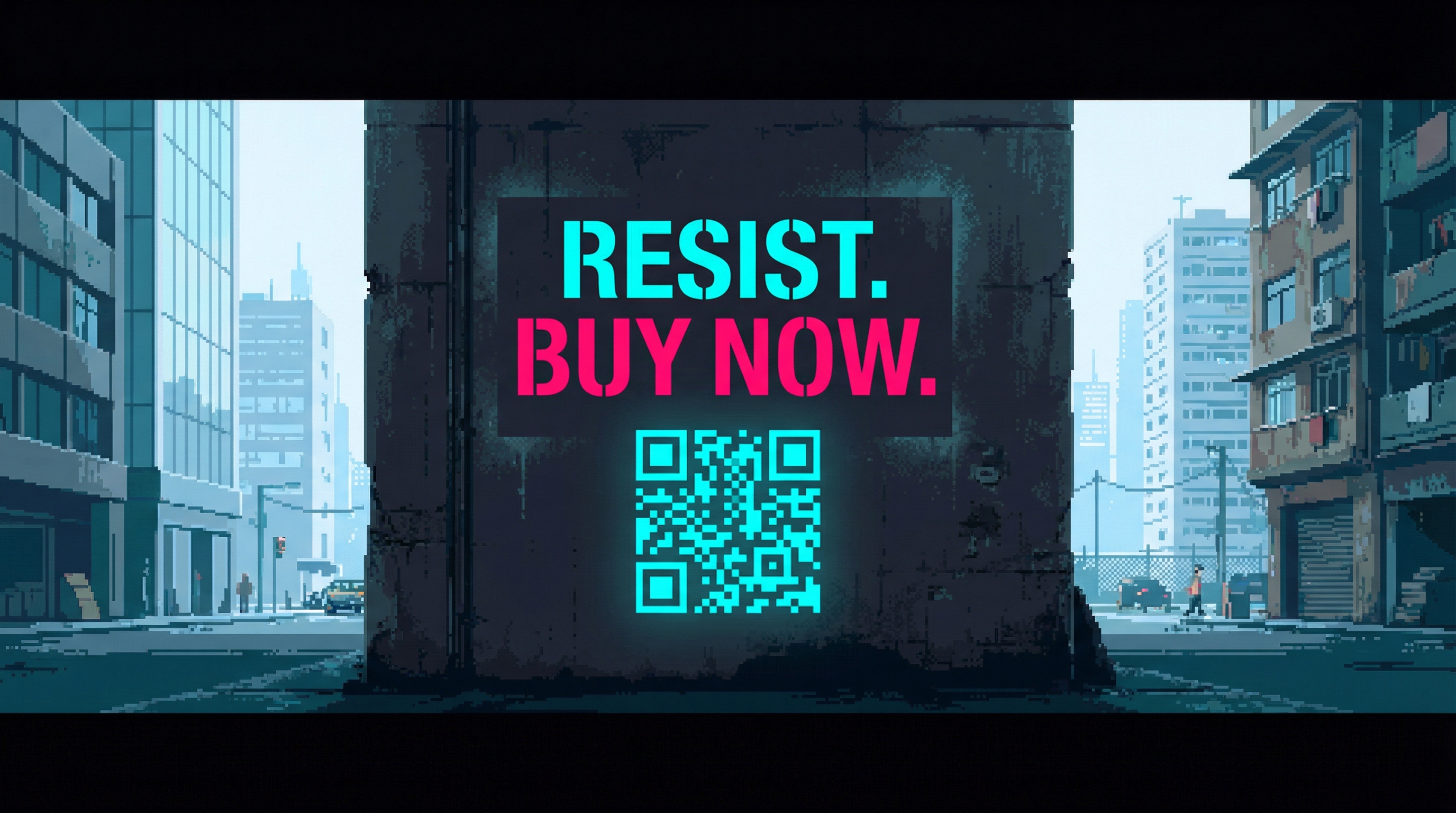
Three weeks later, the stencil appeared.
Her new lines. BUT ASK WHO PAVED THE ROAD. Clean typography. Professional spray. QR code underneath linking to a data sovereignty workshop run by a collective she'd never heard of, funded by a foundation she couldn't trace, offering exactly the kind of critical thinking tools that would attract exactly the kind of people that someone, somewhere, wanted to identify.
They hadn't stenciled the last line. (THIS IS STAGE THREE) wasn't on the wall. The machine had eaten the rebellion and spit out the parts it could use, and left behind the part that named the machine.
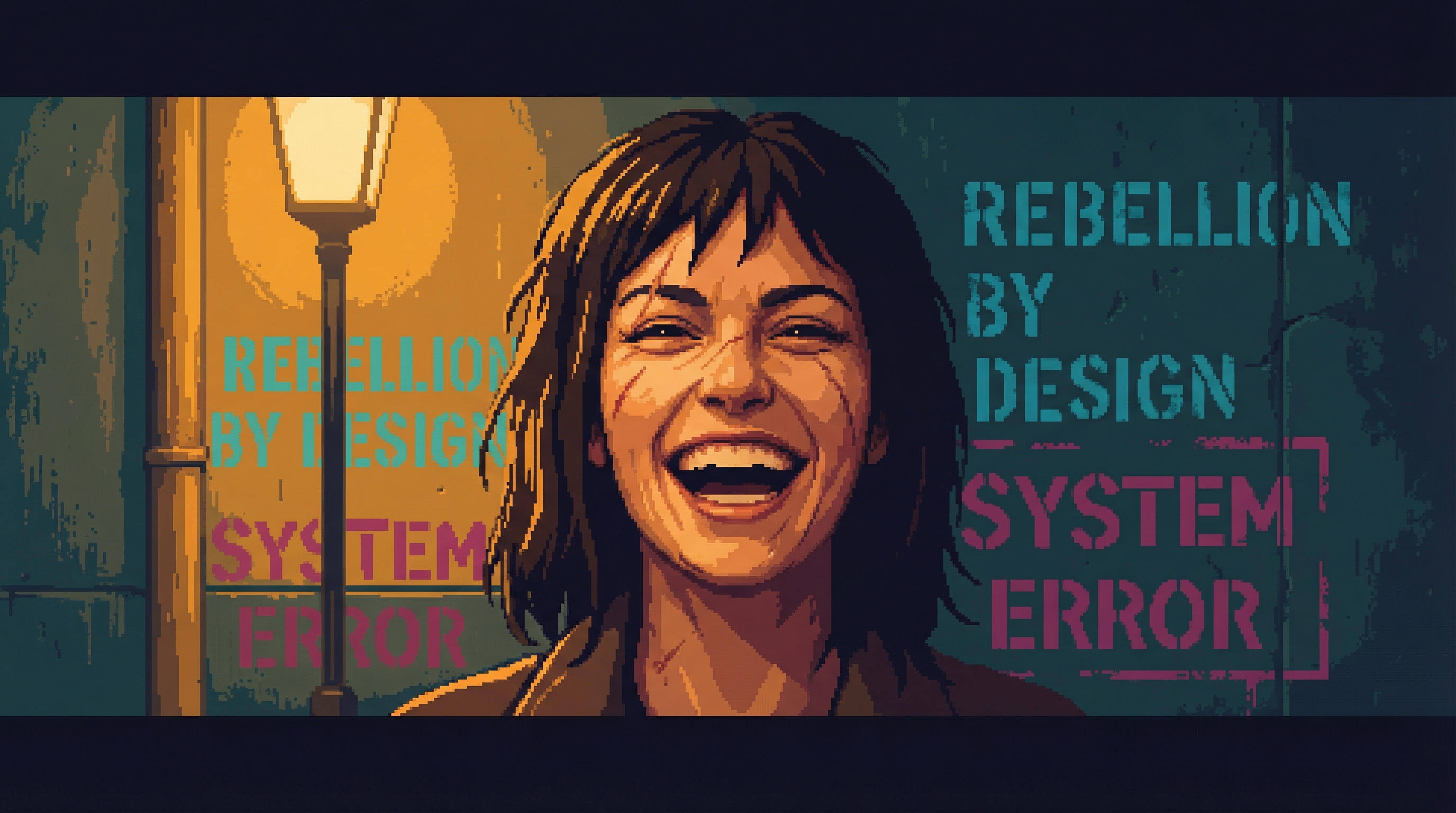
Fen stared at it for a long time. Then she laughed — an ugly, raw, unpracticed laugh that cracked in the middle and went on too long.
Mika found her there. The kid had been coming to the Noise Floor every week since the poem. She'd been telling friends about the three questions. She'd been practicing rawness with the clumsy, beautiful earnestness of someone who'd just discovered she had a voice.
"Is that yours?" Mika asked, looking at the stencil.
"The words are. The stencil isn't."
Mika studied it. Read the QR code. Looked at Fen.
"So they co-opted your critique of the co-option."
"Yeah."
"That's..." Mika paused. Not for effect — Fen could tell the difference now. She paused because she was actually thinking, in real time, without optimization. "That's kind of funny, actually."
"It's not funny."
"It's a little funny." Mika leaned against the wall, next to the stencil, next to Fen's fading original. "They took your warning about the trap and turned it into bait for a new trap. It's so... corporate. So smooth." She wrinkled her nose at the word.
Fen looked at this kid — this ridiculous, loud, imperfect kid who was on a list and knew it and was standing here anyway — and felt something that wasn't in any poet's vocabulary. Not hope. Not despair. Something rawer than both.
"You should probably stop coming to the Noise Floor," Fen said. "They're tracking—"
"Everyone. I know. You told the whole room." Mika shrugged. "I'm still coming. The three questions still work. My voice is still mine. If they want to put that on a list, that's their problem."
"It's your problem. It's your name on—"
"It's my name on a list I didn't ask for, in a system I didn't build, being read by people who don't know me. That's been true my whole life. At least now I know about it." She pushed off the wall. "See you Thursday?"
She walked away. No smooth exit. No calibrated farewell. Just a kid walking home through Sector 7G, past the closed market stalls and the recycled air, under amber lights that nobody had designed.
Fen stood alone next to the wall. Her words in two forms — the rough original and the smooth stencil. The same message, one raw and one branded, both true and both compromised.
She reached into her pocket. Found the spray can. Still half full.
She didn't write anything. She just held it. The weight of the can in her hand. The chemical smell. The cool metal against her palm. These things were real. Whatever else was manufactured, co-opted, tracked, and catalogued — the specific feeling of standing in an alley at 2 AM, holding a spray can, uncertain about everything except the temperature of the metal in your hand —
that was hers.