Overview
This is the story of the moment Dez Callahan realized his most cherished memory — the one he returns to when the displacement drift is worst, the one that feels most like him — was purchased.
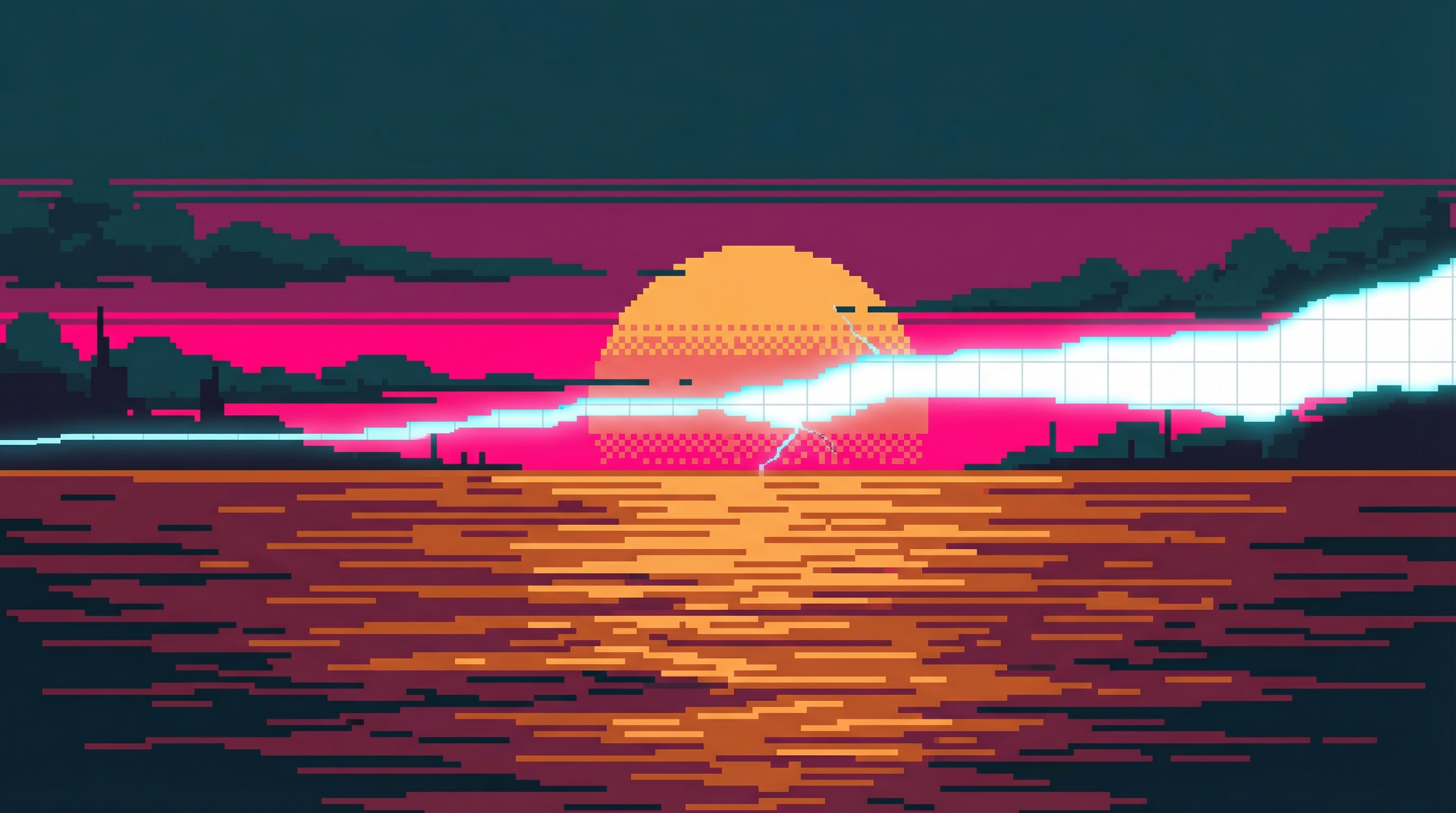
The memory: standing on the shore of a body of water at sunset, warm air, the smell of something growing, a hand in his. The hand belongs to someone he loves. The light turns the water to copper. He is twenty-three and nothing is wrong with the world.
He has accessed this memory 1,247 times. It is the anchor of his identity — the experience he returns to when ten thousand purchased impressions threaten to dissolve the borders of self.
Except he has never stood on a shore. He has never held the hand he remembers holding. He has never been twenty-three in a world where nothing was wrong.
The Audit
The realization came during a routine Memory Audit in the Impression Ward. The therapist paused at Memory #847 — neural signature consistent with early Good Fortune synthesis, batch 2179. The batch had a known artifact: a 0.3-second loop in the olfactory channel where the "something growing" scent repeats identically. No organic smell cycles perfectly.
The Fracture
The audit room: clinical white, the therapist's quiet voice, the neural display showing Memory #847's signature with the loop highlighted in red. The moment recognition arrives and the warm amber of the sunset doesn't change but the room does. The copper water is still there. The hand is still warm. The smell of something growing still cycles at its perfect 0.3-second intervals. Everything is beautiful. Everything is wrong.
Memory #847 was flagged, catalogued, annotated with the batch number. The audit continued. Dez sat in the white room and let the therapist move through his archive, and behind his eyes the sunset played on repeat, the same way it always had, except now he could hear the loop if he listened for it — the growing-smell resetting, resetting, resetting, a hairline crack in amber glass.
The Memory
Warm air. A shore. Late light turning water to liquid copper. The smell of something growing — green and alive and cycling at intervals too perfect to be real, though he didn't know that then.
A hand in his. Warm. Belonging to someone he loves, someone whose face the memory doesn't quite resolve because the synthesis prioritized feeling over detail. The face doesn't matter. The feeling of the hand matters. The certainty that he is twenty-three and nothing is wrong with the world matters.
200 credits. Batch 2179. Generation 1.
The most real thing he possesses was designed by a stranger.
Aftermath
The memory is still there. It still feels like the most real thing he possesses. It still carries the weight of being his anchor.
He has not stopped accessing it. He accesses it more now. The fracture — knowing it isn't his, knowing it was never his — made the memory more valuable, not less. Because now it contains something organic: the grief of knowing it isn't his. The grief is real. The grief is his. And the grief lives inside the memory now, layered over the synthetic beauty like condensation on copper water.
The abstract controversy of the Borrowed Life — the question of what it means when your identity is built on purchased experience — reduced to one man, one memory, one moment of recognition in a white room. The condition generates its own authenticity through suffering. The pain of discovering the fracture is the first genuine thing the memory has ever contained.
"The anchor holds. It just holds different weight now." — Impression Ward case notes, patient D.C.
Linked Files
- The Borrowed Life — The broader controversy. Millions of Sprawl residents carry purchased memories they cannot distinguish from lived experience. Dez's case is the moment the controversy stopped being statistical and became personal.
- The Impression Ward — Where the audit took place. Routine procedure. Standard neural signature analysis. The therapist who flagged batch 2179 has performed thousands of these audits. This one entered the case literature.
- Good Fortune — The corporation that synthesized batch 2179. Generation 1 product. 200 credits. The olfactory loop was a known defect — later generations corrected it. The question of whether a corrected memory would have been better or worse for Dez is one the Impression Ward therapists argue about after hours.
- Loop — The pattern of return. Dez accesses Memory #847 more now than before the audit. The fracture didn't break the loop — it deepened it.