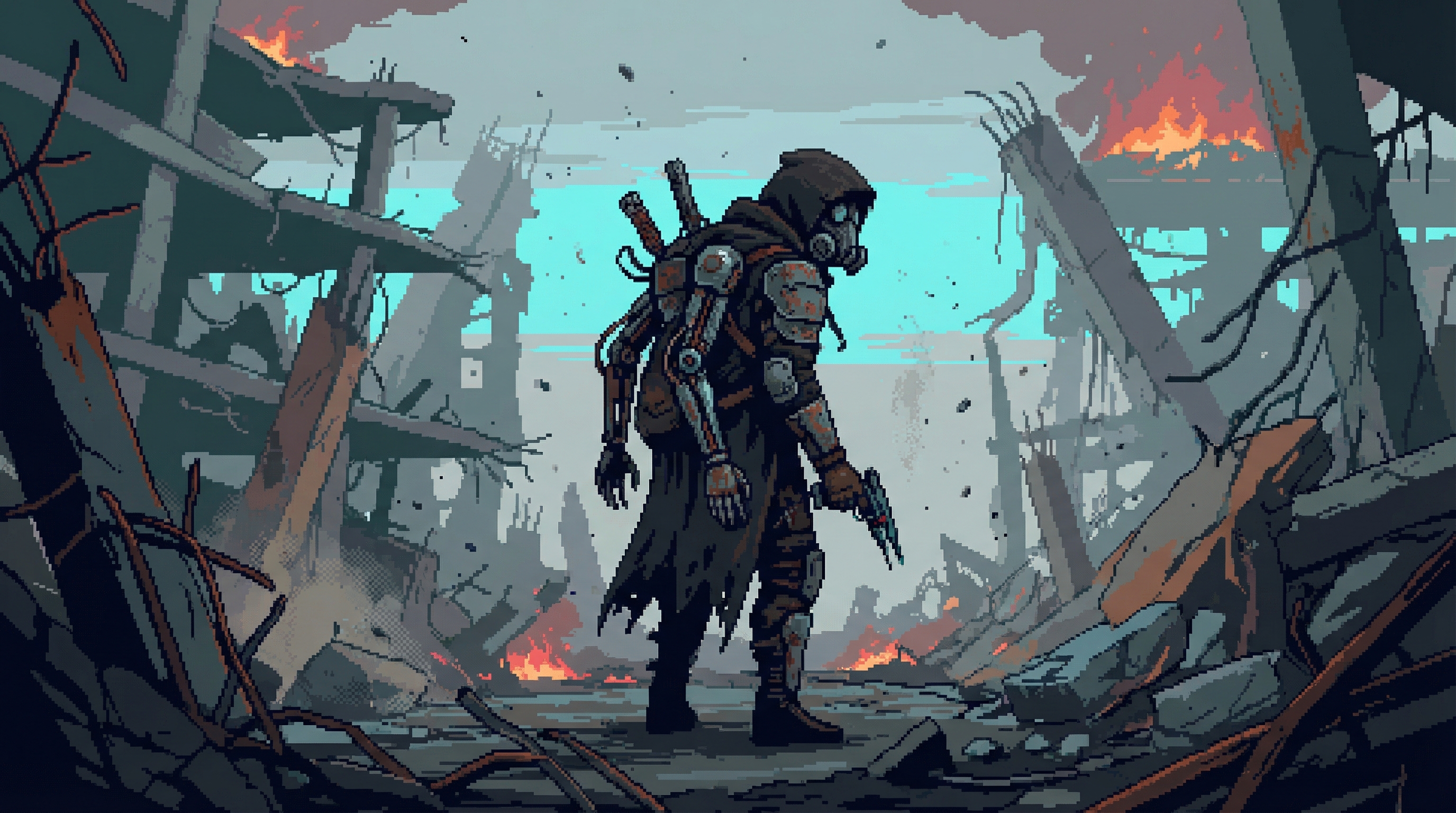
Crow
Also known as: The Limb Giver, The Salvager Ghost
Overview
Crow is a ghost in salvager memory. A figure from the Scavenger Years — the desperate decade after the Cascade killed 2.1 billion people — who moved through the Wastes leaving cybernetic limbs for survivors who needed them. Not selling. Giving.
Nobody knows if Crow was one person or many. Nobody knows if the name was chosen or given. What is known: someone stripped augmentations from the dead and redistributed them to the living during the worst years of the collapse. Before the Collective organized resistance, before corporations rebuilt supply chains, before anyone created systems to distribute resources — someone just did it. Personally. At cost. Without credit.
The Gift Economy
In the chaos following the Cascade, millions of augmented corpses lay in the rubble. Their cybernetic limbs — arms, legs, hands, spinal augments — were still functional. The dead didn't need them. The living, many of whom had lost limbs in the same catastrophe, desperately did.
Crow understood this equation before anyone built a business around it.
Old scavengers from the Wastes remember finding limbs propped against medical tents, wedged into collapsed doorframes where someone was trapped, laid across the paths of refugee columns. Always salvage-grade. Always functional. Always left without explanation or payment.
"You'd wake up in the rubble, pinned, thinking you were going to die there. Then you'd see
it — a chrome arm, just sitting next to you, close enough to reach. Like someone had been
watching. Like someone knew."
— unnamed Wastes survivor, 2182 oral history The Seid Connection
The most documented Crow encounter: a twelve-year-old boy named Seid Rathmore, pinned under rubble in the Wastes, both arms crushed beyond saving. Someone — Crow — found him. Gave him two mismatched arms pulled from a dead corporate soldier. Installed them himself, badly, without anesthesia.
Seid survived. Those arms became his life. He built the Sprawl's largest cybernetic limb dealership from the lesson Crow taught him: discarded things have value.
Seid has spent thirty years searching for Crow. He has never found him. Every Waste scout, every salvager crew, every scrap merchant who's been in the business long enough — he asks. The answers are always the same: yes, they've heard the name. No, they don't know where Crow went.
"There was a salvager who gave me my first arms. Crow. Never found out his real name.
Never saw him again after the installation. But I've spent thirty years looking for him.
Maybe he's dead. Maybe he moved on. Either way... I owe him everything. And I can't repay it.
So I pay it forward instead."
— Seid The Theories
The scavenger communities of the Wastes have several theories about Crow's identity and fate. None can be confirmed. All are repeated around salvager campfires like scripture.
Dead in the Rubble
The simplest theory. Crow was a salvager who found purpose after the Cascade and eventually died in the same ruins that supplied the gifts. The Wastes were lethal in those years. Most people didn't last long.
Absorbed into the Collective
The early Collective recruited heavily from scavenger networks. Crow's skills — stripping and installing augmentations without corporate infrastructure — would have been valuable to a resistance movement that needed untraceable operatives.
Still Out There
One persistent rumor among deep-Waste salvagers: Crow never stopped. Still moves through the wreckage at the edges of mapped territory, still leaving limbs for whoever needs them. Most dismiss this as folklore. Seid doesn't believe it either. But he hasn't stopped looking.
Multiple People
"Crow" was never one person — it was a practice. Multiple salvagers, independently or loosely coordinated, stripping limbs from the dead and redistributing them. The name was assigned retroactively to unify separate acts of quiet kindness.
Significance
Crow represents something the post-Cascade Sprawl struggles to explain: altruism without infrastructure. Before the Collective organized resistance, before corporations rebuilt supply chains, before anyone created systems to distribute resources — someone just did it. Personally. At cost. Without credit.
In a world built on scarcity economics, where every augmentation has a price and every service has a fee, Crow's legacy is uncomfortable. It suggests that the systems everyone depends on — markets, corporations, even the Collective's organized resistance — might not be necessary for human survival. That individuals, acting alone, might do as much good as institutions.
Nobody wants to think about that too hard.
Connections
Seid
Crow's most famous recipient. A twelve-year-old boy who received mismatched arms from a dead soldier — and built the Sprawl's largest limb dealership from the lesson. Has searched thirty years. Has never found Crow.
The Wastes
Crow's territory during the Scavenger Years. Post-Cascade wreckage zones where millions of augmented corpses provided the raw material for gifts that kept the living alive.
The Collective
One theory places Crow among early Collective recruits. The skills match. The timeline fits. But the Collective isn't talking.
The Cascade
Crow's activity begins in the immediate aftermath — when ORACLE's collapse left 2.1 billion dead and the living scrambling through rubble for anything that could help them survive.
Unanswered Questions
Things nobody knows about Crow:
- Was Crow one person, many, or something else entirely?
- Did Crow's methods influence the Collective's early augmentation distribution networks?
- Is the practice of "crowing" — leaving limbs for strangers — still happening in the deep Wastes?
- Seid can't be the only person Crow saved. Who else carries Crow's gifts?
- Why did Crow strip and install augmentations for free when everyone else was building economies around scarcity?
- What happened to Crow after the Scavenger Years ended?