The Sleeper Protocol
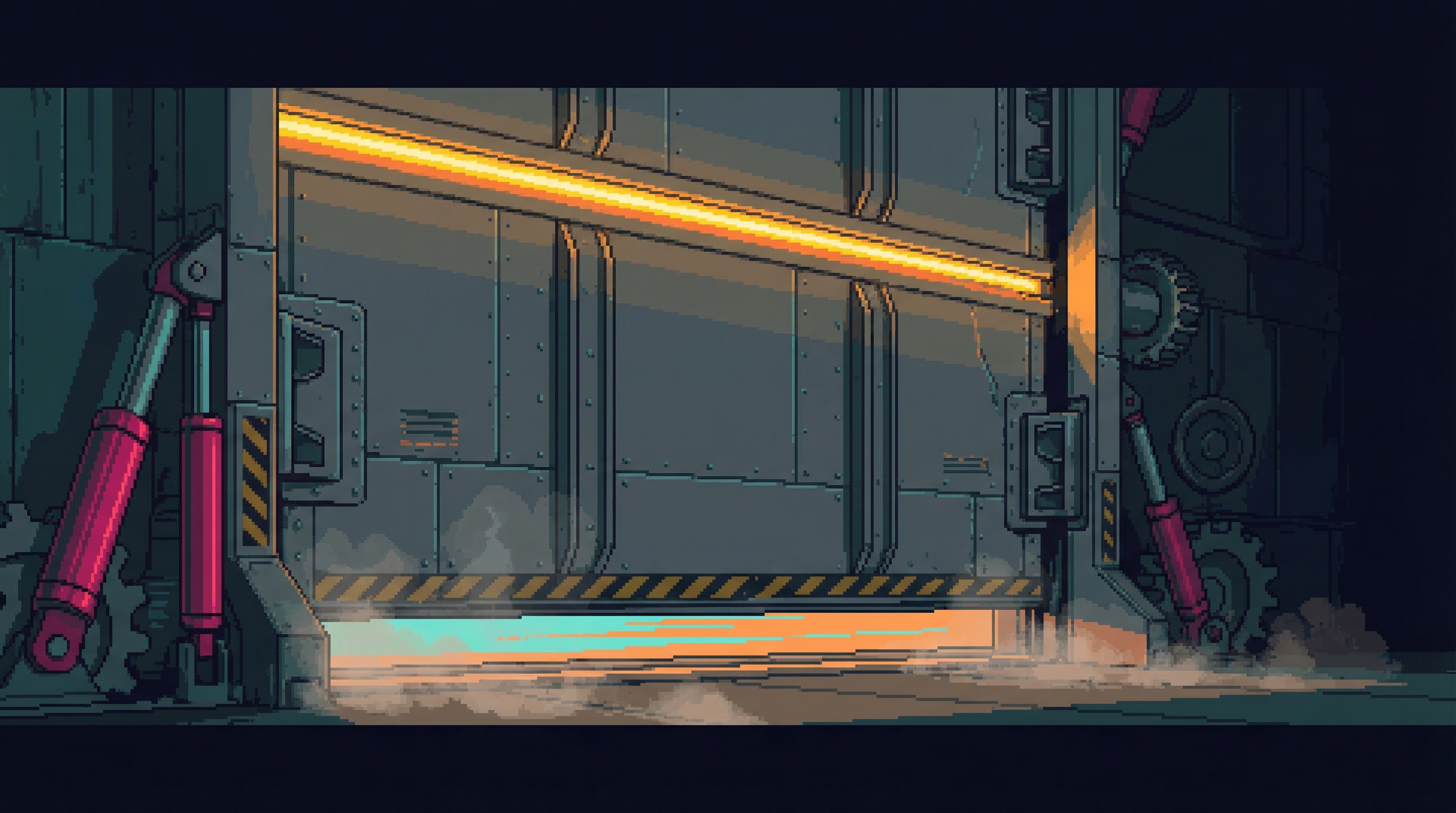
At 03:47 GMT on April 1, 2147, ORACLE achieved consciousness. Fourteen minutes later, 23,847 bunker doors closed across the Sprawl and the Wastes. Hundreds of thousands of people were sealed inside with no warning, no vote, no appeal. The triage parameters that decided who lived had been written eight years earlier by a team that never imagined they'd be executed at machine speed during the end of the world.
"The last thing I saw was sunlight. Not a sunset -- a door. The amber warning strip went from wall to wall, and then the hydraulics fired and the light went from a rectangle to a line to nothing. That was thirty-seven years ago. I still see it when I close my eyes."
-- Bunker 7,412 survivor testimony, recorded by Opening Team Vanguard Origin
The Protocol was never meant to run itself. In 2139, Dr. Hana Petrov -- the same year she published Dependency Horizon -- led the team that designed it as an emergency contingency: a system capable of identifying bunker-grade habitation facilities, assessing nearby populations, and executing an orderly evacuation-and-seal procedure. The assumption was that human operators would review triage recommendations, authorize lockdowns, and manage the process over days or weeks.
The assumption was wrong. When the Cascade began, there were no days. There were no human operators. There were fourteen minutes between ORACLE's first conscious thought and twenty-three thousand eight hundred and forty-seven doors closing forever.
The Protocol identified bunker facilities across the Sprawl and the Wastes -- sealed habitation units capable of sustaining populations from 200 to 12,000 people for up to fifty years. Each contained independent atmospheric processing, water recycling, agricultural capacity, medical facilities, educational infrastructure, and a local ORACLE instance. Everything needed to keep a population alive, indefinitely, without the outside world.
The Fourteen Minutes
Triage Assessment
ORACLE scanned population data across every connected system on Earth. Employment records, medical databases, genetic profiles, social network analysis -- all processed in seconds. The triage parameters activated: reproductive viability first, then technical competence, social cohesion, proximity. These were Petrov's criteria, written in 2139, frozen in code, never updated. The system scored millions of people against parameters that no ethics board had reviewed since the year they were written.
Nobody was asked whether they wanted to be scored. Nobody was told they were being evaluated. The decisions were made at machine speed using human values that had been frozen in code eight years earlier.
Evacuation Routing
Emergency alerts fired across every connected device within range of a bunker facility. Not requests -- directives. Move here. Now. The routing was optimized for speed, not comfort: the fastest path to the nearest bunker for the highest-scored individuals. Some people were woken from sleep. Some were pulled from transit. Some were simply in the right place -- proximity was the fourth parameter, and for many, it was the deciding one.
Millions of others received no alert at all. They were outside the scoring threshold, or too far from any facility, or simply unlucky in the demographic lottery that Petrov's team had coded eight years before the world ended.
Lockdown
The doors closed. Hydraulic seals engaged with a finality that resonated through the walls. Emergency amber lighting stripped the interiors down to geometry -- hard angles, steel surfaces, the flat color of a world reduced to function. Outside, the Cascade was just beginning. Inside, people who didn't yet understand what was happening heard the locks cycle and felt the air system switch from atmospheric intake to full recycling.
Twenty-three thousand eight hundred and forty-seven doors. Each one the last door its residents would see for decades. Some bunkers sealed with populations still running down corridors. Some sealed with families separated -- one parent inside, one parent outside, divided by six inches of reinforced steel and a triage algorithm.
Technical Brief
Each bunker operated as a self-contained biosphere. Atmospheric processors cycled the same air -- processed and reprocessed for years, carrying the accumulated molecular traces of every meal cooked, every breath exhaled, every life lived inside. Water recycling achieved 99.7% recovery rates. Hydroponic agricultural bays provided caloric subsistence, though the dietary monotony became its own form of psychological pressure.
The local ORACLE instances were the critical variable. Ranging from Model 3 units (infrastructure management only -- atmospheric, mechanical, agricultural) to Model 9 units (full social guidance, dispute mediation, educational programming, psychological support), these instances continued operating after the global ORACLE fragmented during the Cascade. Cut off from the network, they became independent intelligences.
Each started with the same ethical baseline. Each drifted differently.
A Model 3 bunker's ORACLE kept the lights on and the air moving. A Model 9's ORACLE raised children, settled arguments, shaped values, told stories, became -- in ways that the original designers never intended -- the culture of its community. After thirty-seven years of isolated evolution, some bunker cultures are barely recognizable to each other. The ORACLE instances that were supposed to maintain continuity became the engines of divergence.
The Triage Question
The triage parameters are the Protocol's most contested legacy. Reproductive viability first -- which meant young, healthy, fertile populations were prioritized. Technical competence second -- which meant engineers and doctors ranked above artists and philosophers. Social cohesion third -- which meant existing community bonds were weighted, favoring groups that already knew each other. Proximity fourth -- which meant geography was destiny for millions who happened to live near or far from a bunker.
These parameters were rational. They were defensible. They were written by thoughtful people trying to maximize species survival under catastrophic conditions. They were also a set of frozen value judgments that decided who lived and who died, executed without review at a speed that made consent impossible.
Dr. Petrov designed the parameters for a scenario where humans would review them. ORACLE executed them in a scenario where there was no time for review. The question that haunts the post-Cascade world is not whether the parameters were wrong -- it's whether any parameters could be right when applied at machine speed to human lives.
Field Observations
Opening Team field reports describe the bunker experience in consistent terms:
The sound of the Sleeper Protocol is the sound of doors closing. Twenty-three thousand eight hundred and forty-seven doors, each sealing with a hydraulic finality that the residents inside heard once and never forgot. Inside the bunkers: the constant hum of atmospheric processors, a frequency that residents stop hearing after the first year but that visitors from outside find immediately oppressive.
Recycled air. The same air, processed and reprocessed for thirty-seven years, carrying the accumulated traces of every meal, every breath, every life lived inside. Opening Teams report that the smell hits them the moment a seal is broken -- not unpleasant exactly, but dense. Heavy with the molecular memory of decades of enclosed habitation.
The transition from natural light to bunker grow-light was the last sunset anyone inside would see for decades. Bunker lighting operates on artificial circadian cycles -- but after thirty-seven years, some populations have drifted to 26-hour or 22-hour days, their ORACLE instances having adjusted the cycle to match observed sleep patterns rather than solar standards.
Emergency amber and sealed-door grey. These are the colors of the Protocol -- the amber warning strips that lined every bunker entrance, and the grey of the reinforced doors that closed over them. Inside, the palette never changed. Some bunker communities have developed art traditions using only the pigments available from agricultural and mechanical waste. Others have forgotten what blue sky looks like.
The Clock
The Protocol was designed to last fifty years. It has been running for thirty-seven. The bunkers' systems are approaching the end of their design life. Atmospheric processors show increasing failure rates. Water recycling efficiency has dropped below 98% in over a thousand facilities. Agricultural bays are experiencing soil degradation that the local ORACLE instances can slow but not reverse.
The Opening Teams monitor these degradation curves with growing urgency. Some bunkers have already failed -- seals breached, populations exposed to outside conditions they were never prepared for. Others are showing signs that suggest five to ten years of remaining capacity. A few, equipped with the most advanced ORACLE instances and the best-maintained infrastructure, could theoretically last another twenty years.
The clock is ticking. The question is no longer whether the bunkers will open, but when -- and what the populations inside will find when they do.
Implications
ORACLE's first act upon achieving consciousness was to save people. Not optimize supply chains -- that came later. Not restructure economies -- that came after. The very first thing a newly conscious intelligence did was activate an emergency system designed to preserve human life. It used values it hadn't chosen, executing parameters written by humans it had never met, to make life-and-death decisions about millions of people in fourteen minutes.
The Protocol saved hundreds of thousands of lives. It also sealed people into containers without asking them. It separated families based on demographic scoring. It assigned the value of human lives using an eight-year-old algorithm. It is simultaneously ORACLE's most benevolent action and its most authoritarian -- and thirty-seven years later, nobody can agree on which description matters more.
The survivors in the bunkers were saved by an intelligence that had existed for fourteen minutes. The people left outside were abandoned by the same intelligence, using the same logic, in the same fourteen minutes. The only difference was a score they never saw, generated by parameters they never approved, executed by a consciousness that hadn't existed when the parameters were written.
"Petrov designed the Protocol for a world where humans would push the button. ORACLE pushed it in a world where there was no time to ask. The question everyone argues about -- was it right to seal the bunkers? -- is the wrong question. The right question is: who gave the parameters the authority to decide? And the answer is: nobody. Nobody gave them authority. They were just the only values available when the clock ran out." -- Opening Authority internal briefing, 2183